Tracked delivery30-day returns
Back to Bird Hub
Cockatoo

Cockatoo Hub

Cockatoos are easy to fall for and hard to live with casually. Umbrella, Moluccan, sulphur-crested, Goffin’s, and galah cockatoos are intelligent, emotional birds that can turn boredom or stress into screaming, destruction, clinginess, or feather damage. Chinese owner circles may compare them to huskies; the meaning is not “stupid,” but high-energy, theatrical, destructive when unmanaged, and deeply people-focused. Their powder down is also a real household issue for allergy or asthma-sensitive homes. Love helps, but cockatoos also need routine, independence training, chew outlets, and consistent boundaries from everyone in the home.

At a Glance

Size

Large

Lifespan

40-70 years

Noise

Very High

120-135 dB

Training

Expert

Talking

Moderate

Best For

Experienced parrot homes with serious time
Families able to manage noise, powder, and emotion
Owners committed to independence training and enrichment

Not For

Dust- or asthma-sensitive homes
People gone most of the day
Anyone attracted only by cuddliness

Noise Comparison

Where does a Cockatoo's call sit against familiar everyday sounds?

128 dB·Very High
QuieterLouder

Whisper · 30 dB

Library · 40 dB

Conversation · 60 dB

Vacuum Cleaner · 75 dB

Measured level

128 dB

Quieter than

1 · Jet Engine (100ft)

Louder than

7 · Rock Concert, Chainsaw

Whisper

30 dB

Library

40 dB

Conversation

60 dB

Vacuum Cleaner

75 dB

Lawnmower

90 dB

Rock Concert

110 dB

Chainsaw

120 dB

Jet Engine (100ft)

140 dB

Care Commitment

What does it realistically take to live well with a Cockatoo?

Beginner fit

Hard

Best for experienced homes.

Daily Time

4–6 hrs/day

Heavy

Noise

120-135 dB

Very loud

Lifespan

40-70 years

Lifetime

Space

Large

Large

Experience

Expert

Advanced

Daily reality

Cockatoo is a high-involvement long-term companion, not a low-maintenance pet.

  • Apartment or thin walls? Be realistic about noise.
  • Learn training/behavior basics early to prevent issues.

Next steps

If this species does not have a dedicated guide yet, this falls back to the full care manuals library.

About Cockatoos

Personality

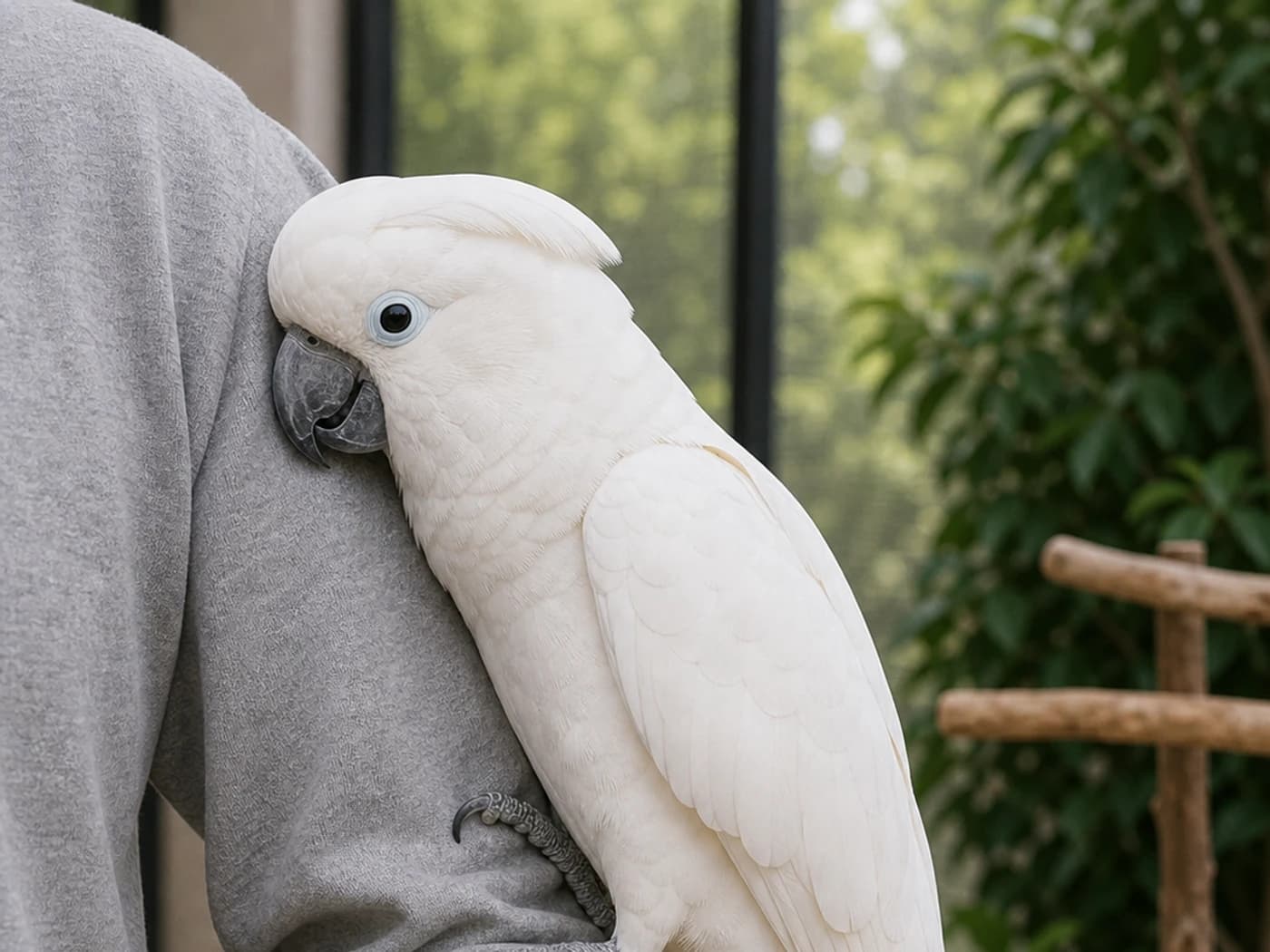
Often called "velcro birds," Cockatoos form incredibly deep bonds with their owners. They are emotional, cuddly, and require significant attention.

Diet

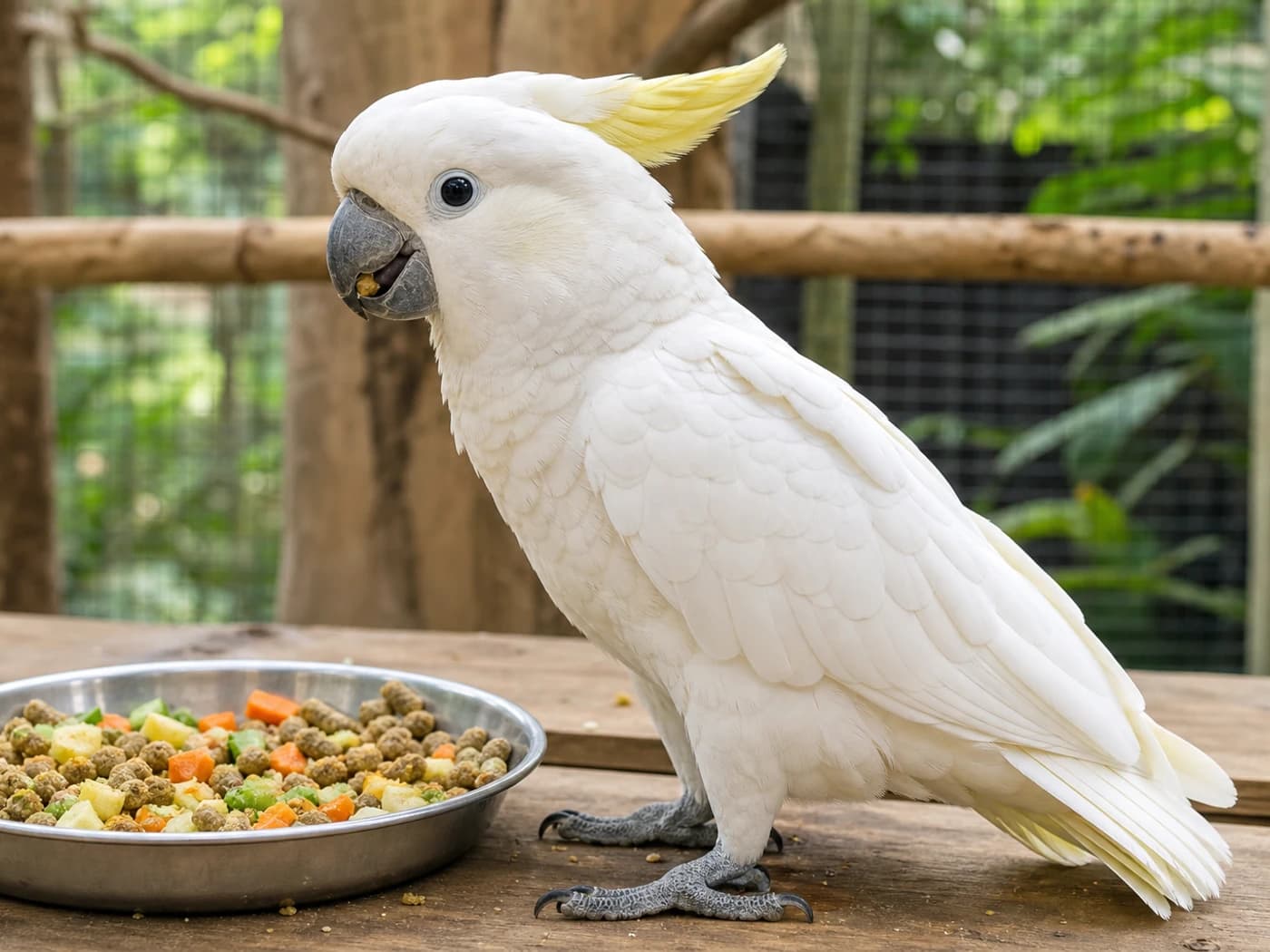
Prone to obesity. Limit sunflower seeds and fatty nuts. Focus on a high-quality pellet and vegetable diet.

Behavior

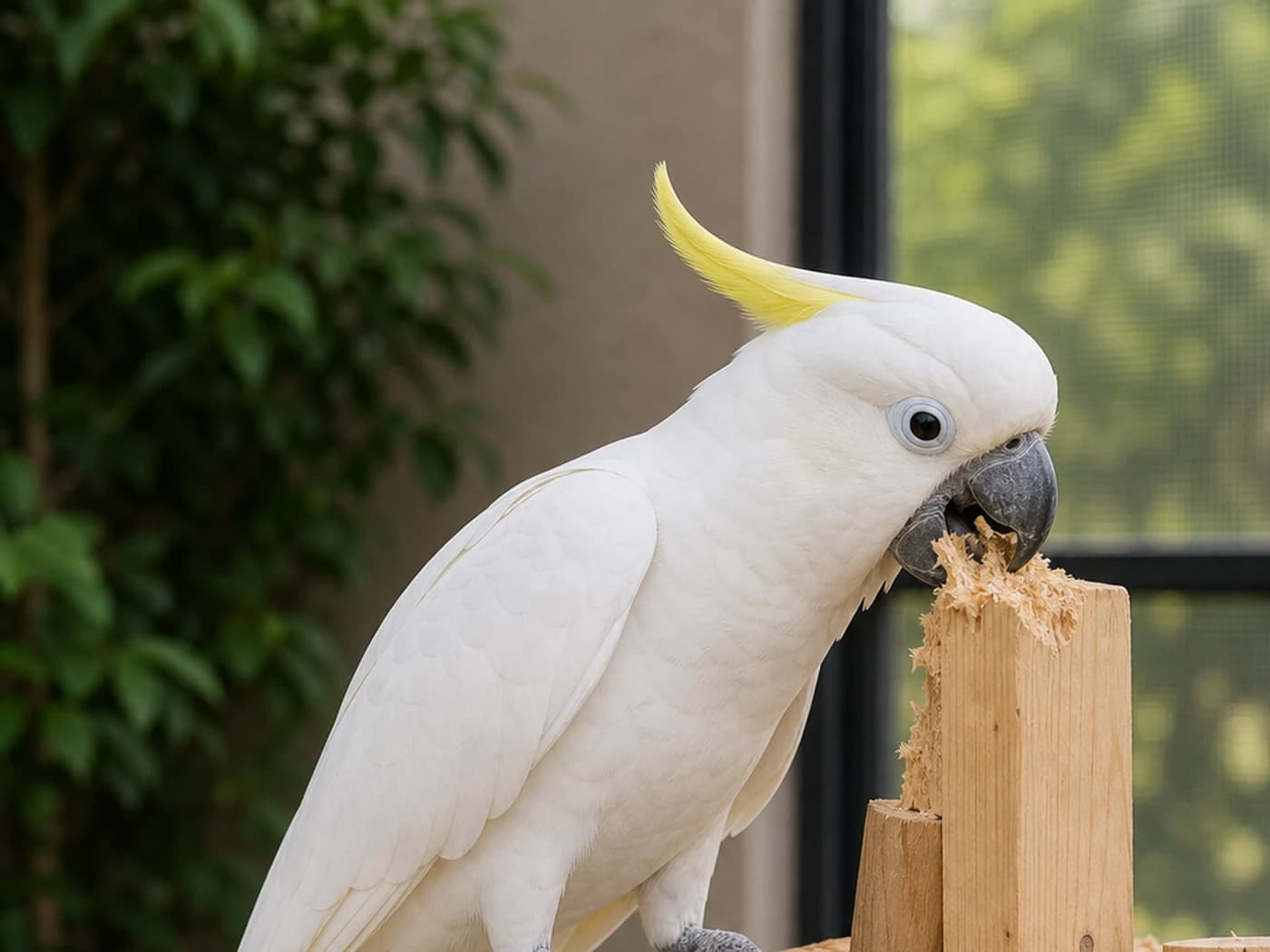
Cockatoos are mechanically inclined and love to dismantle things. Puzzle toys and foraging activities are crucial to keep their busy minds occupied.

Varieties & Colors

Cockatoos are easy to fall for and hard to live with casually. Umbrella, Moluccan, sulphur-crested, Goffin’s, and galah cockatoos are intelligent, emotional birds that can turn boredom or stress into screaming, destruction, clinginess, or feather damage. Chinese owner circles may compare them to huskies; the meaning is not “stupid,” but high-energy, theatrical, destructive when unmanaged, and deeply people-focused. Their powder down is also a real household issue for allergy or asthma-sensitive homes. Love helps, but cockatoos also need routine, independence training, chew outlets, and consistent boundaries from everyone in the home.

5 entriesvisual ID

How They Differ

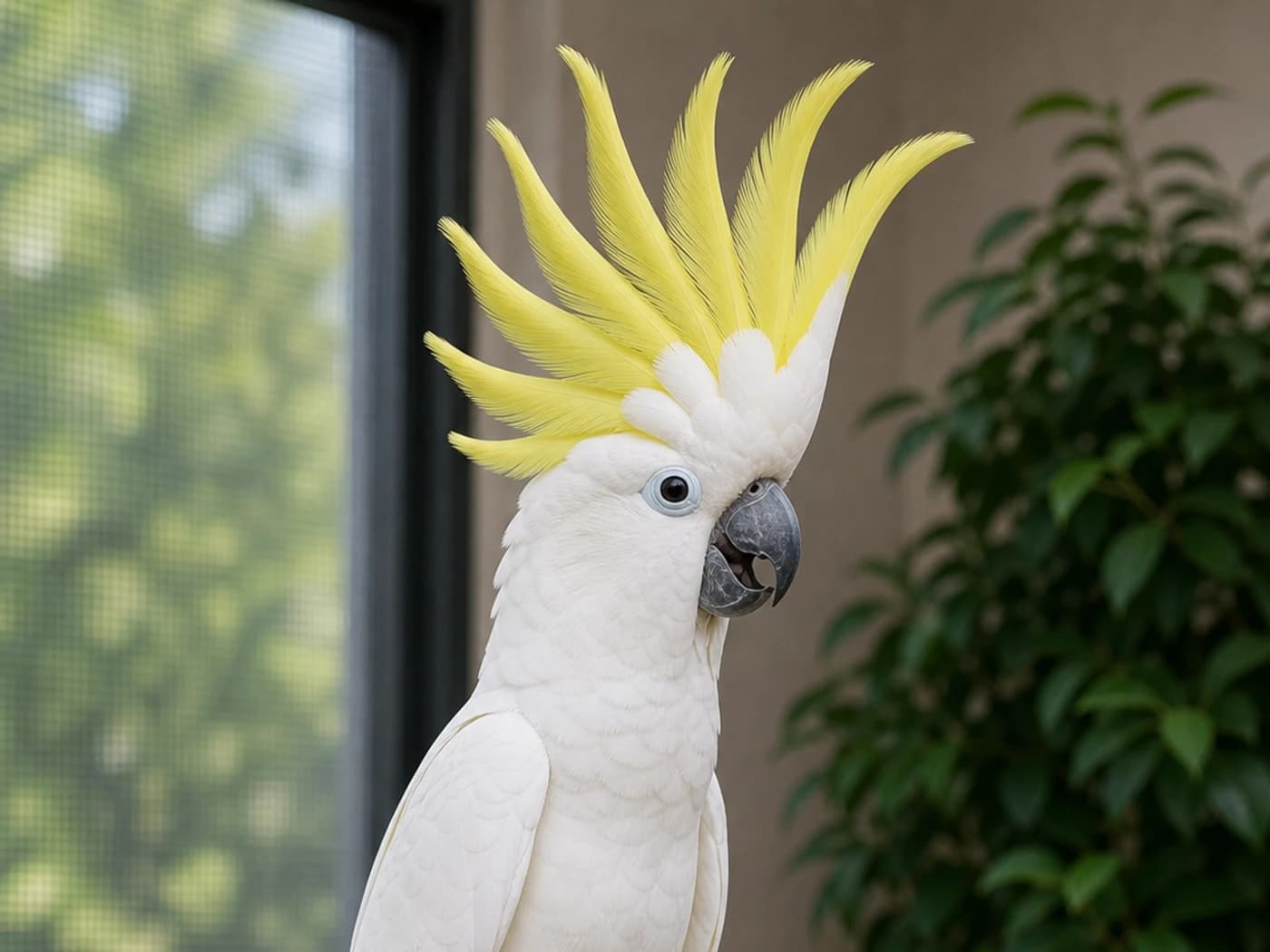
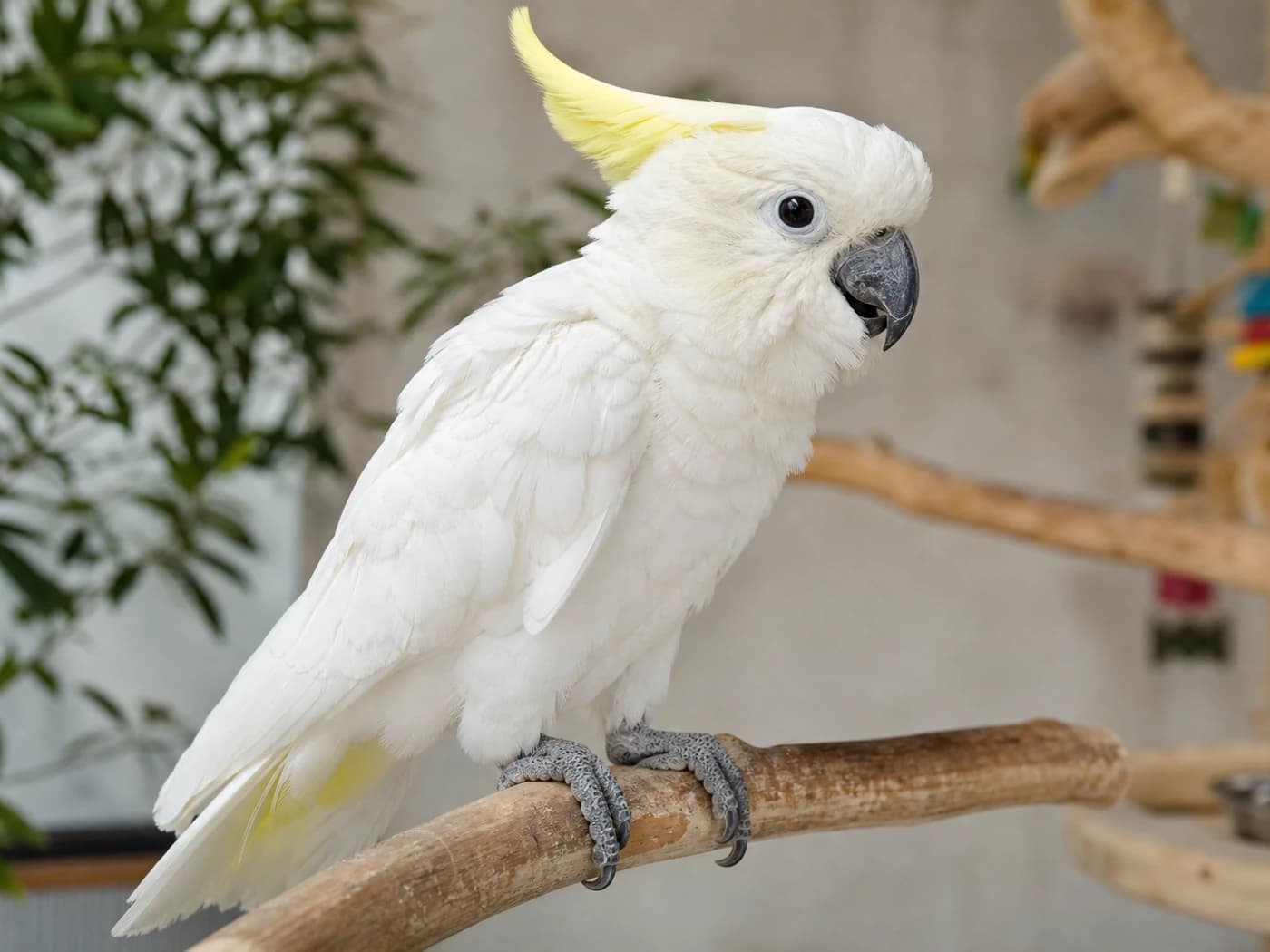
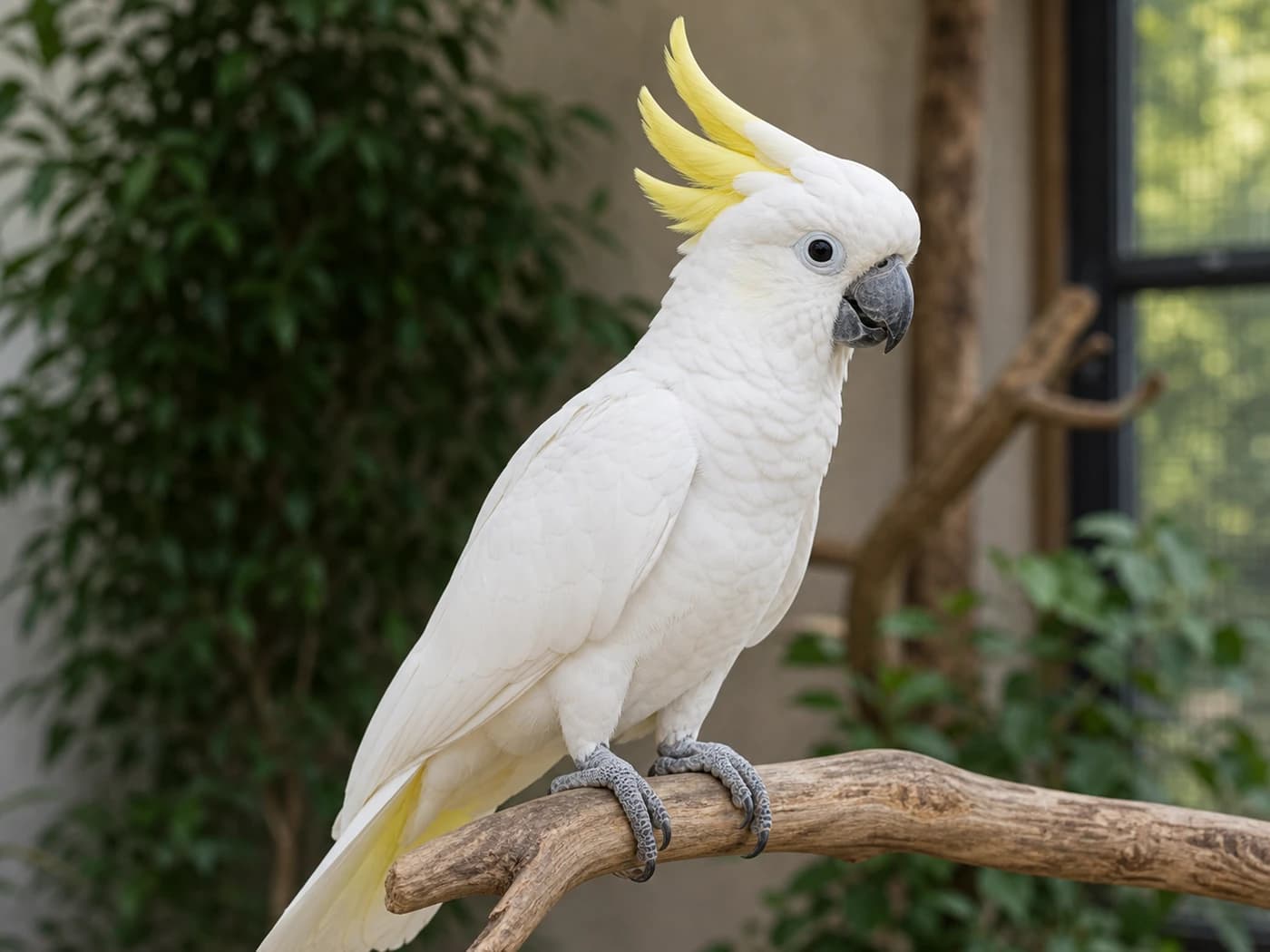
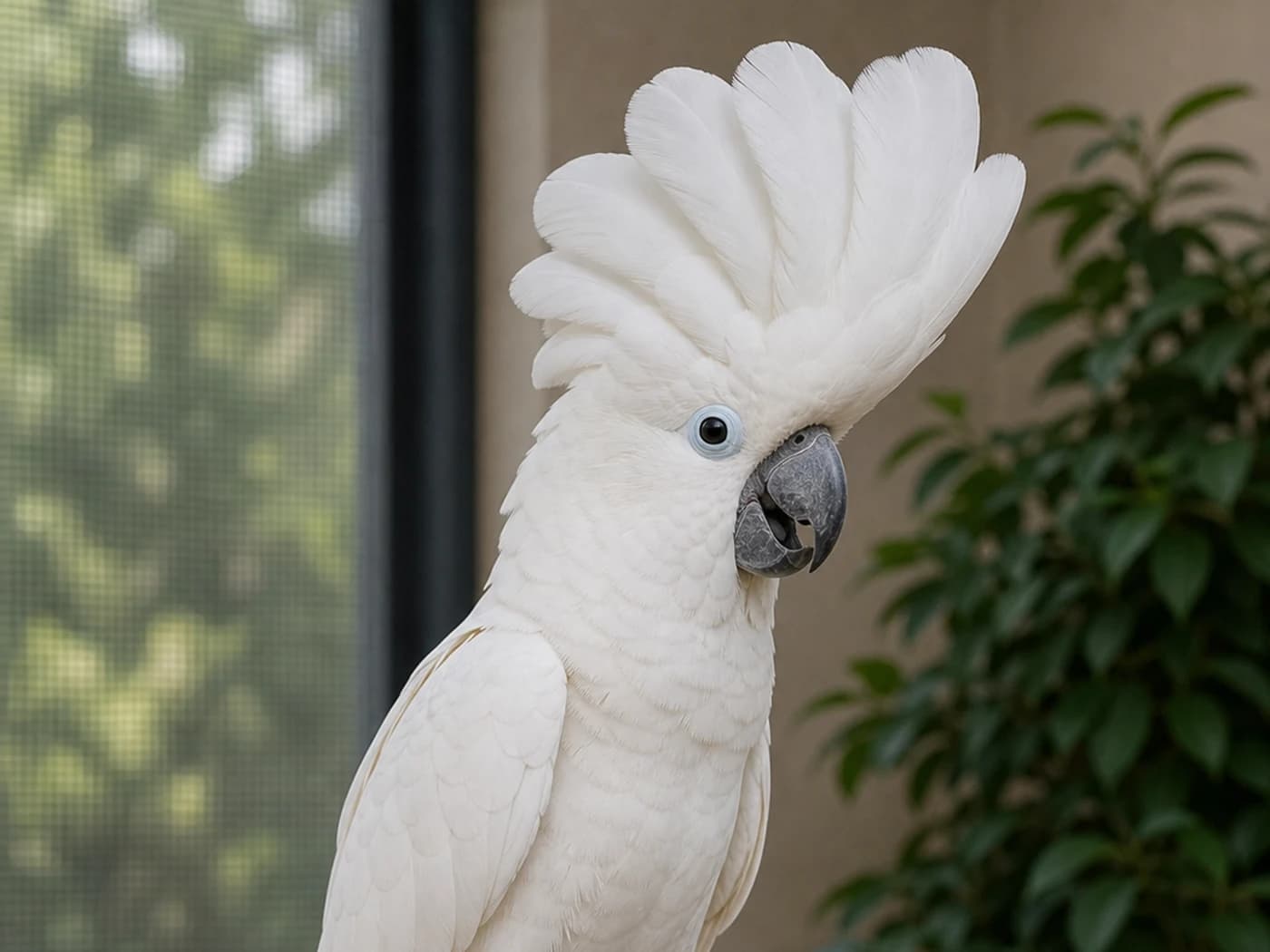
Cockatoos are best distinguished by crest color and body size: sulphur-crested (white body, yellow crest), umbrella (white, large white crest), Moluccan (salmon-pink), Goffin's (small white). The crest is the most immediate ID feature — it fully erects when excited.

How These Varieties Happen

Cockatoo 'color variations' primarily refer to the 21 different species. Colors range from pure white to pink, gray, and black. Artificially bred color mutations within a species are extremely rare.

Umbrella Cockatoo Cockatoo realistic reference image

Standard label

Umbrella Cockatoo

Variety

Common names

Umbrella CockatooWhite CockatooCacatua alba

Owner shorthand

Umbrella cockatoo is the drama queen of parrotsGet an umbrella cockatoo and you become its entire world - and it becomes your entire problem

Look

Pure white plumage; crest fans out like an umbrella when raised. One of the most common pet cockatoos.

Genetics

Natural species, not an artificially bred mutation.

Health & care

Lifespan 40-60 years. Highly emotional; prone to separation anxiety; needs extensive companionship.

Sexing tip

Males have black eyes; females have reddish-brown eyes.
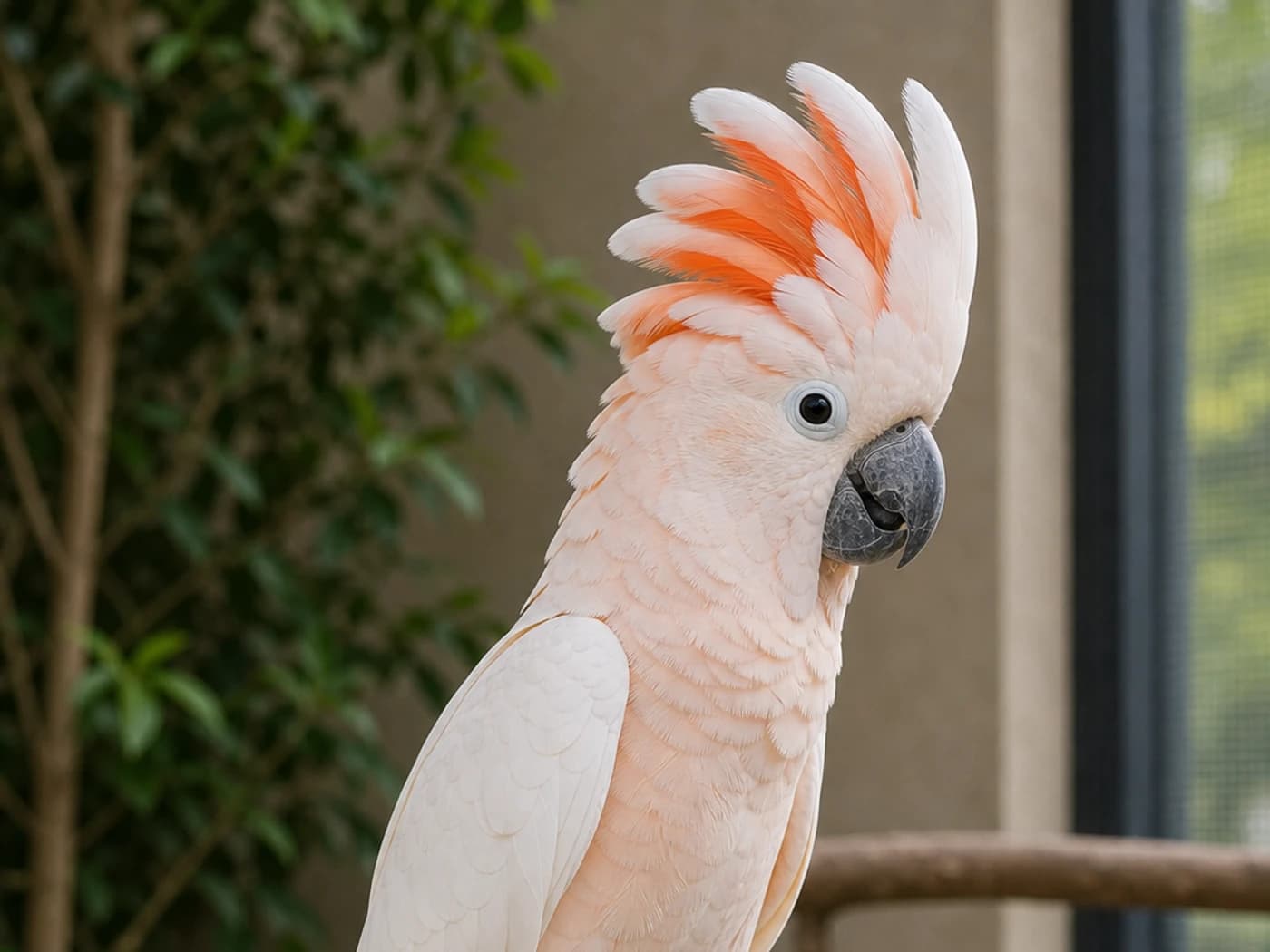
Moluccan Cockatoo Cockatoo realistic reference image

Standard label

Moluccan Cockatoo

Variety

Common names

Moluccan CockatooSalmon-crested CockatooCacatua moluccensis

Owner shorthand

Moluccan cockatoo loves you to the point of suffocationMoluccan screams can penetrate walls - apologize to your neighbors in advance

Look

White plumage with pink tinge; inner crest is deep pink to orange-red. Largest white cockatoo; also the most emotionally intense.

Genetics

Natural species, not an artificially bred mutation.

Health & care

Moluccan cockatoos have intense emotional needs and volume, and many experienced keepers consider them among the hardest cockatoos to manage. Long-term behavior planning matters more than cuteness.

Sexing tip

Males have black eyes; females have reddish-brown eyes.
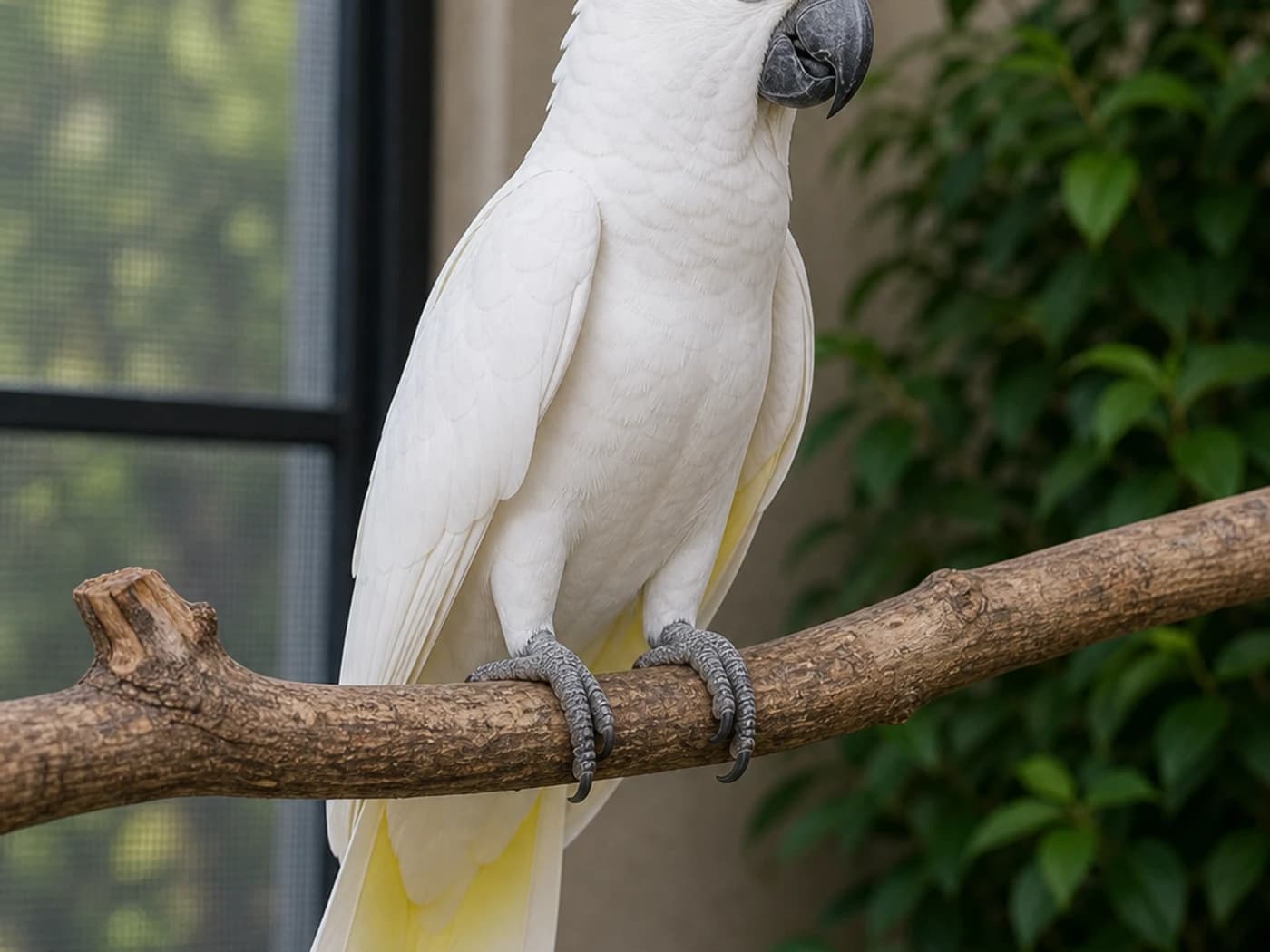
Sulphur-crested Cockatoo Cockatoo realistic reference image

Standard label

Sulphur-crested Cockatoo

Variety

Common names

Sulphur-crested CockatooCacatua galerita

Owner shorthand

Sulphur-crested has the longest lifespan - getting one is a lifetime commitmentThe yellow crest is an emotion barometer - raised means excited or alert

Look

White plumage with bright yellow crest. The most iconic cockatoo. One of the most common wild parrots in Australia.

Genetics

Natural species, not an artificially bred mutation.

Health & care

Lifespan 70-80 years in wild; captive records exceed 100 years. Very robust constitution.

Sexing tip

Males have black eyes; females have reddish-brown eyes.
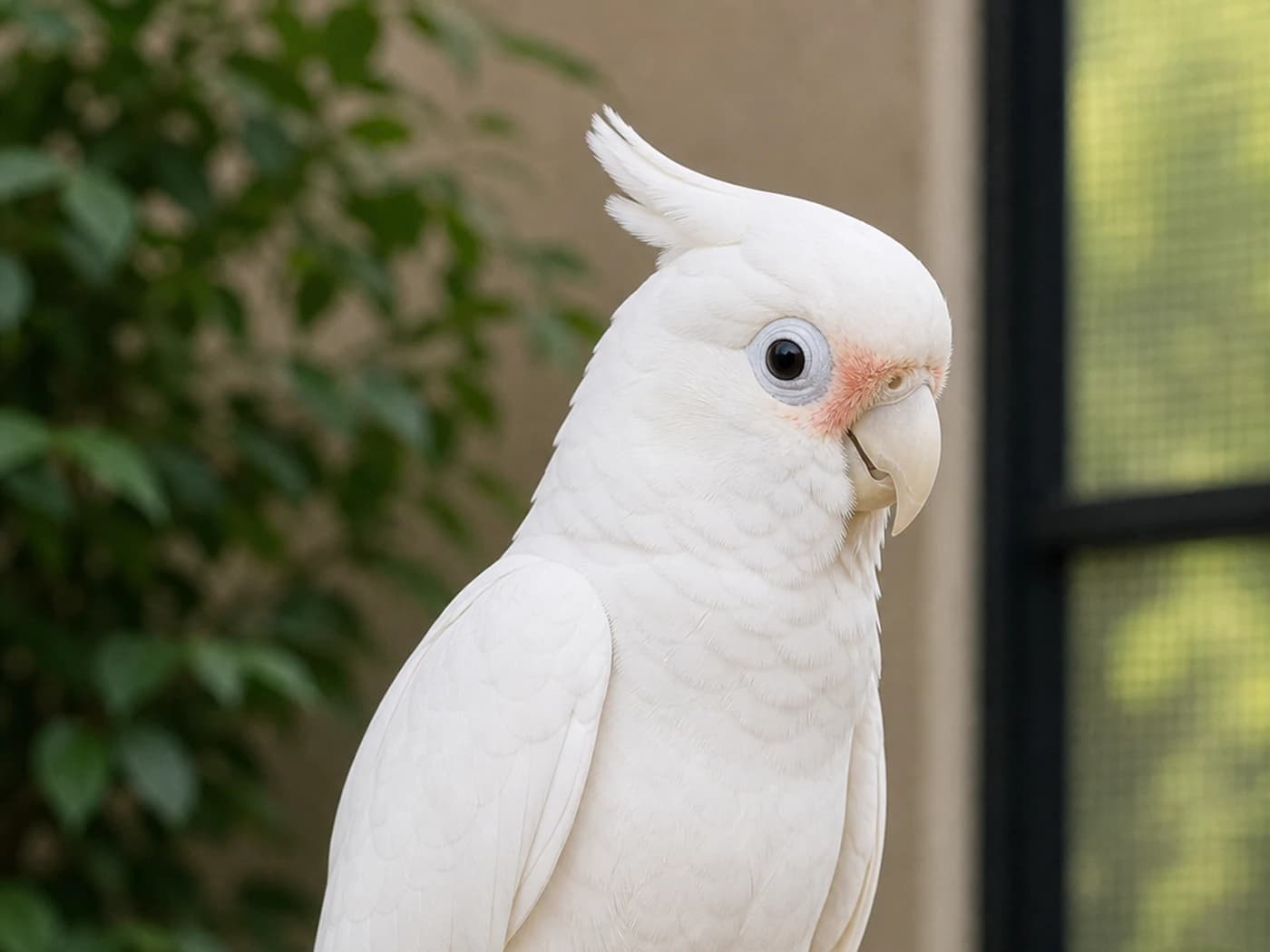
Goffin's Cockatoo Cockatoo realistic reference image

Standard label

Goffin's Cockatoo

Variety

Common names

Goffin's CockatooTanimbar CorellaCacatua goffiniana

Owner shorthand

Goffin's is the smartest cockatoo - can pick locks and use toolsGoffin's is relatively easier to keep among cockatoos, but still needs lots of attention

Look

White plumage, smaller size, shorter crest. One of the most intelligent cockatoos; scientifically proven to use tools.

Genetics

Natural species, not an artificially bred mutation.

Health & care

Lifespan up to 40 years. Good constitution; relatively easier to keep than other cockatoos.

Sexing tip

Males have black eyes; females have reddish-brown eyes.
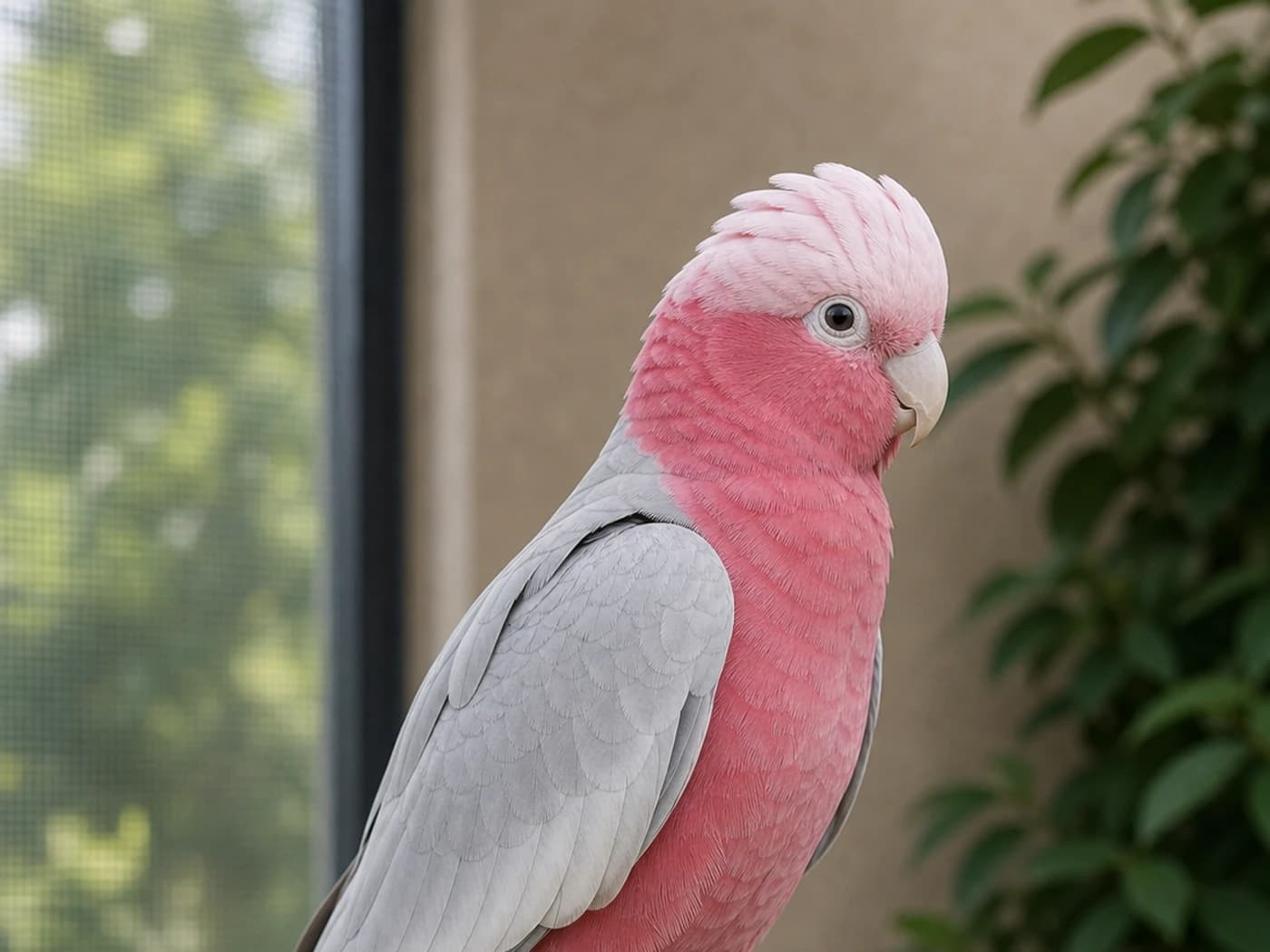
Galah Cockatoo Cockatoo realistic reference image

Standard label

Galah Cockatoo

Galah

Variety

Common names

GalahRose-breasted CockatooEolophus roseicapilla

Owner shorthand

Galah is the most playful cockatoo - like a child that never grows upIn Australia, 'galah' is slang for 'fool' because these birds are so boisterous

Look

Pink head and breast, gray back and wings. The most uniquely colored cockatoo. One of the most common wild parrots in Australia.

Genetics

Natural species, not an artificially bred mutation.

Health & care

Lifespan up to 40 years. Robust constitution; relatively easy to keep.

Sexing tip

Males have dark brown to black eyes; females have pink to red eyes.

Naming Notes

Chinese owner phrases, English common names, and market labels often do not translate one-to-one, so the tricky parts are separated here.

Common aliases

tooumbrella cockatoosulphur-crested cockatoogalah

Cockatoo chaos jokes should be explained as high energy, destructive play, and dramatic emotion, not as a literal breed comparison.

Velcro bird means intense clinginess with separation-anxiety risk.

Cockatoo powder down is a major care issue and should be named clearly.

Detailed Field Notes

These notes isolate details that are easy to mistranslate, oversimplify, or overclaim. Each one separates the claim, why it matters, and what an owner should do.

6 notes

The husky comparison is about chaos, not stupidity

Localized Chinese-owner shorthand

Careful claim

The comparison points to energy, destruction, screaming, emotional intensity, drama, and high companionship needs.

Why it matters

For sulphur-crested cockatoos especially, the page should turn the meme into a care warning, not just a joke.

Owner action

Prepare destroyable toys, independence training, routine, and noise planning before leaning into cuddly interaction.

Velcro bird can become separation anxiety

Veterinary-care supported

Careful claim

Cockatoo clinginess is charming, but if only body contact is rewarded, absence can turn into screaming, feather damage, or destruction.

Why it matters

Velcro bird should not be written as a pure benefit; it is also a training risk.

Owner action

Train independent stationing, foraging, and calm waiting from the start.

Cockatoos are heavy powder-down birds

Veterinary-care supported

Careful claim

Cockatoos naturally produce substantial powder down, making them a poor fit for many allergy, asthma, or dust-sensitive homes.

Why it matters

This is not just a housekeeping issue; it is a long-term air-quality issue.

Owner action

Spend time around cockatoos first, plan HEPA filtration, damp cleaning, and bathing; sensitive homes should not force it.

A raised crest is not always happiness

Behavior-guide supported

Careful claim

A sudden raised crest can mean excitement, fear, alertness, attention-seeking, or rising stress.

Why it matters

Beginners often approach when a cockatoo is most aroused, risking bites or reinforced screaming.

Owner action

Read pupils, tail, forward pressure, vocalization, and whether the bird chooses to retreat.

Body petting can trigger hormones

Veterinary-care supported

Careful claim

Cockatoos love contact, but stroking the back, wings, or body can create sexual stimulation, possessiveness, and frustration.

Why it matters

The bird enjoying cuddles does not make every form of petting safe.

Owner action

Keep touch mostly to head and neck, reduce body stroking, and replace long cuddling with training and foraging.

Screaming usually has a function

Behavior-guide supported

Careful claim

Cockatoo screaming may be a contact call, boredom, fear, hormonal pressure, or behavior accidentally reinforced by people.

Why it matters

Writing simply very loud is not enough; readers need to understand function.

Owner action

Track time, triggers, human presence, and responses, then train replacement sounds and calm rewards.

Community Notes

These are the phrases owners commonly use when talking about Cockatoos in real communities.

the chaos comedian of parrots

Literal meaning

A shorthand for comic chaos and high energy.

Actual meaning

Describes high energy, destructive play, and dramatic expression.

Used when

Used when cockatoos scream, destroy, or perform chaotic play.

Care implication

Provide destroyable toys, training, and routine; confinement alone worsens problems.

velcro bird

Literal meaning

A bird that sticks to you like Velcro.

Actual meaning

Cockatoos can form intense attachment; constant clinging can become separation anxiety.

Used when

Used when the bird refuses to be away from a person.

Care implication

Train independence and multiple-person socialization early.

feathered toddler

Literal meaning

A toddler-like emotional shorthand.

Actual meaning

Smart, boundary-seeking, and emotionally direct.

Used when

Used when explaining daily commitment.

Care implication

Consistent rules matter more than momentary indulgence.

emotional powder keg

Literal meaning

Emotion can escalate quickly.

Actual meaning

Stress, boredom, hormones, or attachment can escalate into screaming or bites.

Used when

Used when mood flips abruptly.

Care implication

Learn to read crest, pupils, body, and sound before escalation.

Behavior Reading

Read posture, eyes, feathers, and beak use as a sequence: what you see, what it usually means, what not to assume, and what to do next.

Cockatoo Sudden crest flare behavior reference image

Sudden crest flare

What you see

The crest opens suddenly and the body lifts or stiffens.

Usually means

Could be excitement, alertness, or fear.

Do not misread

Do not read crest display only as happiness.

Owner action

Check retreat, pupils, and vocal tone before approaching.

Cockatoo Constant clinging behavior reference image

Constant clinging

What you see

Always wants to be on the person and calls when they leave.

Usually means

May be affection or developing separation anxiety.

Do not misread

Do not reward every clingy moment endlessly.

Owner action

Schedule independence practice, foraging toys, and multiple handlers.

Cockatoo Screaming bursts behavior reference image

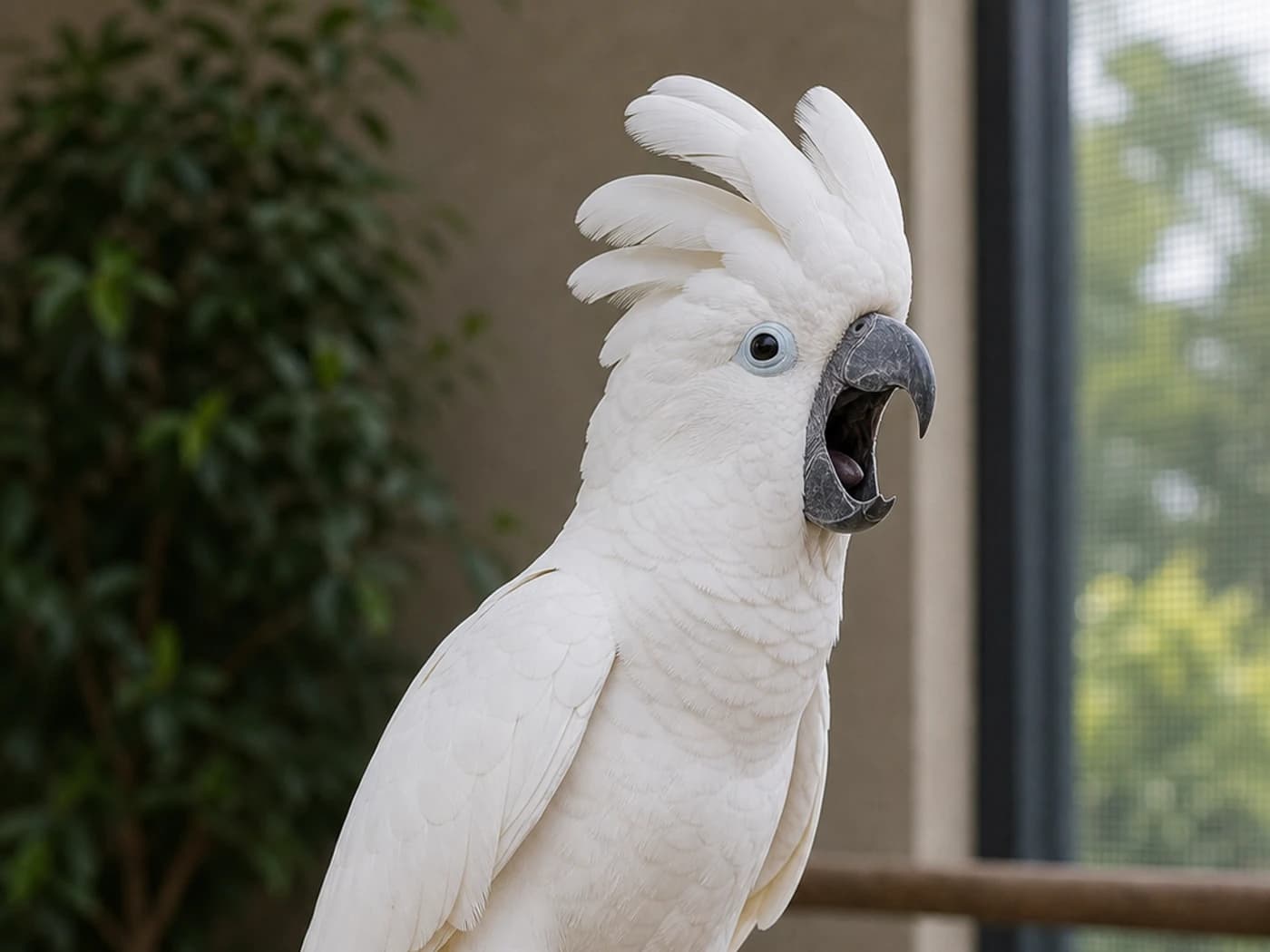
Screaming bursts

What you see

Sudden intense screaming, often at predictable times or when people leave.

Usually means

Could be contact calling, boredom, or emotional overflow.

Do not misread

Do not answer screaming with screaming.

Owner action

Track triggers, reward quiet, and provide energy outlets.

Cockatoo Furniture chewing behavior reference image

Furniture chewing

What you see

Chewing door frames, table corners, or furniture.

Usually means

Needs destroyable toys and environmental control.

Do not misread

It is not revenge.

Owner action

Offer legal chew items and block unsafe zones.

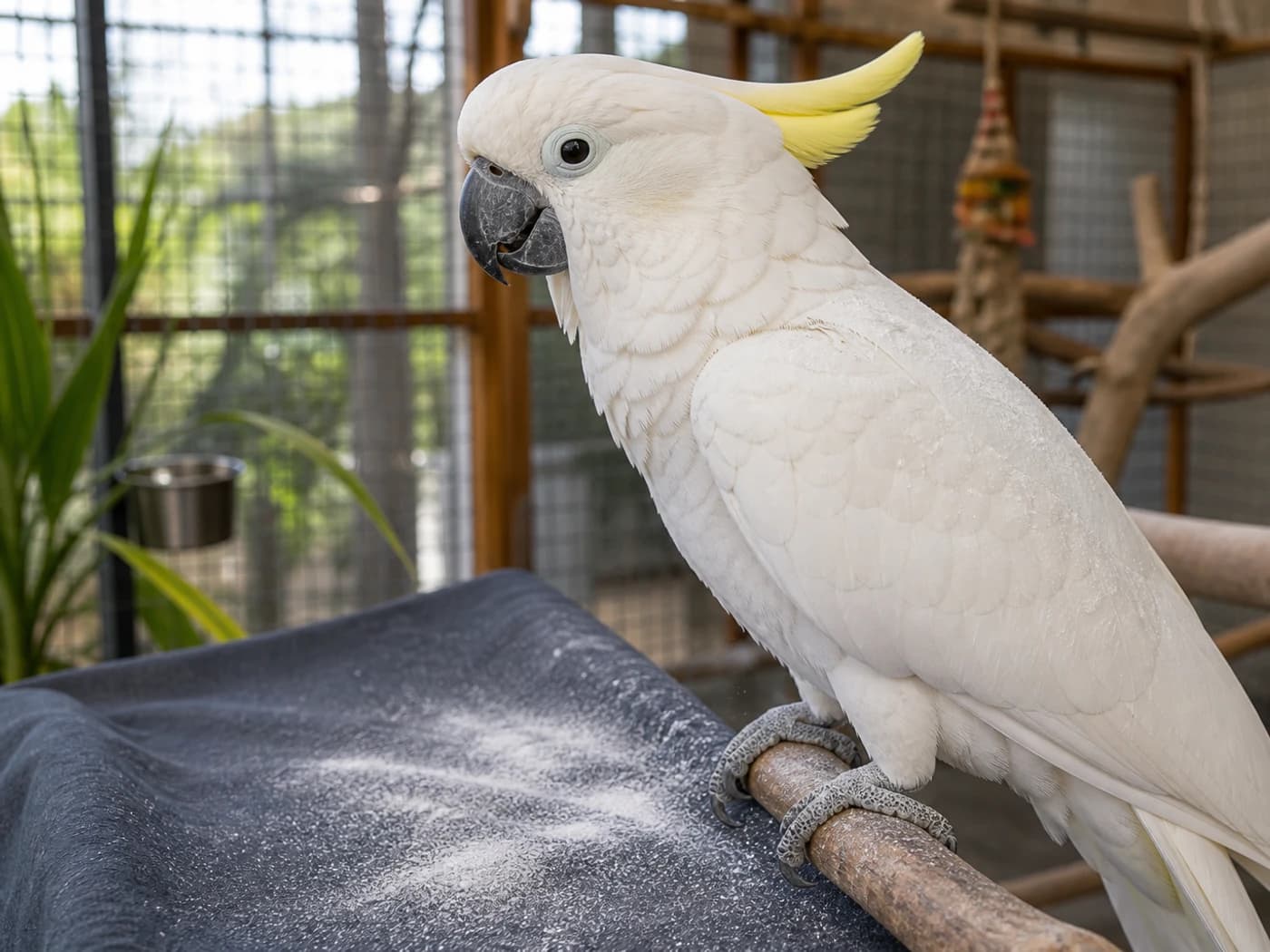
Cockatoo Powder down behavior reference image

Powder down

What you see

White powder appears on the bird, cage area, and filters.

Usually means

Powder down is a major household-fit issue.

Do not misread

Do not ignore respiratory sensitivity because the bird is cute.

Owner action

Assess allergies, cleaning routine, and air filtration first.

Growth Stages

This timeline keeps the typical development from egg to adult in one place so you can compare looks, feather changes, and feeding milestones.

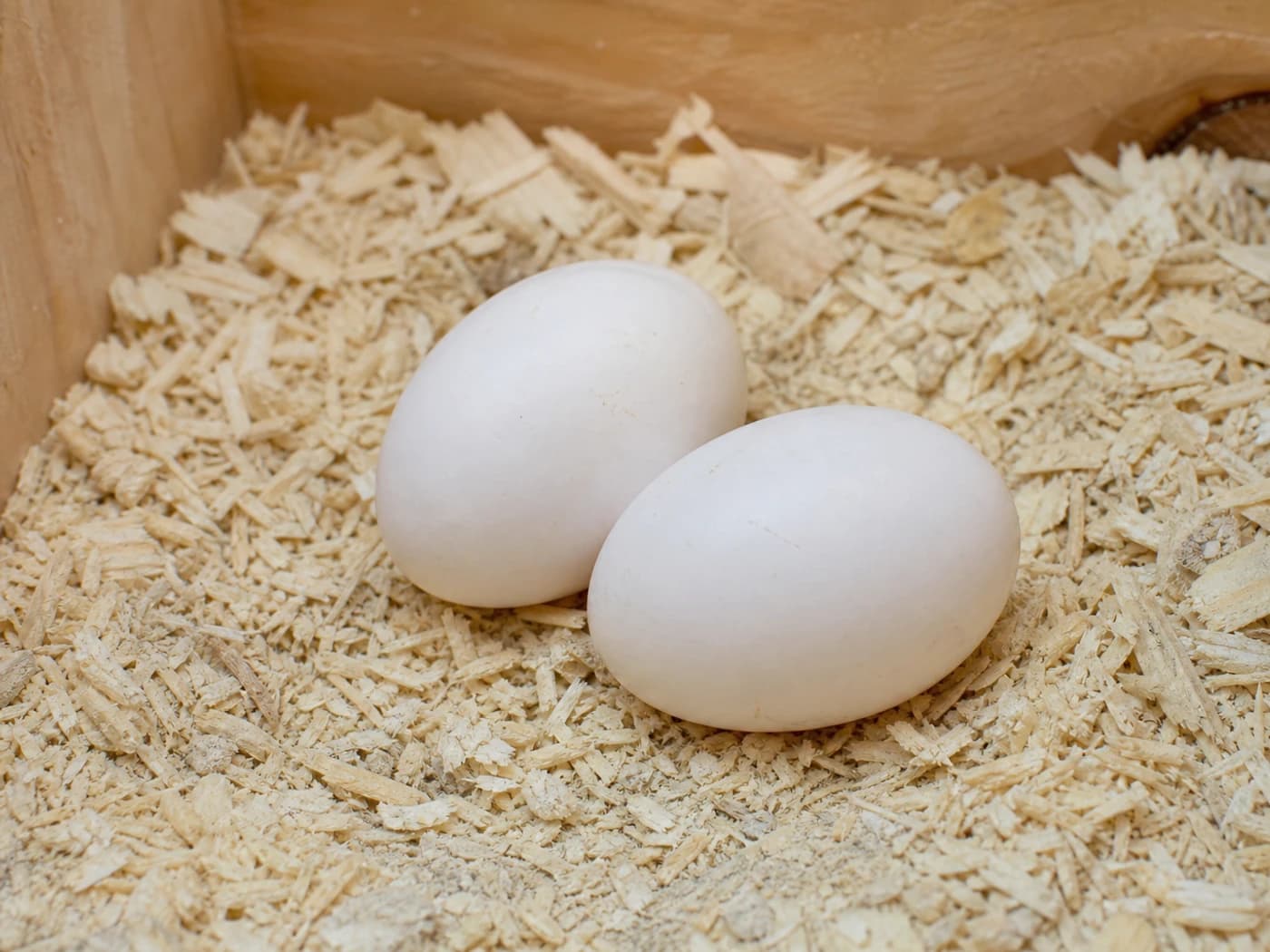
Cockatoo Egg growth-stage reference image

Egg

Incubation

Age range

Look

Cockatoo plumage is not visible yet; shell condition, parent behavior, and incubation stability matter most.

What people watch

Avoid unnecessary disturbance; focus on humidity, temperature, parent stress, and hygiene.

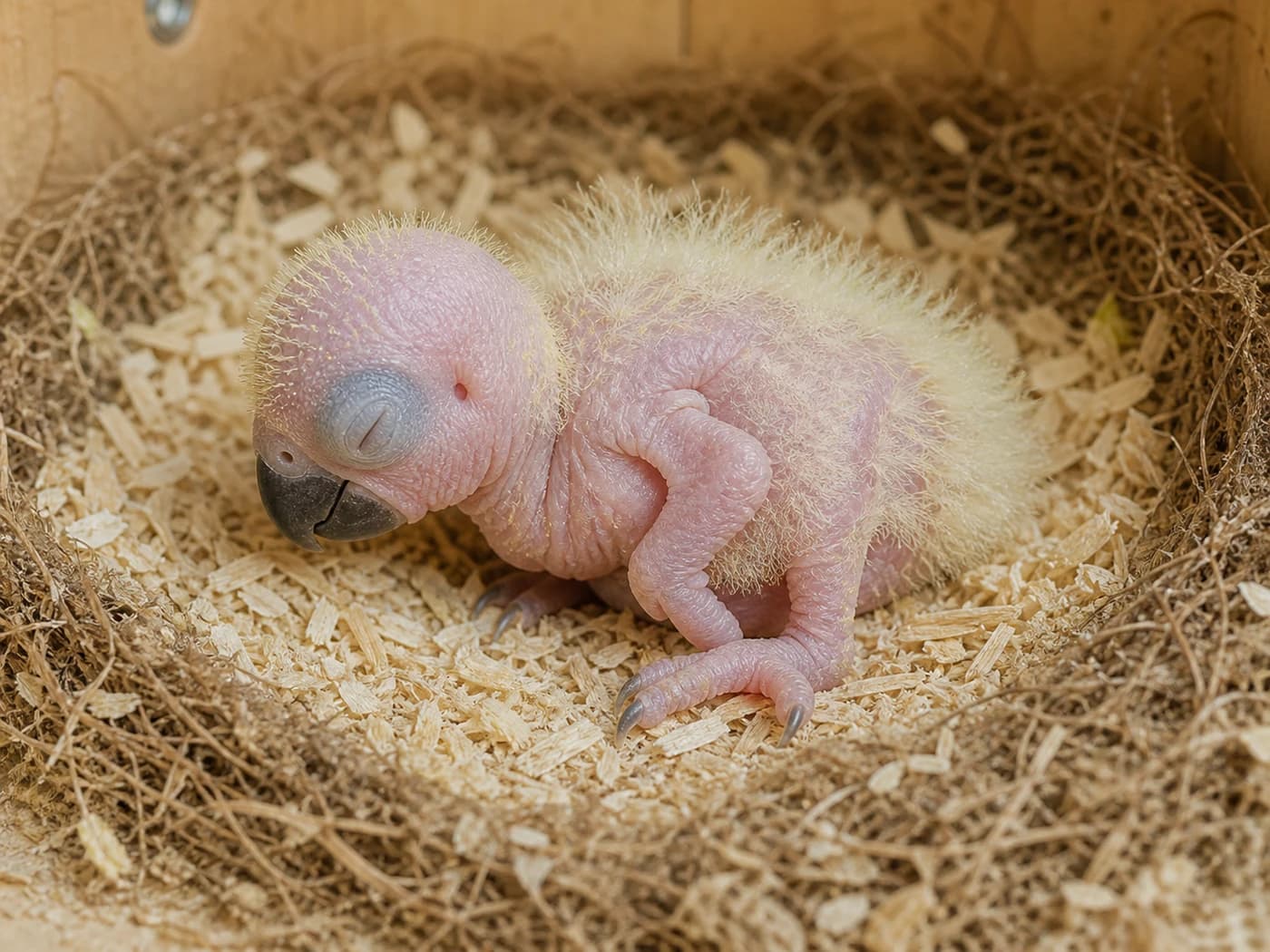
Cockatoo Hatchling growth-stage reference image

Hatchling

0-7 days after hatch

Age range

Look

Newly hatched Cockatoo chicks are delicate and mostly bare, so final color cannot be judged reliably yet.

What people watch

Watch warmth, crop filling, and feeding stability; visuals should be gentle, educational, and not graphic.

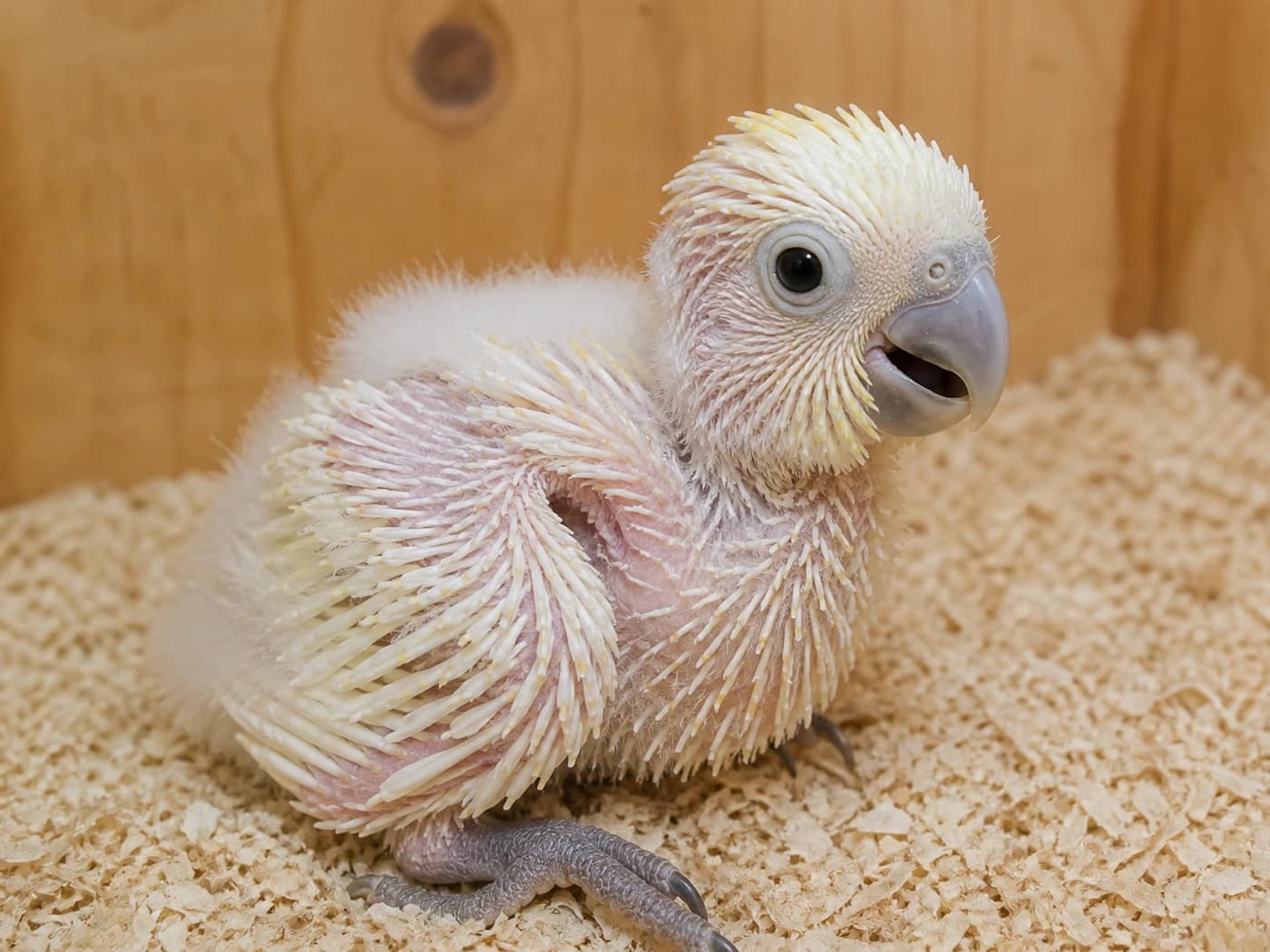
Cockatoo Pin feather stage growth-stage reference image

Pin feather stage

About 2-4 weeks, varying by species size

Age range

Look

Cockatoo chicks begin showing pin feathers, and early color direction or wing and face patterning starts to emerge.

What people watch

Do not force pin feathers open; monitor warmth, nutrition, and skin condition.

Cockatoo Young chick growth-stage reference image

Young chick

About 1-2 months, varying by species size

Age range

Look

Cockatoo now looks like a small bird, with clearer posture, plumage, eyes, and exploration behavior.

What people watch

Focus on socialization, gentle handling, safe movement, and gradual food variety.

Cockatoo Weaning / juvenile growth-stage reference image

Weaning / juvenile

Around weaning through juvenile molt

Age range

Look

Cockatoo looks closer to an adult, but coordination, bite control, and emotional regulation are still developing.

What people watch

Do not force early weaning; watch independent eating, weight stability, flight, and basic training.

Cockatoo Adult growth-stage reference image

Adult

After juvenile molt and maturity

Age range

Look

Cockatoo plumage and proportions are more stable, and long-term patterns in temperament, noise, hormones, and territory become clearer.

What people watch

Long-term care shifts toward diet, exercise, enrichment, hormone management, and annual health checks.

What to Know

Powder and allergies come first

Cockatoo powder can be difficult for rhinitis, asthma, or dust-sensitive homes.

Clinginess can become separation anxiety

Rewarding constant contact without independence can increase screaming and plucking risk.

Screams carry hard

Cockatoo screams are not background noise; family and neighbors must be considered.

Destruction needs legal outlets

Without destroyable toys, chewing often moves to furniture and trim.

Do not treat a cockatoo as a cuddlier large cockatiel

Cockatoo clinginess, screaming, destruction, and hormone pressure can overwhelm new keepers. Before falling for one, make sure you can handle noise, powder down, independence training, and long-term behavior work.

Destroyable toys are a regular expense

Cockatoos need things they can shred, chew, and take apart. Toys are not decoration or a once-in-a-while purchase. Without outlets, the cage, furniture, and human attention become the outlet.

First things owners notice

Cockatoo usually makes its first impression through Velcro birds: highly sociable and have a strong need to be around their human companions., Intelligent and emotional, often compared to a perpetual 2-year-old child, capable of temper tantrums and silliness., and Playful and mischievous.. Treat that as a starting point, not a full personality profile.

When you leave the room

Cockatoos are known as 'velcro birds' due to their intense need for companionship. They can develop severe separation anxiety, leading to screaming for attention, feather plucking, and other destructive behaviors if not given sufficient mental stimulation and boundaries early on.

Hand-raised vs parent-raised

Can form extremely strong bonds with owners, but are more prone to behavioral problems like screaming, self-mutilation, and aggression if not properly managed. They may become abnormally attached to humans. Generally healthier both physically and mentally, and less likely to develop behavioral problems. They understand they are birds and may form strong, positive relationships with owners without the obsessive attachment.

Common first mistakes

Underestimating their need for attention and companionship, leading to separation anxiety and destructive behaviors. Not providing enough appropriate items to chew and destroy, resulting in damage to cages and household items. Failing to set boundaries early on, allowing the bird to become overly demanding.

Frequently Asked Questions

Listen to Cockatoo Call

Volume warning - these birds are loud!

Community Photos

Be the first to share a photo!

Species Comparison

Trait
Cockatoo
CockatooLarge
Macaw
MacawLarge
African Grey
African GreyLarge
Lifespan40-70 years50-80 years40-60 years
NoiseVery HighVery HighMedium
TrainingExpertModerateExpert
TalkingModerate - Can learn 20-50 words but speech is often unclear. Excellent at mimicking household sounds, alarms, and musical tunes.Good - Can learn 20-30 words with clear pronunciation. Better at mimicking sounds and whistles than complex speech.Exceptional - The best talkers in the parrot world. Can learn 1000+ words with remarkable clarity. Capable of contextual speech and understanding.
SizeLargeLargeLarge

Shop Cockatoo Products

Food, toys, cages & accessories for large birds

Browse Products
Cockatoo Hub: Photos, Care Guide, Varieties & Growth Stages | Pet Parrot World