Tracked delivery30-day returns
Back to Bird Hub
Eclectus

Eclectus Hub

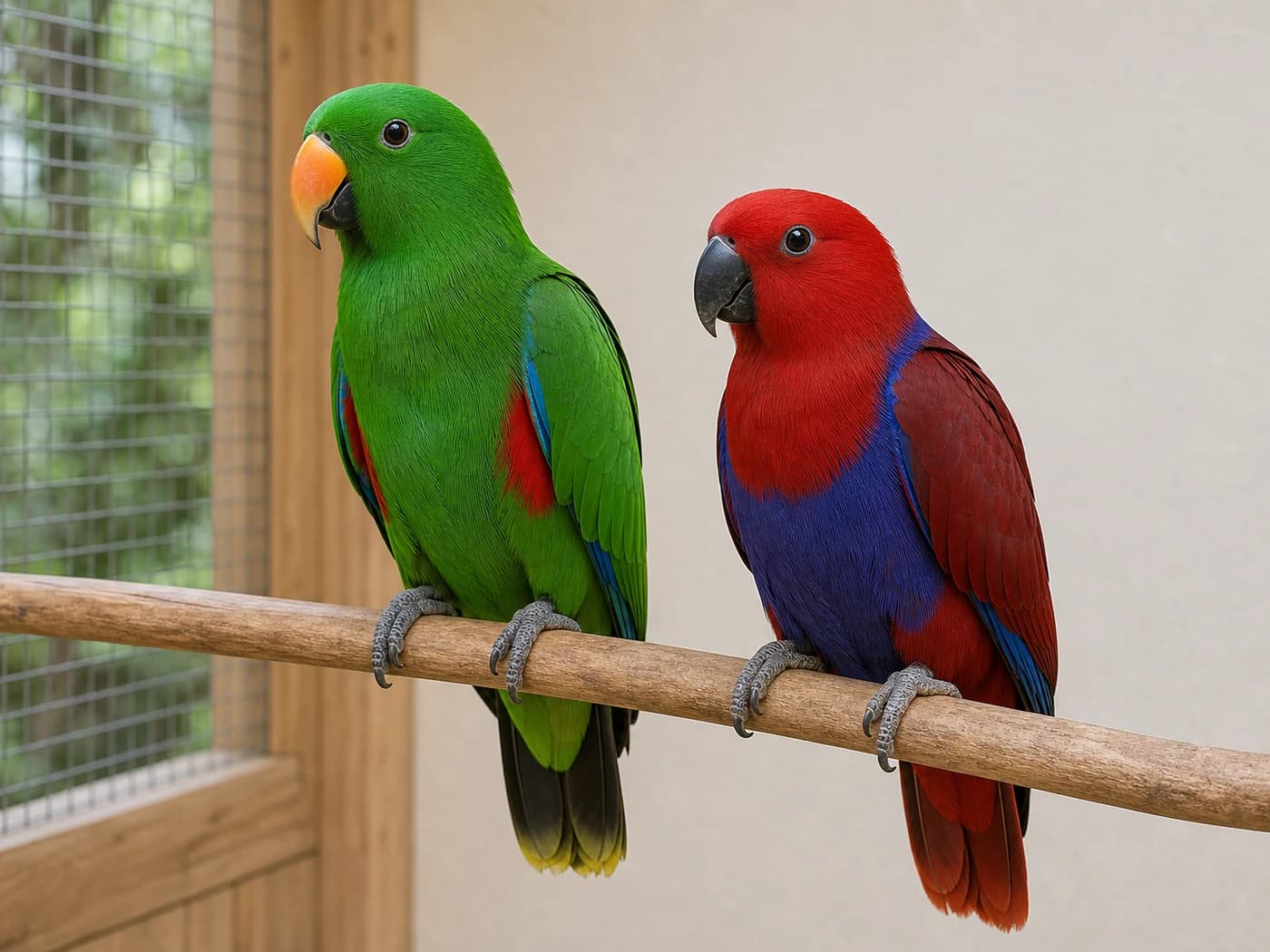
An Eclectus page has to start with the obvious surprise: the green male and the red female are the same kind of bird. Males are usually bright green, while females are vivid red with blue-purple areas, so first-time viewers often assume they are two species. The hard part is not recognizing the colors. It is long-term care: diet sensitivity, female territoriality, hormone management, and signs such as toe-tapping or wing flipping that deserve careful records and veterinary input. Eclectus parrots may watch quietly, but quiet does not mean low need.

At a Glance

Size

Medium

Lifespan

30-50 years

Noise

Low

80-90 dB

Training

Moderate

Talking

Very

Best For

Owners willing to study diet carefully
People who enjoy quieter observation plus steady interaction
Homes ready for sex differences and female territoriality

Not For

Owners planning generic high-fat parrot feeding
People drawn only by female color without territory awareness
Homes unwilling to monitor diet sensitivity

Noise Comparison

Where does a Eclectus's call sit against familiar everyday sounds?

85 dB·Low
QuieterLouder

Whisper · 30 dB

Library · 40 dB

Conversation · 60 dB

Vacuum Cleaner · 75 dB

Measured level

85 dB

Quieter than

4 · Lawnmower, Rock Concert

Louder than

4 · Conversation, Vacuum Cleaner

Whisper

30 dB

Library

40 dB

Conversation

60 dB

Vacuum Cleaner

75 dB

Lawnmower

90 dB

Rock Concert

110 dB

Chainsaw

120 dB

Jet Engine (100ft)

140 dB

Care Commitment

What does it realistically take to live well with a Eclectus?

Beginner fit

Good

Easier everyday fit.

Daily Time

2–4 hrs/day

Moderate

Noise

80-90 dB

Quiet

Lifespan

30-50 years

Long

Space

Medium

Medium

Experience

Moderate

Intermediate

Daily reality

Eclectus fits into home life more easily, but still needs routine interaction and enrichment.

  • A steady routine makes noise easier to manage.
  • Enrichment beats punishment for most behavior issues.

Watch-outs

Diet Complexity

Cannot eat standard pellets — 80% fresh food required. Pellets cause toe-tapping/wing-flipping.

Next steps

If this species does not have a dedicated guide yet, this falls back to the full care manuals library.

About Eclectuss

Personality

Serene and observant. They are sexually dimorphic (males green, females red/blue) and generally less touchy-feely than Cockatoos but deeply intelligent.

Diet

Unique digestive tract requires a diet of 80% soft foods (fruits/veggies) and minimal pellets/seeds. Avoid fortified foods as they can cause vitamin toxicity.

Behavior

They prefer a calm environment. Too much chaos can lead to stress behaviors like toe-tapping.

Varieties & Colors

An Eclectus page has to start with the obvious surprise: the green male and the red female are the same kind of bird. Males are usually bright green, while females are vivid red with blue-purple areas, so first-time viewers often assume they are two species. The hard part is not recognizing the colors. It is long-term care: diet sensitivity, female territoriality, hormone management, and signs such as toe-tapping or wing flipping that deserve careful records and veterinary input. Eclectus parrots may watch quietly, but quiet does not mean low need.

3 entriesvisual ID

How They Differ

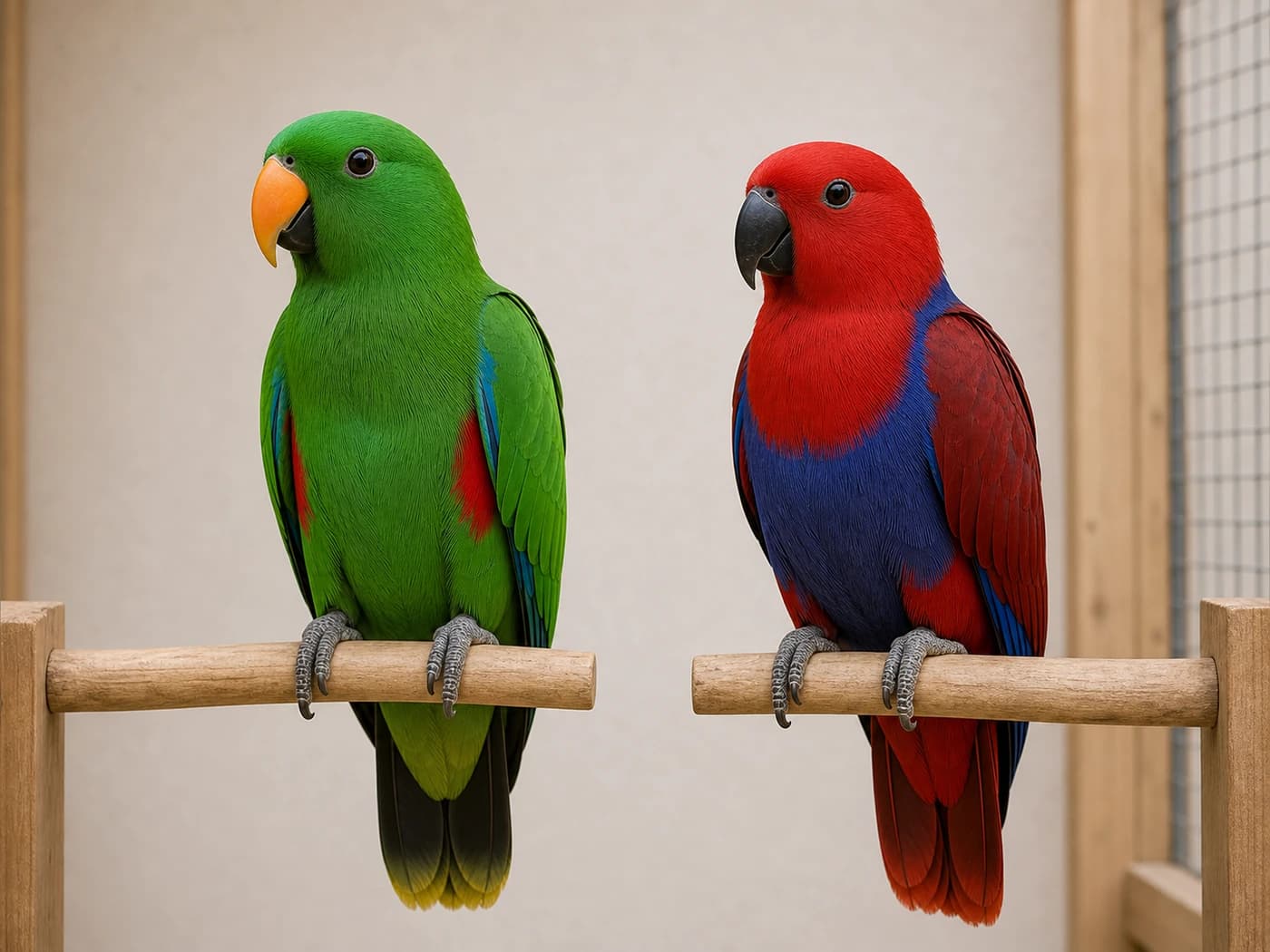
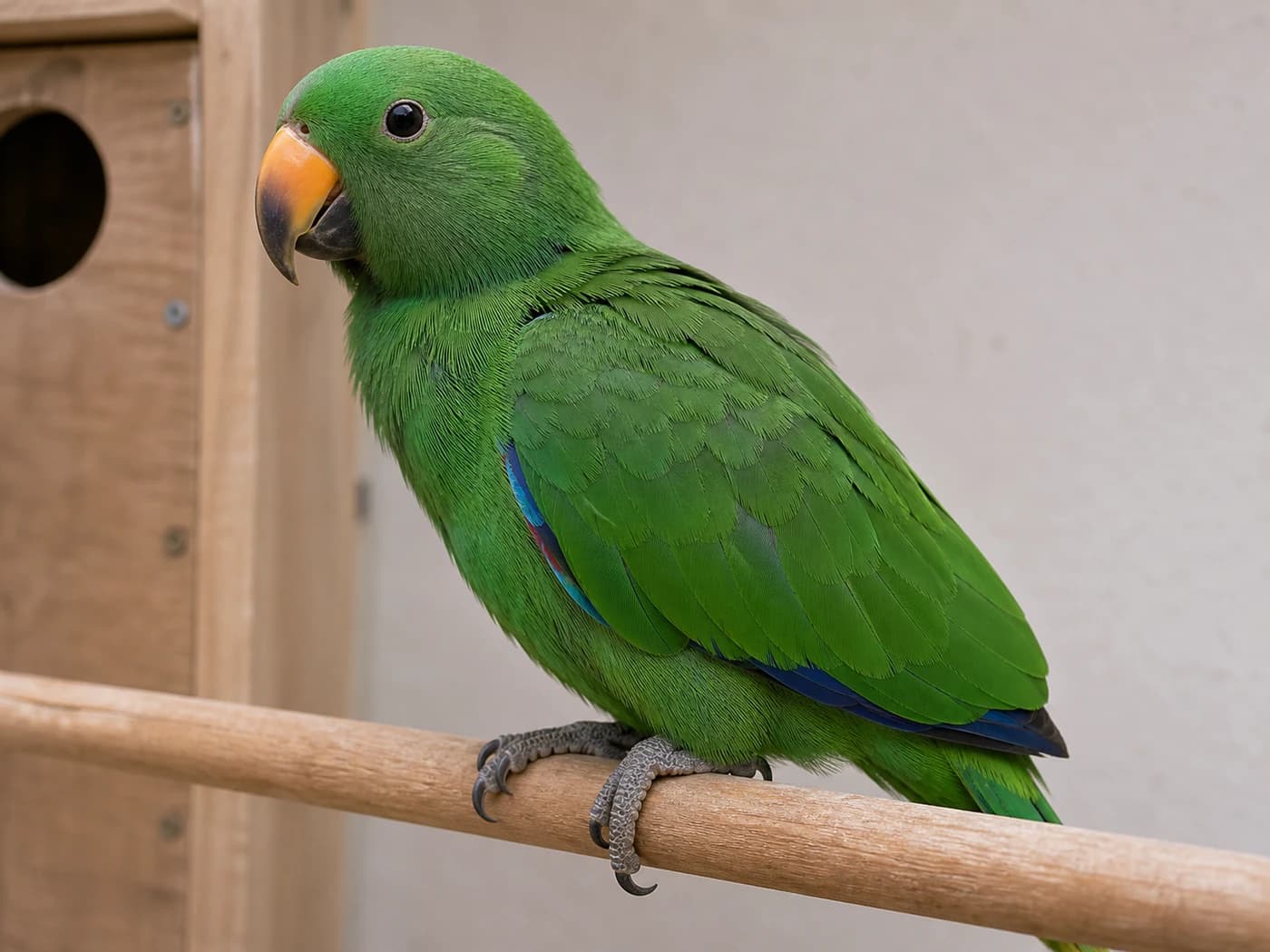
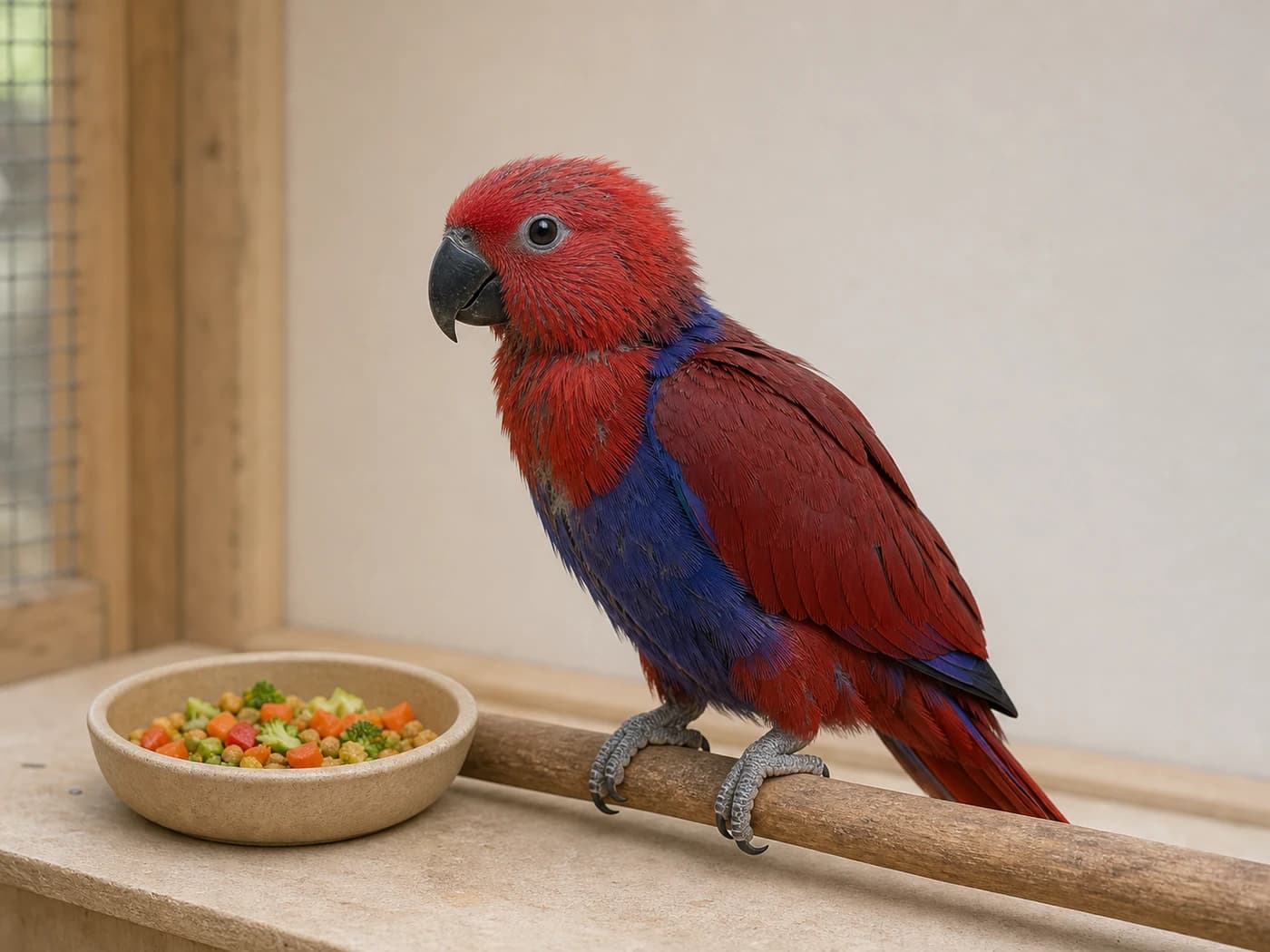
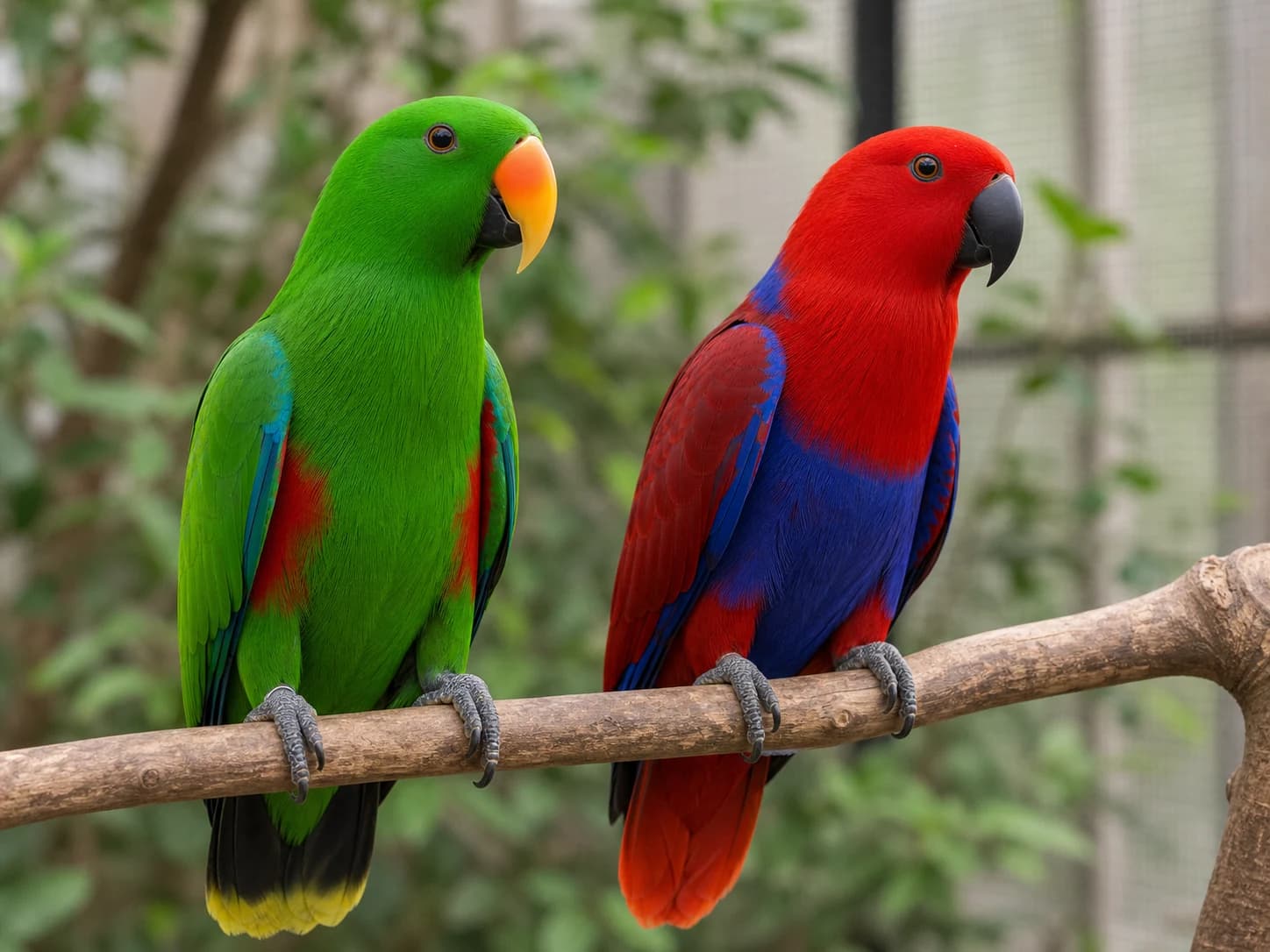
Male eclectus: brilliant green overall, orange-red beak, red underwings, blue tail. Female eclectus: bright red head and chest, blue-purple belly, black beak. Similar size, approximately 35–40 cm.

How These Varieties Happen

Eclectus parrots are famous for extreme sexual dimorphism: males are bright green, females are red and blue. The color difference is so dramatic that they were historically classified as two different species.

Solomon Island Eclectus - Male Eclectus realistic reference image

Standard label

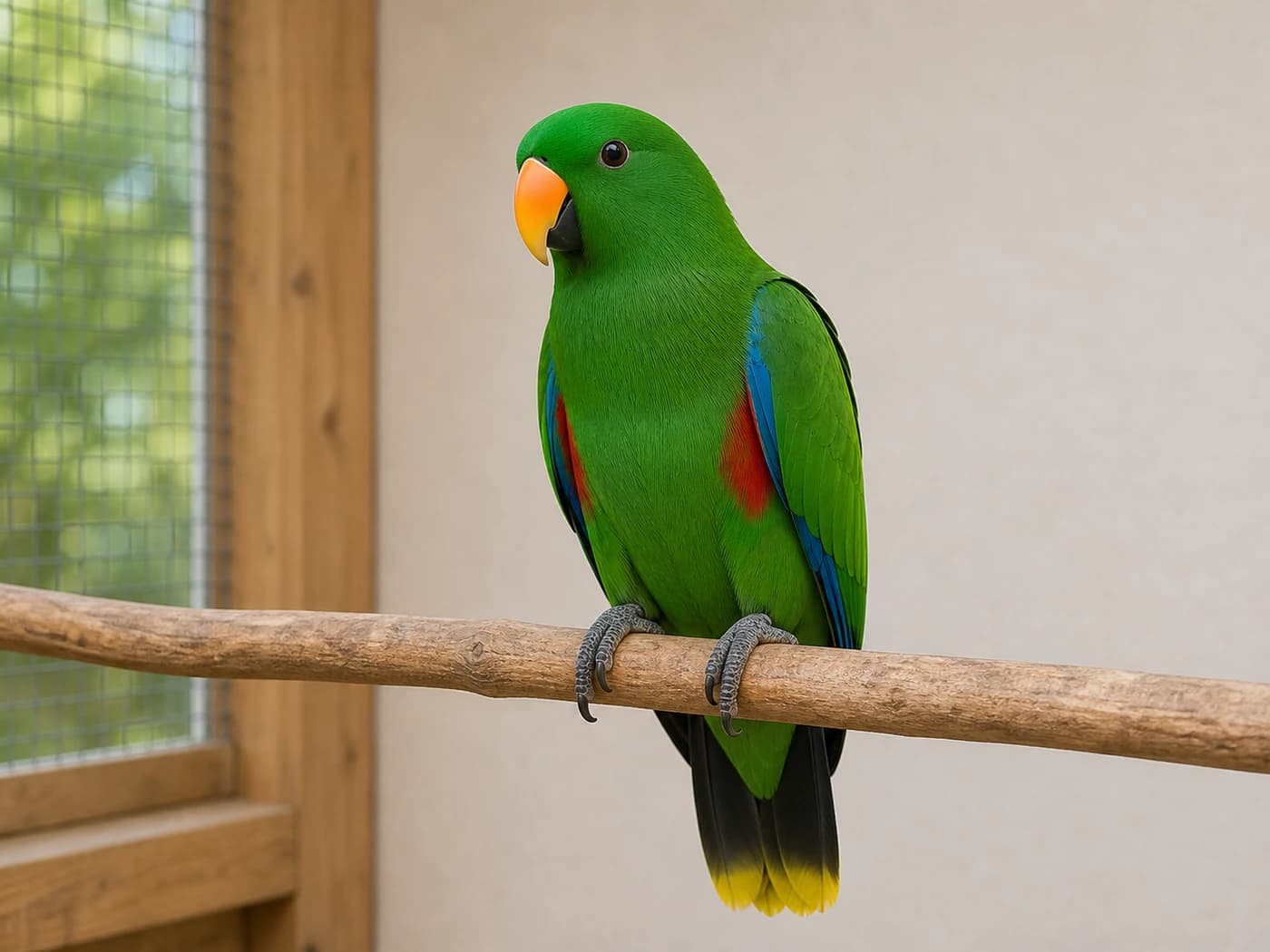
Solomon Island Eclectus - Male

Solomon Island Eclectus Male

Variety

Common names

Solomon Island Eclectus MaleGrand Eclectus Male

Owner shorthand

Male eclectus is the Hulk of parrots - all green and eye-catchingPut a male and female eclectus together and most people think they're two different species

Look

Bright green body, red underwings, orange-yellow upper beak, black lower beak.

Genetics

Natural sexual characteristic, not a genetic mutation. Male coloration determined by evolutionary selection.

Health & care

Lifespan 30-40 years. Good constitution; high dietary requirements; needs abundant fresh fruits and vegetables.

Sexing tip

Males are all green with orange beak; females are red and blue with black beak. Sex is immediately obvious.
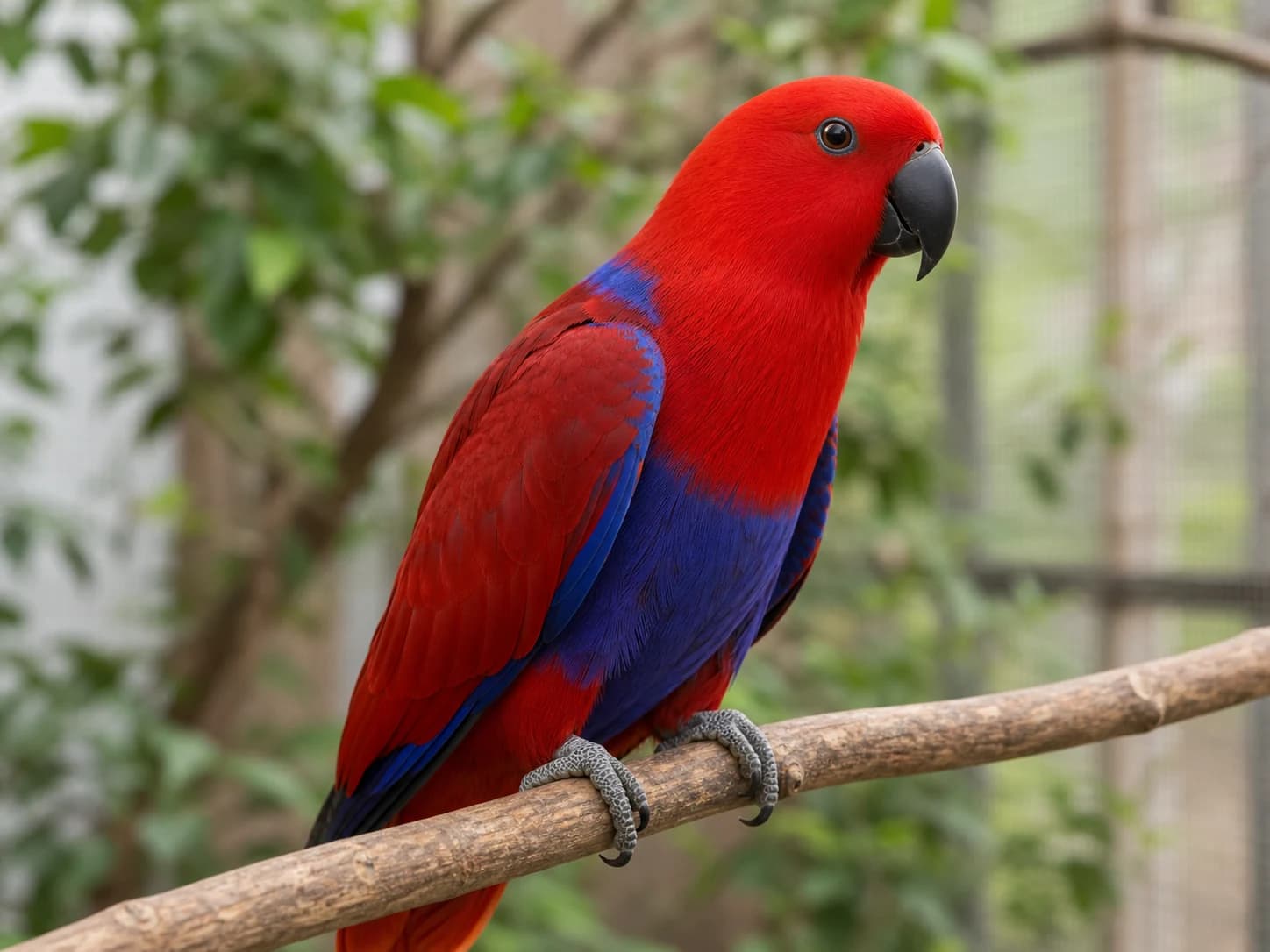
Solomon Island Eclectus - Female Eclectus realistic reference image

Standard label

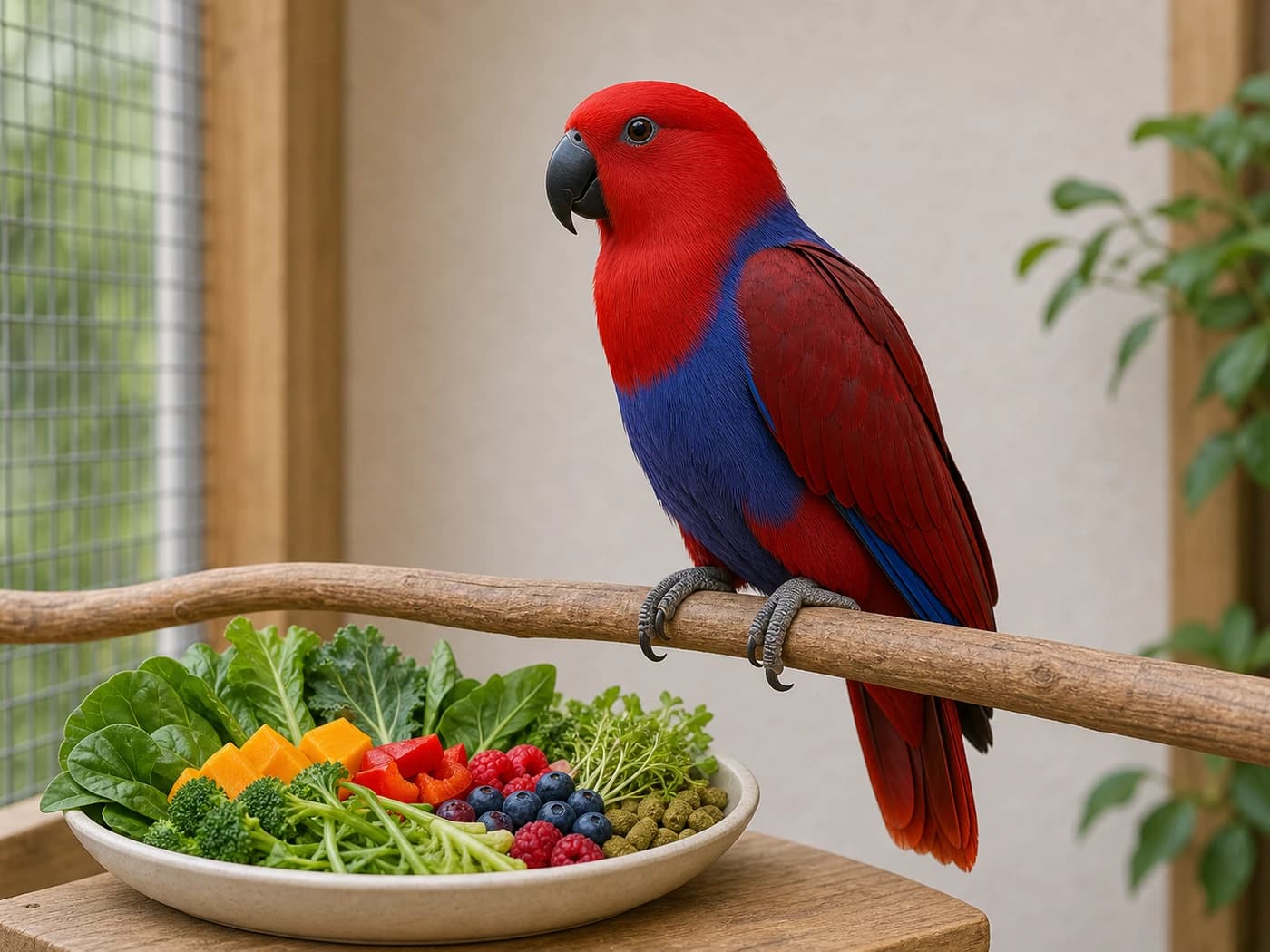
Solomon Island Eclectus - Female

Solomon Island Eclectus Female

Variety

Common names

Solomon Island Eclectus Female

Owner shorthand

Female eclectus is the cardinal of parrots - strikingly redFemale eclectus is more colorful than the male - extremely rare in birds

Look

Bright red head and breast, blue-purple abdomen, all-black beak. More colorful than the male - extremely rare in nature (usually males are more colorful).

Genetics

Natural sexual characteristic. Female's bright colors may help males identify them in tree hollows.

Health & care

Lifespan 30-40 years. Females have higher vitamin A requirements; deficiency causes illness.

Sexing tip

Females are red and blue with black beak; males are green with orange beak.

Eclectus male and female comparison Eclectus realistic reference image

Standard label

Eclectus male and female comparison

Sexual dimorphism comparison

Variety

Common names

green male red femalesame species comparison

Owner shorthand

Wait, same species?Green male, red queen

Look

Males are mainly bright green with orange-yellow bills; females are vivid red with blue-purple areas and a completely different visual impression.

Genetics

This is natural sexual dimorphism in Eclectus parrots, not two species and not a normal color mutation.

Health & care

Both sexes need careful diet management and hormone-aware handling; color alone does not predict temperament.

Sexing tip

Eclectus parrots are one of the easiest parrots to sex visually: mostly green males, red-blue females.

Naming Notes

Chinese owner phrases, English common names, and market labels often do not translate one-to-one, so the tricky parts are separated here.

Common aliases

Solomon Island Eclectusmale Eclectusfemale Eclectus

Eclectus males and females look radically different; green males and red females are the same species group.

Red-queen owner shorthand describes the female color impression, not a cardinal bird.

Toe-tapping and wing flipping should be named and explained as possible diet/stress-related signs.

Detailed Field Notes

These notes isolate details that are easy to mistranslate, oversimplify, or overclaim. Each one separates the claim, why it matters, and what an owner should do.

6 notes

Green male and red female are the same species

Taxonomy-supported

Careful claim

Eclectus sexual dimorphism is dramatic: males are mostly green and females red-blue-purple, but they are the same species complex.

Why it matters

This is the first thing the Eclectus page should explain visually.

Owner action

Use male-female comparison imagery in the hero or variety section, not only a single green bird.

Diet sensitivity needs cautious writing

Veterinary/care supported

Careful claim

Eclectus parrots are often treated as more sensitive to heavily fortified, oily, or highly processed diets, so generic parrot feeding advice is not enough.

Why it matters

Readers may assume one generic parrot food is enough.

Owner action

Emphasize varied vegetables, fruit, legumes, lower-fat feeding, and avian-vet-guided adjustments.

Toe-tapping and wing flipping should not get one fixed cause

Specialist-discussed, cause not settled

Careful claim

Toe-tapping and wing flipping are repeatedly discussed in Eclectus care and may relate to diet, stress, hormones, or medical issues.

Why it matters

Do not claim one food or one supplement is always the cause or cure.

Owner action

Record frequency, diet, recent changes, and video, then consult an avian vet.

Female territory needs clear framing

Care-experience supported

Careful claim

Female Eclectus parrots are vivid and intelligent, and may become more cage-, corner-, or resource-guarding during breeding condition.

Why it matters

The page should not stop at females are prettier; it needs real boundary notes.

Owner action

Reduce nest-like spaces, avoid forcing hands into the cage, and train out-of-cage and station exchanges.

Quiet observation is not low interaction

Care-experience supported

Careful claim

Eclectus parrots can appear elegant and quiet, but they still need stable social time, foraging, and training.

Why it matters

Quiet can be misread as easy.

Owner action

Schedule low-pressure interaction, observation-friendly training, and choice-based station activities.

Do not casually stack supplements

Veterinary nutrition logic

Careful claim

Because Eclectus diets are sensitive, stacking vitamins, fortified foods, and treats can make problems harder to trace.

Why it matters

The Eclectus page should say more supplements are not automatically safer.

Owner action

Confirm supplements and major diet changes with an avian vet, and change one variable at a time.

Community Notes

These are the phrases owners commonly use when talking about Eclectuss in real communities.

wait, same species?

Literal meaning

Male and female look like different birds.

Actual meaning

Eclectus sexual dimorphism is dramatic.

Used when

Used when seeing male and female together.

Care implication

Explain sex differences, not separate breeds.

green gentleman

Literal meaning

A vivid green male impression.

Actual meaning

Describes the bright green male and his colored bill.

Used when

Used for male birds.

Care implication

Do not skip training because males look gentle.

red queen

Literal meaning

A red-dressed female shorthand.

Actual meaning

Describes the vivid red-blue-purple female.

Used when

Used for females.

Care implication

Female territoriality can intensify in breeding condition.

female steals the show

Literal meaning

The female is visually more dramatic.

Actual meaning

Unlike many birds, female Eclectus can be more visually striking.

Used when

Used when explaining dimorphism.

Care implication

Color difference does not create simple personality labels.

Behavior Reading

Read posture, eyes, feathers, and beak use as a sequence: what you see, what it usually means, what not to assume, and what to do next.

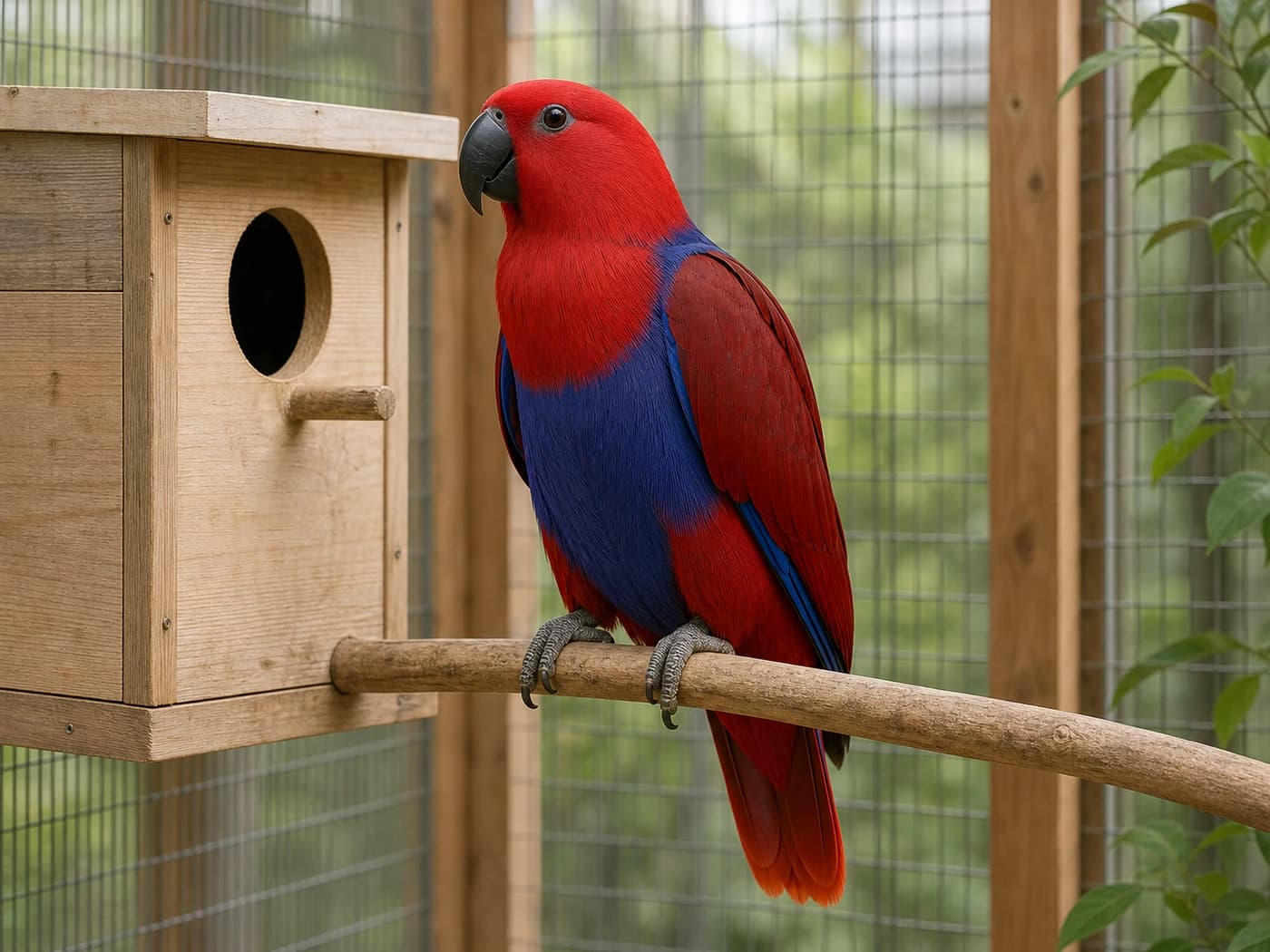
Eclectus Sexual dimorphism behavior reference image

Sexual dimorphism

What you see

One bird is green, the other red-blue-purple.

Usually means

This is male-female difference within the same species group.

Do not misread

Do not misread them as unrelated species.

Owner action

Use pair comparison visuals to prevent naming confusion.

Eclectus Quiet observing behavior reference image

Quiet observing

What you see

Quietly watches people and surroundings.

Usually means

Does not mean the bird needs no interaction.

Do not misread

A quiet bird can still be stressed.

Owner action

Use routine training, foraging, and gentle engagement.

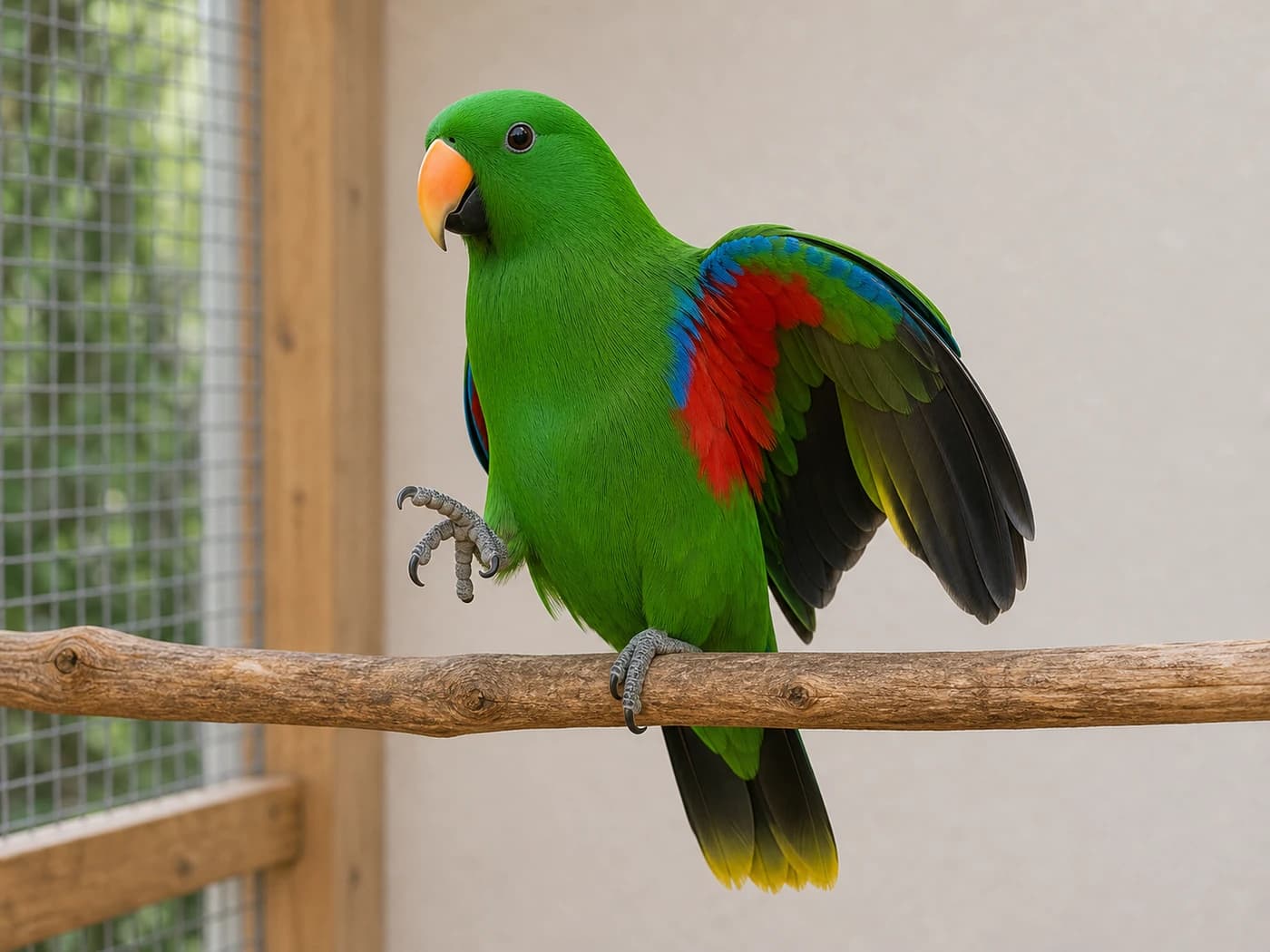
Eclectus Toe-tapping and wing flipping behavior reference image

Toe-tapping and wing flipping

What you see

Rhythmic toe tapping or repeated wing flipping.

Usually means

May relate to diet, stress, or health state.

Do not misread

Do not dismiss it as a cute trick.

Owner action

Track diet and frequency; consult an avian vet if persistent.

Eclectus Diet sensitivity behavior reference image

Diet sensitivity

What you see

Changes after diet shifts, fortified foods, or fatty foods.

Usually means

Eclectus diet should not be treated like generic high-fat parrot feeding.

Do not misread

Do not label every issue as pickiness.

Owner action

Adjust gradually with species-aware diet guidance.

Eclectus Female territoriality behavior reference image

Female territoriality

What you see

Female guards cage, corners, or reacts strongly to hands.

Usually means

Often stronger in breeding condition.

Do not misread

Do not force handling through it.

Owner action

Reduce nest cues and train voluntary movement out of the cage.

Growth Stages

This timeline keeps the typical development from egg to adult in one place so you can compare looks, feather changes, and feeding milestones.

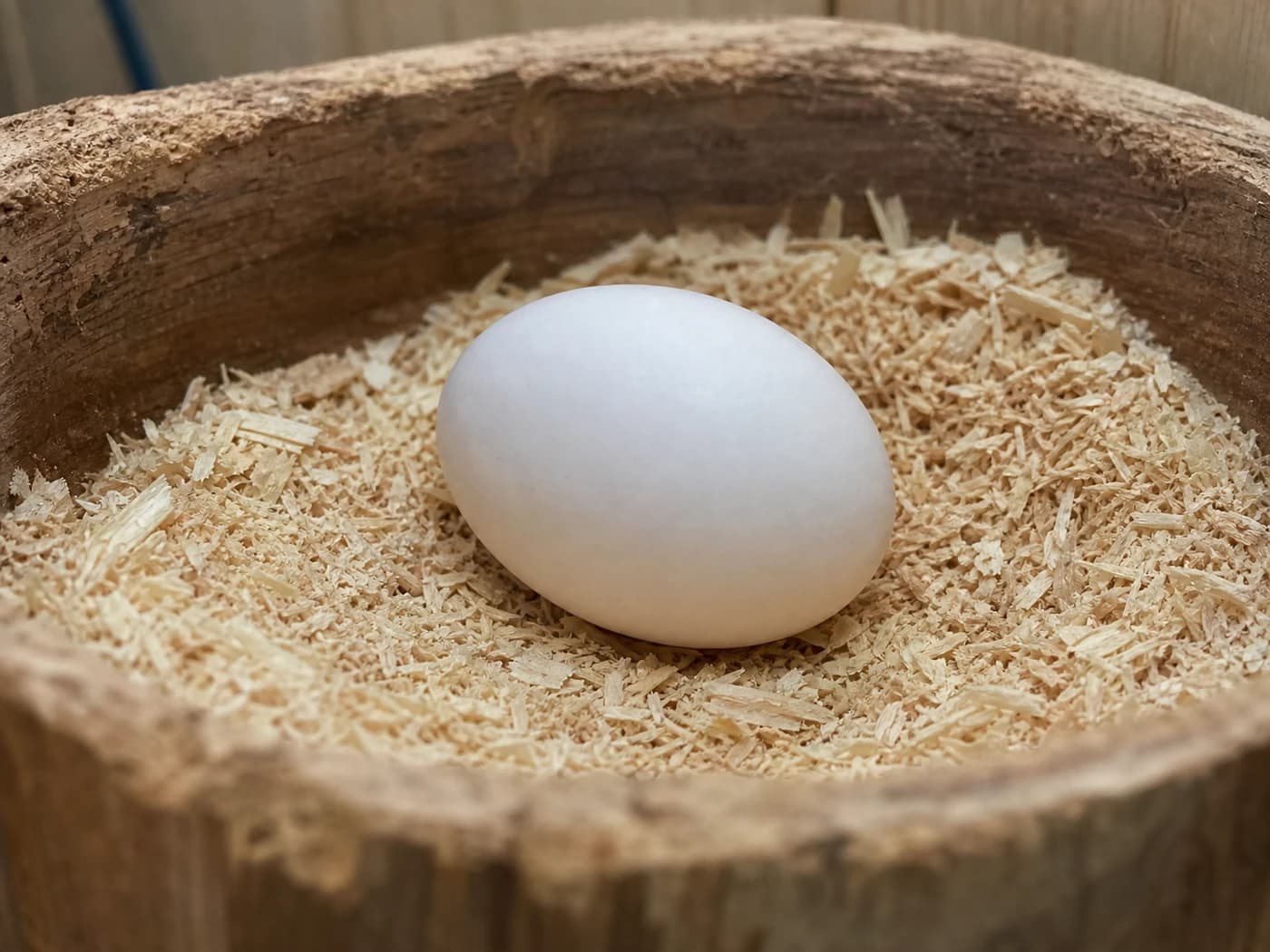
Eclectus Egg growth-stage reference image

Egg

Incubation

Age range

Look

Eclectus plumage is not visible yet; shell condition, parent behavior, and incubation stability matter most.

What people watch

Avoid unnecessary disturbance; focus on humidity, temperature, parent stress, and hygiene.

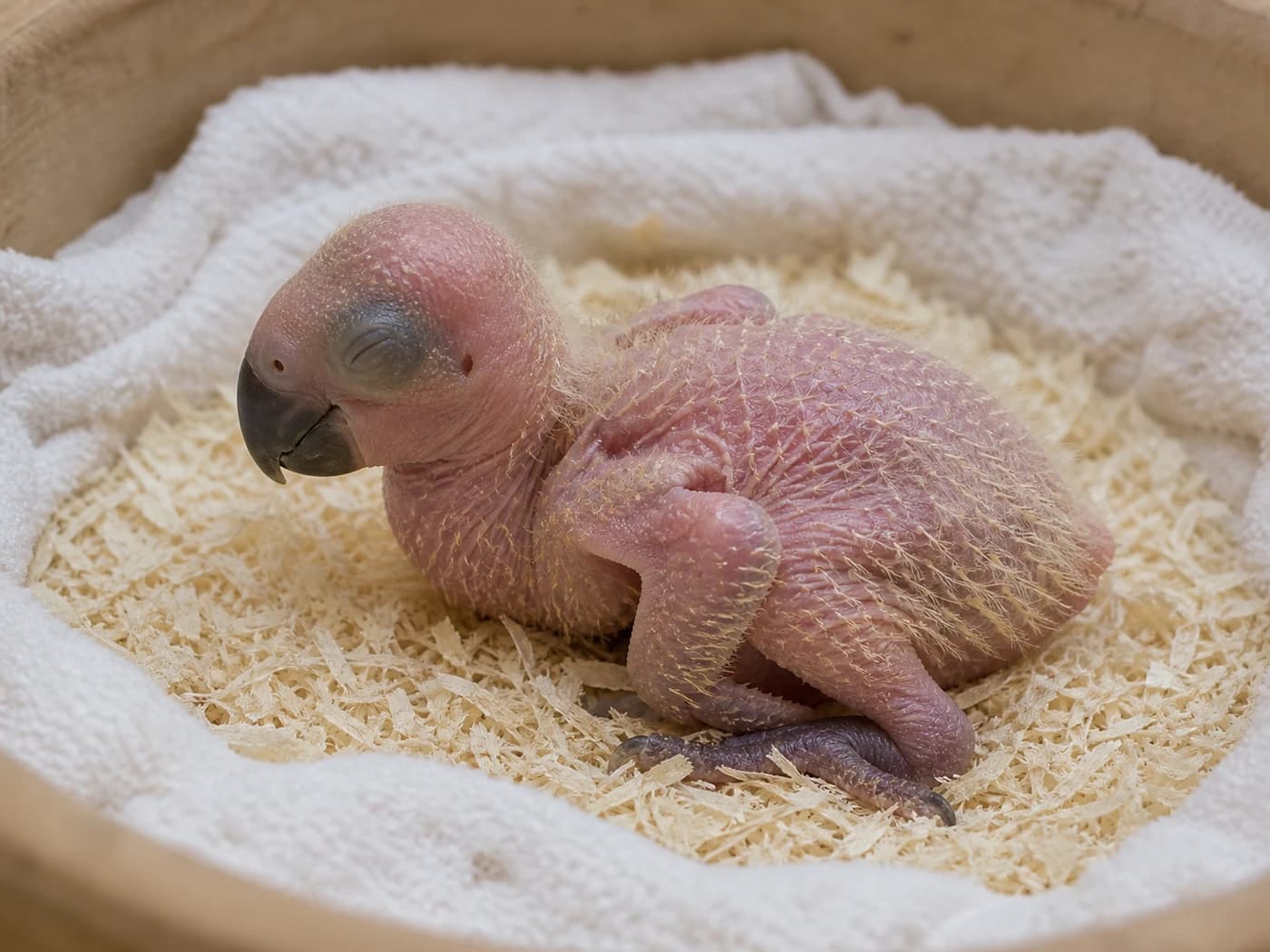
Eclectus Hatchling growth-stage reference image

Hatchling

0-7 days after hatch

Age range

Look

Newly hatched Eclectus chicks are delicate and mostly bare, so final color cannot be judged reliably yet.

What people watch

Watch warmth, crop filling, and feeding stability; visuals should be gentle, educational, and not graphic.

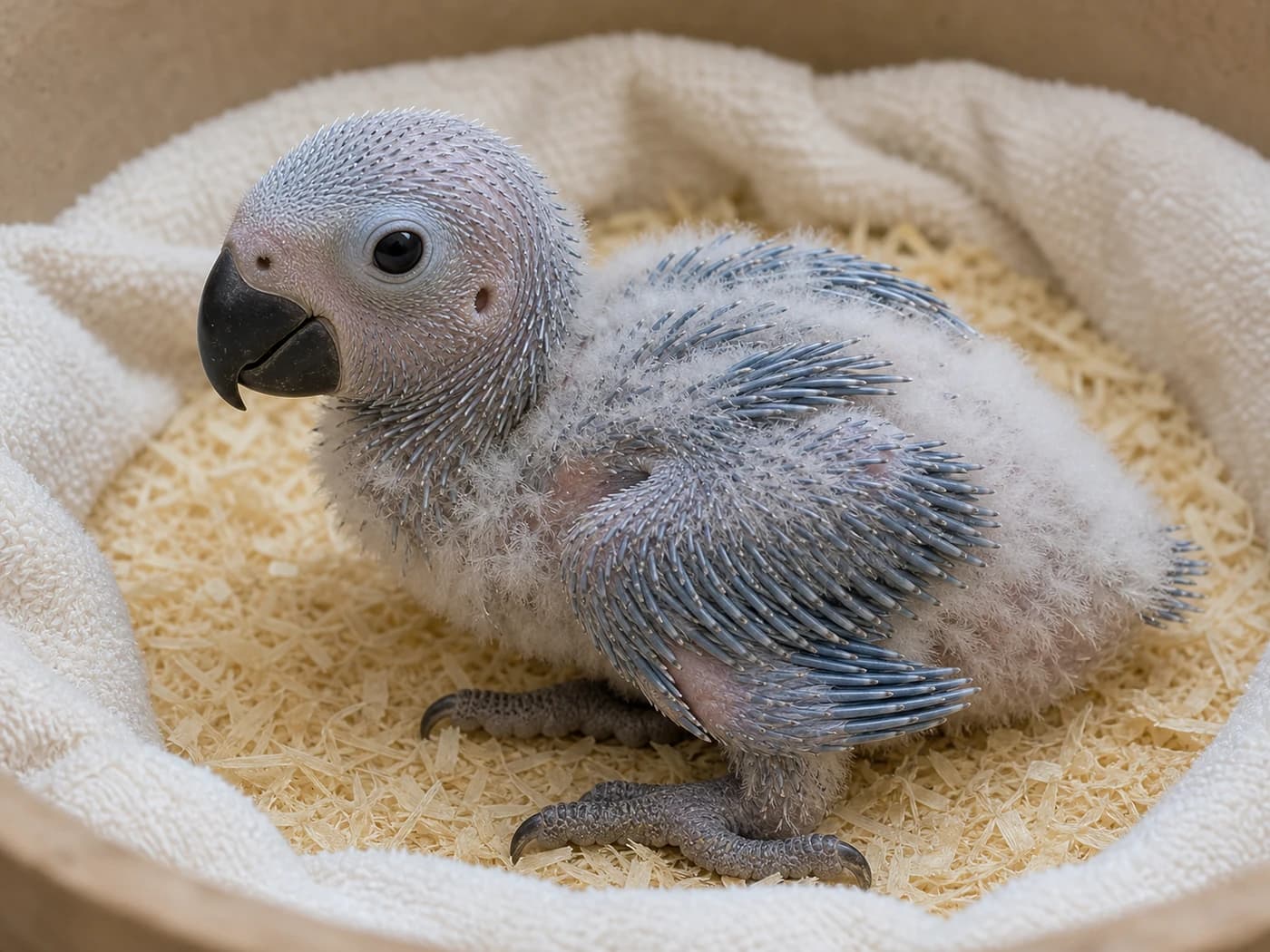
Eclectus Pin feather stage growth-stage reference image

Pin feather stage

About 2-4 weeks, varying by species size

Age range

Look

Eclectus chicks begin showing pin feathers, and early color direction or wing and face patterning starts to emerge.

What people watch

Do not force pin feathers open; monitor warmth, nutrition, and skin condition.

Eclectus Young chick growth-stage reference image

Young chick

About 1-2 months, varying by species size

Age range

Look

Eclectus now looks like a small bird, with clearer posture, plumage, eyes, and exploration behavior.

What people watch

Focus on socialization, gentle handling, safe movement, and gradual food variety.

Eclectus Weaning / juvenile growth-stage reference image

Weaning / juvenile

Around weaning through juvenile molt

Age range

Look

Eclectus looks closer to an adult, but coordination, bite control, and emotional regulation are still developing.

What people watch

Do not force early weaning; watch independent eating, weight stability, flight, and basic training.

Eclectus Adult growth-stage reference image

Adult

After juvenile molt and maturity

Age range

Look

Eclectus plumage and proportions are more stable, and long-term patterns in temperament, noise, hormones, and territory become clearer.

What people watch

Long-term care shifts toward diet, exercise, enrichment, hormone management, and annual health checks.

What to Know

Diet is central

Eclectus parrots are diet-sensitive and should not be fed generic high-fat diets casually.

Female territoriality needs management

During breeding condition, forcing hands into guarded areas escalates risk.

Quiet does not mean low need

Eclectus may look calm but still need training, foraging, and stable social time.

Track toe-tapping

Toe-tapping and wing flipping should be tracked with diet, frequency, and context.

Eclectus diet should not be copied from generic parrot care

Eclectus parrots often do better with more fresh plant foods and careful use of highly fortified, oily, or additive-heavy foods. Do not lock the ratio into a slogan; adjust with body condition, droppings, feathers, and avian-vet advice.

First things owners notice

Eclectus Parrot usually makes its first impression through Improper diet: Eclectus parrots have specific dietary needs (mainly fresh vegetables) and are prone to vitamin deficiencies (especially Vitamin A)., Incorrect handling: Touching them anywhere other than the head/neck can be considered sexual and trigger hormonal, aggressive behavior., and Misinterpreting neurological symptoms: Toe tapping and wing flipping can be caused by over-supplementation or exposure to synthetic vitamins/dyes.. Treat that as a starting point, not a full personality profile.

When you leave the room

Eclectus parrots can develop separation anxiety, often manifesting as excessive vocalization. Excessive barking/screaming when left alone.

Hand-raised vs parent-raised

No significant difference in tameness between properly co-parented and properly hand-raised birds. Parent-raised birds learn social skills from their parents.

Common first mistakes

Improper diet: Eclectus parrots have specific dietary needs (mainly fresh vegetables) and are prone to vitamin deficiencies (especially Vitamin A). Incorrect handling: Touching them anywhere other than the head/neck can be considered sexual and trigger hormonal, aggressive behavior. Misinterpreting neurological symptoms: Toe tapping and wing flipping can be caused by over-supplementation or exposure to synthetic vitamins/dyes.

Frequently Asked Questions

Listen to Eclectus Call

Hear their distinctive vocalizations

Community Photos

Be the first to share a photo!

Species Comparison

Trait
Eclectus
EclectusMedium
African Grey
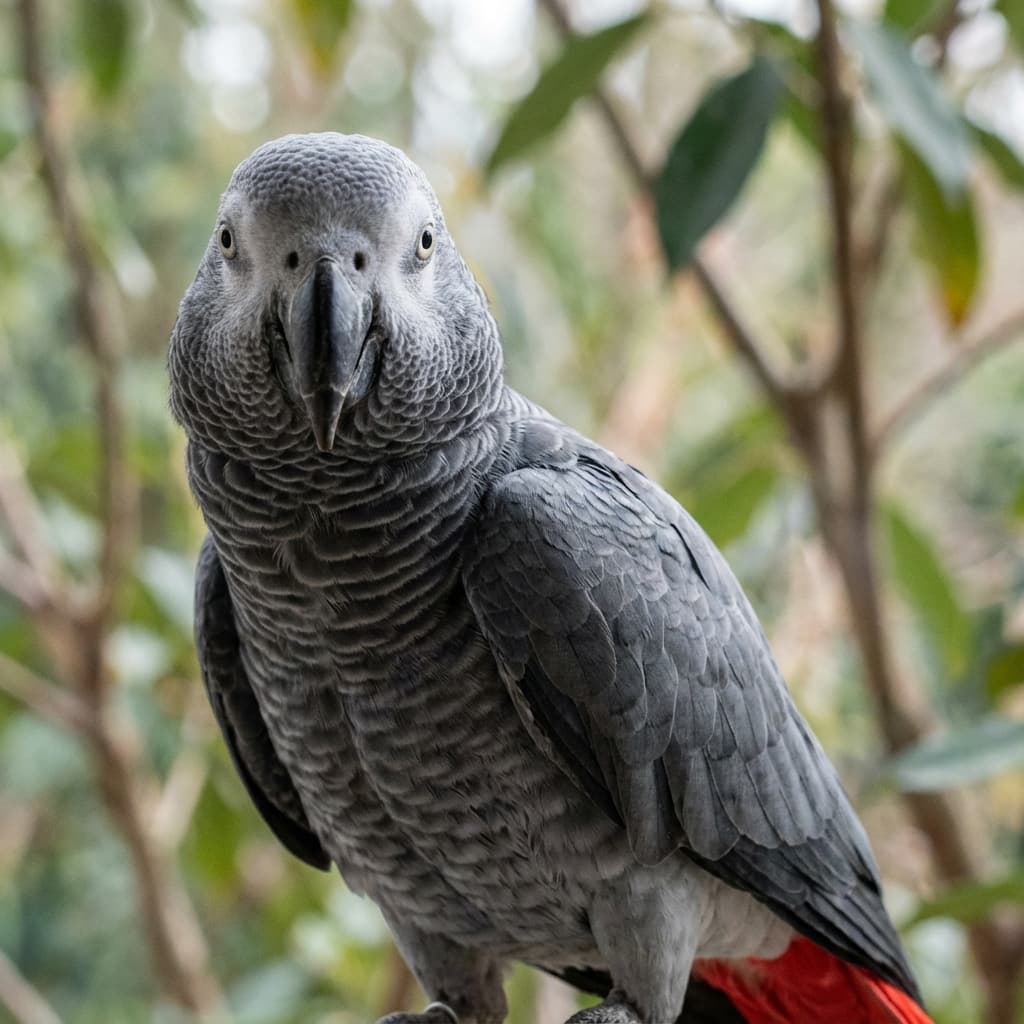
African GreyLarge
Amazon Parrot
Amazon ParrotLarge
Lifespan30-50 years40-60 years40-70 years
NoiseLowMediumHigh
TrainingModerateExpertModerate
TalkingVery Good - Clear, distinct speech. Can learn 100-250 words. Males tend to be better talkers. Known for speaking in complete sentences.Exceptional - The best talkers in the parrot world. Can learn 1000+ words with remarkable clarity. Capable of contextual speech and understanding.Excellent - Outstanding singers and talkers. Can learn 100-300 words with clear speech. Famous for singing opera and mimicking voices with emotion.
SizeMediumLargeLarge

Shop Eclectus Products

Food, toys, cages & accessories for medium birds

Browse Products
Eclectus Hub: Photos, Care Guide, Varieties & Growth Stages | Pet Parrot World