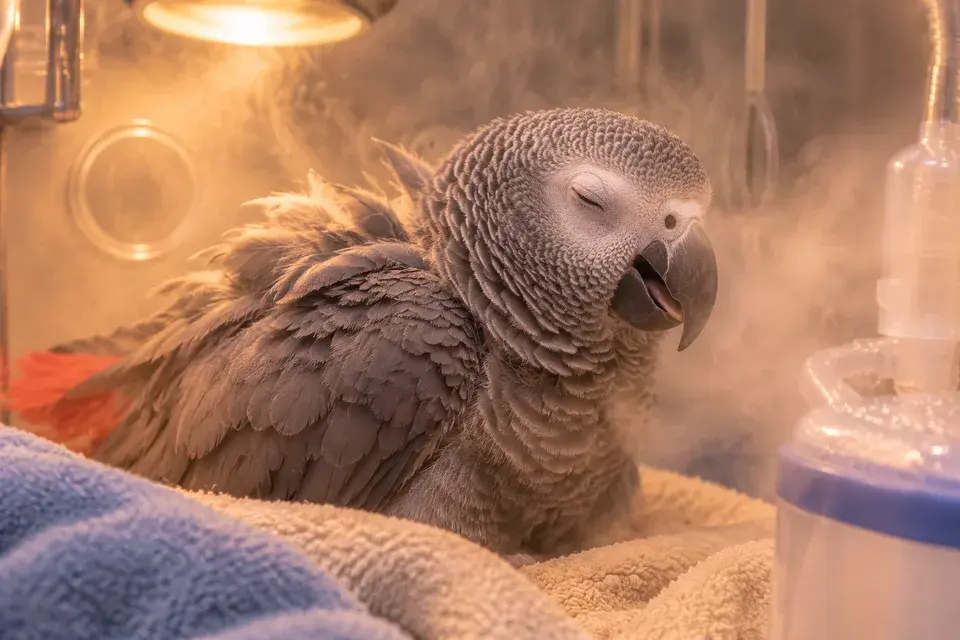
Why parrots have zero diaphragm reserve when breathing heavy—how to separate normal post-flight panting from life-threatening pneumonia, air-sac blockages, or overheating in under 2 minutes.
Unlike mammals, parrots do not have a muscular diaphragm. Every breath relies on rib-cage expansion and nine thin-walled air sacs distributed throughout the chest and abdomen (Crosta et al., 2021). When you notice a bird breathing heavy at rest, your parrot has already exhausted its silent compensation buffer. Acting calmly within the first 30 minutes often determines whether a bird stabilizes or crashes.
1. Fast 90-Second Check: Exercise Panting vs True Emergency
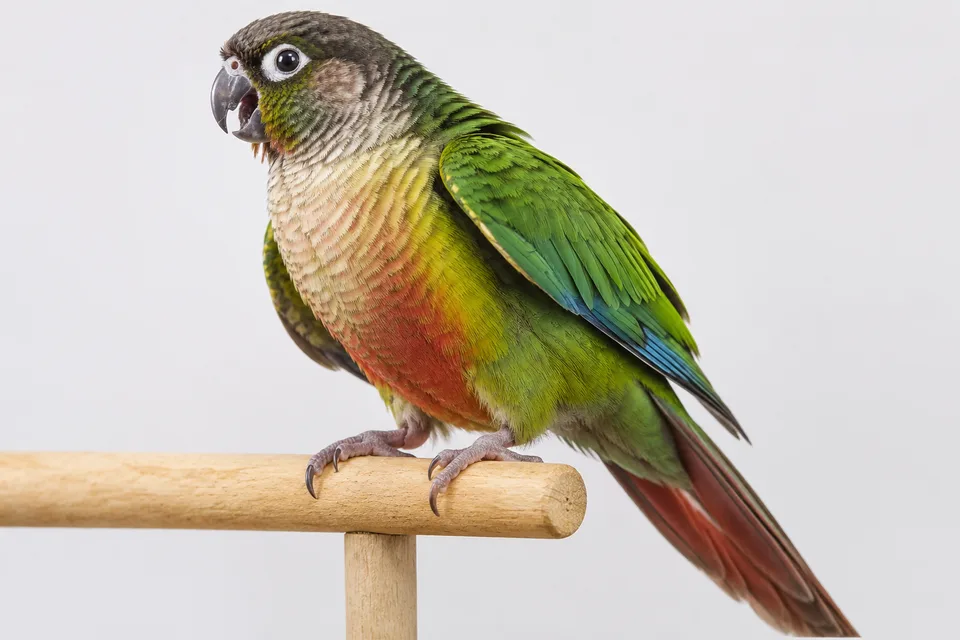
Before panicking, ask what happened in the last five minutes. A flighted parrot that just sprinted three laps around the living room—or got startled by a hawk outside the window—will naturally pant with wings slightly held away from the ribs. Healthy post-flight panting resolves visibly within 2 to 3 minutes once perched in a cool, quiet room.
Treat heavy breathing as an immediate clinical emergency if any of the following apply:
- Open-mouth breathing continues for more than 3 minutes with zero prior flight or exercise.
- Each breath produces an audible click, squeak, wheeze, or wet rasping sound.
- The tail dips rhythmically up and down on every inhale and exhale while fluffed on two feet—or sitting on the cage floor.
- Anyone in the home recently heated a non-stick pan, self-cleaning oven, air fryer, candle, or aerosol spray.
2. Three-Stage Avian Respiratory Triage Table
| Stage & Clinical Picture | Observable Signs | Immediate Stabilization |
|---|---|---|
| Stage 1 — Mild Upper Chill / Early Rhinitis | Occasional dry sneezes, exposed cere feathers, clear watery nostril moisture, alert posture | Raise hospital zone to 30°C (86°F), eliminate drafts, observe closely for 24 hours |
| Stage 2 — Active Rhinitis / Sinus Congestion | Yellowish nostril crust, plugged nares, whistling nasal breath, fluffed nap posture | Maintain 30–32°C warmth, begin sterile saline nebulization therapy, book avian vet swab |
| Stage 3 — Lower Air-Sac / Pneumonia Crisis | Pronounced tail bobbing, neck-stretched open-mouth gasping, throat clicking, lethargy | 32–34°C (90–93°F) quiet ICU box, zero handling restraint, emergency avian veterinary oxygen & systemic therapy |
3. First-Hour Stabilization Rules While Arranging Veterinary Care
- Stop heat loss immediately: Sick birds burn massive calories trying to hold a 40–41°C core temperature. Move your bird into a pre-warmed 30–34°C hospital incubator or draft-free travel carrier. Turn off automatic air-exchange fans that blow cool room drafts directly onto the bird.
- Never restrain a gasping bird on its back: Pressing on the keel bone or toweling a dyspneic parrot blocks sternal movement and can cause sudden hypoxic arrest.
- Pause dry seeds during severe distress: Hard seeds require high digestive effort and risk aspiration when a bird is gasping between swallows. Once breathing steadies, offer easily digested recovery formula or soft pellets—never cold water.
- Check household air immediately: If fumes are possible, move the cage into fresh ventilated air before applying heat.
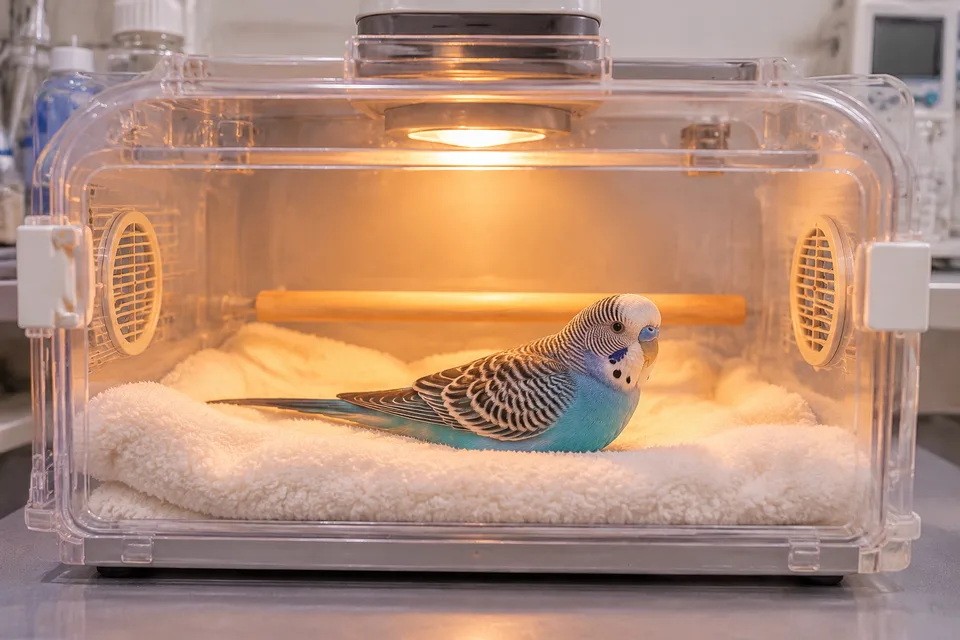
Run your bird's exact symptoms through our free Avian Symptom Checker, review full Bird Respiratory Infection & Nebulization Protocols, and keep a ready Bird First Aid Kit plus a compact hospital transport cage on standby.
Frequently Asked Questions
Why is my bird breathing heavy with no nasal discharge?
Lower air-sac infections (such as fungal Aspergillosis), inhaled PTFE fumes, internal abdominal masses, or egg binding compress the air sacs from inside without producing runny nostrils.
Should I steam my bird in a hot bathroom?
Warm bathroom humidity can loosen dry nostril crusts briefly, but hot steam does not reach deep air sacs—proper cool-mist ultrasonic or mesh nebulization (under 5 microns) is far safer and more effective.