Minutes count when a parrot bleeds, chills, or stops digesting seeds. Build an avian-vet-ready bird first aid kit covering ICU warmth, recovery formula, bleeding control, and crop care.
Avian emergencies rarely wait for weekday clinic hours. Because parrots mask weakness until critical depletion, keeping a dedicated bird first aid kit ready before crisis strikes can keep a bird alive long enough to reach an avian veterinarian.
1. The "Big Three" Stabilization Essentials (Every Home Needs These)
| Essential Item | Why It Saves Lives | Target Standard |
|---|---|---|
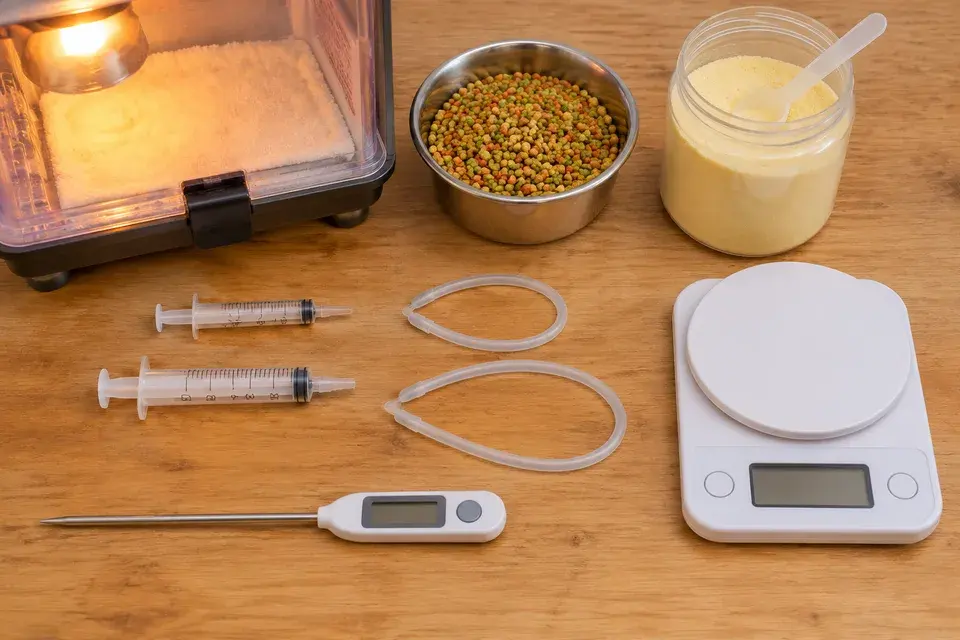
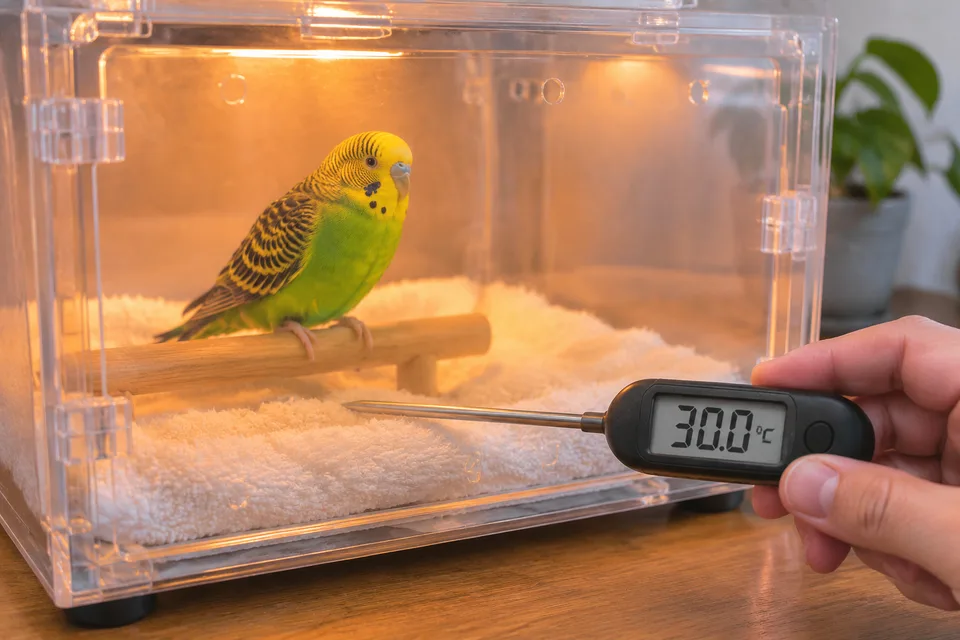
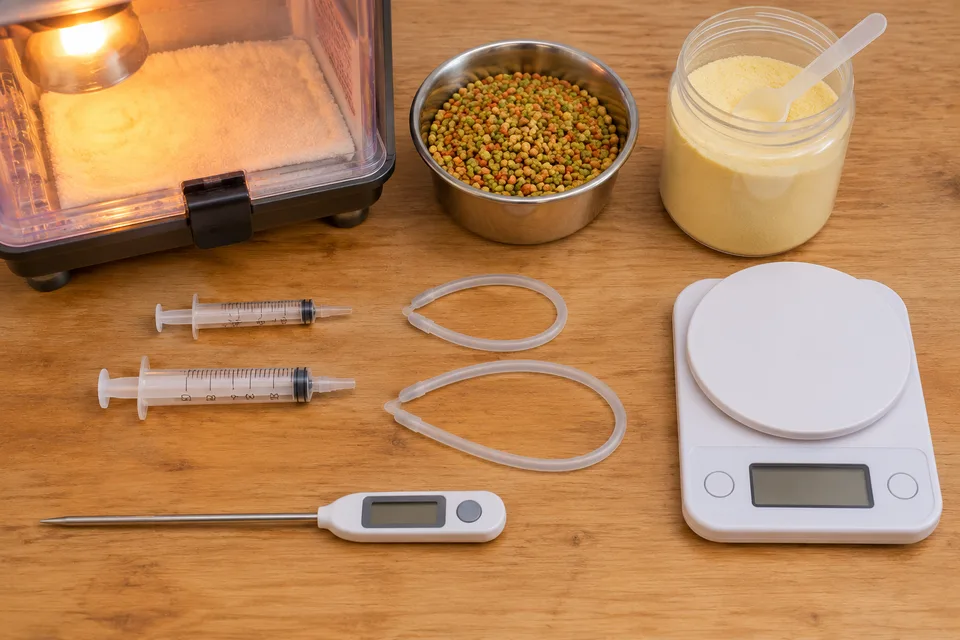
| 1. Hospital Cage / Incubator | Sick birds cannot thermoregulate; hypothermia kills faster than hunger | Steady 28–32°C (82–90°F), draft-free, with thermometer |
| 2. Avian Recovery Formula | Inflamed guts cannot digest dry seeds or millet | Trusted brand (e.g., Harrison's Recovery or Kaytee/Versele-Laga A21), fed at 38–40°C |
| 3. Soft Feeding Syringes & Thermometer | Allows safe hydration and vet-directed dosing without crop burns | 1 ml dosing syringes + digital food thermometer |
Need step-by-step instructions on building a temporary warm box? Read our Hospital Cage & Incubator Setup Guide and Emergency Kit Protocol.
2. Bleeding, Wound & Respiratory Supplies
- Cornstarch or veterinary styptic powder: Stops minor nail or beak-tip bleeds quickly. (For a broken, actively bleeding blood feather shaft, consult an avian vet immediately—do not use styptic powder inside deep soft tissue wounds.)
- 0.9% sterile saline vials: Safe for flushing minor eye dust, cleaning skin scrapes, or vet-directed saline nebulization.
- Handheld mesh nebulizer + small ventilated box: Invaluable for urgent upper-airway congestion under veterinary guidance.
- Cotton gauze pads, blunt-tip bandage scissors & vet wrap: For stabilizing minor injuries during transport to the clinic.
- Needle-nose tweezers or hemostats: Helpful for removing tangled toy threads—and a reminder to inspect safe cage toys regularly.
3. Monitoring Tools & Recovery Nutrition
- Digital gram scale (0.1 g or 1 g precision): Weight drops days before a parrot looks visibly ill. Weigh weekly at the same morning hour before breakfast.
- Avian-specific probiotics: Useful during stress or spaced 2–3 hours away from prescribed antibiotics; see our Bird Probiotics Guide.
- White paper towels: Line the hospital cage floor with plain white paper towels so you can photograph fresh droppings for your vet.
4. Pre-Written Emergency Card (Tape Inside Your Kit Lid)
In a panic, nobody wants to search Google for numbers. Write these three lines on a card inside your kit today:
- Primary avian veterinarian phone number, address, and drive time.
- Nearest 24-hour exotic emergency hospital phone number.
- Each bird's baseline healthy morning weight in grams and band/microchip ID.
If your bird is currently fluffed up, tail-bobbing, or refusing food, document symptoms immediately in our Bird Health Observation Checklist while arranging veterinary care.