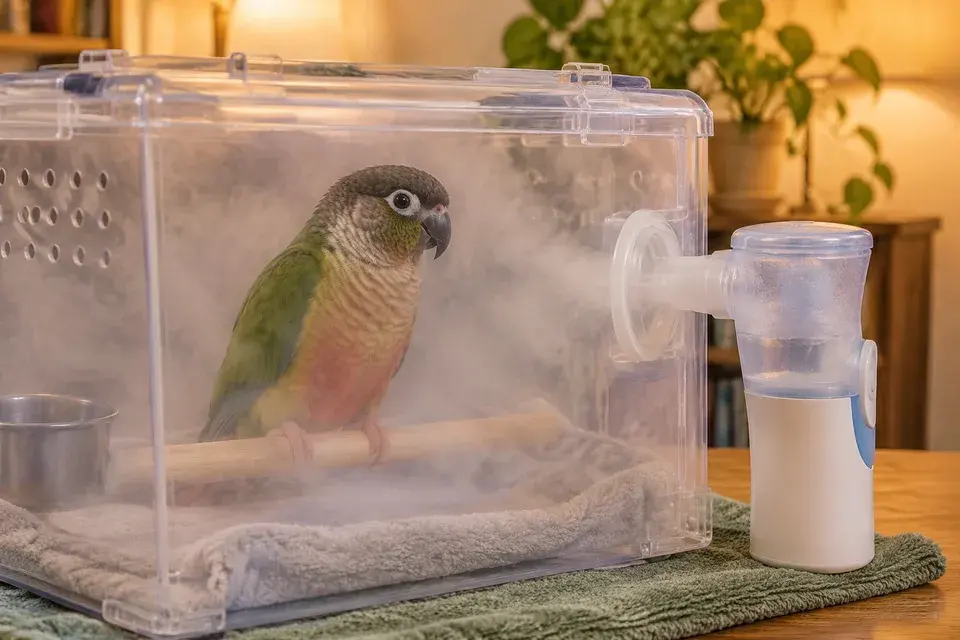
How to spot early avian respiratory distress—from clear nasal sneezes to tail bobbing and clicking breaths—plus emergency warmth, diet swaps, and vet-guided nebulization basics.
A parrot's respiratory tract is fundamentally different from a mammal's: rigid lungs connect to nine thin-walled air sacs extending throughout the body cavity and even hollow bones (Crosta et al., 2021). Because birds instinctively hide illness until reserves collapse, learning to recognize and respond rapidly to a bird respiratory infection is one of the highest-leverage skills a bird owner can possess.
Medical disclaimer: This guide is for urgent triage education and owner preparation; always consult a licensed avian veterinarian for diagnostic swabs, imaging, and prescription dosing.
1. Symptom Triage: Mild Chill vs. True Emergency
| Observed Signs | Likely Severity | Immediate Action |
|---|---|---|
| Clear nasal discharge, occasional sneezing, normal appetite & flight | Early upper-airway irritation or mild rhinitis | Isolate in a warm, draft-free room (28–30°C), remove scents/sprays, monitor 24 hours |
| Yellow/thick nasal crust, swollen eye (Chlamydia risk), clicking sounds, fluffed feathers | Moderate bacterial or chlamydial sinus/airway infection | Book avian vet ASAP; prepare hospital cage + vet-prescribed nebulization/antibiotics |
| Tail bobbing with each breath, open-beak breathing, wheezing, sitting on cage floor | Critical lower-airway / pneumonia / air sac distress | Emergency avian vet immediately; stabilize heat at 30–32°C and minimize handling stress |
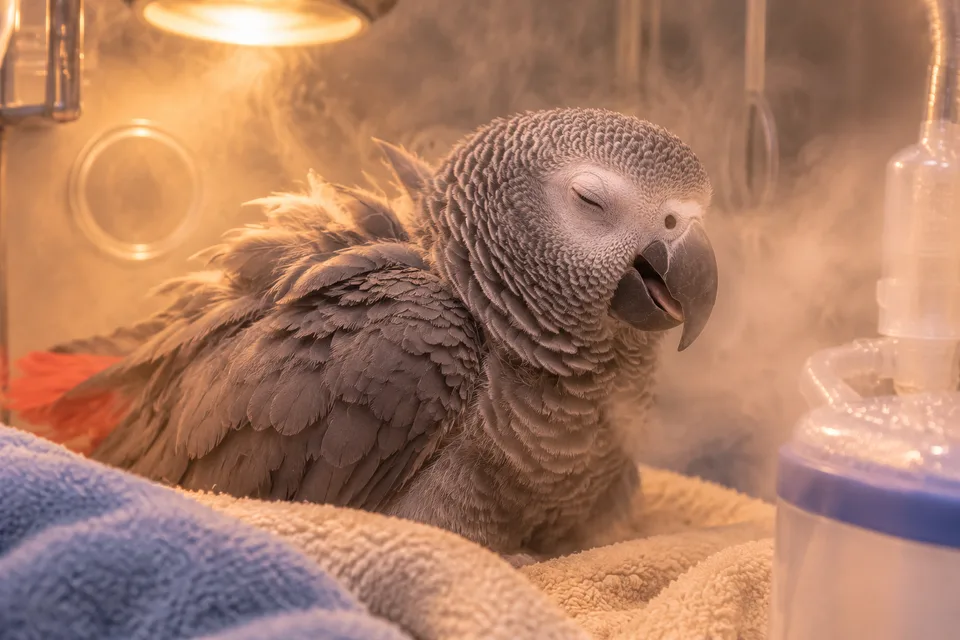
2. The Three Immediate Stabilization Rules (Before You Reach the Vet)
Rule 1: Build a Draft-Free Hospital Setup (28–32°C / 82–90°F)
Sick birds burn immense calories trying to stay warm. Place your bird in a quiet, covered hospital container or incubator set to 28–30°C (up to 30–32°C for severely fluffed or baby birds). Turn off fans, shut off direct AC drafts, and avoid rapid temperature swings. See our step-by-step Hospital Cage & Incubator Setup Guide.
Rule 2: Pause Heavy Seeds & Millet; Switch to Soft Easy-to-Digest Food
During fever or respiratory infection, gut motility slows dramatically. Hard dry seeds sit in the crop like heavy steak in a flu patient's stomach. Offer warm soaked high-potency pellets or avian recovery formula so energy goes into breathing and immunity rather than grinding hulls.
Rule 3: Eliminate All Airborne Irritants Immediately
Stop cooking with non-stick PTFE/Teflon cookware nearby, extinguish scented candles, diffusers, aerosol sprays, and smoke. Many acute "sudden respiratory deaths" stem from inhaled household fumes rather than germs alone.
3. How Vet-Guided Avian Nebulization Works
Unlike oral pills that irritate an already weak digestive tract, handheld mesh nebulizers turn sterile 0.9% saline (or vet-prescribed medications such as amikacin or properly diluted F10SC under veterinary instruction) into a fine mist that reaches deep into the air sacs. Typical sessions run 10–15 minutes inside a ventilated carrier box, followed by drying feathers completely before feeding. Read our Avian Nebulization Protocol for equipment prep.
4. Crucial Warnings on Oral Antibiotics & Probiotics
- Never medicate on an empty stomach: If your vet prescribes oral doxycycline or azithromycin (often needed for chlamydiosis / "one-eye cold"), give it ~1 hour after a soft meal to prevent vomiting.
- Finish the full prescribed course: Chlamydial infections often improve dramatically on day 4–5, yet relapse violently if stopped early.
- Space probiotics 2–3 hours apart: Antibiotics wipe out beneficial gut flora too; review our Bird Probiotics Guide to protect digestion safely.
Not sure what your bird's breathing or droppings indicate right now? Log every symptom with our interactive Bird Health Observation Checklist or compare Bird Droppings Color Charts before calling your vet.
References
- Crosta, L., et al. (2021). Respiratory Diseases of Parrots: Anatomy, Physiology, Diagnosis and Treatment. Veterinary Clinics of North America: Exotic Animal Practice (pmid:33892893).
- Sukon, P., et al. (2021). Global prevalence of chlamydial infections in birds: A systematic review and meta-analysis. Preventive Veterinary Medicine (pmid:33984601).