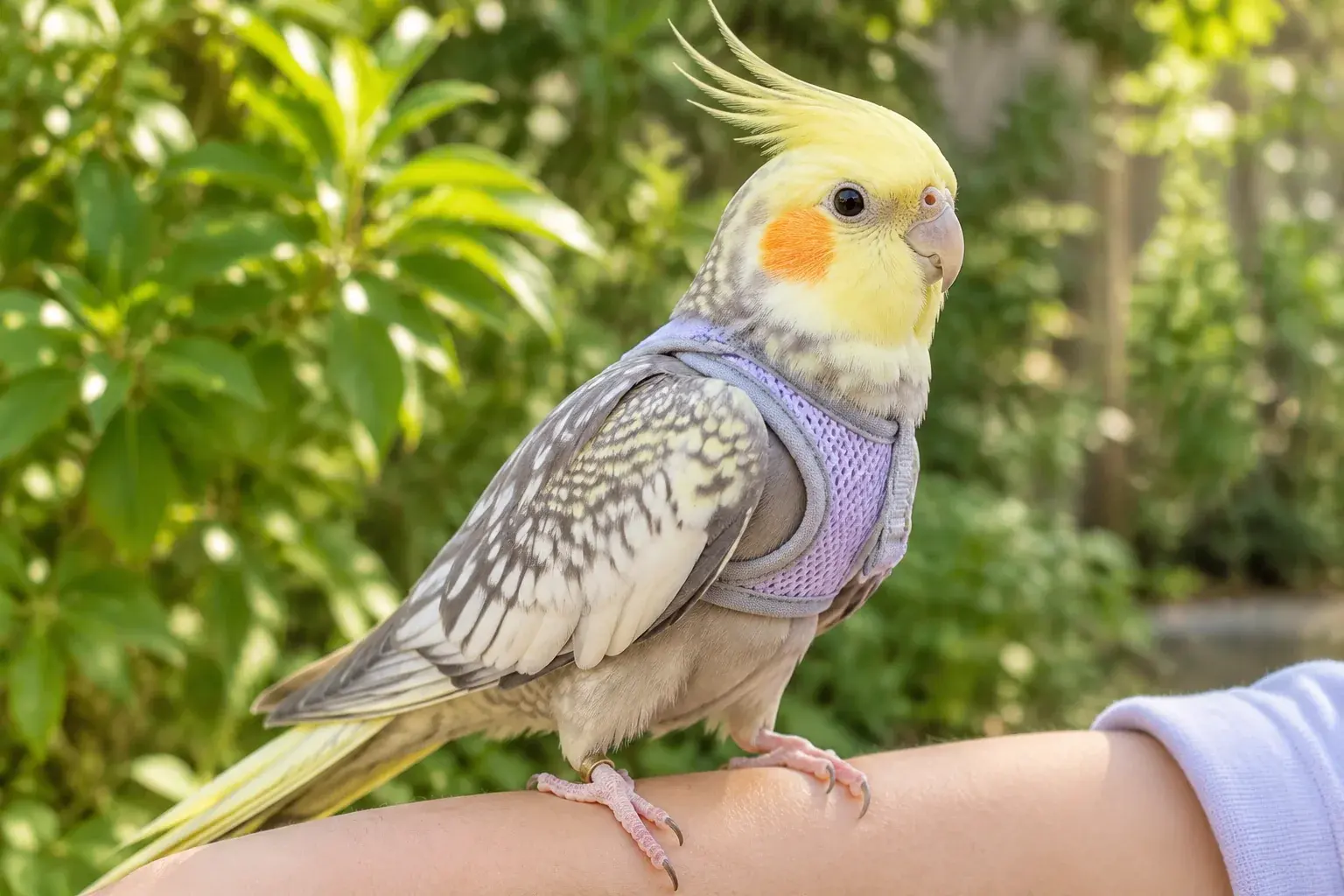
How to safely train your bird to wear a parrot harness and leash without forcing or flooding—plus why keeping flight feathers intact actually improves health monitoring and reduces biting.
Every parrot thrives on fresh outdoor air and direct natural UVB sunlight—not filtered through window glass. While a breathable parrot backpack carrier is ideal for walks in busy places, a properly fitted parrot harness and leash lets flighted birds perch on your arm, stretch their wings, and explore calm outdoor spaces safely.
1. Why Harness Training Beats Wing Clipping
Many owners clip wings hoping a bird will stay safe outside. In reality, even a heavily clipped parrot can catch a sudden gust of wind and glide hundreds of meters away—while losing its primary defense and exercise outlet indoors. Preserving full flight gives you two major advantages:
- An early illness warning system: Because flight is high-intensity aerobic exercise, a flighted bird that suddenly refuses to fly often alerts you days earlier than a clipped bird that stays perched all day.
- Lower biting and screaming rates: Flighted parrots can simply fly away when uncomfortable instead of feeling cornered and biting.
2. How to Check Harness Fit & Hardware Safety
| Feature | What to Look For | What to Avoid |
|---|---|---|
| Strap Material | Soft, lightweight woven nylon or fleece-lined chest strap | Heavy chains or stiff leather that bruises keel bones |
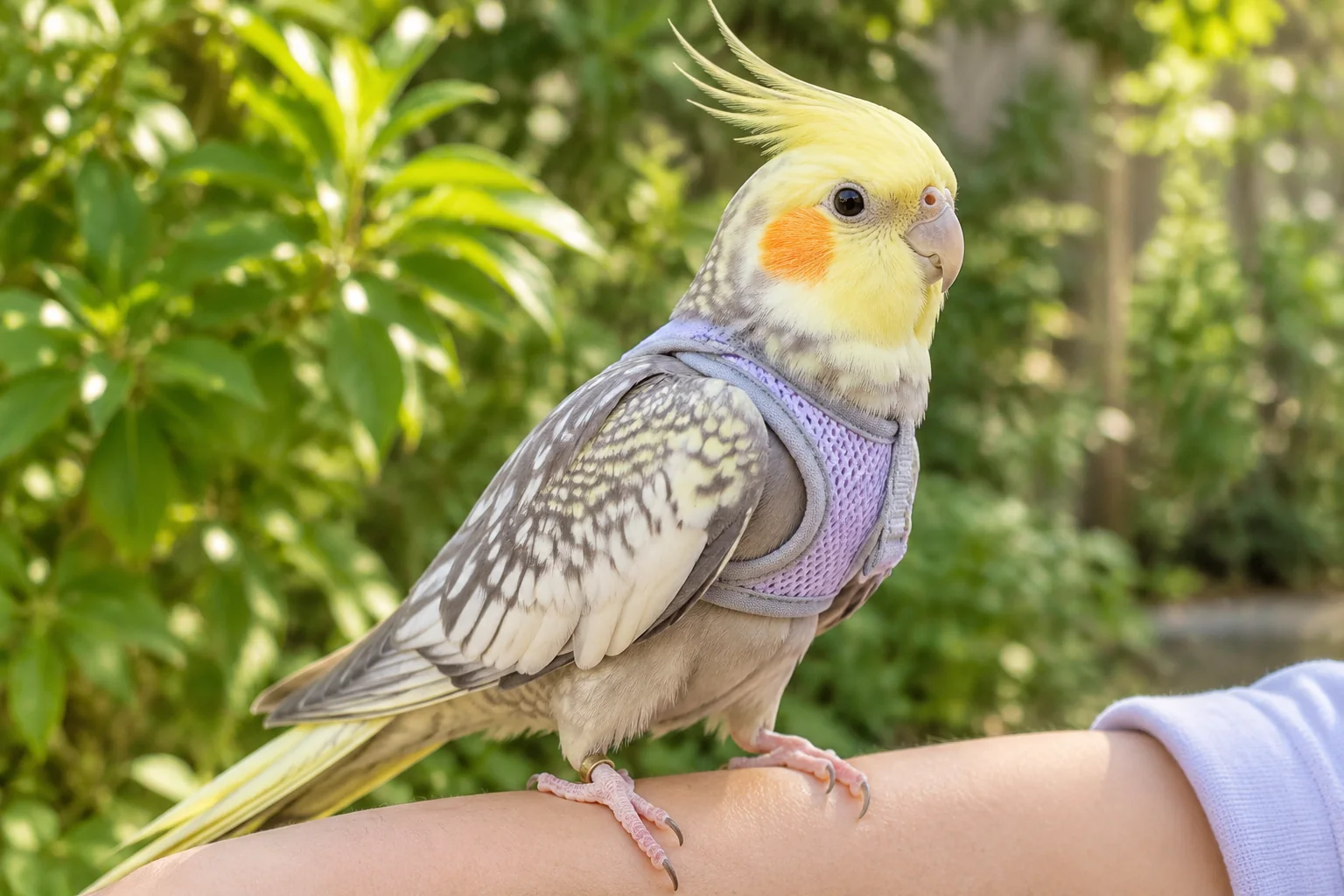
| Neck & Wing Clearances | One flat finger slides smoothly under the chest strap without slipping over shoulders | Loose loops that catch toes or tight straps restricting crop expansion |
| Ankle Chains / Leg Leashes | Never use leg leashes on parrots | Unlike raptors, parrots have fragile tibiotarsi that fracture if jerked mid-flight |
Looking for a lightweight starter setup for cockatiels, conures, or budgies? Check out our Soft Breathable Parrot Flight Harness & Leash or pair it with a travel backpack for backup transport.
3. Four-Week Stress-Free Harness Training Protocol
Never wrestle a bird into a harness or force compliance ("flooding"). Forcing the straps triggers deep distrust and lifelong harness phobia.
- Week 1 — Visual & Target Desensitization: Lay the harness near the playstand and reward your bird with high-value treats just for touching or walking near it.
- Week 2 — Voluntary Head Loop: Hold a large loop open with a treat behind it so your parrot reaches its head through willingly for 1 second, then backs out. Repeat until relaxed.
- Week 3 — Wing Tuck Without Tightening: Gently lift one wing at a time while feeding millet, letting the strap rest briefly without buckling.
- Week 4 — Short Indoor Sessions First: Buckle smoothly, reward immediately with favorite foraging treats, walk indoors for 2–3 minutes, and remove before frustration builds.
4. Outdoor Safety Rules Every Time You Step Outside
- Always inspect seams, buckles, and leash elasticity before clipping on.
- Loop the wrist strap securely around your wrist—never rely on loose finger grip.
- Watch the sky and trees for hawks, unleashed dogs, and fast-moving cyclists.
- Combine morning harness walks with proper indoor UVB lighting on rainy or winter days.