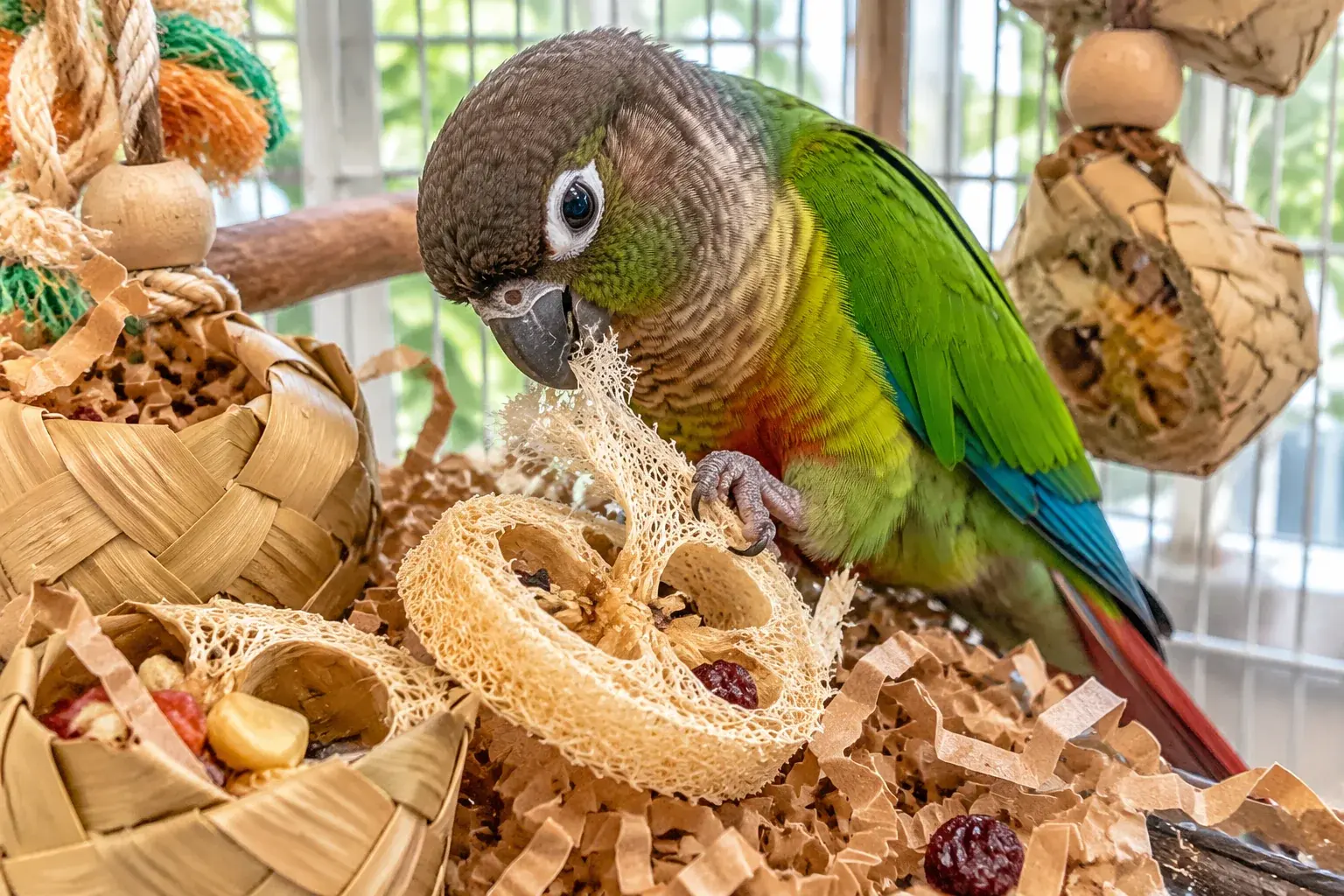
Wild parrots spend hours working for food every day. Discover the behavioral science behind foraging toys, why birds ignore store-bought toys, and how enrichment prevents screaming and feather plucking.
Many bird owners spend hundreds of dollars on colorful perches and blocks only to watch their parrot sit motionless next to them. When a bird ignores toys, the problem is rarely that "my bird doesn't like toys." In avian behavior science, foraging toys for parrots are not optional luxury items—they fill a mandatory daily time budget that otherwise turns into screaming, biting, or feather-destructive behavior.
1. The Behavioral Time-Budget Rule (Why Free Bowl Feeding Causes Problems)
In the wild, parrots allocate their waking hours across a strict behavioral schedule: flying, social preening, resting, chewing wood, and—taking up 40% to 60% of the day—searching for and extracting food. When we serve an endless bowl of pellets or seeds in a cage, that multi-hour foraging block is compressed into 15 minutes.
Research in Applied Animal Behaviour Science (Meehan et al., 2003; Rodríguez-López, 2016) demonstrates that empty hours in a parrot's daily schedule do not simply disappear. They are replaced by displacement behaviors: repetitive cage pacing, attention-seeking screaming, and psychogenic feather picking. Adding foraging opportunities and physical cage complexity directly prevents and reduces these welfare issues.
2. Why Your Parrot Ignores New Toys (And How to Fix It)
Reason 1: Neophobia (Fear of Novel Objects)
As prey animals, parrots are hardwired to distrust unfamiliar shapes and bright plastics suddenly hung inches from their sleeping perch. Hang a new foraging toy 1–2 meters outside the cage for several days first so your bird can inspect it from a safe distance, then move it to the outside bars before placing it inside.
Reason 2: The Toy Gives Zero Environmental Feedback
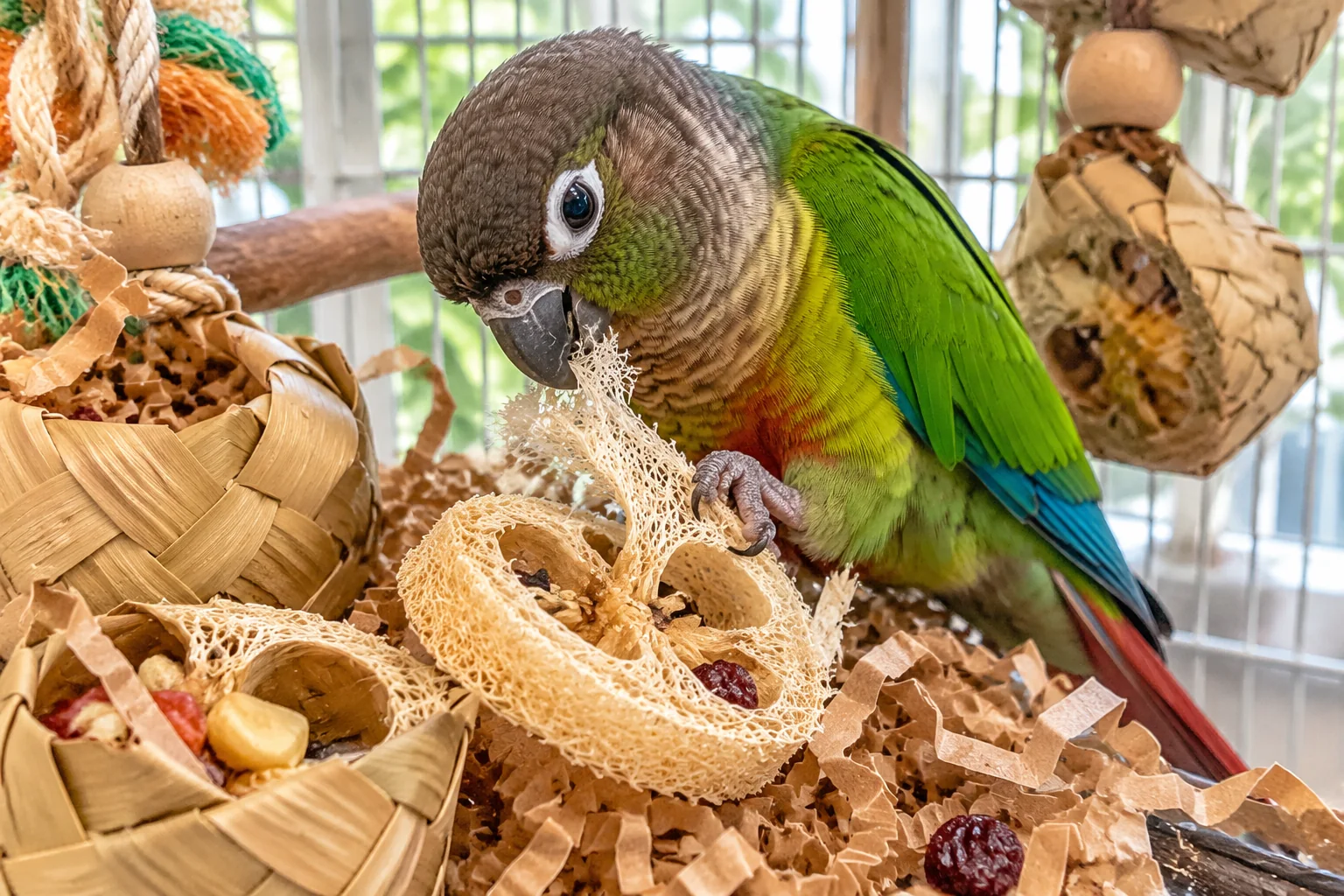
Parrots repeat behaviors that produce immediate feedback. A rock-hard acrylic block does nothing when bitten, whereas soft balsa, corn husk, loofah, palm leaf, and cardboard tear cleanly on the first bite. If your bird ignores hard wood, step down to softer shreddable textures.
Reason 3: Starting With Puzzle Levels That Are Too Hard
If a parrot cannot see or smell the reward inside a complex acrylic wheel on day one, it quits trying. Always teach foraging in three progressive stages:
- Level 1 (Visible + Easy Access): Tuck millet or a nut loosely inside a crinkled paper cup or loofah & corn husk pack where the bird sees the food immediately.
- Level 2 (Partially Concealed): Twist unbleached paper around a favorite treat inside a woven palm-leaf foraging bag so the bird tears the wrapper to earn the reward.
- Level 3 (Mechanical Puzzle): Once your bird actively hunts for hidden food, introduce rotating wheels like the acrylic foraging wind wheel or covered foraging cups.
3. Matching Materials to Beak Strength
| Species Size | Best Starter Foraging Materials | Recommended Enrichment Picks |
|---|---|---|
| Budgies, Parrotlets, Lovebirds, Cockatiels | Sola wood, mahogany pods, crinkled paper, thin seagrass, corn husk | Shreddable Paper & Vine Toys |
| Conures, Quakers, Caiques, Senegals | Loofah slices, pine slats, palm leaf, medium acrylic spinners | Conure Loofah & Corn Husk Foraging Pack |
| African Greys, Amazons, Cockatoos, Macaws | Hardwood blocks, coconut shells, heavy stainless-steel puzzle feeders | Heavy-Duty Wooden Block Chew Toy & Coconut Hideaway Set |
4. Safe DIY Foraging Ideas You Can Make in 2 Minutes
- Cardboard Egg Carton Box: Fill clean paper egg cups with pellets, dried herbs, and shredded paper, then close the lid loosely.
- Skewer Veggie Kebabs: Thread bell pepper chunks, broccoli florets, and carrot coins onto a stainless-steel skewer to turn fresh parrot chop into an active foraging challenge.
- Foraging Tray on the Playstand: Scatter clean river stones or wood chips in a shallow ceramic dish with buried seeds so your bird roots through obstacles instead of eating from a plain bowl.
Explore our full curated collection of Foraging Toys for Parrots, or check our Avian Health Guides if sudden toy disinterest comes alongside lethargy or fluffed feathers.
References
- Meehan, C. L., Millam, J. R., & Mench, J. A. (2003). Foraging opportunity and increased physical complexity both prevent and reduce psychogenic feather picking by young Amazon parrots. Applied Animal Behaviour Science, 80(1), 71–85.
- Mellor, E. L., et al. (2021). Nature calls: intelligence and natural foraging style predict poor welfare in captive parrots. Proceedings of the Royal Society B (PMC8493207).