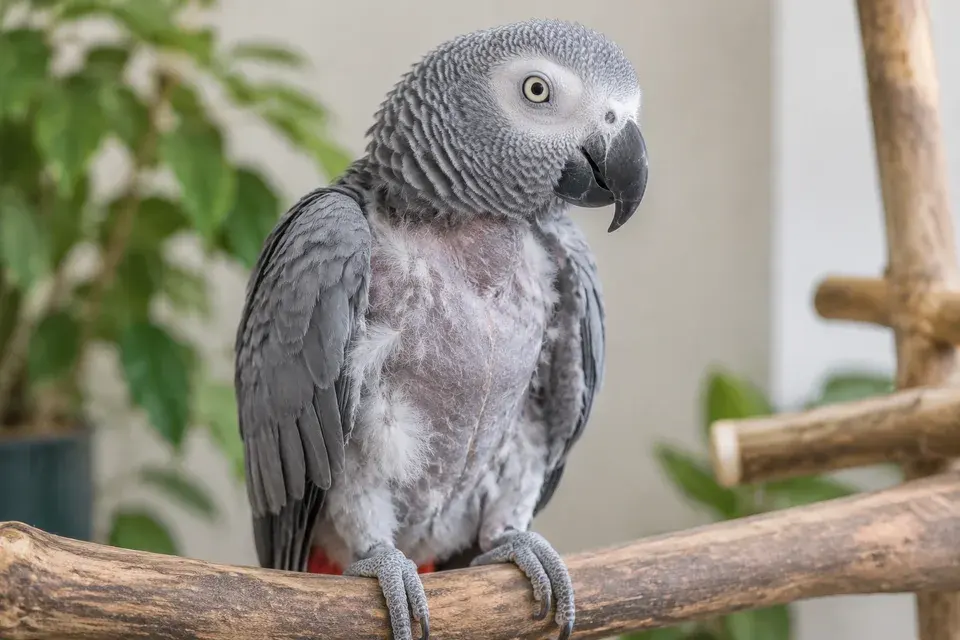
Feather-destructive behavior rarely happens in the wild. Separate medical causes from boredom, sleep imbalance, Vitamin A deficiency, and housing triggers using avian behavioral research.
Seeing a companion parrot chew, snap, or pull out its own feathers leaves owners feeling helpless and guilty. Notice one crucial clue first: feather-destructive behavior (FDB) is virtually absent in wild flocks and occurs almost exclusively in captive settings. When a bird damages its plumage, it is broadcasting that either its body or its environment is out of balance.
1. Step One: Rule Out Medical Causes Before Calling It "Behavioral"
Veterinary literature (Jenkins, 2001) emphasizes that jumping straight to behavioral toys without medical screening misses painful underlying disease. Book an avian veterinarian exam first to screen for:
- Infectious & parasitic triggers: Bacterial/fungal folliculitis, mites, giardia, or viral disease such as PBFD (Psittacine Beak and Feather Disease) and Avian Bornavirus.
- Metabolic & organ disease: Fatty liver disease, thyroid dysfunction, or reproductive tumors that cause localized skin irritation over the abdomen or chest.
- Heavy metal toxicity: Zinc or lead ingestion from unsafe cage coatings or cheap toy hardware.
- Respiratory or air-sac discomfort: Birds with chronic respiratory infections sometimes pluck directly over the chest or flank.
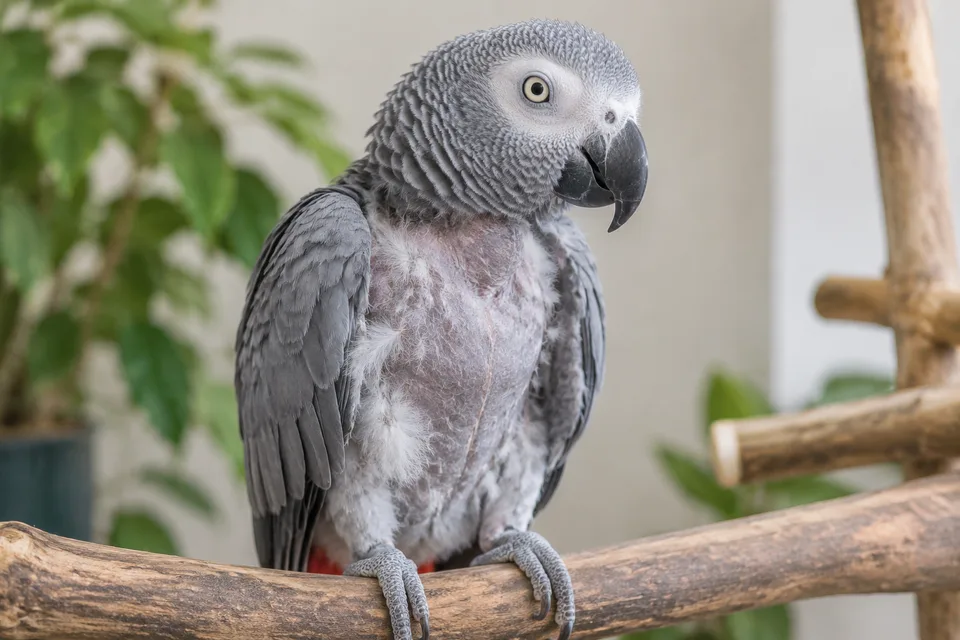
2. Four Non-Medical Drivers Confirmed by Research
1. Vitamin A Deficiency & Seed-Only Diets
All-seed diets—and even unmeasured half-seed diets—leave parrots chronically short of vitamin A, drying skin and weakening feather follicles. Build meals around formulated pellets plus pro-vitamin A vegetables in a daily fresh parrot chop.
2. Empty Behavioral Time Budgets & Lack of Foraging
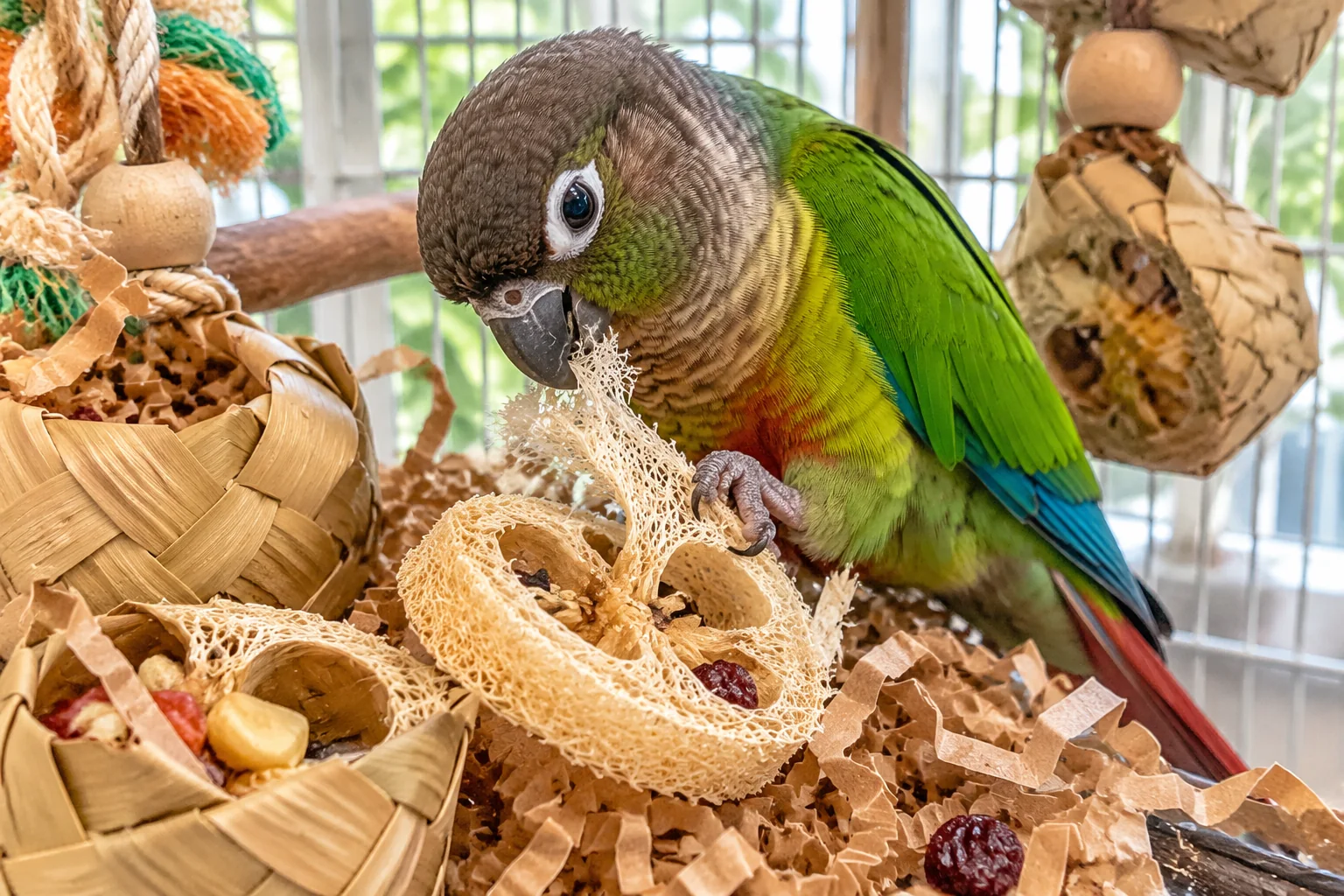
Empirical studies on captive parrots (Meehan et al., 2003; Mellor et al., 2021) proved that wild-type intelligent species with restricted foraging opportunities develop significantly higher rates of psychogenic feather picking. Replacing open seed bowls with layered foraging toys for parrots gives natural chewing and problem-solving an outlet.
3. Excess Darkness (>12 Hours) & Erratic Sleep
A surprising 2014 UK veterinary study on African Greys and Cockatoos found that birds kept in darkness for more than 12 hours per night had over seven times the odds of feather plucking compared to birds sleeping ~8–10 hours on a consistent schedule. Never trap a bored bird under a cage cover all evening; maintain predictable day-night hours and eliminate tiny nightlights that disrupt melatonin.
4. Dry Indoor Air, Lack of UV Light & Handling Stress
- Target 45%–60% indoor humidity and encourage misting or a shallow circulating bird bath so new pin feathers soften cleanly.
- Avoid petting down the back, wings, or belly—sexual frustration and hormonal swings rapidly escalate to self-mutilation.
- Provide proper overhead avian UV lighting and never leave your bird near kitchen PTFE fumes or smoke.
3. Action Checklist for This Week
- Log feather loss location, skin redness, and droppings in our Bird Health Observation Checklist and schedule a vet CBC/chem panel.
- Eliminate scented candles, fuzzy happy huts, and unwashed high-fat seed sticks.
- Introduce one easy level-1 shreddable foraging toy outside the cage first, then move inside once accepted.
References
- Jenkins, J. R. (2001). Feather picking and self-mutilation in psittacine birds. Veterinary Clinics of North America: Exotic Animal Practice (pmid:11601106).
- Meehan, C. L., et al. (2003). Foraging opportunity and increased physical complexity both prevent and reduce psychogenic feather picking by young Amazon parrots. Applied Animal Behaviour Science.
- Cussen, V. A., & Mench, J. A. (2015). Personality dimensions and resiliency to environmental stress in Amazon parrots. PLoS ONE (PMC4482636).