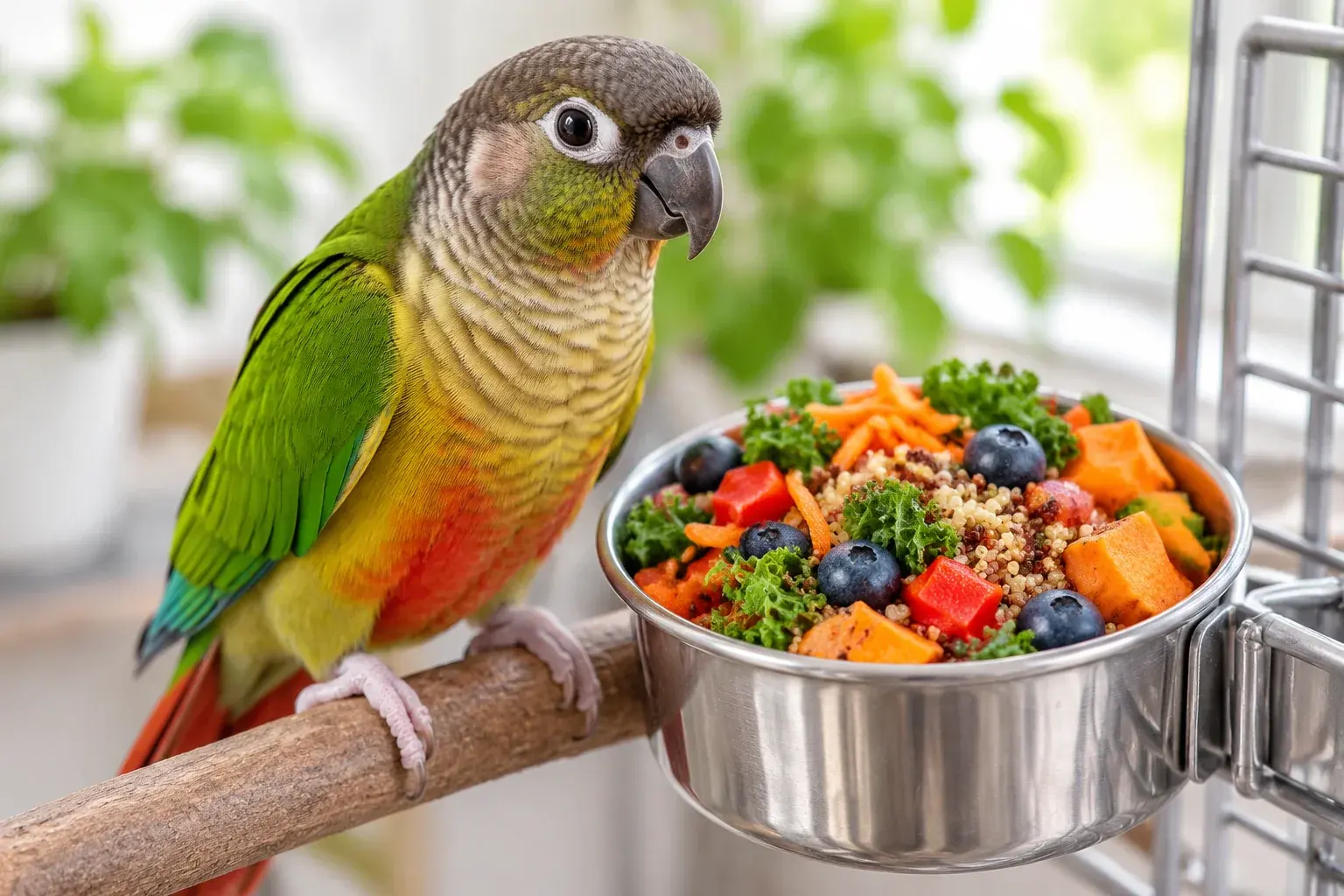
A practical, freezer-friendly parrot chop recipe backed by avian nutrition research—plus why natural beta-carotene beats synthetic vitamin A drops and 4 tricks to get seed-addicted birds eating veggies.
All-seed diets are one of the leading silent drivers of fatty liver disease and immune deficiency in pet birds. Even when a parrot eats pellets, fresh vegetable chop provides live phytonutrients, hydration, and natural textures. Research on captive Amazon parrots (Brightsmith, 2012) also reminds us that randomly mixing produce and seeds without measuring proportions dilutes critical nutrients—so structure matters.
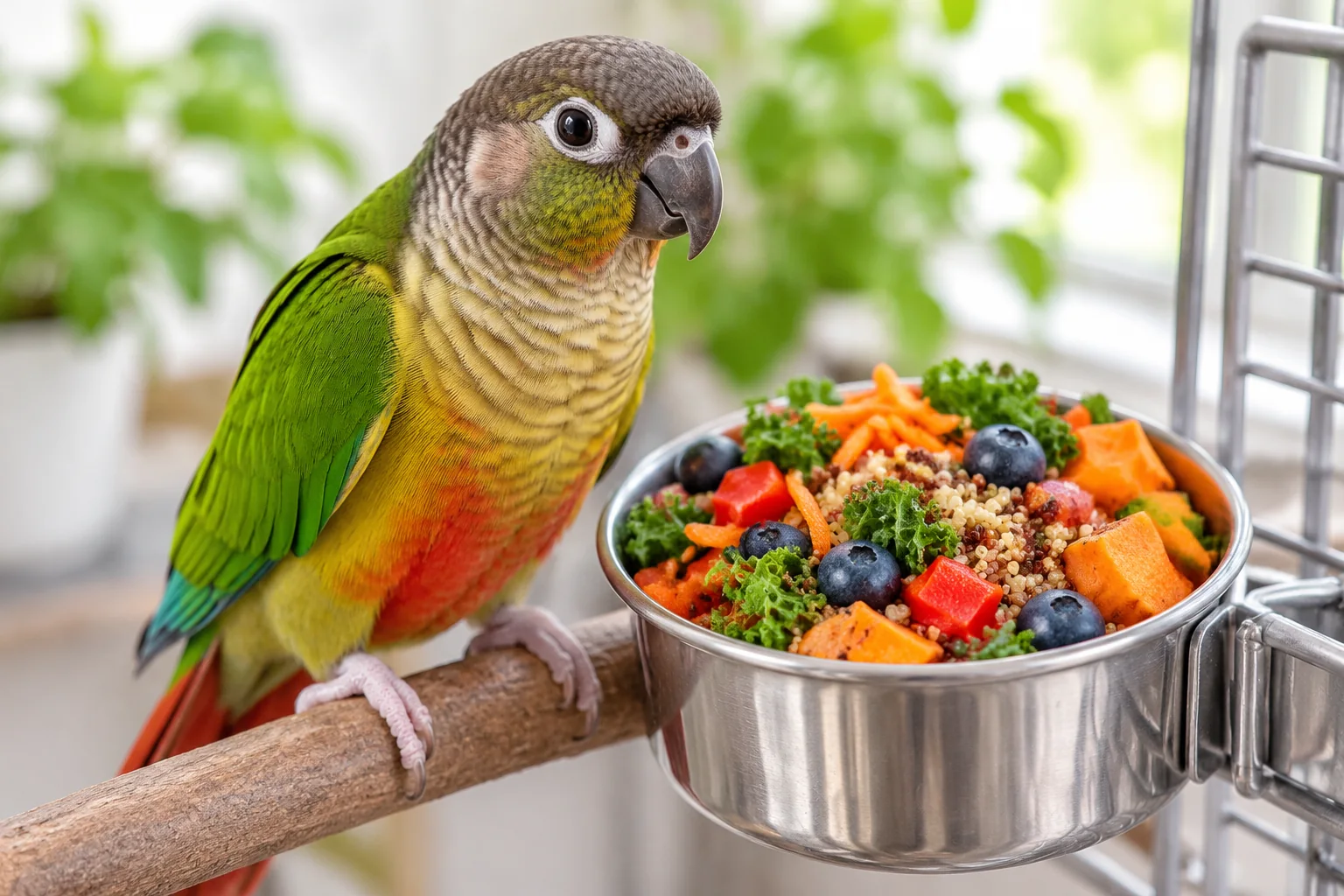
1. The Balanced Parrot Chop Formula (By Volume)
| Layer | Share | Best Bird-Safe Ingredients | Nutritional Role |
|---|---|---|---|
| Dark Leafy & Cruciferous Greens | 45% | Kale, dandelion greens, bok choy, mustard greens, broccoli florets, cilantro | Calcium, folate, trace minerals |
| Orange/Red Pro-Vitamin A Veggies | 25% | Carrots, sweet potato (cooked), butternut squash, red bell pepper, chili pepper | Beta-carotene (safe Vitamin A precursor) |
| Sprouted Legumes & Cooked Grains | 20% | Quinoa, oats, cooked lentils, chickpeas, mung bean sprouts (never raw dried beans) | Lysine & plant amino acids lacking in plain seeds |
| Low-Sugar Fruit & Functional Seeds | 10% | Blueberries, pomegranate, chia seeds, hemp hearts | Omega-3 fatty acids & antioxidants |
Why Natural Beta-Carotene Beats Vitamin A Drops
Seed-heavy birds frequently suffer from hypovitaminosis A, weakening respiratory and oral immunity. However, oversupplementing synthetic liquid vitamin A can cause toxicity. Feeding orange and dark leafy vegetables supplies beta-carotene: your parrot's body converts only what it needs into active vitamin A and safely excretes the rest.
2. Step-by-Step Batch Prep & Storage
- Wash thoroughly and dry completely: Excess water turns frozen chop into mush. Spin greens dry in a salad spinner before chopping.
- Pulse in small batches—do not puree: Use a food processor on short pulses to create 3–6 mm crumbles tailored to your bird's beak size (finer for budgies/parrotlets, chunkier for conures and greys).
- Cook hard root veggies and legumes: Steam sweet potato and squash lightly; boil lentils and beans completely (raw legumes contain dangerous lectins).
- Freeze flat in weekly portions: Press into freezer bags or ice-cube trays, squeeze out air, and thaw one night's portion in the refrigerator before serving.
3. Four Tricks for Parrots That Refuse Vegetables
Many hand-raised birds never experienced fresh veggies during their juvenile socialization window, so their instinct flags unfamiliar wet food as suspicious. Try these proven methods:
- Skewer or clip whole greens near a favorite perch: Hanging shredded kale, carrot ribbons, or pepper strips with a cage clip turns food into a shreddable foraging toy.
- Serve chop warm in the morning: Hunger is highest at dawn. Offer fresh chop for 60–90 minutes before putting the main pellet dish back in.
- Dust lightly with crushed pellets or chia seeds: Familiar dry textures encourage skeptical beaks to take the first taste.
- Never leave wet chop beside the water dish: Food tossed into water spoils rapidly. Use separate clamp-on stainless steel feeding dishes and remove uneaten wet chop after 2–3 hours.
Before prepping your next batch, double-check our Toxic Foods for Birds Checklist and learn how balanced pellets fit alongside fresh chop.
References
- Brightsmith, D. J. (2012). Nutritional levels of diets fed to captive Amazon parrots: does mixing seed, produce, and pellets provide a healthy diet? Journal of Avian Medicine and Surgery (pmid:23156977).
- Cummings, A. M., et al. (2022). An evaluation of three diet conversion methods in psittacine birds converting from seed-based diets to pelleted diets. Journal of Avian Medicine and Surgery (pmid:35972867).