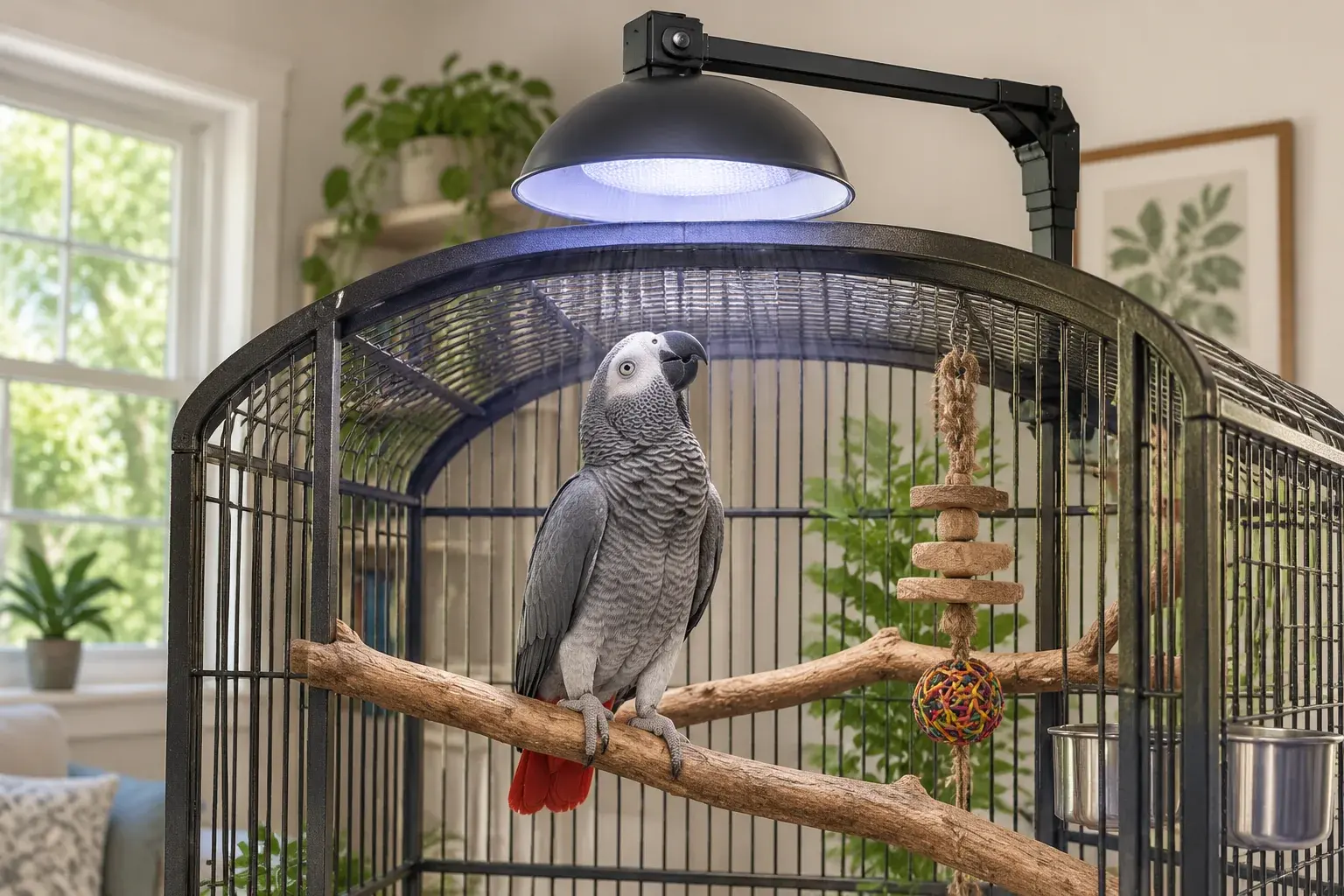
Does your indoor parrot need a UV lamp? Learn why sunlight through glass fails, why reptile bulbs can harm birds, what CRI ≥ 90 means for avian vision, and exact placement distances.
Sunlight plays two irreplaceable roles in avian biology: UVB triggers vitamin D3 synthesis in the skin so your bird can absorb dietary calcium, while UVA shapes how parrots see plumage, food ripeness, and day-night circadian rhythms. Because most pet parrots live indoors, choosing the right UV light for birds—and avoiding unsafe imitations—directly protects bone density, egg-laying health, and feather quality.
1. Why Sunlight Through a Window Does Not Work
Many owners place a bird cage next to a sunny window assuming their parrot gets plenty of UV light. Standard household window glass blocks virtually 100% of UVB wavelengths. Your bird feels warmth, sees brightness, and may even squint in glare—yet produces zero vitamin D3. If you give your bird real sun outdoors, use a breathable outdoor carrier or screened balcony with partial shade rather than closed glass.
2. How to Spot Unsafe or Fake "Full Spectrum" Bird Lights
- UVA-only knockoffs: Cheap unbranded bulbs often emit visible light plus a trace of UVA while lacking true UVB phosphors. Always buy from established avian lighting manufacturers that publish spectral output charts.
- Never borrow high-output reptile bulbs: Desert reptile lamps (such as 10.0 UVB tubes) emit intense radiation designed for thick-skinned lizards, not delicate avian corneas and thin bird skin. Use avian-specific full-spectrum lamps (typically 2.4% UVB).
- Check CRI (Color Rendering Index) ≥ 90 and High-Frequency Ballasts: Birds process visual frames significantly faster than humans. Standard low-frequency fluorescent tubes create a rapid strobe flicker that looks steady to human eyes but causes chronic visual stress in parrots. Look for high-CRI (≥ 90) avian lamps running on flicker-free electronic ballasts.
3. Exact Placement Rules (15–45 cm & Eye Protection)
| Parameter | Recommended Standard | Why It Matters |
|---|---|---|
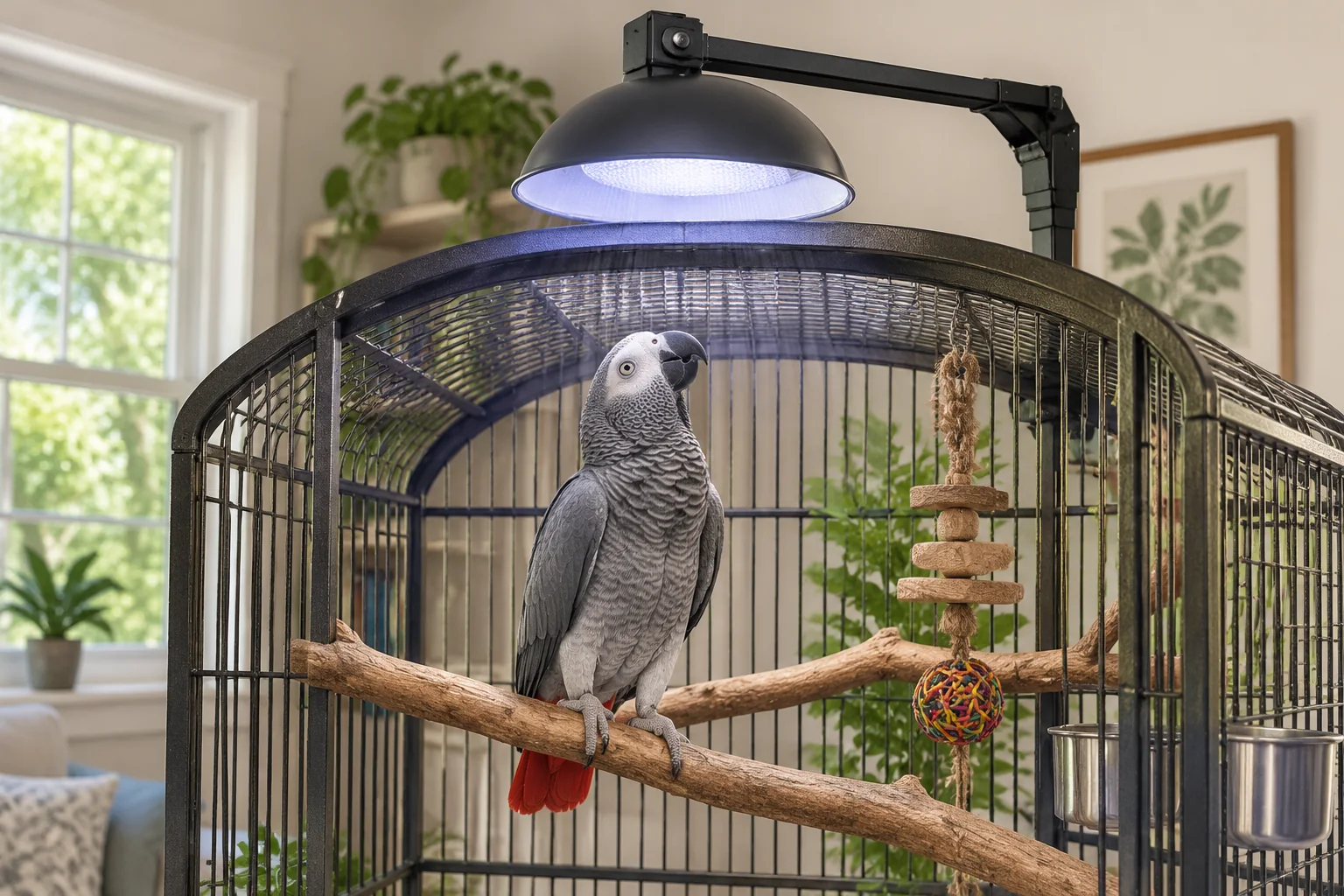
| Distance Above Perch | 15–45 cm (6–18 inches) | UVB drops sharply with distance; closer than 15 cm risks corneal irritation and thermal burns. |
| Mounting Position | Overhead (top of cage), never side-mounted | Side lighting shines directly into the eyes—especially dangerous for Lutino/albino birds lacking ocular melanin. |
| Daily Photoperiod | 4–8 hours (synced to consistent daytime hours) | Always provide shaded lower perches so the bird can self-regulate light exposure. |
| Bulb Replacement | Every 6 months | UVB-emitting phosphors degrade long before the visible light burns out. |
4. Lighting, Circadian Rhythm & Hormonal Balance
Full-spectrum lighting only helps when paired with predictable darkness at night. Erratic lighting schedules confuse the pineal gland and trigger chronic molting or reproductive hormones. Keep daytime lamp timers consistent, turn off nightlights completely after dark, and review our dietary vitamin A & calcium guide alongside cage setup essentials.
Frequently Asked Questions
Do parrots on pellets still need a UV light?
Formulated pellets contain synthetic vitamin D3, which covers baseline dietary needs, but proper avian UVA/UVB lighting still supports natural circadian signaling, visual color perception, and natural preening behavior. Never supplement excess liquid D3 on top of pellets without veterinary bloodwork.
Can I leave an avian UV light on all day?
Running it 4–6 hours around midday (with ambient room light completing a steady 10–12 hour day) works well for most indoor companion birds while preventing light fatigue.