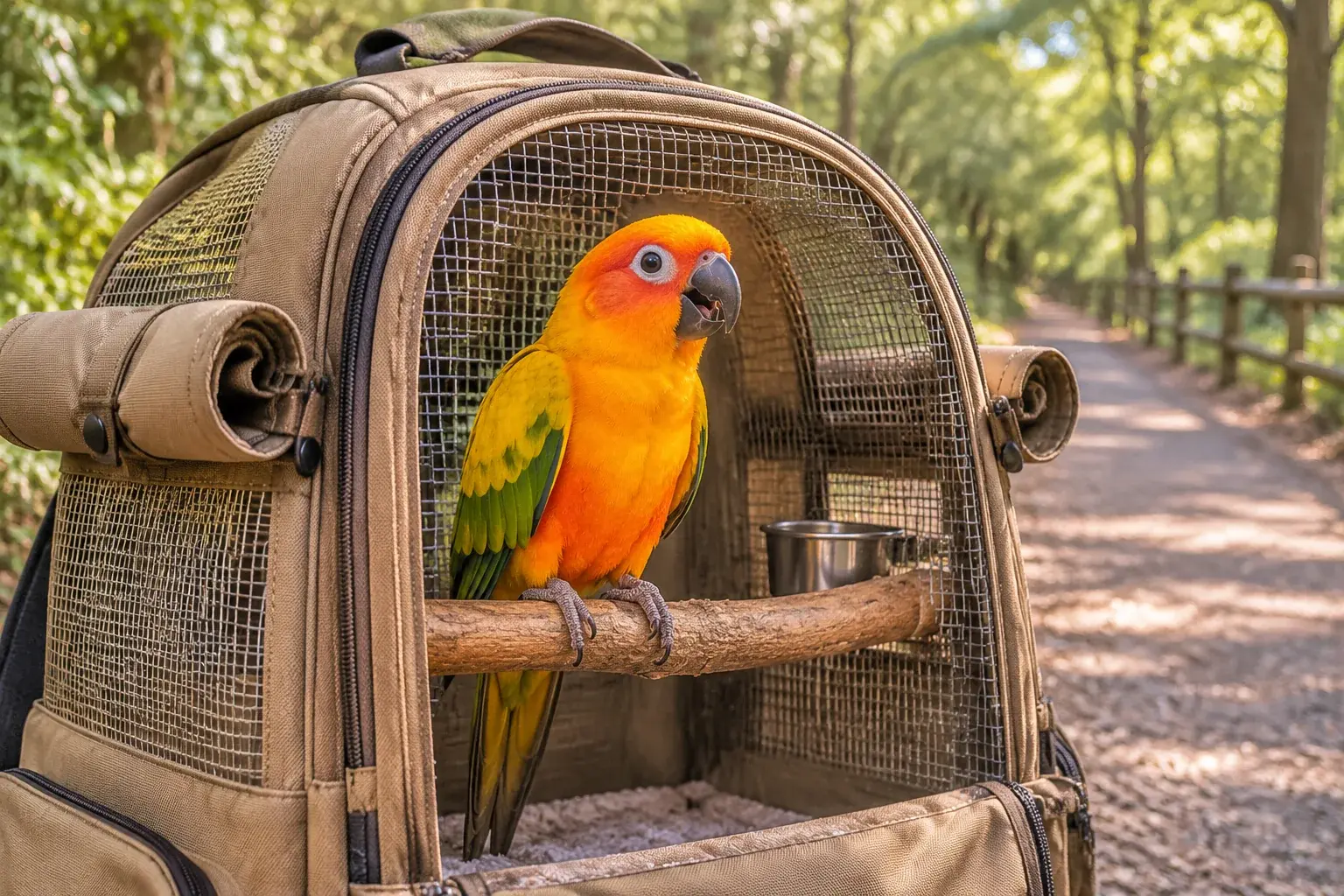
Comparing clear bubble packs, wire travel cages, and chew-proof soft parrot backpack carriers—plus how to pick safe perches, shade flaps, and escape-proof locks.
Taking a companion parrot outside for natural sunlight and sensory enrichment transforms both physical health and emotional resilience. Yet choosing the wrong parrot backpack carrier turns a relaxing walk into a heatstroke hazard or a chewed-through escape risk. Based on multi-year field testing of soft travel packs, hard-shell bubble backpacks, and wire carriers, here is what actually separates a safe outdoor carrier from a marketing gimmick.
1. The Three Types of Parrot Travel Carriers Compared
| Carrier Type | Airflow & Summer Safety | Beak Resistance | Wearer Comfort | Best Use Case |
|---|---|---|---|---|
| Hard PVC / Acrylic Bubble Packs | Low to moderate; traps heat in direct sun | Smooth walls resist chewing, vents remain vulnerable | Rigid against the back | Short cool-weather vet transfers under shade |
| Wire Travel Cages in Sleeves | Maximum airflow on all sides | Chew-proof metal bars | Bulky, awkward weight balance | Car travel and hotel stays |
| Reinforced Soft Parrot Backpacks | High when built with full-panel mesh + shade flaps | Requires internal stainless-steel mesh liners | Ergonomic straps, chest & seatbelt loops | Daily walks, hikes, and low-stress vet trips |
2. The Five Safety Features That Matter Most
Internal Stainless-Steel Mesh (Not Plain Nylon Screen)
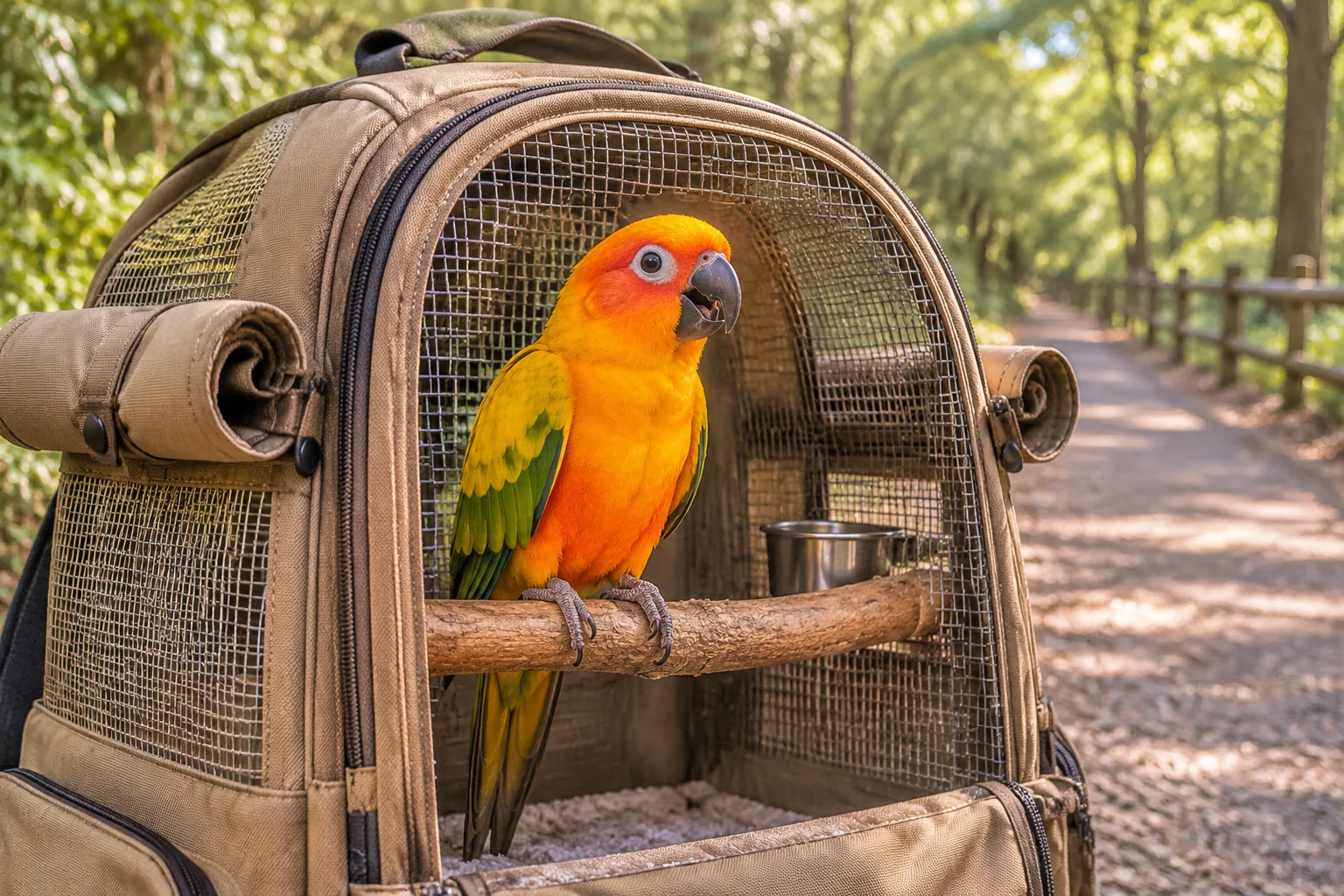
Parrots explore the world with a curved beak engineered to crack nuts and shred hardwood. Ordinary pet-carrier nylon mesh can be snipped open by a determined conure or lovebird in minutes. Look for backpacks with woven stainless-steel mesh panels behind the fabric vents, or pair a breathable soft carrier with close supervision during short trips.
Heat Dissipation and Roll-Down Shade Flaps
A clear plastic dome acts like a greenhouse in warm weather. Because birds lack sweat glands, enclosed clear panels exposed to direct sun can push internal carrier temperatures dangerously high within 10 minutes. Choose carriers with side mesh windows and roll-down privacy flaps: rolling the flap down blocks harsh glare, shields against sudden wind or rain, and calms a stressed bird in crowded areas.
Adjustable Perch Height and Tail Clearance
Cockatiels, budgies, and conures carry long tail feathers that bend or fray if the perch sits too close to the floor tray. A well-designed carrier lets you mount the perch higher for long-tailed species or lower for stockier birds like Amazons and Caiques so their crest never scrapes the ceiling mesh.
Low-Key Colors Reduce Stranger Stress
Bright neon or cartoon-printed backpacks attract crowds who walk straight up and tap on the window—triggering panic inside the pack. Neutral khaki, charcoal, or olive exteriors blend into everyday outfits and keep your bird calm in public spaces.
Center of Gravity, Seatbelt Loops & Escape-Proof Latches
- Top handle balance: Pick up the empty pack by the top handle; if it tips forward or backward, it will tilt your parrot's perch with every step.
- Car seatbelt pass-through: A rear strap lets you thread a vehicle seatbelt directly behind the pack during vet drives.
- Dual-zipper locks or marine clasps: Clever parrots learn to unzip standard sliders from the inside. Always clip dual zippers together with a carabiner or locking clasp.
3. Shop Vetted Travel Carriers & Flight Gear
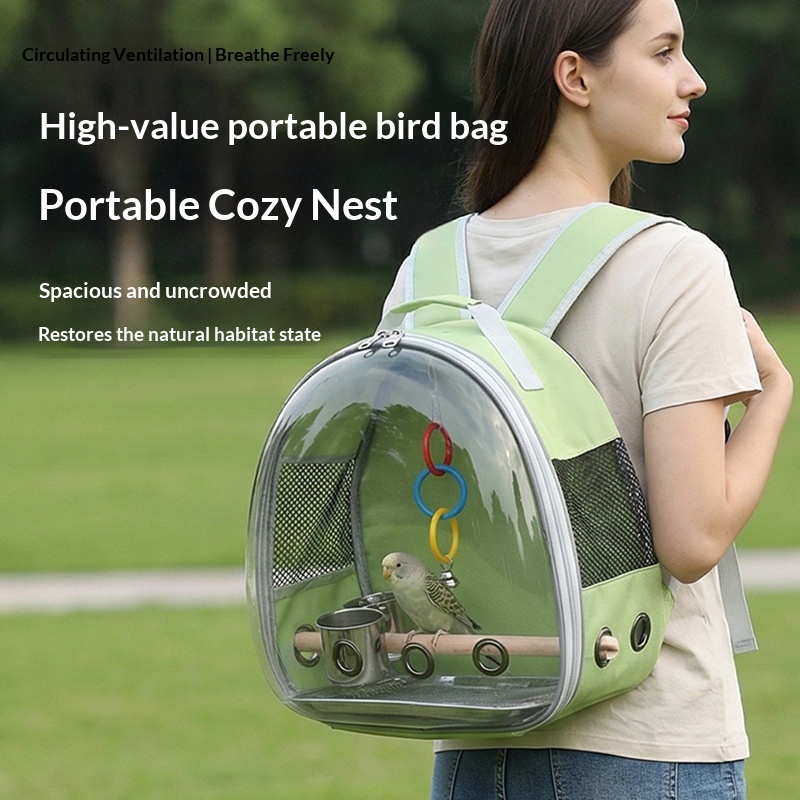
- Panoramic Transparent Bird Travel Backpack — Lightweight everyday pack with wooden perch and wide visibility for small to medium parrots.
- Breathable Escape-Proof Bird Travel Carrier Bag — Dual-side mesh ventilation for warm-weather outings and short vet visits.
- Compact Portable Wire Travel Bird Cage — Heavy-chewer metal option for road trips and temporary quarantine stays.
- Pair safe carrier trips with our Parrot Harness & Leash Training Guide or learn why outdoor exposure complements UVB Lighting for Pet Birds.
4. How to Desensitize Your Parrot to a Travel Backpack
- Station the open pack near the cage: Leave the doors unzipped with high-value treats and a favorite foot toy inside for 3–5 days.
- Reward voluntary entry: Use foraging treats or target training so your bird walks onto the carrier perch voluntarily rather than being stuffed inside.
- Practice 2-minute indoor walks: Zip the carrier closed, carry it to another room, reward calmly, and open it before any panic starts.
- Gradually step outdoors: Start in a quiet shaded yard or balcony for 5 minutes before heading to parks or busy streets.
Frequently Asked Questions
What size parrot backpack carrier do I need?
For budgies, parrotlets, lovebirds, and green-cheek conures, an interior footprint around 30 × 27 × 42 cm (12 × 11 × 16.5 in) gives comfortable wing-stretch clearance. Medium birds like African Greys or Amazons need deeper packs around 34 × 51 cm (13 × 20 in) with reinforced metal liners.
Can I use a cat bubble backpack for a parrot?
Standard cat backpacks lack perch mounts, have large ventilation holes that trap toes or beaks, and overheat rapidly. Always choose a bird-specific carrier with a secure perch, chew-safe vents, and a removable tray.