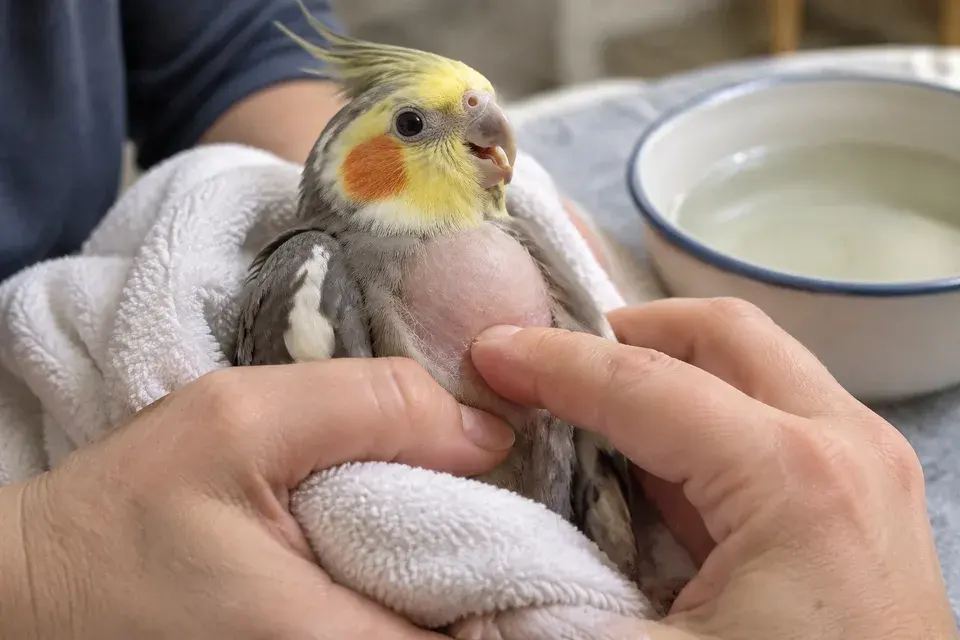
Why mixing raw millet with hand-feeding formula is the #1 trigger of fatal sour crop in baby parrots—plus how to recognize red crop vessels, slow emptying, and safe stabilization.
Few emergencies escalate faster in unweaned chicks and convalescing budgies than sour crop—the lay term for crop stasis complicated by bacterial or Candida yeast fermentation. Because the avian crop is simply a thin storage pouch with minimal digestive enzymes of its own, food that stalls for more than 4 to 6 hours at body temperature rapidly sours, inflames the mucosa, and halts gut motility altogether.
1. The #1 Beginner Mistake: Mixing Millet or Seeds Into Hand-Feeding Formula
In rescue and breeding triage, one feeding mistake causes more preventable sour-crop cases than almost any pathogen: mixing whole millet or raw seeds into liquid hand-feeding formula.
- Mismatched emptying speeds: Finely milled recovery formula is pre-cooked and passes out of the crop within 3–4 hours. Whole millet sits at the bottom of the crop absorbing water and swelling slowly.
- Hidden fermentation trap: To an inexperienced hand, the crop looks mostly flat once the liquid portion passes—so the owner syringes a fresh meal on top of yesterday's swollen, half-fermented millet.
- Rapid spoilage: Within 48–72 hours of layered feeding, yeast and Gram-negative bacteria multiply, causing sudden regurgitation, foul-smelling sour mucus, and acute lethargy.
If transitioning a chick, keep formula meals pure (mixed at 50–60°C and fed strictly at 38–40°C—see our Common Feeding Mistakes Guide) and offer extruded organic pellets separately during supervised daytime intervals.
2. Warning Signs of Crop Stasis vs Candida Sour Crop
| Clinical Sign | Early Thermal Crop Slowdown | Active Sour Crop / Candidiasis |
|---|---|---|
| Emptying Time | Delayed past 5 hours; mild doughy feel | Fails to clear even 3–5 ml across an entire morning; ballooned gas or fluid |
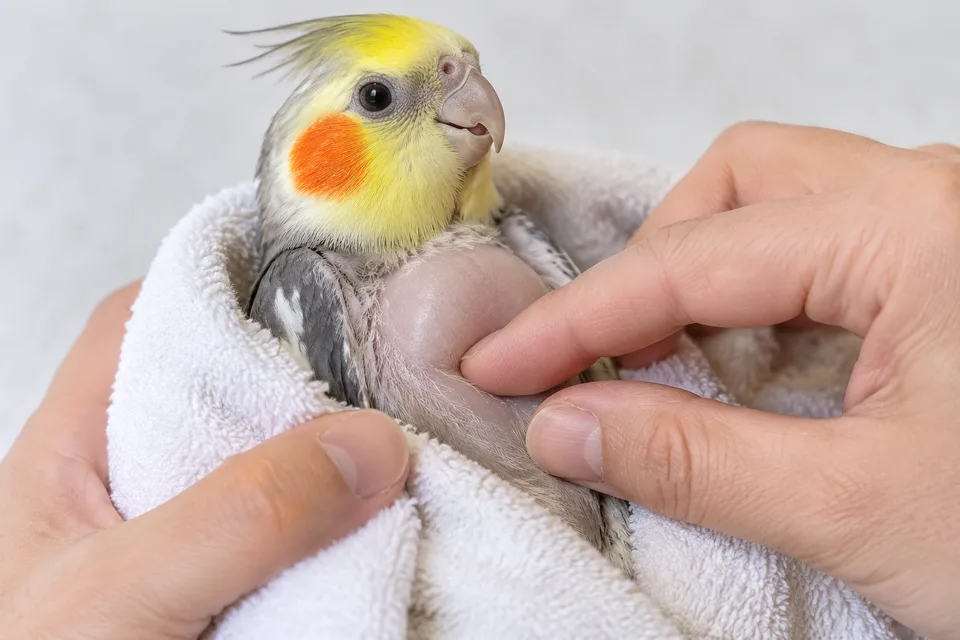
| Crop Skin Appearance | Pale pink, smooth elasticity | Thickened "Turkish towel" wall or prominent, angry red blood vessels across the crop |
| Regurgitation | Occasional head shake | Immediate vomiting after syringe feeding, rhythmic chest heaving, sour yogurt odor |
3. Immediate Home Stabilization & When to Flush
- Stop solid food and raise ambient warmth first: Chilled birds cannot move their GI tract. Place the bird in a 32°C (90°F) incubator first—never push more thick formula into a stalled crop.
- Hydrate and gently massage if mildly doughy: A few drops of warm (39°C) electrolyte water with gentle upward-circular fingertip massage (never squeezing upward toward the throat!) helps clear mild dehydration impaction.
- Veterinary crop aspiration & targeted antifungals: When prominent red vessels, gas distension, or repeated vomiting appear, an avian vet—or trained caregiver following strict crop flush safety protocols—must empty the fermented contents before prescribing nystatin or targeted antimicrobials alongside properly timed avian probiotics.
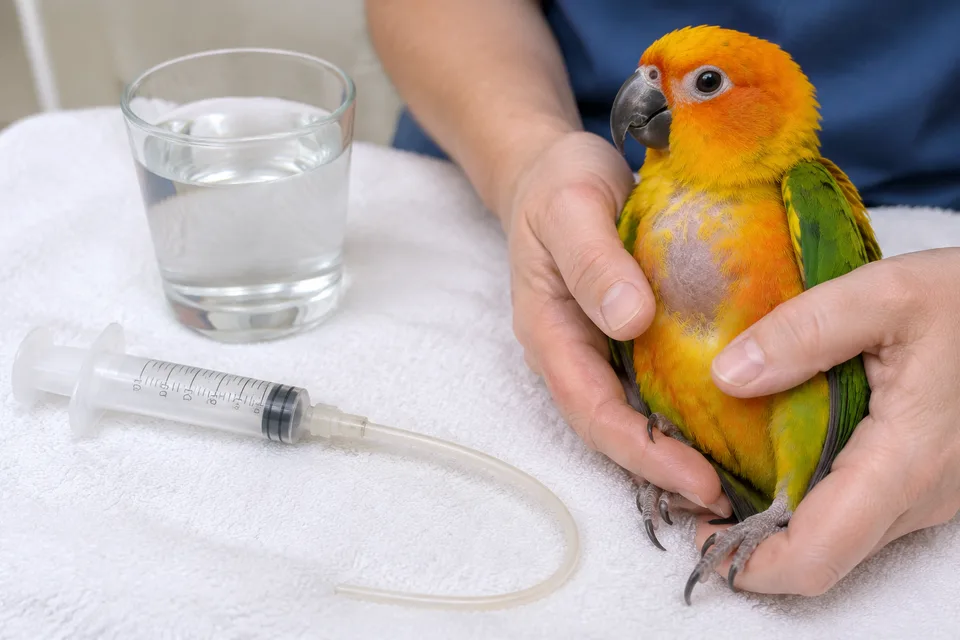
Check suspicious regurgitation or droppings immediately in our Avian Symptom Checker and stock sterile syringes plus Hand-Rearing Recovery Formula inside your Bird First Aid Kit.
Frequently Asked Questions
Why did my baby parrot stop digesting formula overnight?
The two most common triggers are formula fed below 37°C (98.6°F) or a night-time room temperature drop below 26°C (79°F) in unfeathered or weaning chicks.
Can apple cider vinegar cure sour crop on its own?
Mild acidification cannot rescue an impacted or severely infected crop and can irritate ulcerated mucosa when red blood vessels are visible—thermal stabilization, clearing fermented residue, and avian vet care come first.