Best Bird Cage for Budgies
Budgies are active horizontal flyers that cover long distances in the wild. Tall, narrow decorative cages restrict natural flight and tail movement. Most importantly, bar spacing must never exceed 1/2 inch; wider gaps risk head entrapment and fatal injury.
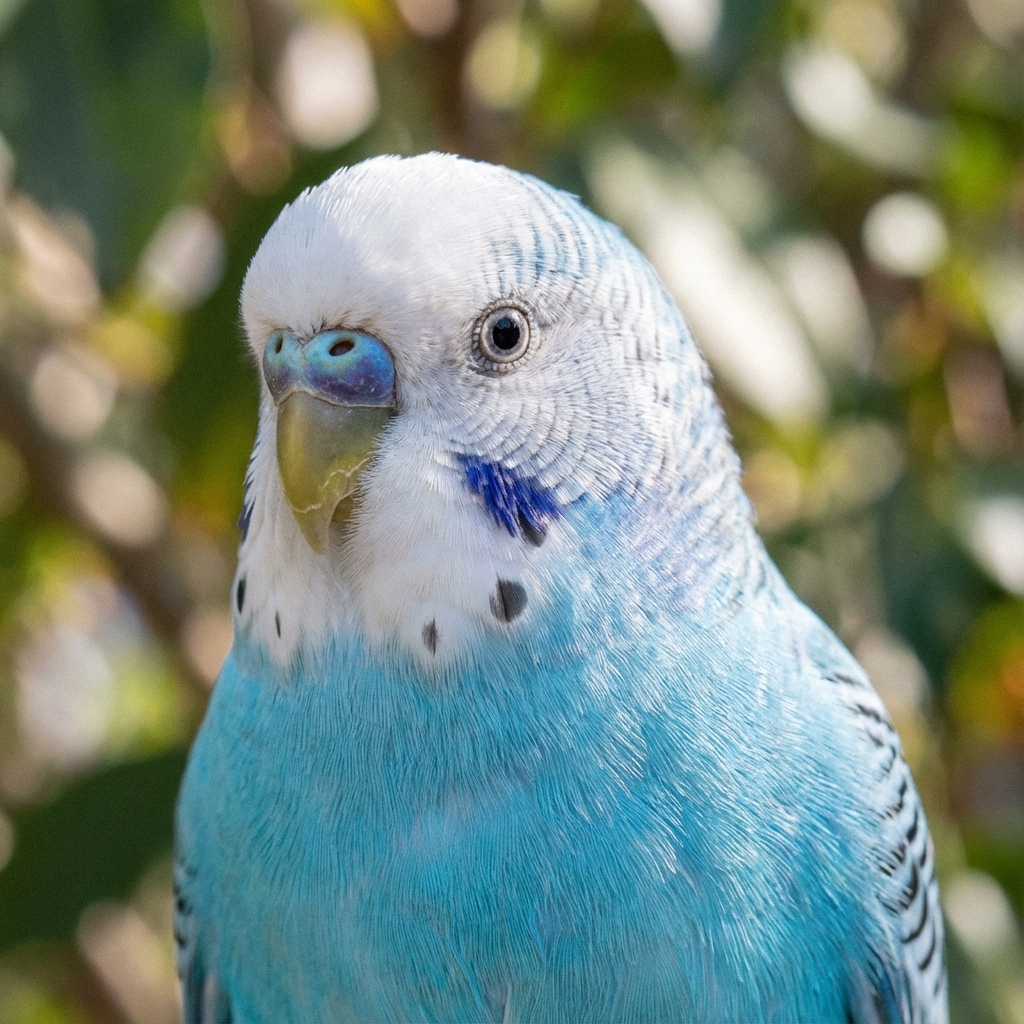
Budgie Cage Dimensions & Bar Spacing At-a-Glance
Avian veterinary recommended minimum standards
18"W x 18"D x 24"H
(46 x 46 x 61 cm)30"W x 18"D x 18"H
Optimal active wing flapping space1/2 inch (1.27 cm) max
Strict limit to prevent head entrapment2 mm (12–14 gauge)
Resists species beak leverageKey Layout Requirement: Wide horizontal layout (budgies fly horizontally, not vertically)
Best Cages for Budgies
Curated for safe bar spacing, non-toxic finishes, easy cleaning, and durable locks.
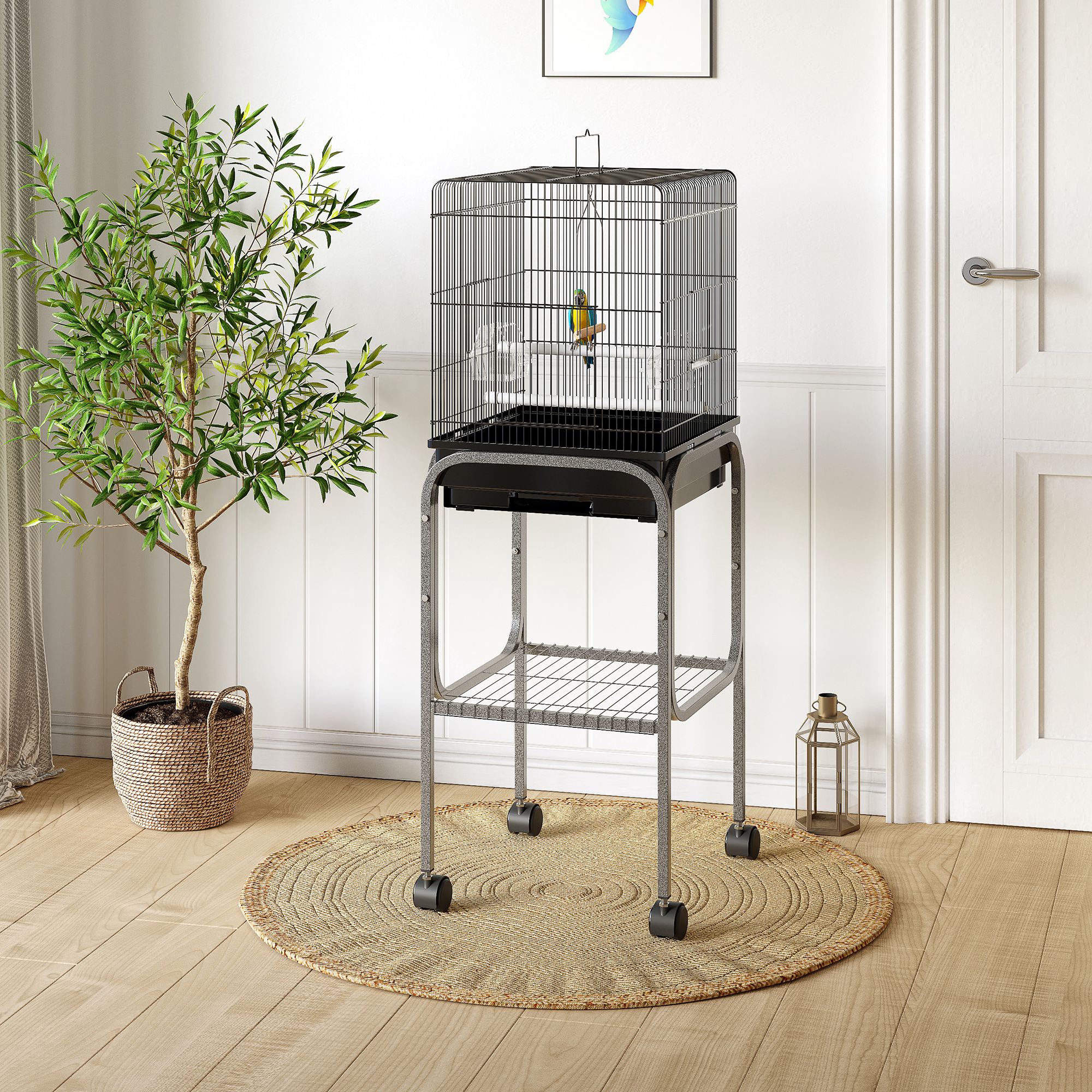 $135.93Best Overall Flight Cage
45-Inch Metal Indoor Bird Cage with Rolling Stand
Spacious horizontal flight room with safe 1/2" bar spacing and storage basket.
Key Benefits
- Ample horizontal flight corridor
- Rolling caster stand with storage shelf
- Safe 1/2-inch spacing
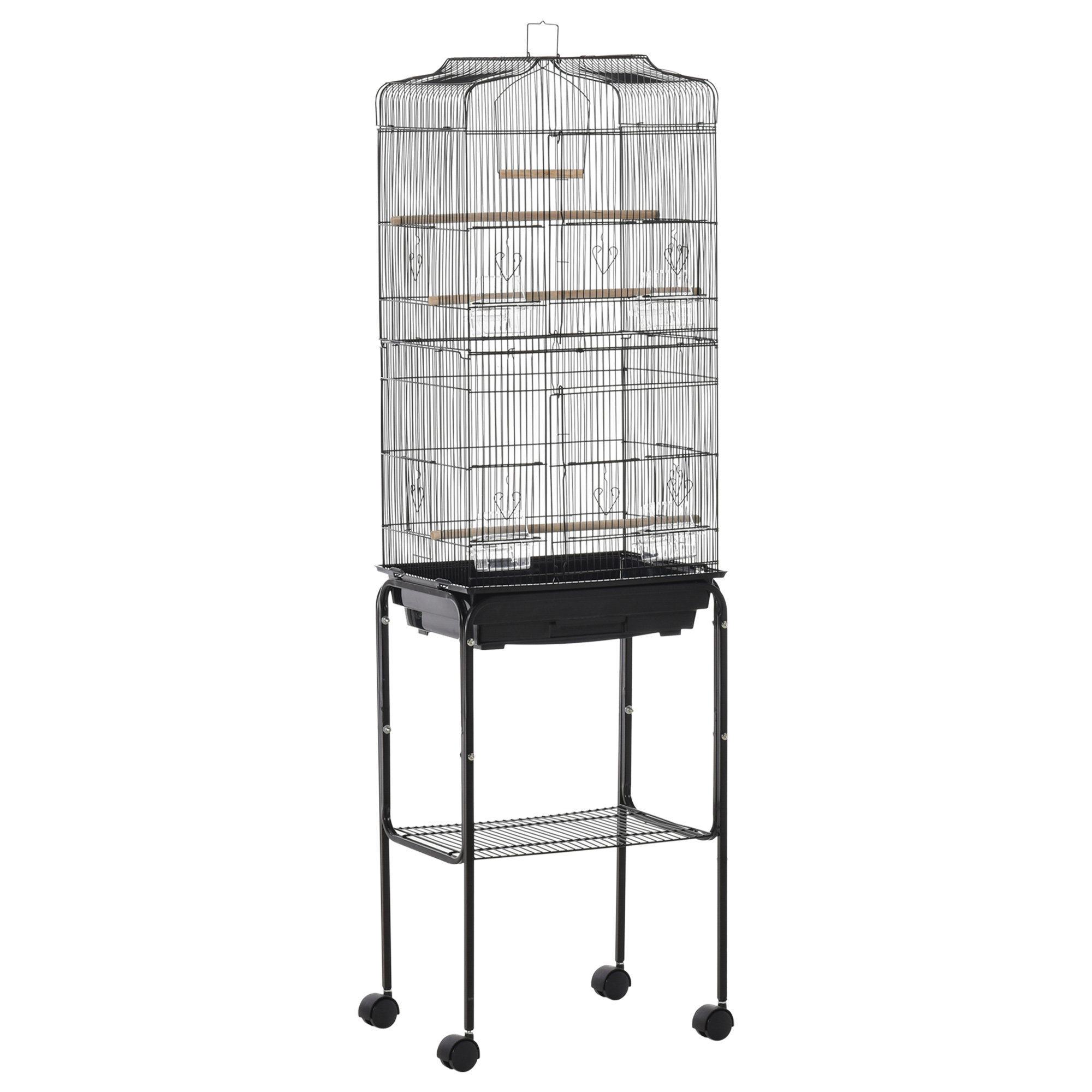 $103.28Best Value Flight Cage
PawHut Rolling Cage with Accessories
Includes feeding bowls, wooden perches, and bottom shelf storage.
Key Benefits
- Includes starter perches and bowls
- Convenient slide-out tray
- Budget friendly
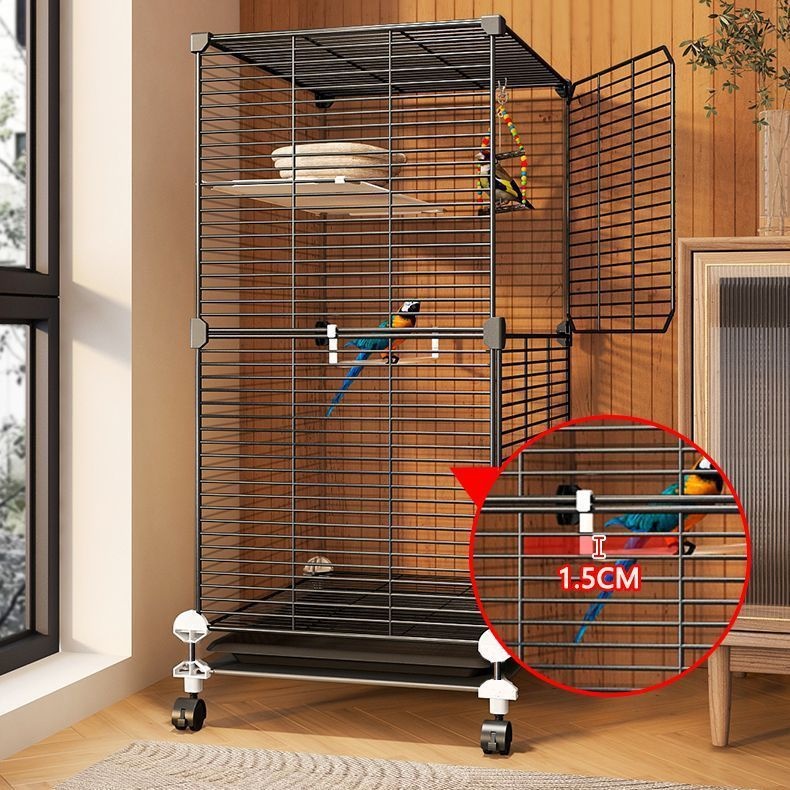 $47.02Best Starter Cage
Splash-Guard Small Parrot Ecological Villa
Compact, mess-contained starter home with rolling base.
Key Benefits
- Splash guards reduce seed mess
- Ultra lightweight
- Easy to sanitize
How to Choose the Right Cage for a Budgie
Horizontal Width Trumps Height
Always prioritize width over vertical height. A cage measuring 30 inches wide allows your budgie to flutter between perches and exercise flight muscles, whereas a tall 40-inch tower with a narrow 16-inch base only encourages sedentary climbing.
Bar Spacing and Orientation
Safe bar spacing for budgies is strictly 1/2 inch (1.27 cm) or smaller. Horizontal bars on at least two sides are necessary for natural climbing and exercise.
Easy-Clean Slide-Out Grates and Trays
Budgies produce frequent droppings and shed seed husks continuously. Look for a pull-out bottom grate and deep debris tray that allow daily cleaning without giving the bird an escape route.
Dangerous Cage Mistakes to Avoid
These common cage selection errors can cause physical trauma, behavioral disorders, or fatal head entrapment.
Buying round or Victorian dome-top cages
Round cages lack corners where birds feel secure when resting, and converging top bars can trap small toes and beaks.
Using bar spacing greater than 1/2 inch
A budgie can easily slip its head between 5/8-inch or 3/4-inch bars and suffer neck compression or suffocation.
Overcrowding the interior with straight dowel perches
Uniform dowel perches cause pressure sores (bumblefoot). Use natural varied-diameter branches and leave a clear flight corridor.
Frequently Asked Questions
What is the absolute minimum cage size for one budgie?
The absolute minimum is 18" x 18" x 24", but avian experts universally recommend a 30" wide flight cage as the standard for long-term health and wing conditioning.
Can two budgies share a cage?
Yes, but the cage should be at least 30 to 36 inches wide so each bird has room to stretch wings and maintain personal perch boundaries.