Tracked delivery30-day returns
Back to Bird Hub
Budgie

Budgie Hub

Budgies are so common that people often underrate them. They are small and easy to find, but they are not throwaway beginner birds. They learn sounds, watch social cues, and need real interaction. A solo budgie left with a mirror can bond to the reflection and lose interest in people. Forehead bars, cere color, and iris rings can help with age and sex clues, but pale mutations and breeding condition complicate the picture. A good budgie home enjoys chatter, training, and daily flight time. A poor one expects a mirror and a seed cup to do all the work.

At a Glance

Size

Small

Lifespan

5-15 years

Noise

Medium

60-70 dB

Training

Easy

Talking

Surprisingly

Best For

Homes with limited space but daily interaction time
People who enjoy small flock birds, chatter, and training
Beginners willing to manage mirrors and social needs

Not For

Owners who want a bird left alone all day
People sensitive to frequent high-pitched chirping
Anyone hoping a mirror can replace companionship

Noise Comparison

Where does a Budgie's call sit against familiar everyday sounds?

65 dB·Medium
QuieterLouder

Whisper · 30 dB

Library · 40 dB

Conversation · 60 dB

Vacuum Cleaner · 75 dB

Measured level

65 dB

Quieter than

5 · Vacuum Cleaner, Lawnmower

Louder than

3 · Library, Conversation

Whisper

30 dB

Library

40 dB

Conversation

60 dB

Vacuum Cleaner

75 dB

Lawnmower

90 dB

Rock Concert

110 dB

Chainsaw

120 dB

Jet Engine (100ft)

140 dB

Care Commitment

What does it realistically take to live well with a Budgie?

Beginner fit

Good

Easier everyday fit.

Daily Time

1–2 hrs/day

Light

Noise

60-70 dB

Noticeable

Lifespan

5-15 years

Short

Space

Small

Small

Experience

Easy

Beginner

Daily reality

Budgie fits into home life more easily, but still needs routine interaction and enrichment.

  • A steady routine makes noise easier to manage.
  • Enrichment beats punishment for most behavior issues.

Next steps

If this species does not have a dedicated guide yet, this falls back to the full care manuals library.

About Budgies

Personality

Chatterboxes! Budgies are active, social, and can be excellent talkers. They are often underestimated due to their size.

Diet

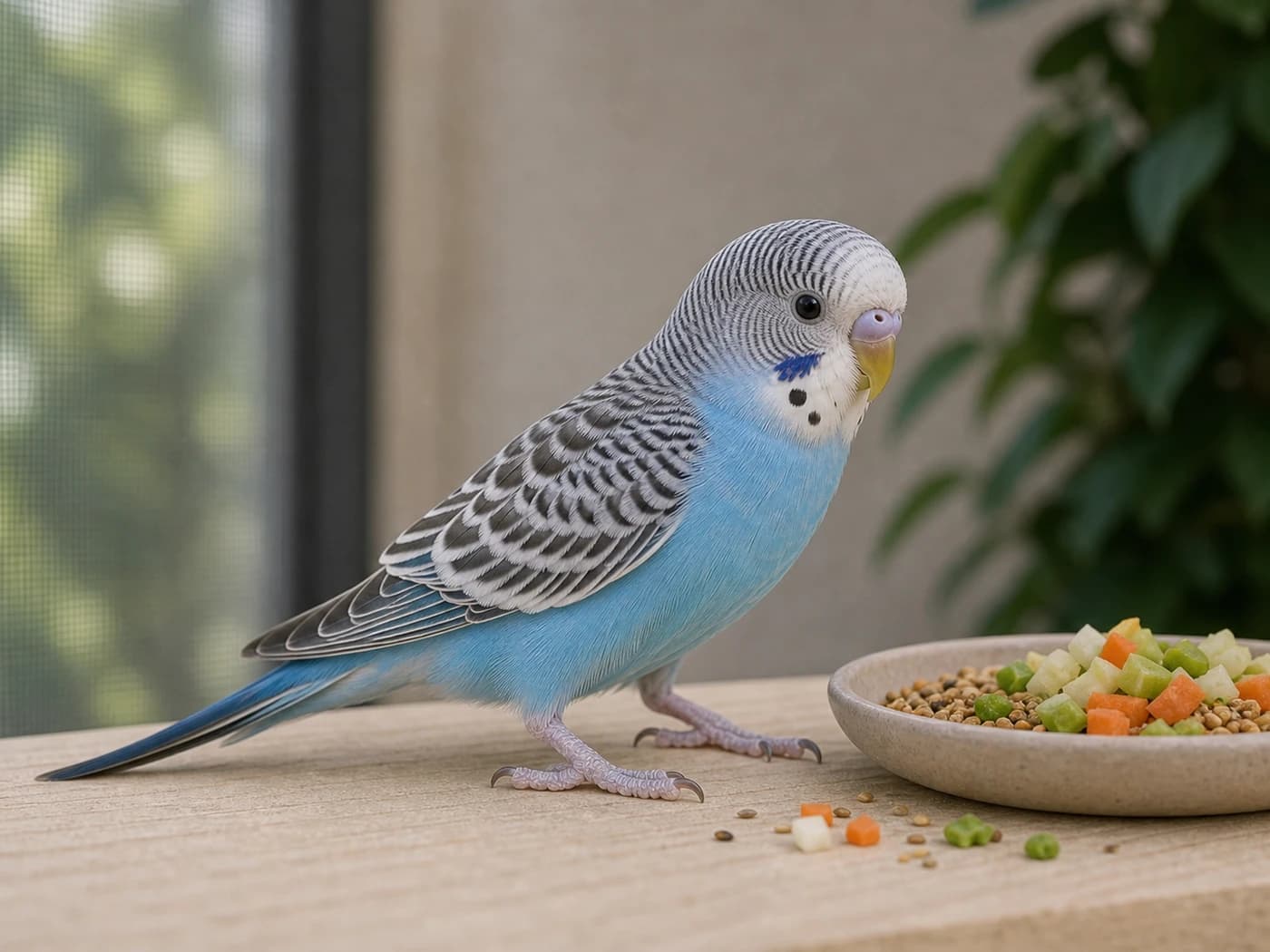
Seed-only diets shorten their life. Convert to fine pellets and chop (finely minced veggies).

Behavior

They fly miles in the wild. A flight cage is essential for their health.

Varieties & Colors

Budgies are so common that people often underrate them. They are small and easy to find, but they are not throwaway beginner birds. They learn sounds, watch social cues, and need real interaction. A solo budgie left with a mirror can bond to the reflection and lose interest in people. Forehead bars, cere color, and iris rings can help with age and sex clues, but pale mutations and breeding condition complicate the picture. A good budgie home enjoys chatter, training, and daily flight time. A poor one expects a mirror and a seed cup to do all the work.

7 entriesvisual ID

How They Differ

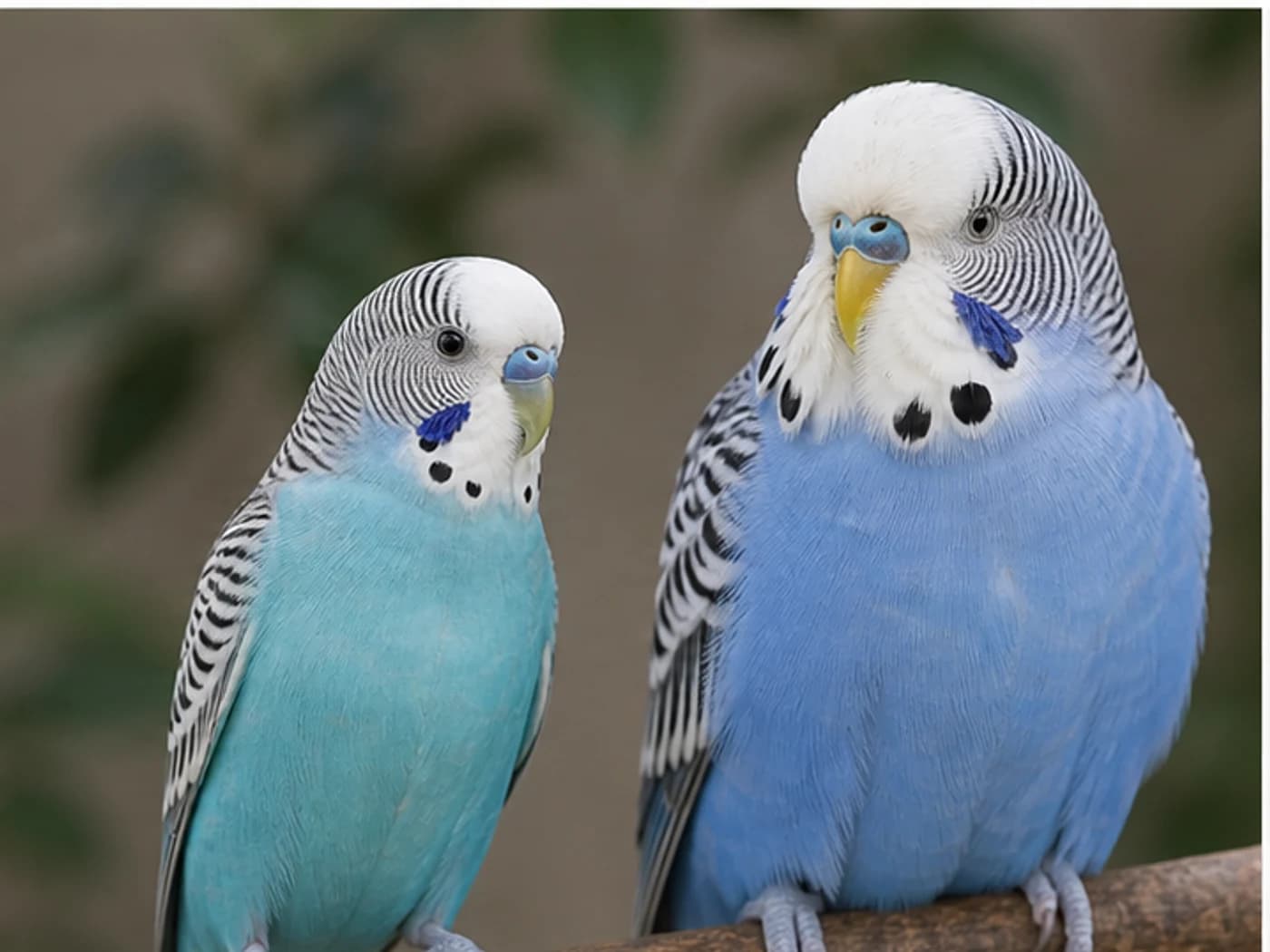
Two main types: American budgie (standard, smaller, ~18 cm) and English budgie (show type, larger, ~22 cm, rounder larger head). Enormous variety of color mutations including green, blue, yellow, white, violet, and dozens more.

How These Varieties Happen

Budgerigars have over 30 known genetic mutations producing hundreds of color combinations. The color system divides into green series (with yellow pigment) and blue series (without yellow pigment).

Wild Green / Light Green Budgie realistic reference image

Standard label

Wild Green / Light Green

Wild-type

Variety

Common names

Wild-typeLight GreenNormal Green

Owner shorthand

Wild green is the easiest budgie to keep - best constitution

Look

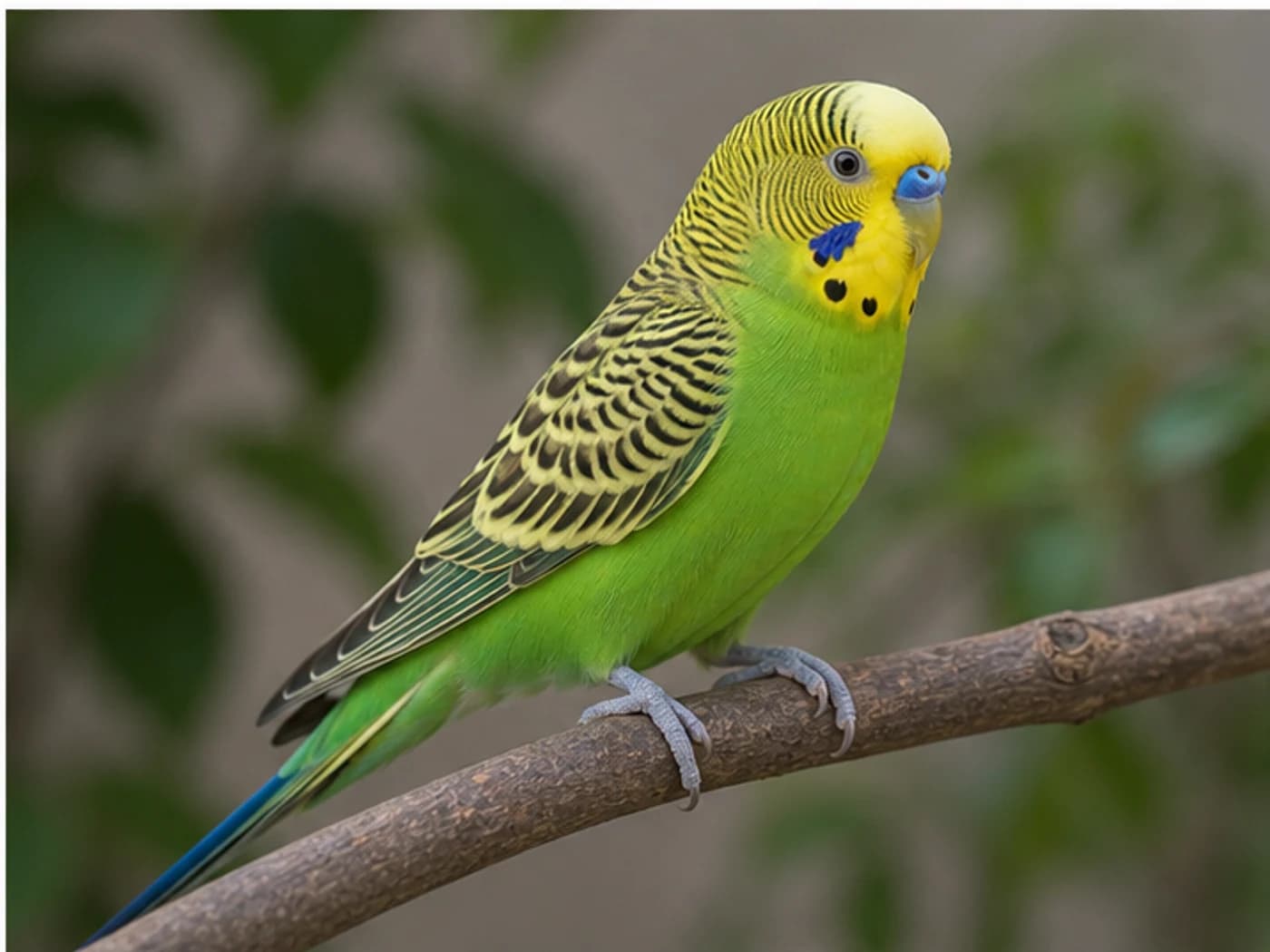
Wild-type coloration. Bright green body, yellow head, black throat spots, black striping on back. The foundation for all color mutations.

Genetics

No mutations; wild-type. Green color results from yellow psittacin pigment combined with structural blue coloration.

Health & care

Wild green is close to the original look and easy for beginners to assess, but health still depends on energy, breathing, droppings, weight, and care.

Sexing tip

Adult males have blue cere (above beak); females have brown or white cere.
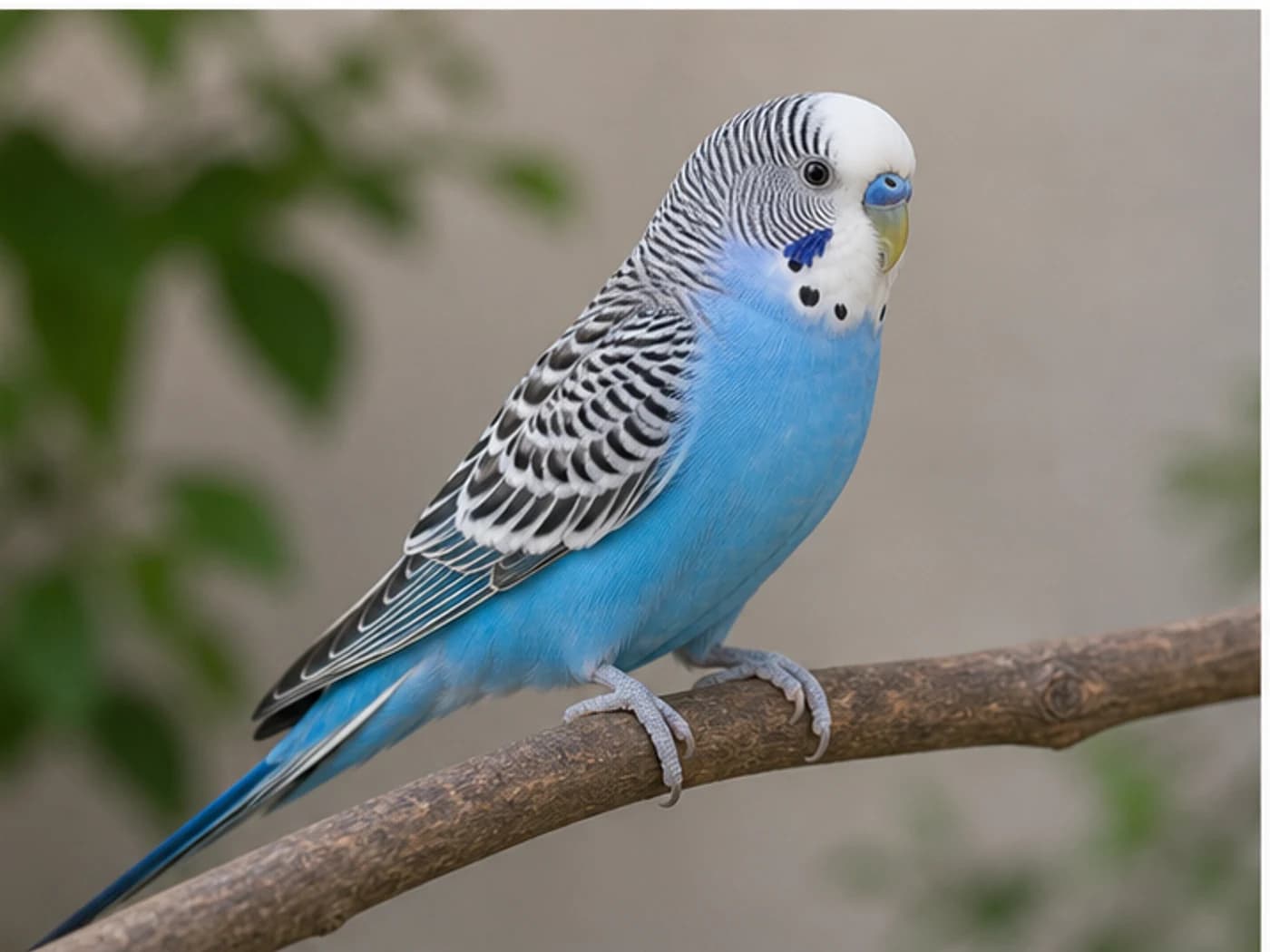
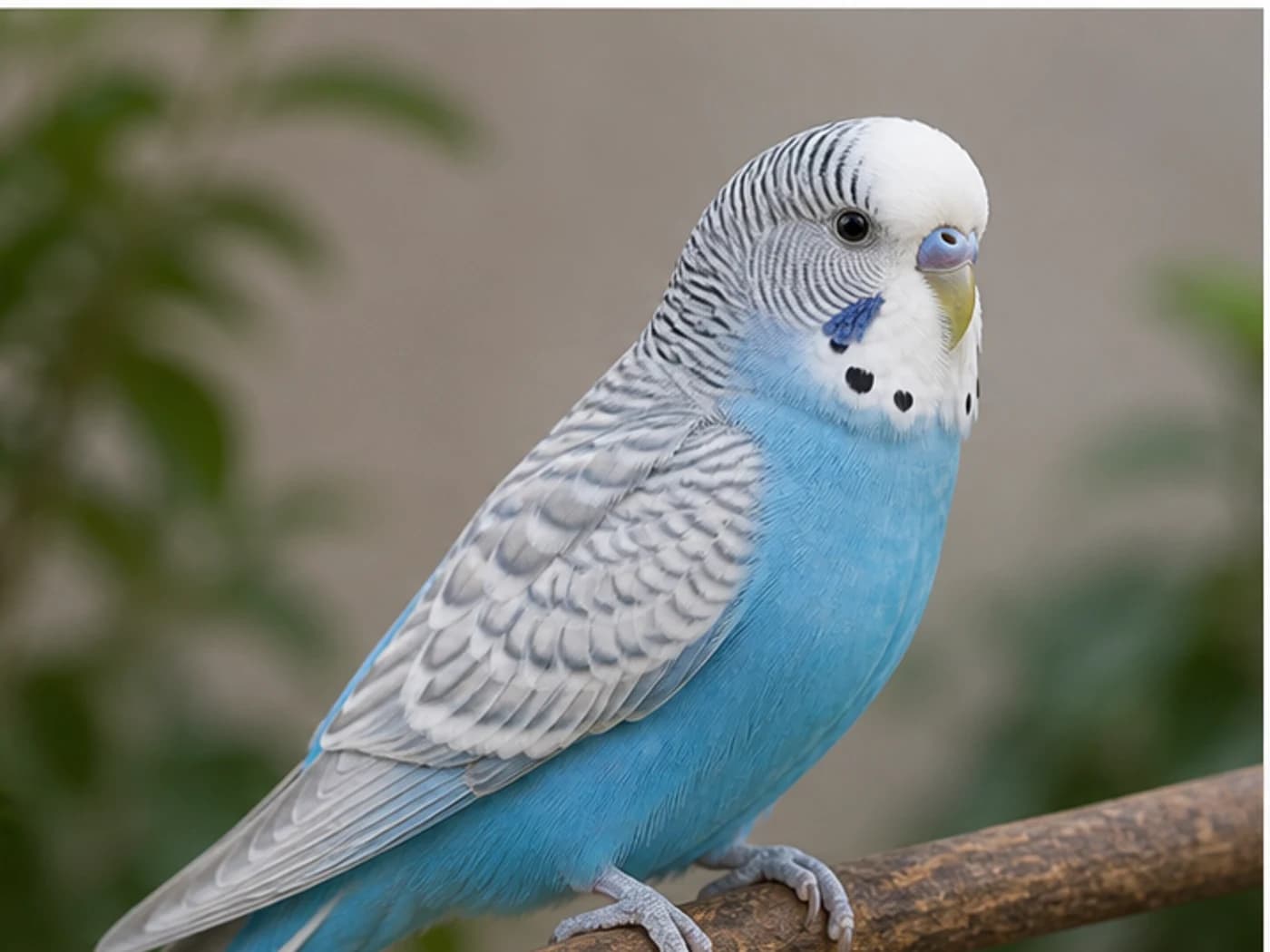
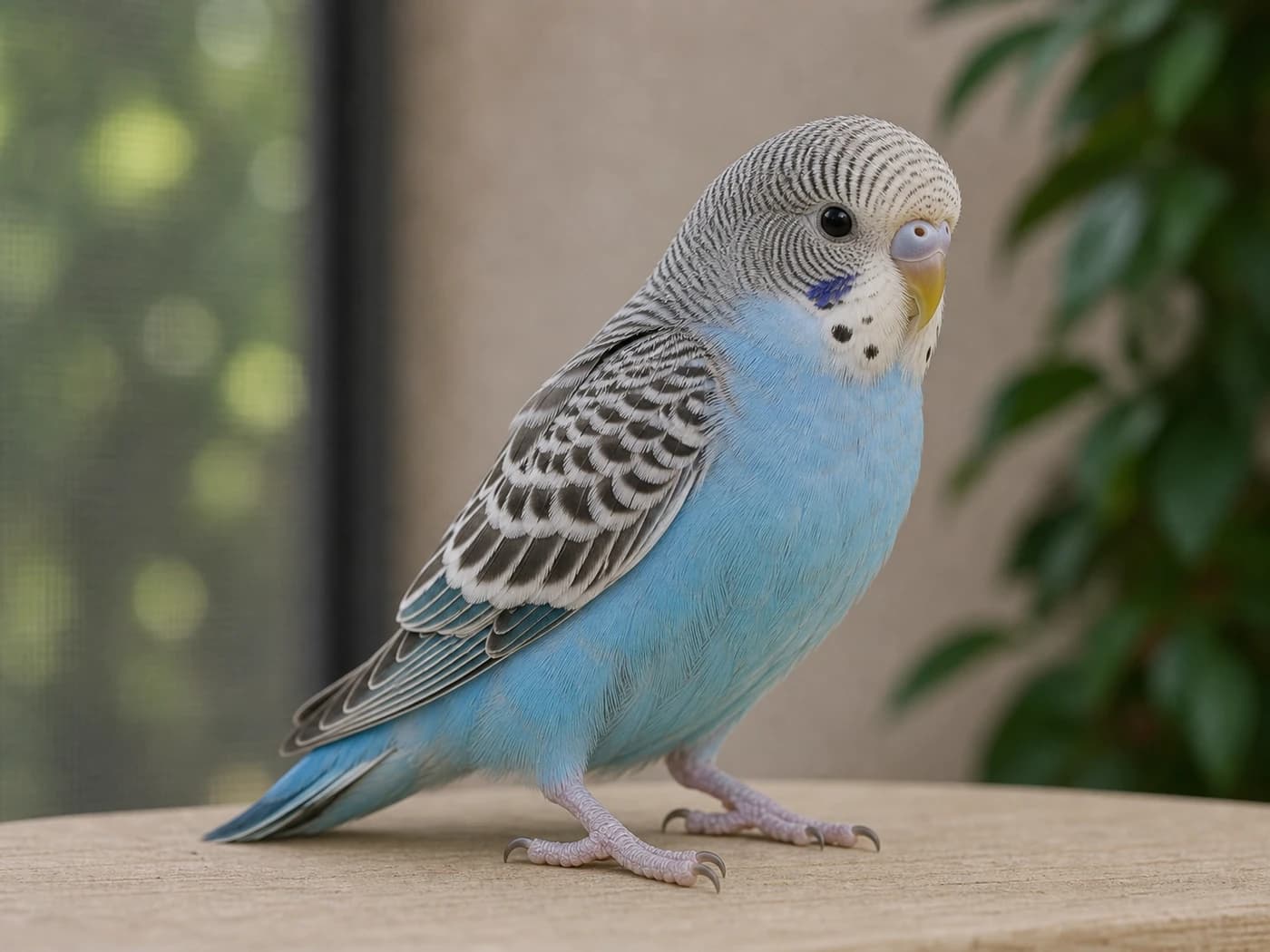
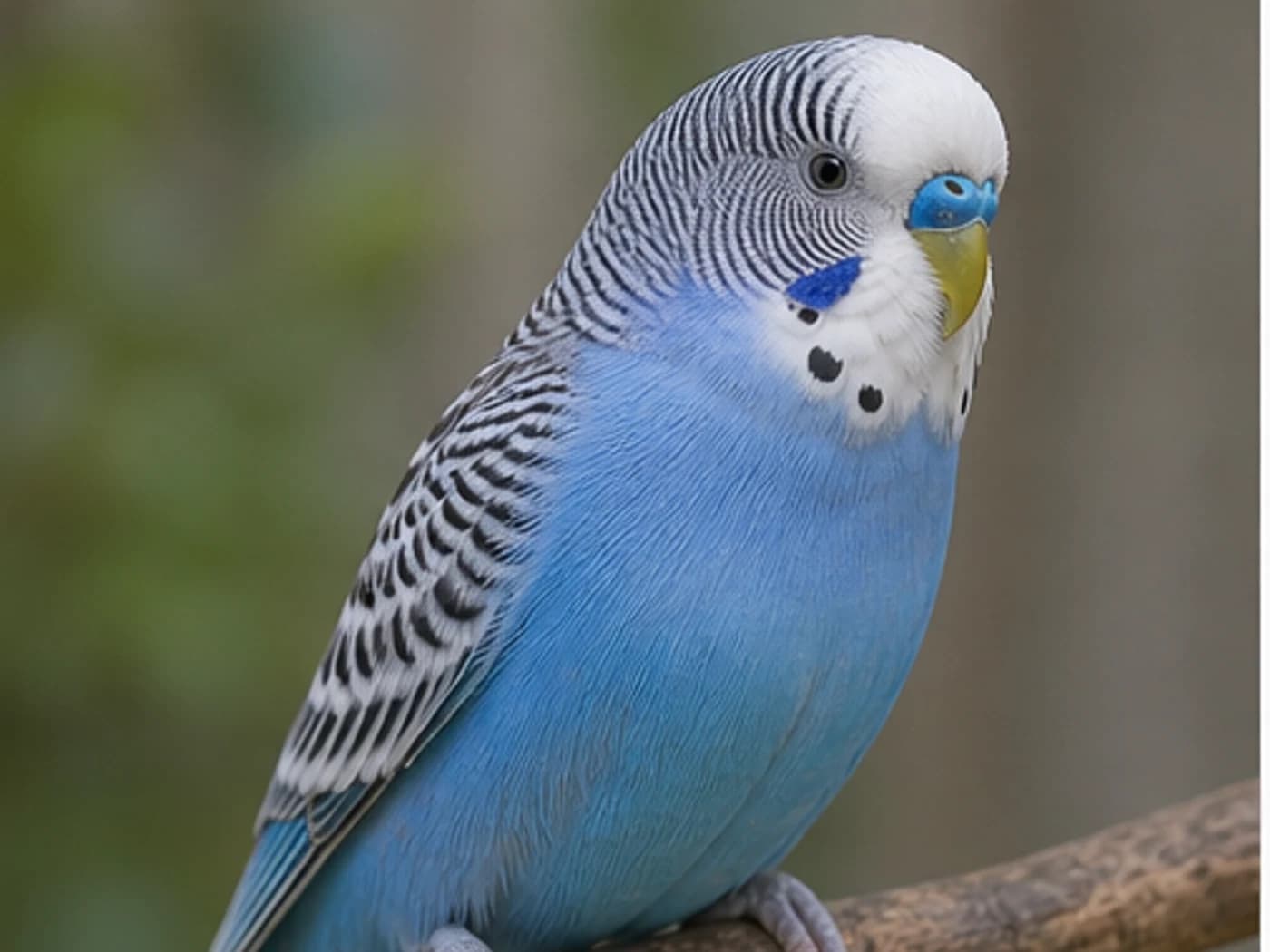
Sky Blue Budgie realistic reference image

Standard label

Sky Blue

Variety

Common names

Sky BlueBlue

Owner shorthand

Sky blue is the foundation of the blue series

Look

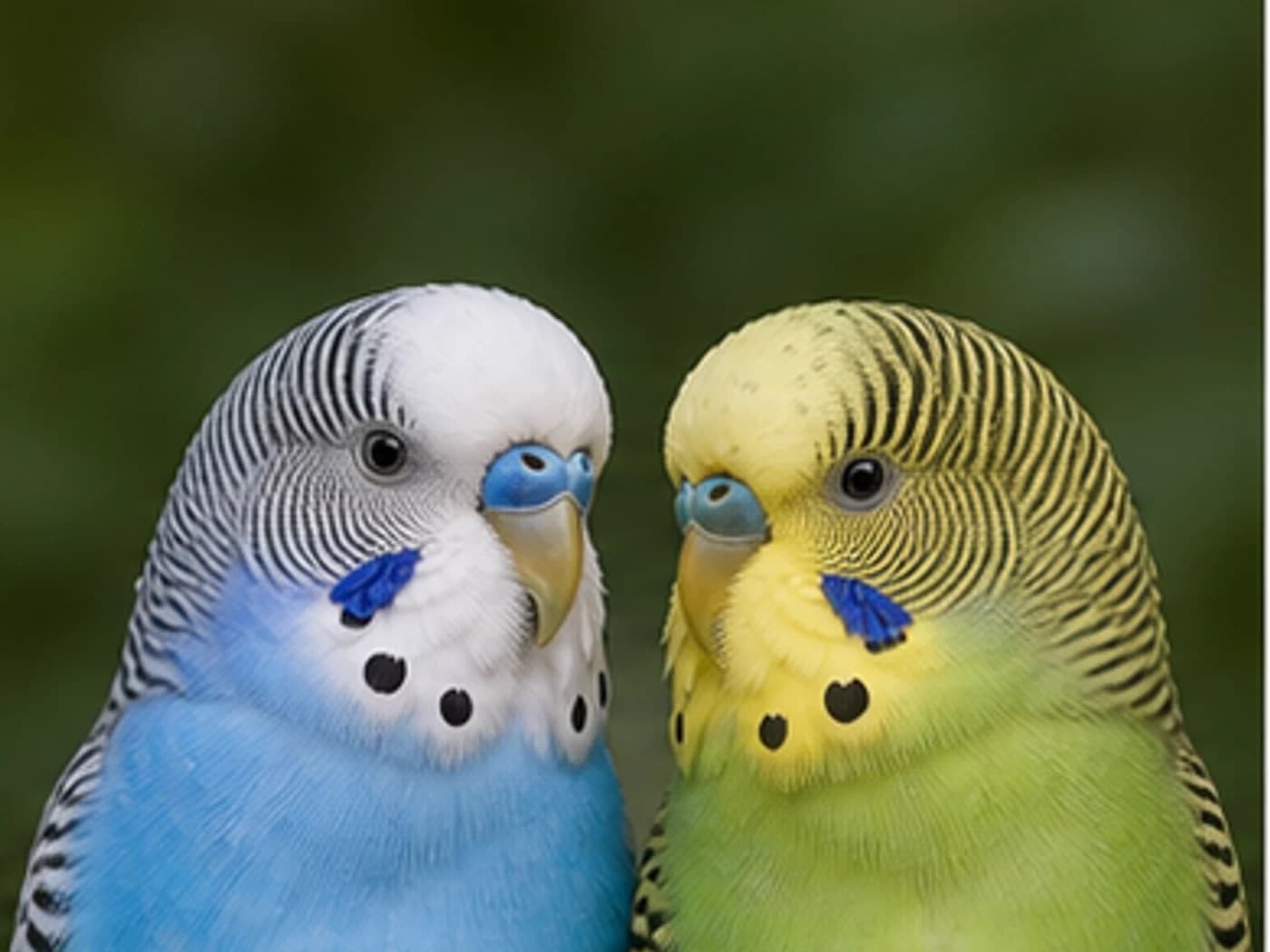
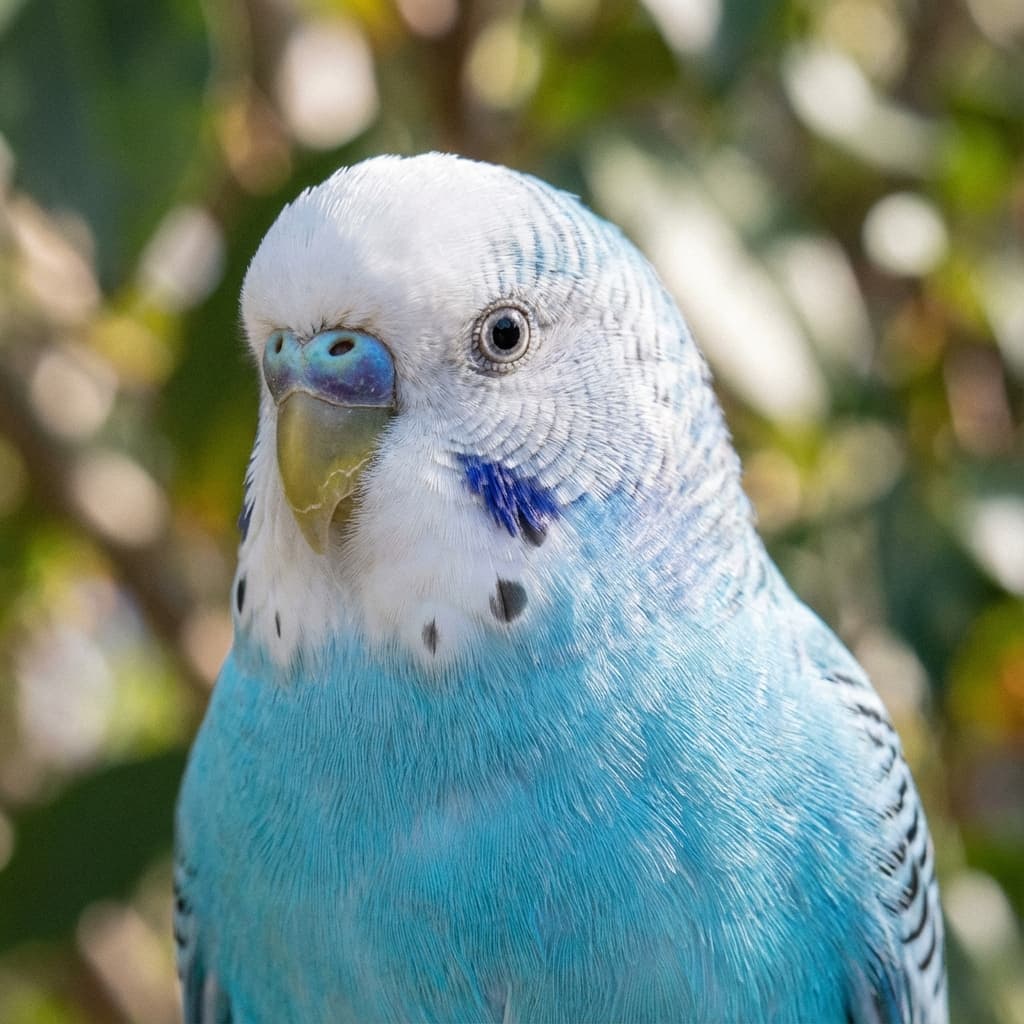
Sky blue body, white head, black throat spots, black striping on back. The base color of the blue series.

Genetics

Autosomal recessive. Mutation eliminates yellow psittacin pigment, leaving only structural blue coloration.

Health & care

Care is usually similar to wild green; do not judge health by color alone. Look at energy, weight, feather condition, and source quality.

Sexing tip

Adult males have deep blue cere; females have white or pale blue cere.

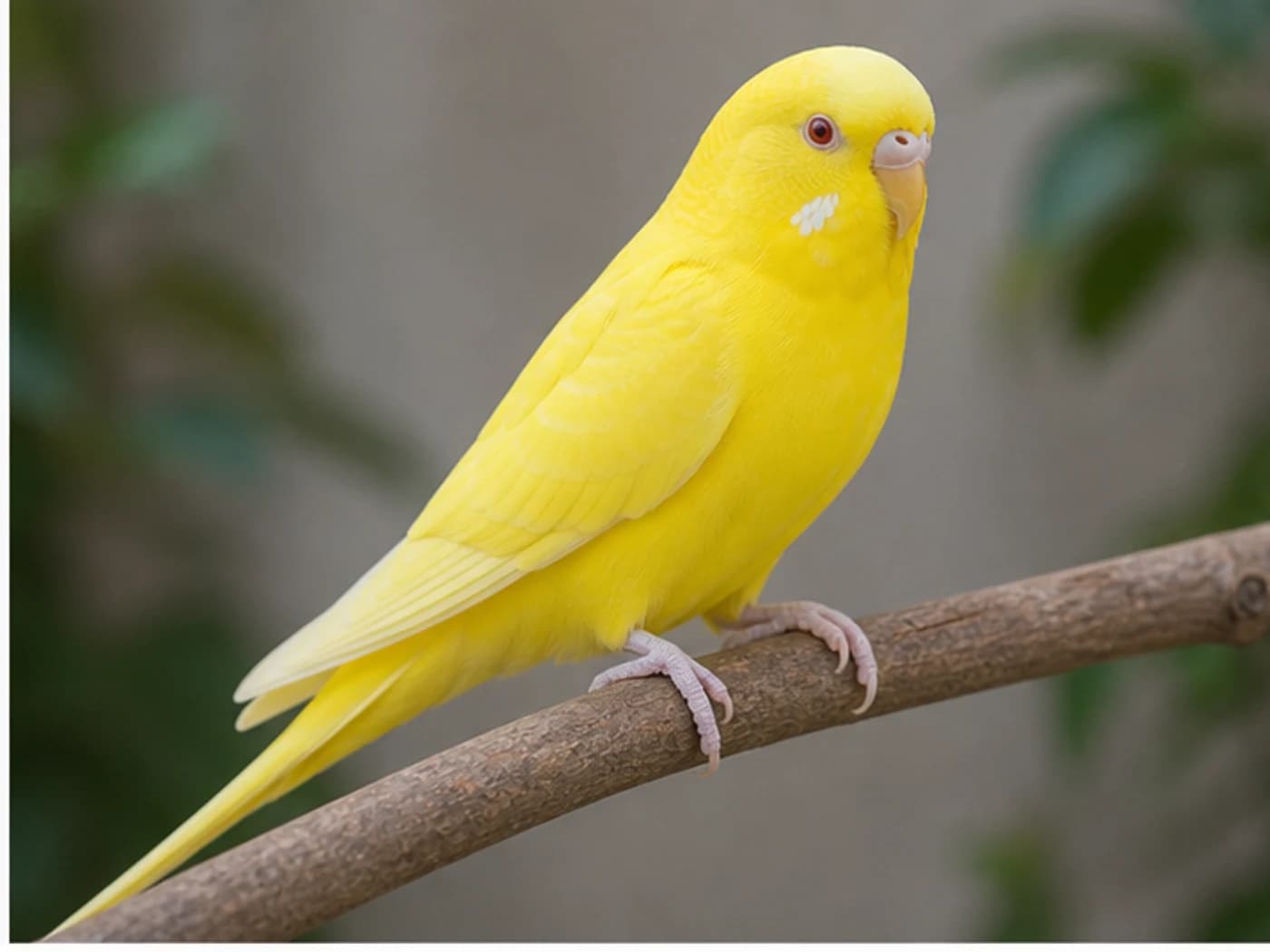
Lutino Budgie realistic reference image

Standard label

Lutino

Variety

Common names

LutinoYellow budgieRed-eyed yellow

Owner shorthand

Lutino budgies look like little suns

Look

Bright yellow plumage with red eyes, no black markings or stripes. The lutino version of the green series.

Genetics

Sex-linked recessive. Eliminates melanin, leaving only yellow psittacin, producing all-yellow appearance and red eyes.

Health & care

Poor eyesight (red eyes), slightly weaker constitution than wild green.

Sexing tip

Males have pink or pinkish-purple cere; females have white or pale pink cere.

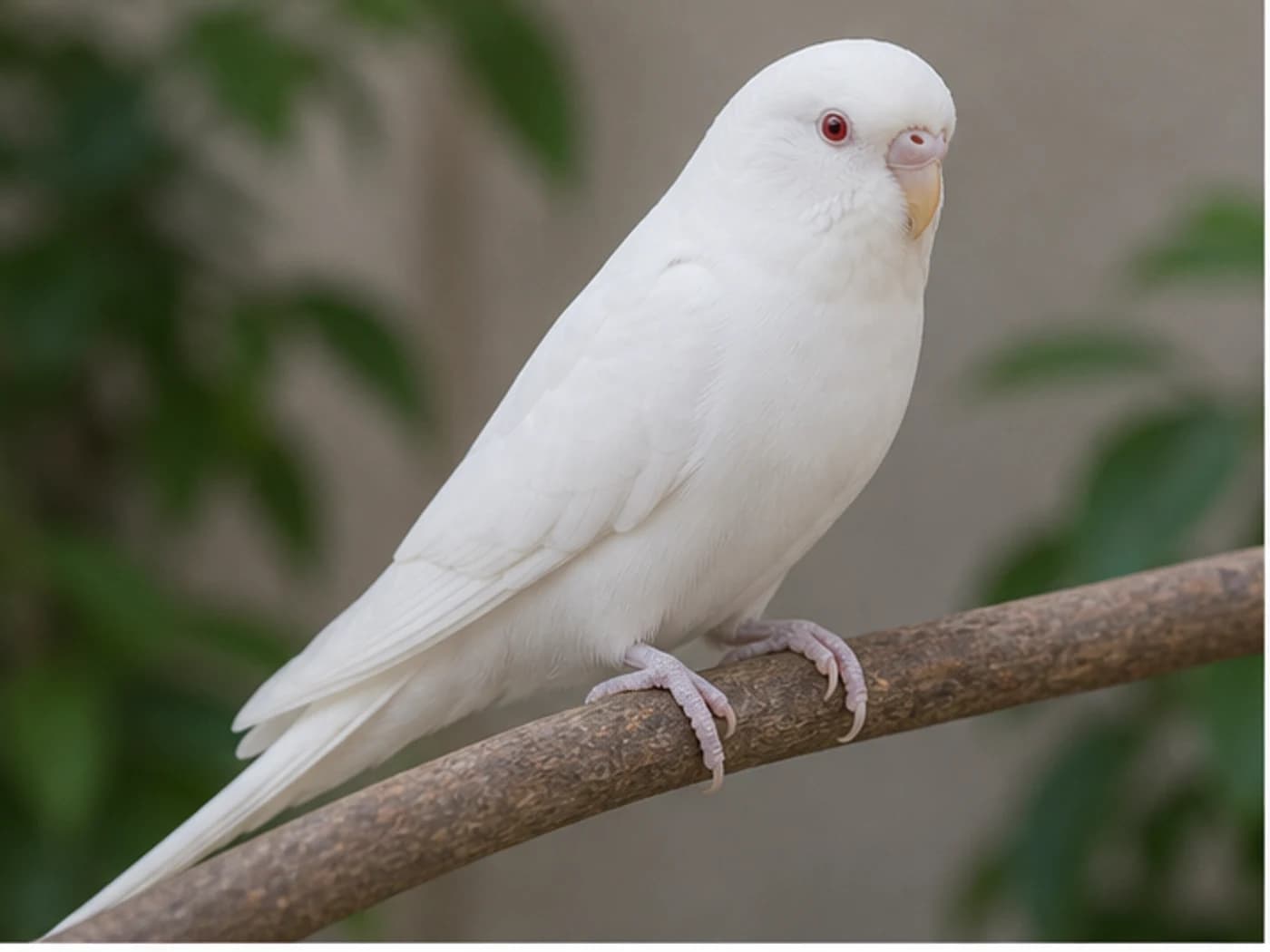
Albino Budgie realistic reference image

Standard label

Albino

Variety

Common names

AlbinoWhite budgieRed-eyed white

Owner shorthand

Albino budgies are the purest color - like a little snowflake

Look

Pure white plumage with red eyes, no pigment. The lutino version of the blue series (blue + lutino double mutation).

Genetics

Double mutation: blue (autosomal recessive) + lutino (sex-linked recessive). Together they eliminate all pigments.

Health & care

Poor eyesight, slightly weaker constitution.

Sexing tip

Males have pink cere; females have white cere.

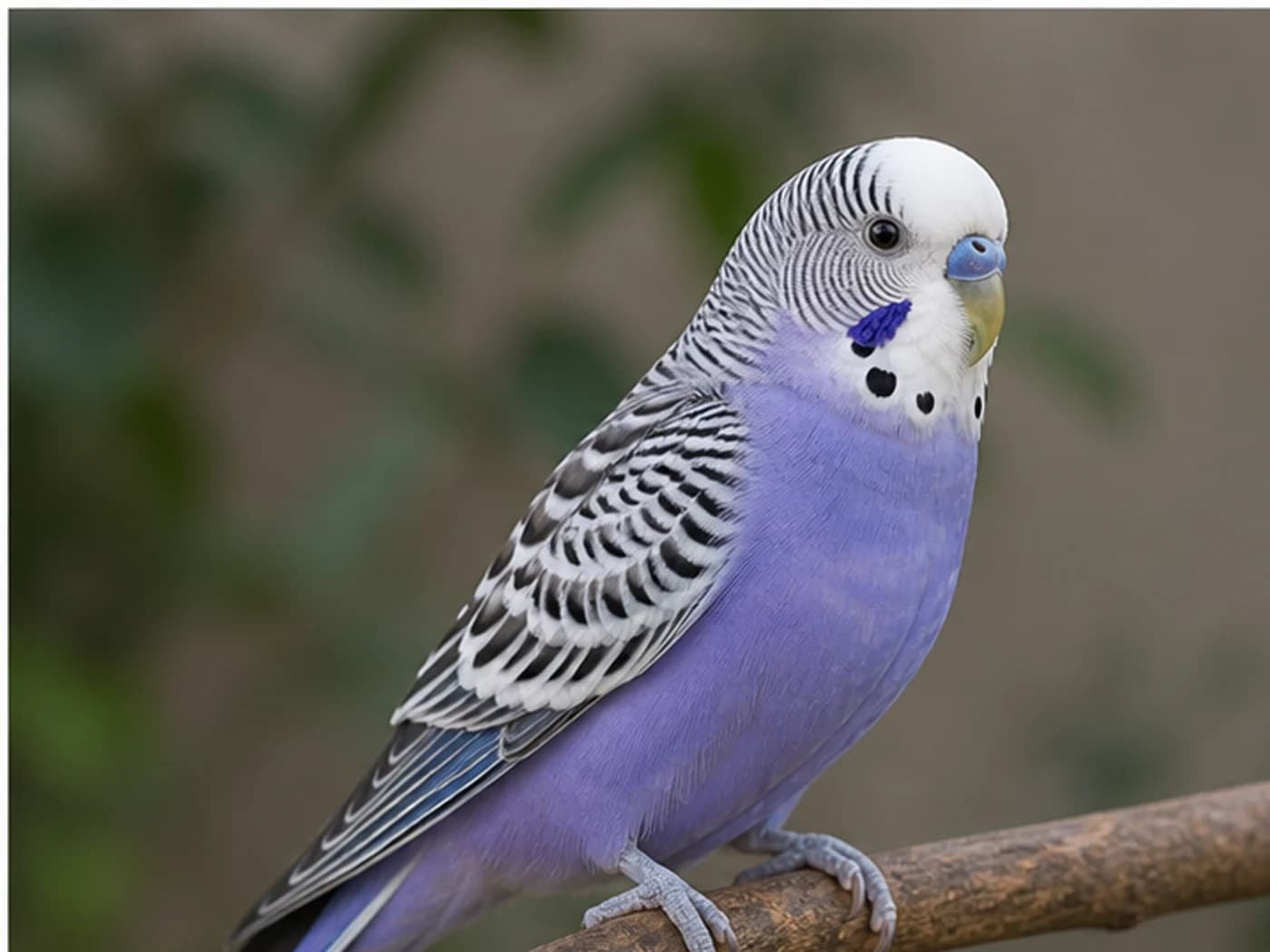
Violet Budgie realistic reference image

Standard label

Violet

Variety

Common names

VioletVisual violet

Owner shorthand

Violet is one of the hardest colors to breed consistentlyTrue deep violet requires double-factor violet + blue series

Look

Deep violet/purple plumage; one of the most popular mutations. Requires specific gene combinations for the deepest purple expression.

Genetics

Autosomal dominant (violet factor). Violet factor combined with blue series produces the best visual effect; combined with green series produces greenish-violet.

Health & care

Good constitution; no specific health concerns.

Sexing tip

Same as blue series: males have deep blue cere; females have white or pale blue cere.

Spangle Budgie realistic reference image

Standard label

Spangle

Variety

Common names

SpangleDouble-factor spangle

Owner shorthand

Double-factor spangle looks like lutino but has dark eyes, not red

Look

Feather markings are reversed: black stripes become white/yellow outlines with dark centers. Double-factor spangle is nearly all yellow or white with minimal markings.

Genetics

Autosomal dominant. Single-factor spangle (one allele) reverses markings; double-factor spangle (two alleles) nearly eliminates all markings.

Health & care

Good constitution; no specific health concerns.

Sexing tip

Same sexing method as the corresponding base color series.

American Budgie vs English Budgie body type Budgie realistic reference image

Standard label

American Budgie vs English Budgie body type

Body type comparison

Variety

Common names

pet budgieshow budgieEnglish budgerigar

Owner shorthand

English budgies look like plush show birdsAmerican budgies feel more athletic

Look

American pet budgies are lighter and cleaner-faced; English budgies are larger, fluffier, and heavier-headed with more pronounced brow feathering.

Genetics

This is not a single color mutation. It is a body and feather type shaped by long-term show-line breeding.

Health & care

English budgies need closer attention to weight, activity, and breathing; American pet budgies are usually lighter and more agile.

Sexing tip

Body type does not sex the bird. Cere color, age, and breeding condition still matter.

Naming Notes

Chinese owner phrases, English common names, and market labels often do not translate one-to-one, so the tricky parts are separated here.

Common aliases

budgerigarparakeetpet budgie

In the US, parakeet often means budgie in pet stores, but parakeet is broader than budgerigar.

English budgie is a show/body type, not a separate species.

Wild green being called hardy is owner shorthand, not a guarantee of individual health.

Detailed Field Notes

These notes isolate details that are easy to mistranslate, oversimplify, or overclaim. Each one separates the claim, why it matters, and what an owner should do.

6 notes

Cere sexing has exceptions

Breeder-guide supported

Careful claim

Adult normal budgies can often be sexed by cere color, but juveniles, breeding condition, and ino mutations can break the simple color rules.

Why it matters

The page should not stop at blue male, brown female, because that misleads buyers of young or pale mutation birds.

Owner action

Combine age, iris, forehead bars, cere texture, and breeder history; use DNA when uncertain.

A mirror is not a companion

Owner-common + behavior guidance

Careful claim

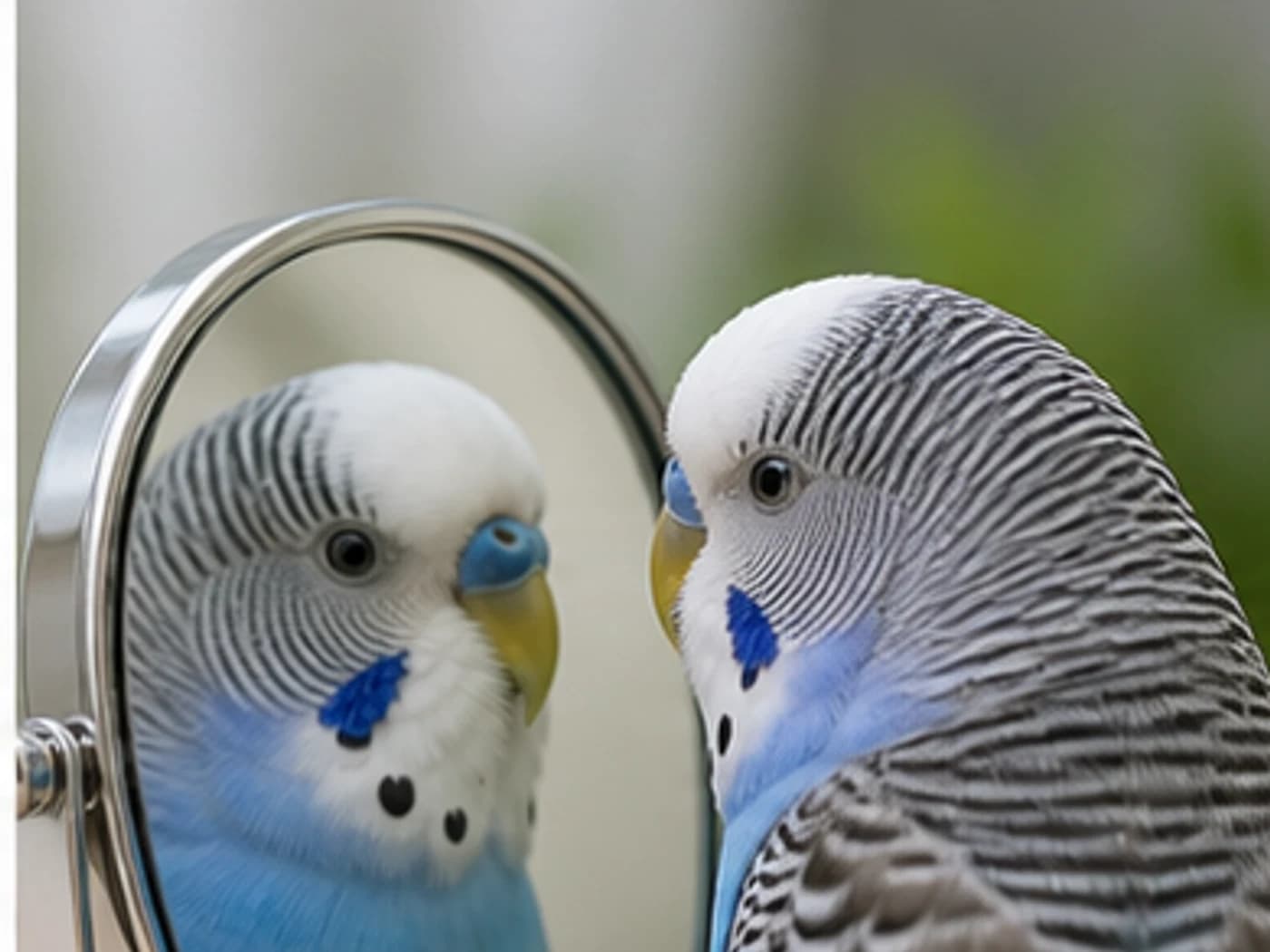
A budgie may treat a reflection as a partner, leading to singing, regurgitation, mirror guarding, and less human interaction.

Why it matters

Mirror fixation is not just a joke; it can change the social life of a solo budgie.

Owner action

Make mirrors a short controlled stimulus, and replace constant mirror access with training, foraging, and real interaction.

Forehead bars and iris are age clues

Breeder-guide supported

Careful claim

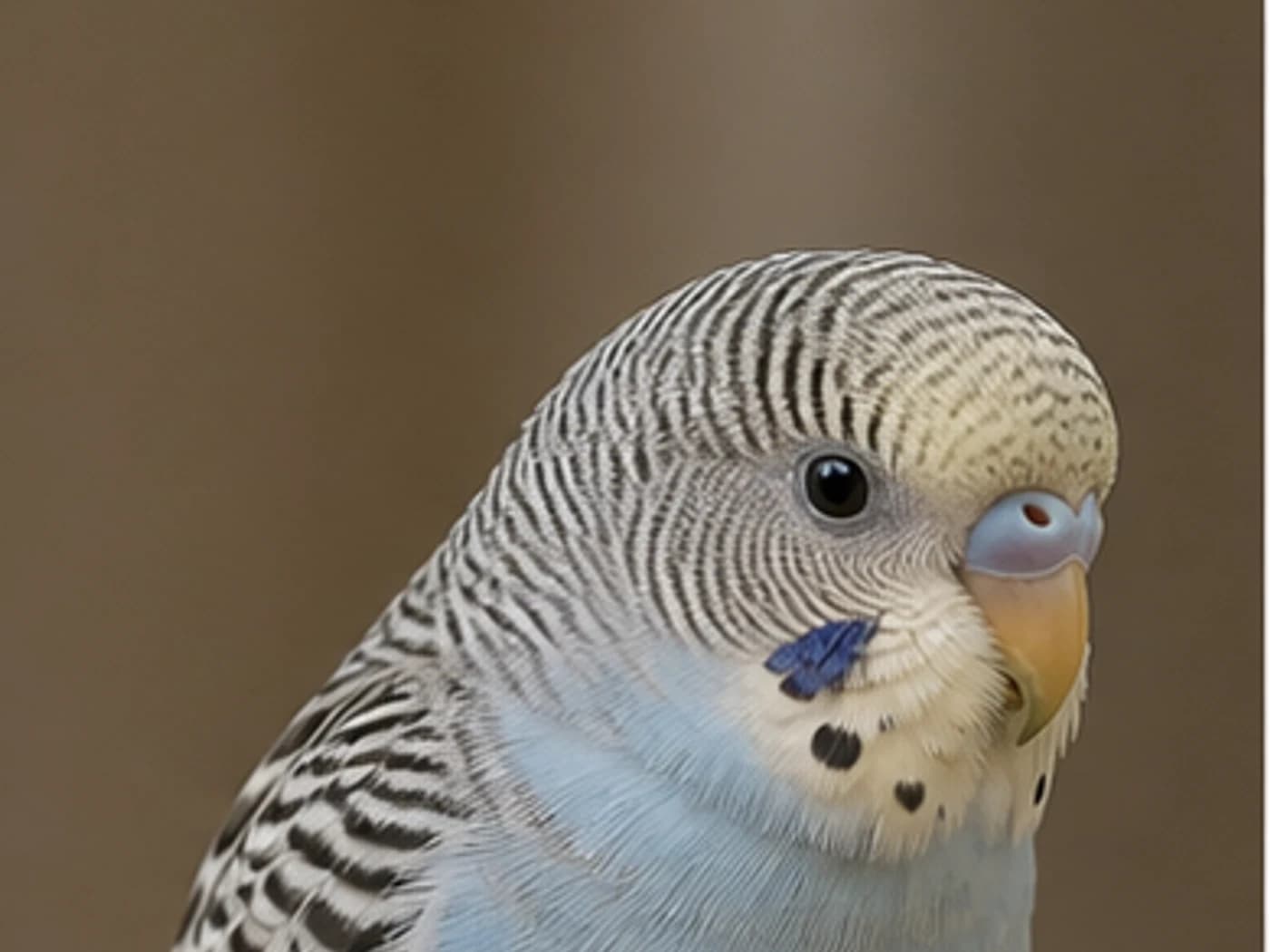
Juveniles often have forehead bars reaching close to the cere; after the first molt the forehead clears, and many adults develop a clearer iris ring.

Why it matters

This helps readers separate juvenile and adult photos, but it cannot be the only age test.

Owner action

Read bars, iris, feet, cere, and seller records together.

English budgie is not a superior species

Aviculture-common

Careful claim

English budgies are show-selected for a larger head, fluffier feathering, and heavier outline; American pet budgies are usually lighter and more agile.

Why it matters

Markets may sell English budgies as premium, but the page should frame them as a body type with different care tradeoffs.

Owner action

For English-type birds, watch weight, activity, breathing, and breeder quality closely.

Small bird, big flock budget

Species-behavior supported

Careful claim

Budgies are strongly social; solo keeping can work, but the social workload shifts heavily to the owner.

Why it matters

An inexpensive small bird is not a low-interaction pet.

Owner action

Plan daily interaction, flight time, foraging, and vocal response; if pairing, quarantine and assess compatibility first.

Seed-only diets create health debt

Veterinary nutrition supported

Careful claim

Budgies readily favor seeds, but long-term seed-only feeding can create nutrient imbalance and weight or liver risk.

Why it matters

Many beginners assume budgies naturally live on seed mix, so the page needs a transition plan.

Owner action

Gradually introduce pellets, dark greens, weighing, and foraging rather than abruptly removing familiar food.

Community Notes

These are the phrases owners commonly use when talking about Budgies in real communities.

mirror obsession

Literal meaning

Over-attachment to a mirror.

Actual meaning

A budgie may treat its reflection like a partner and interact less with people.

Used when

Used when the bird sings to, feeds, or guards a mirror obsessively.

Care implication

Limit mirror access and add human interaction, toys, or a real companion assessment.

tiny chatterbox

Literal meaning

A small bird that chatters constantly.

Actual meaning

Budgies often use chirps, head bobs, and chatter to express excitement or social needs.

Used when

Used when the bird vocalizes throughout its active hours.

Care implication

Watch changes; sudden silence or prolonged fluffing can matter more than normal chatter.

do not underestimate budgies

Literal meaning

Do not assume small means simple.

Actual meaning

Budgies are smart learners that still need social time and enrichment.

Used when

Used when people dismiss budgies as disposable beginner birds.

Care implication

Training, diet, flight space, and health checks still need real attention.

hardy wild green

Literal meaning

Wild green is considered hardy.

Actual meaning

Owners often see wild green budgies as robust, affordable, and beginner-friendly.

Used when

Used when beginners compare colors.

Care implication

Color never replaces checking energy, droppings, breathing, and weight.

Behavior Reading

Read posture, eyes, feathers, and beak use as a sequence: what you see, what it usually means, what not to assume, and what to do next.

Budgie Over-bonding with mirrors behavior reference image

Over-bonding with mirrors

What you see

Regurgitating to, singing at, or guarding a mirror.

Usually means

The bird may see the reflection as a mate and reduce human bonding.

Do not misread

It is not simply healthy companionship.

Owner action

Reduce mirror time and add training, foraging, and real social options.

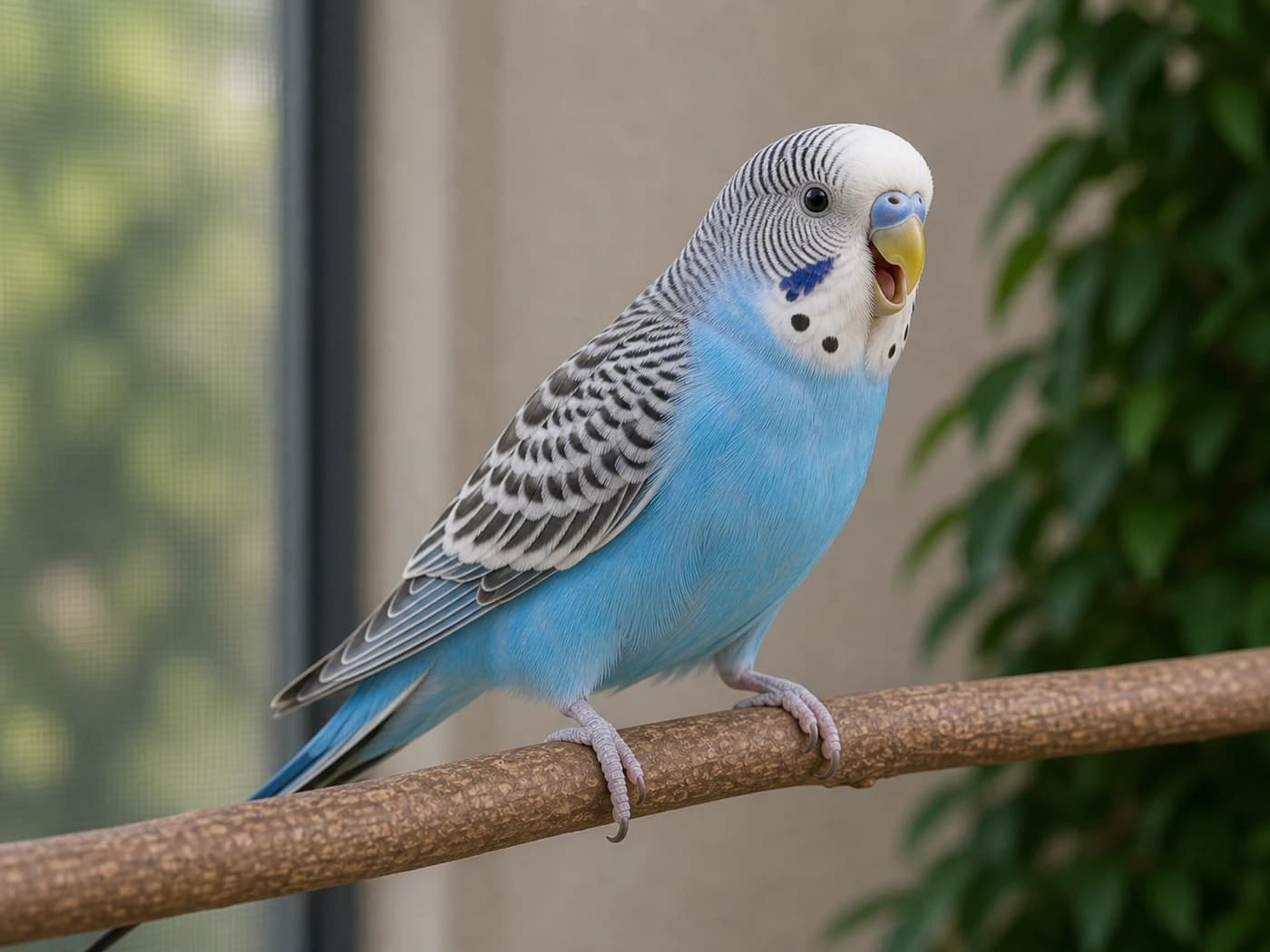
Budgie Head-bobbing chatter behavior reference image

Head-bobbing chatter

What you see

Head-bobbing, chirping, and moving toward hands or flockmates.

Usually means

Often excitement, attention-seeking, or social display.

Do not misread

If paired with panting, fluffing, or imbalance, it is not normal excitement.

Owner action

Respond socially while rotating enrichment sources.

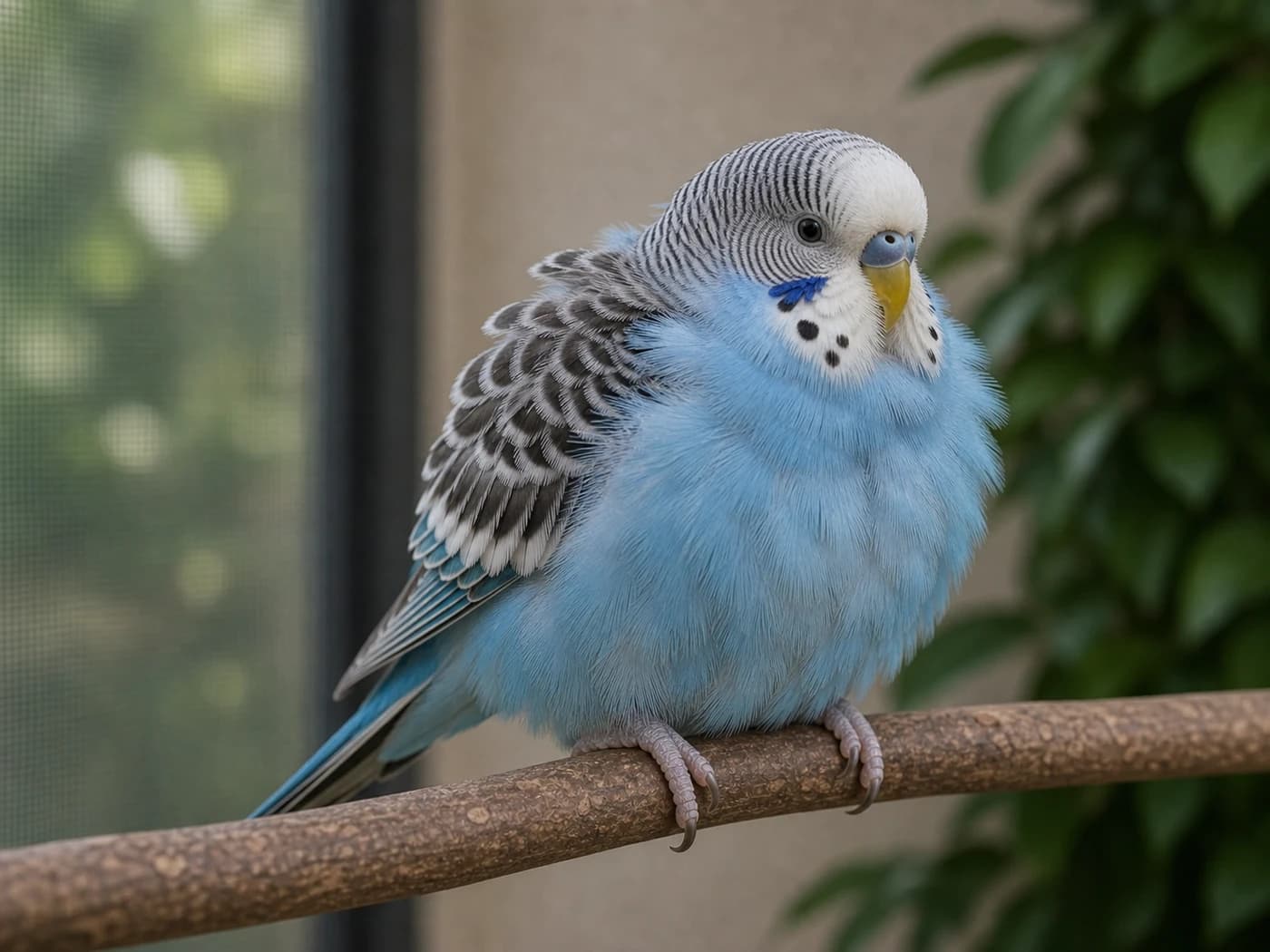
Budgie Fluffed up too long behavior reference image

Fluffed up too long

What you see

Long daytime fluffing, hunching, and low activity.

Usually means

May indicate discomfort or trying to conserve heat.

Do not misread

Do not dismiss it as cute fluffiness.

Owner action

Warm the bird, weigh it, watch droppings, and contact an avian vet if needed.

Budgie Strong flock need behavior reference image

Strong flock need

What you see

Calling for people, searching for flockmates, or vocalizing when alone.

Usually means

Budgies are highly social; solo birds need more interaction.

Do not misread

Do not label chronic loneliness as independence.

Owner action

Schedule interaction, flight, training, or consider a compatible companion.

Budgie Juvenile forehead bars behavior reference image

Juvenile forehead bars

What you see

Young budgies have bars closer to the cere; after molt the forehead clears.

Usually means

It is one age clue.

Do not misread

Do not age every bird by bars alone; variety and individual differences matter.

Owner action

Combine bars with iris, cere, feet, and seller history.

Growth Stages

This timeline keeps the typical development from egg to adult in one place so you can compare looks, feather changes, and feeding milestones.

Budgie Egg growth-stage reference image

Egg

Incubation

Age range

Look

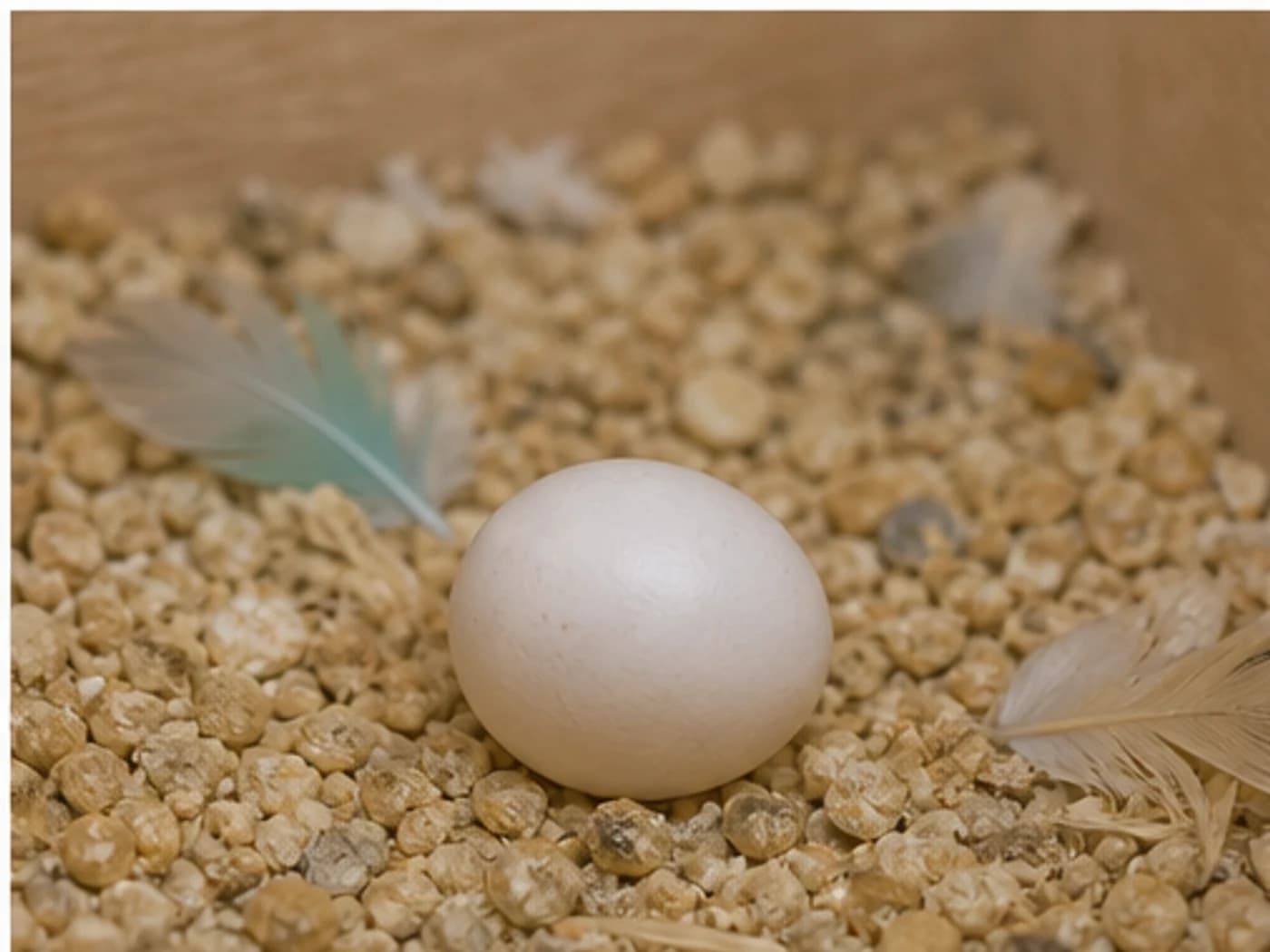
Budgie plumage is not visible yet; shell condition, parent behavior, and incubation stability matter most.

What people watch

Avoid unnecessary disturbance; focus on humidity, temperature, parent stress, and hygiene.

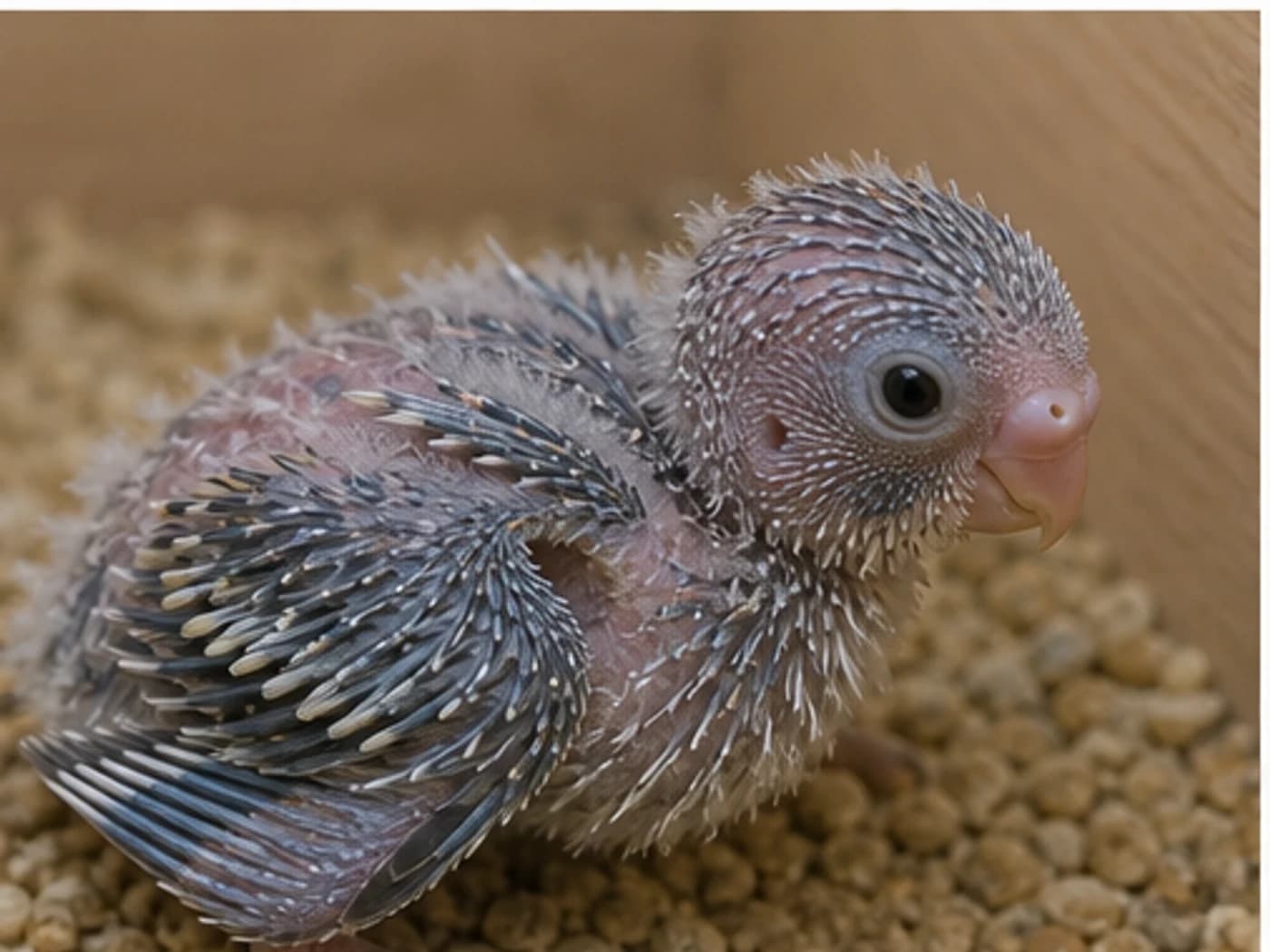
Budgie Hatchling growth-stage reference image

Hatchling

0-7 days after hatch

Age range

Look

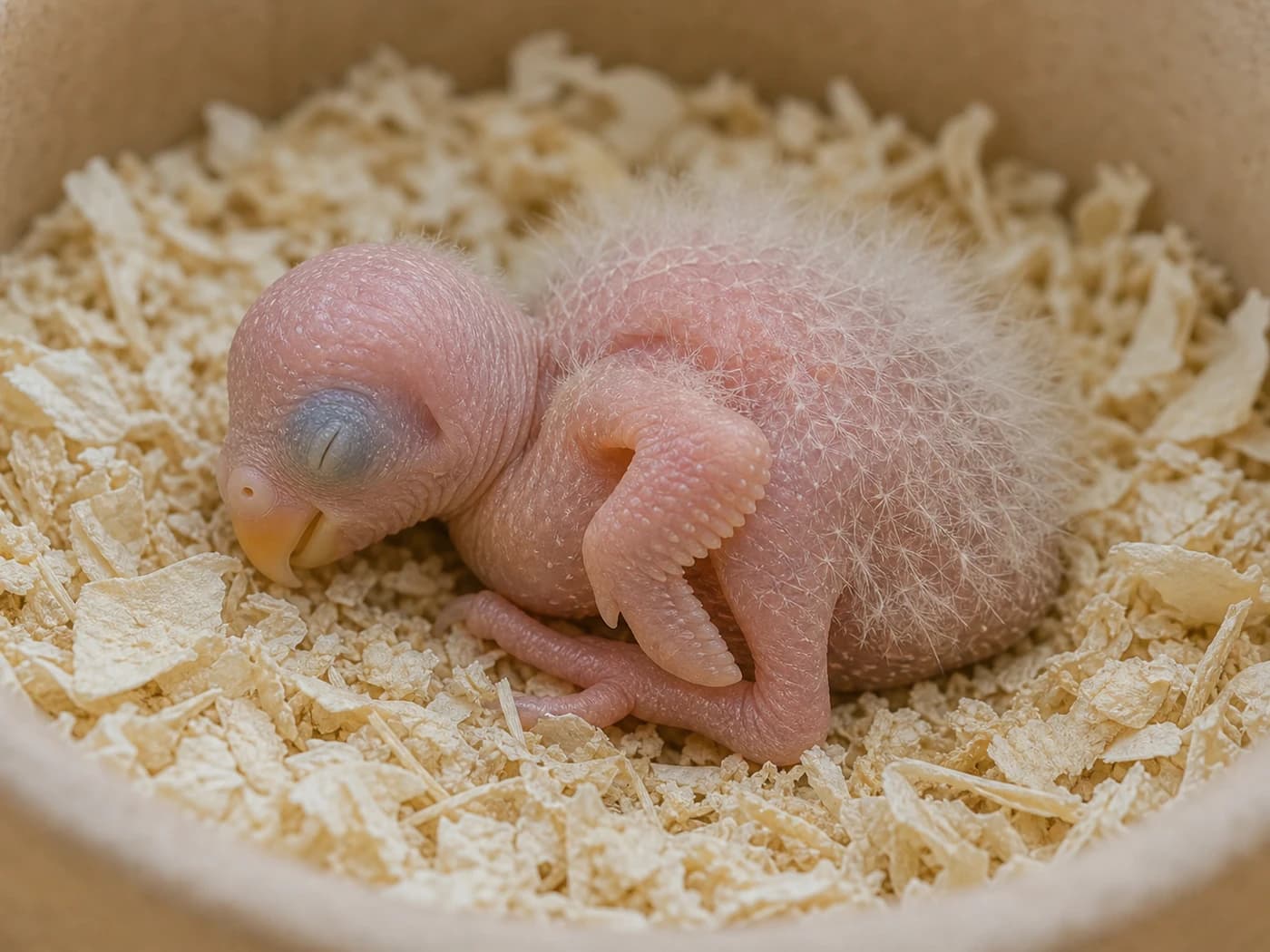
Newly hatched Budgie chicks are delicate and mostly bare, so final color cannot be judged reliably yet.

What people watch

Watch warmth, crop filling, and feeding stability; visuals should be gentle, educational, and not graphic.

Budgie Pin feather stage growth-stage reference image

Pin feather stage

About 2-4 weeks, varying by species size

Age range

Look

Budgie chicks begin showing pin feathers, and early color direction or wing and face patterning starts to emerge.

What people watch

Do not force pin feathers open; monitor warmth, nutrition, and skin condition.

Budgie Young chick growth-stage reference image

Young chick

About 1-2 months, varying by species size

Age range

Look

Budgie now looks like a small bird, with clearer posture, plumage, eyes, and exploration behavior.

What people watch

Focus on socialization, gentle handling, safe movement, and gradual food variety.

Budgie Weaning / juvenile growth-stage reference image

Weaning / juvenile

Around weaning through juvenile molt

Age range

Look

Budgie looks closer to an adult, but coordination, bite control, and emotional regulation are still developing.

What people watch

Do not force early weaning; watch independent eating, weight stability, flight, and basic training.

Budgie Adult growth-stage reference image

Adult

After juvenile molt and maturity

Age range

Look

Budgie plumage and proportions are more stable, and long-term patterns in temperament, noise, hormones, and territory become clearer.

What people watch

Long-term care shifts toward diet, exercise, enrichment, hormone management, and annual health checks.

What to Know

Mirrors do not replace companionship

Long-term mirror fixation can drive hormones, regurgitation, and guarding.

Small birds hide illness fast

Budgies are tiny, so fluffing, reduced appetite, or dropping changes need quick attention.

Avoid seed-only diets

Seed-only diets are unbalanced; vegetables and pellets need patient transition.

Solo birds need real interaction

A solo budgie without daily interaction may become bored, call excessively, or bond to objects.

Budgies need social life, not a one-size-fits-all pairing rule

Budgies are flock birds. A compatible pair can be wonderful, but a solo budgie can also do well when the owner provides real daily interaction, flight, training, and foraging.

First things owners notice

Budgerigar usually makes its first impression through Playful, Love food, and Can rival any parrot in terms of talking ability. Treat that as a starting point, not a full personality profile.

When you leave the room

If a budgie misses its owner or hears another budgie within earshot, it might let loose a contact call, a long, drawn out, insistent single call. A clingy budgie often means isolation from other budgies. The poor bird is lonely in a way that no human can fully address.

Hand-raised vs parent-raised

Much more comfortable with human contact and are often hand-tame by the time you get them. Learn social skills from their parents that enable them to live a healthy, happy existence. They may be harder to tame initially.

Frequently Asked Questions

Listen to Budgie Call

Hear their distinctive vocalizations

Community Photos

Be the first to share a photo!

Species Comparison

Trait
Budgie
BudgieSmall
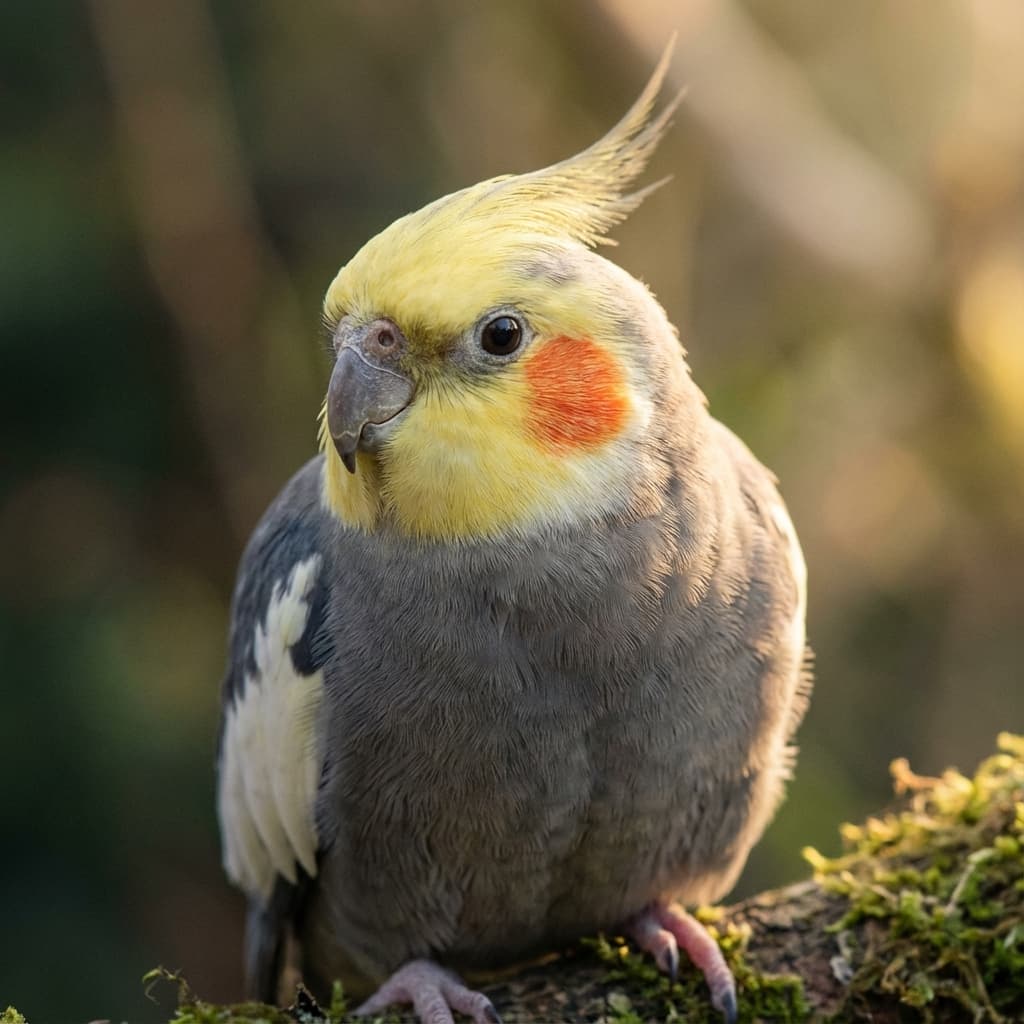
Cockatiel
CockatielSmall
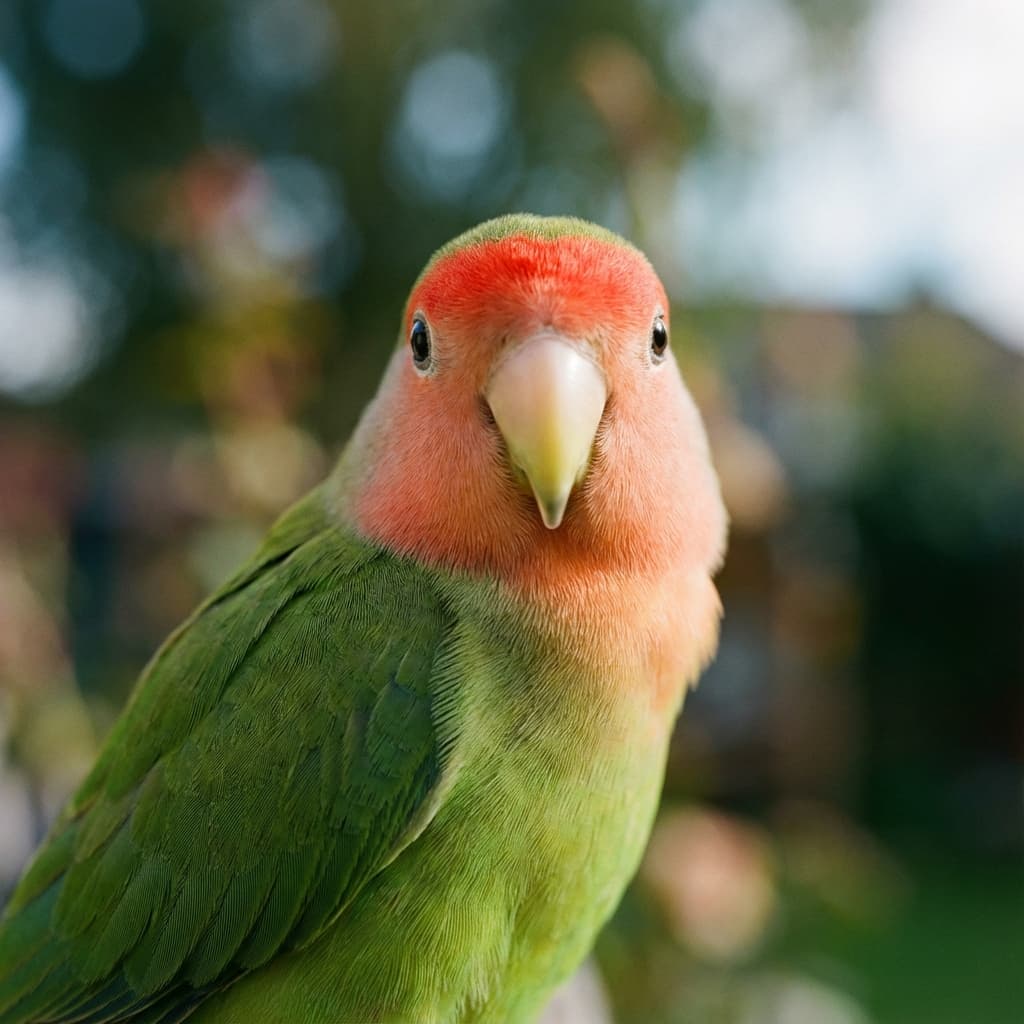
Lovebird
LovebirdSmall
Lifespan5-15 years15-25 years10-20 years
NoiseMediumMediumMedium
TrainingEasyEasyModerate
TalkingSurprisingly Good - Males can learn 100-500+ words! Speech is fast and high-pitched. Hold the world record for largest vocabulary (1,728 words).Limited Speech, Excellent Whistler - Males are champion whistlers and can learn entire songs. Speech limited to 10-20 words with a cute, soft voice.Rare - Most Lovebirds do not talk. A few may learn 5-10 words with unclear speech. They communicate through chirps, whistles, and chattering instead.
SizeSmallSmallSmall

Shop Budgie Products

Food, toys, cages & accessories for small birds

Browse Products