Tracked delivery30-day returns
Back to Bird Hub
Lovebird

Lovebird Hub

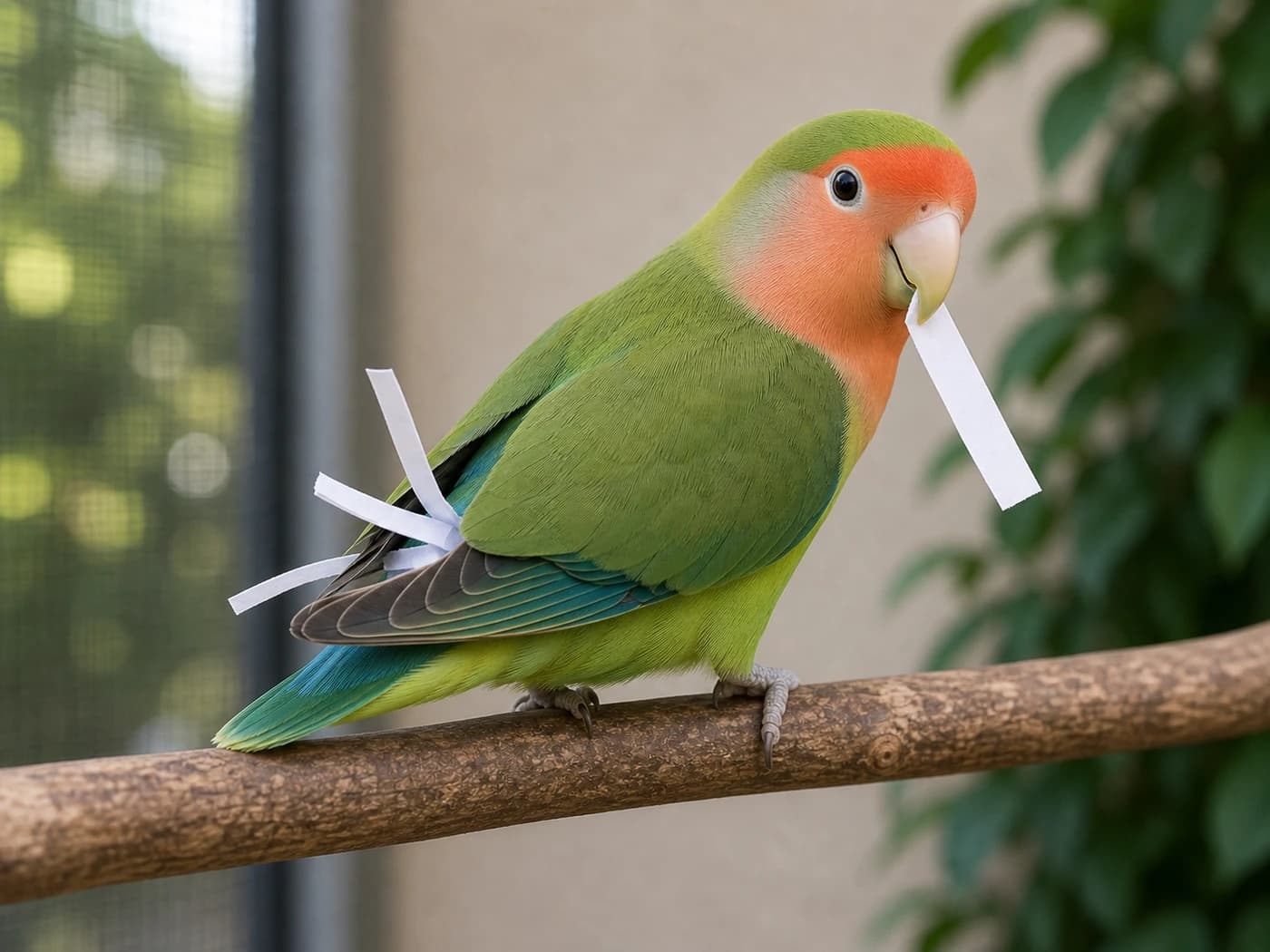
A lovebird is not a tiny, automatically gentle parrot. It is small, bright, fast, and very serious about boundaries. Chinese owners sometimes joke about them as flying pliers; in English the idea is better written as “tiny bird, serious bite.” The point is not that lovebirds are bad. It is that a stressed, nesty, possessive, or cornered lovebird may bite hard and fast. They also have charming habits, especially paper shredding and paper tucking, where strips get carried in the rump feathers like luggage. Good lovebird care means reading warnings, managing nesting triggers, and separating species/type names from color mutations.

At a Glance

Size

Small

Lifespan

10-20 years

Noise

Medium

90-100 dB

Training

Moderate

Talking

Rare

Best For

People who want a small bird but respect boundaries
Homes that can provide training, toys, and daily interaction
Owners willing to learn bite warnings and hormone management

Not For

People who expect to grab a small bird freely
Owners planning casual mixed-bird housing
Anyone unable to handle real bites, nest guarding, or paper shredding

Noise Comparison

Where does a Lovebird's call sit against familiar everyday sounds?

95 dB·Medium
QuieterLouder

Whisper · 30 dB

Library · 40 dB

Conversation · 60 dB

Vacuum Cleaner · 75 dB

Measured level

95 dB

Quieter than

3 · Rock Concert, Chainsaw

Louder than

5 · Vacuum Cleaner, Lawnmower

Whisper

30 dB

Library

40 dB

Conversation

60 dB

Vacuum Cleaner

75 dB

Lawnmower

90 dB

Rock Concert

110 dB

Chainsaw

120 dB

Jet Engine (100ft)

140 dB

Care Commitment

What does it realistically take to live well with a Lovebird?

Beginner fit

Good

Easier everyday fit.

Daily Time

2–4 hrs/day

Moderate

Noise

90-100 dB

Noticeable

Lifespan

10-20 years

Short

Space

Small

Small

Experience

Moderate

Intermediate

Daily reality

Lovebird fits into home life more easily, but still needs routine interaction and enrichment.

  • A steady routine makes noise easier to manage.
  • Enrichment beats punishment for most behavior issues.

Watch-outs

Pair Myth

Single lovebirds can be happy with enough human interaction — pairs bond to each other, not you.

Next steps

If this species does not have a dedicated guide yet, this falls back to the full care manuals library.

About Lovebirds

Personality

Feisty and bold. Lovebirds think they are macaws. They can be territorial but are very affectionate with their chosen mate (human or bird).

Diet

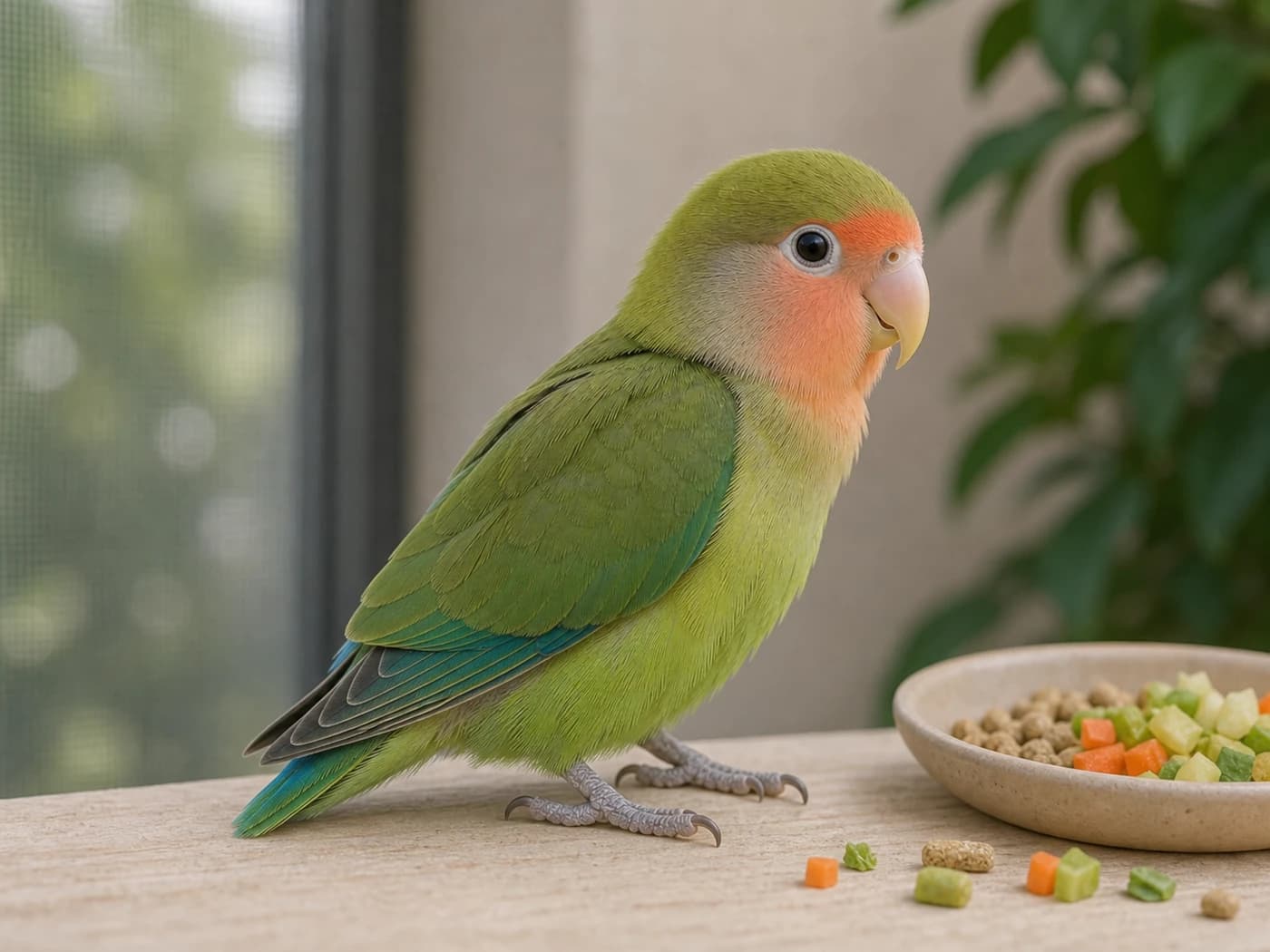
Standard small bird diet. Avoid high-fat seeds if they are not flighted.

Behavior

They love to shred paper to make nesting strips. Provide plenty of shreddable toys.

Varieties & Colors

A lovebird is not a tiny, automatically gentle parrot. It is small, bright, fast, and very serious about boundaries. Chinese owners sometimes joke about them as flying pliers; in English the idea is better written as “tiny bird, serious bite.” The point is not that lovebirds are bad. It is that a stressed, nesty, possessive, or cornered lovebird may bite hard and fast. They also have charming habits, especially paper shredding and paper tucking, where strips get carried in the rump feathers like luggage. Good lovebird care means reading warnings, managing nesting triggers, and separating species/type names from color mutations.

9 entriesvisual ID

How They Differ

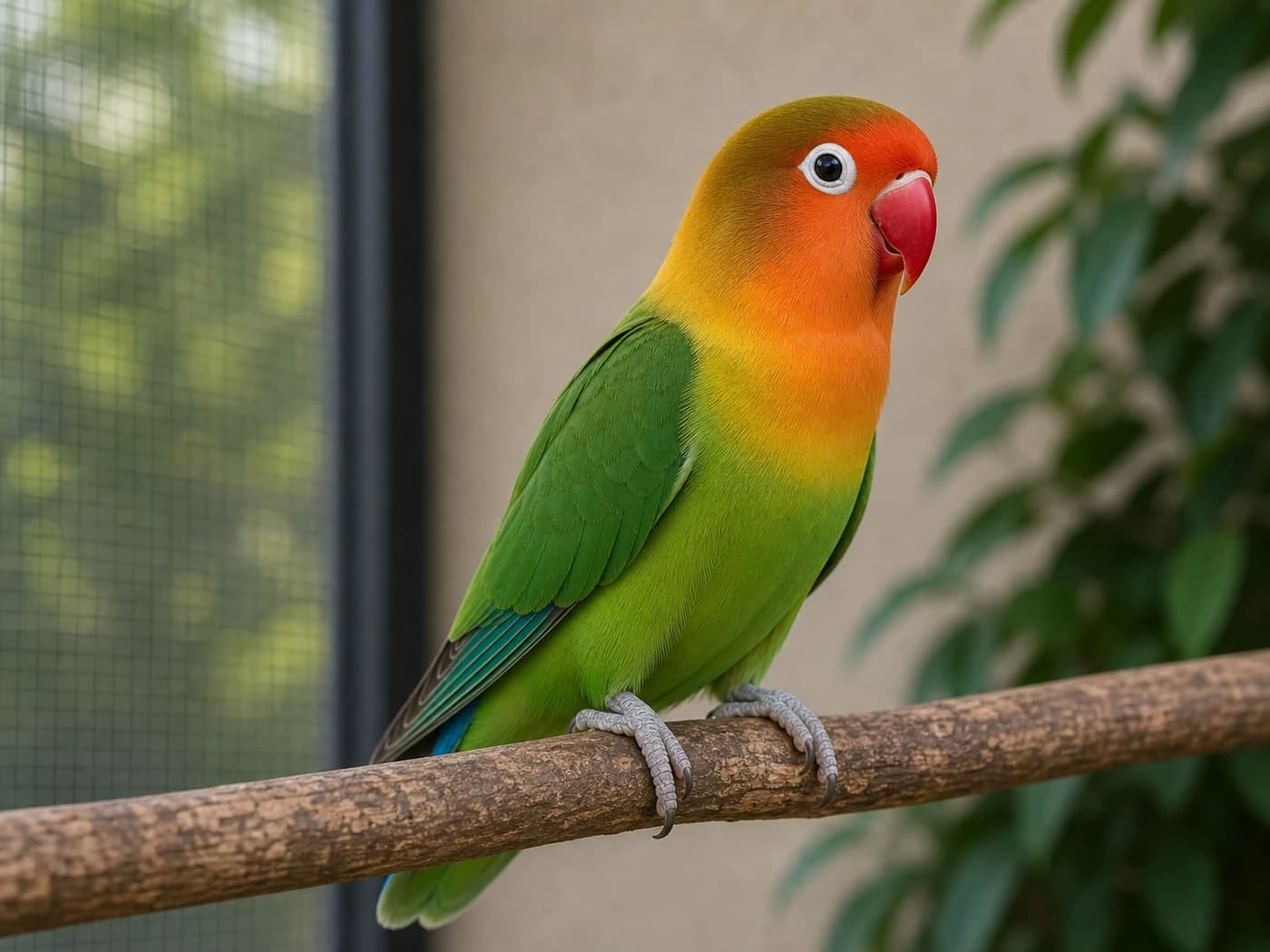
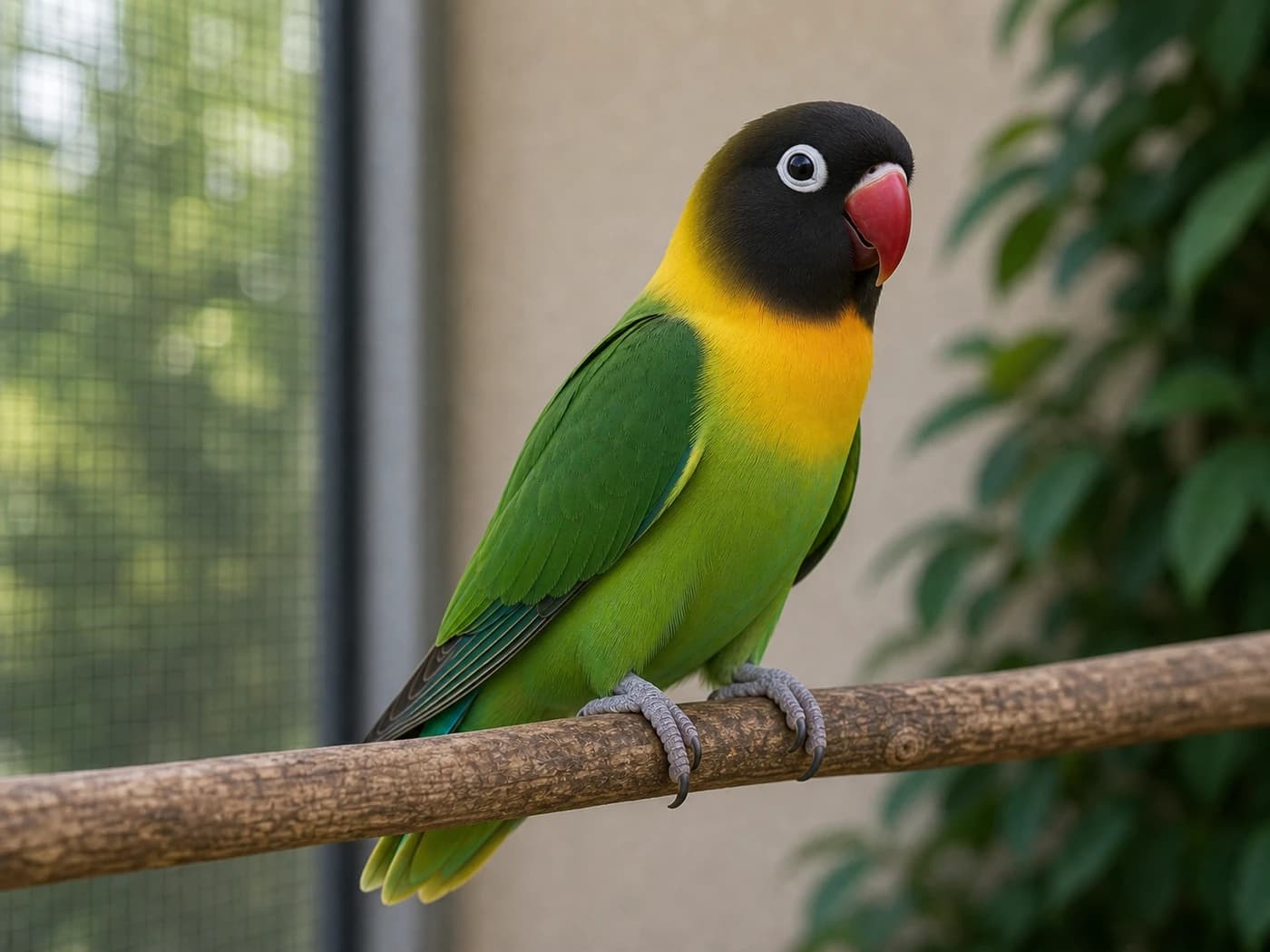
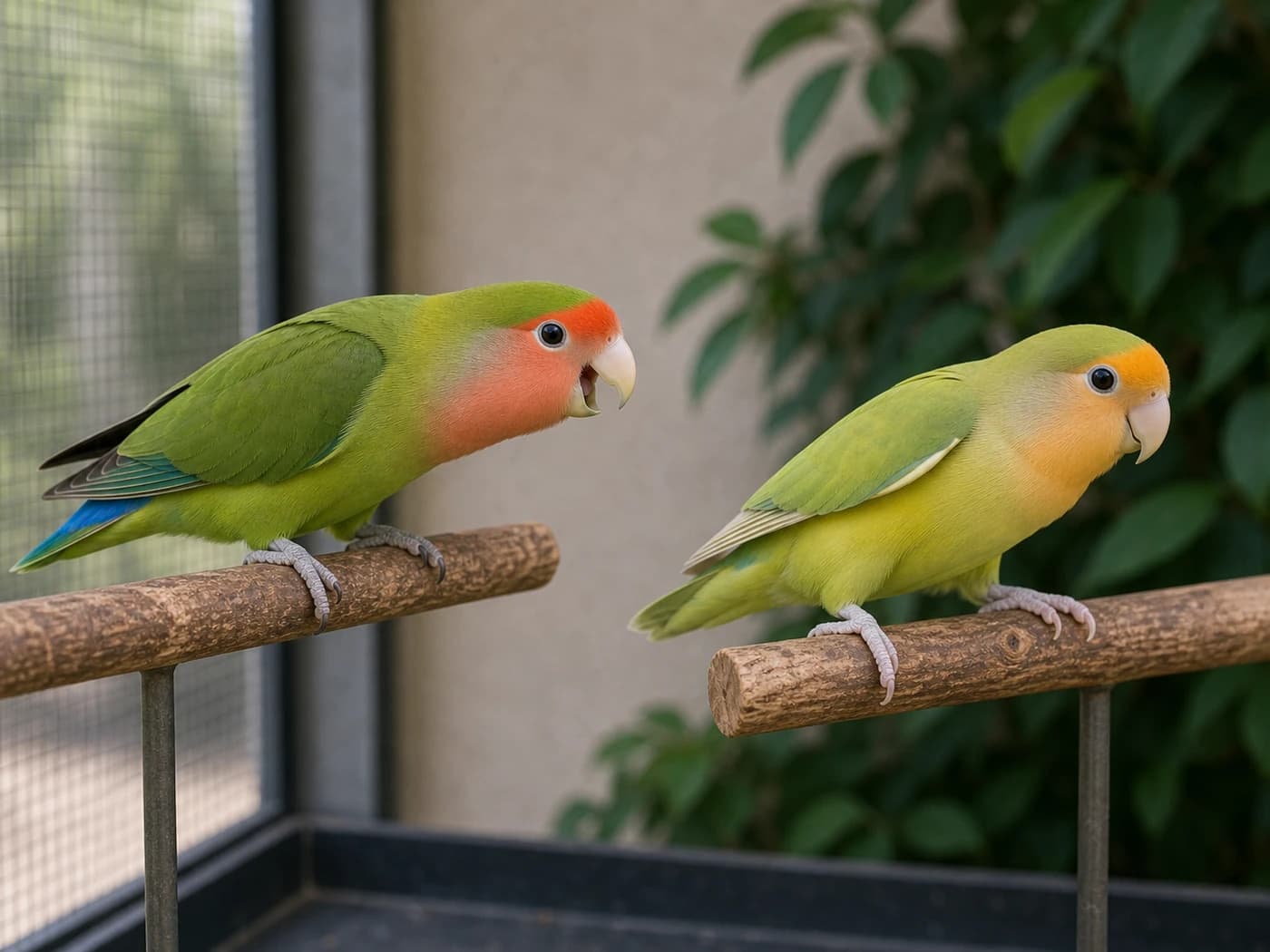
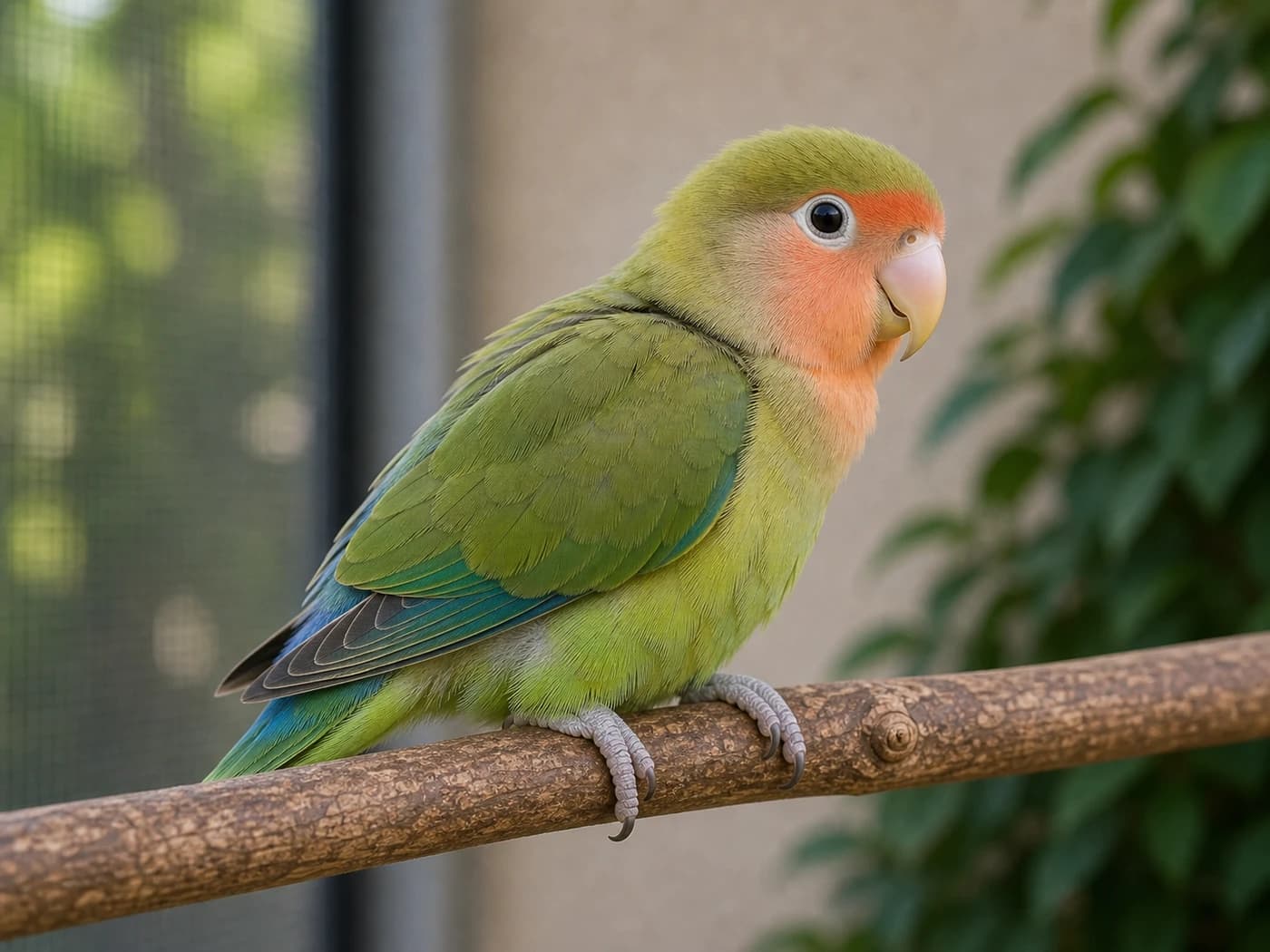
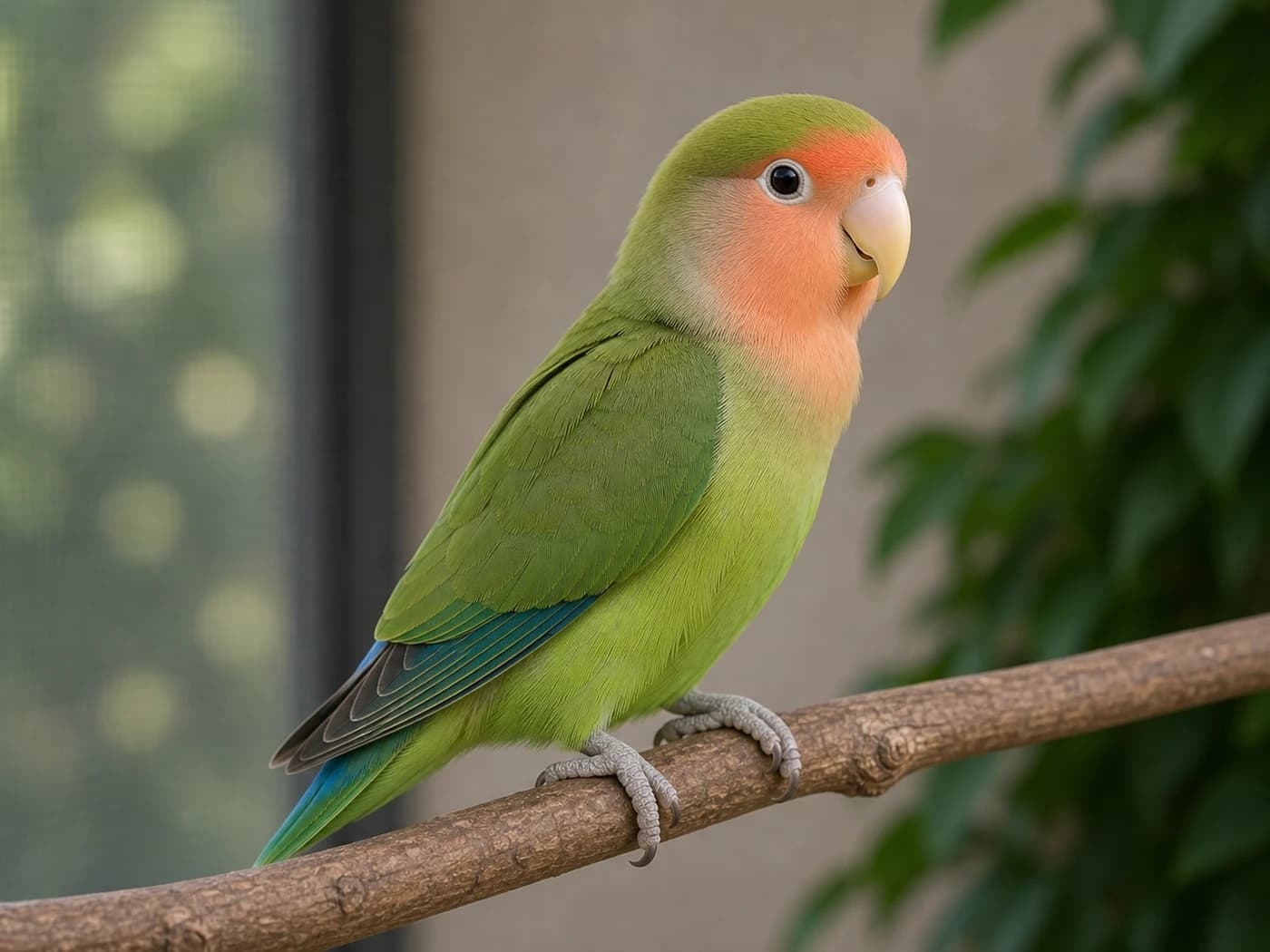
Most common pet lovebirds: peach-faced (pink face, most common), Fischer's (orange face, white eye ring), black-masked (black head, white eye ring). Peach-faced lovebirds have extensive color mutations.

How These Varieties Happen

Peach-faced lovebirds (Agapornis roseicollis) have over 20 known mutations producing dozens of color combinations. The system divides into green series (with yellow pigment) and blue series (without yellow pigment).

Wild Green Lovebird realistic reference image

Standard label

Wild Green

Wild-type

Variety

Common names

Wild-typeNormal Green

Owner shorthand

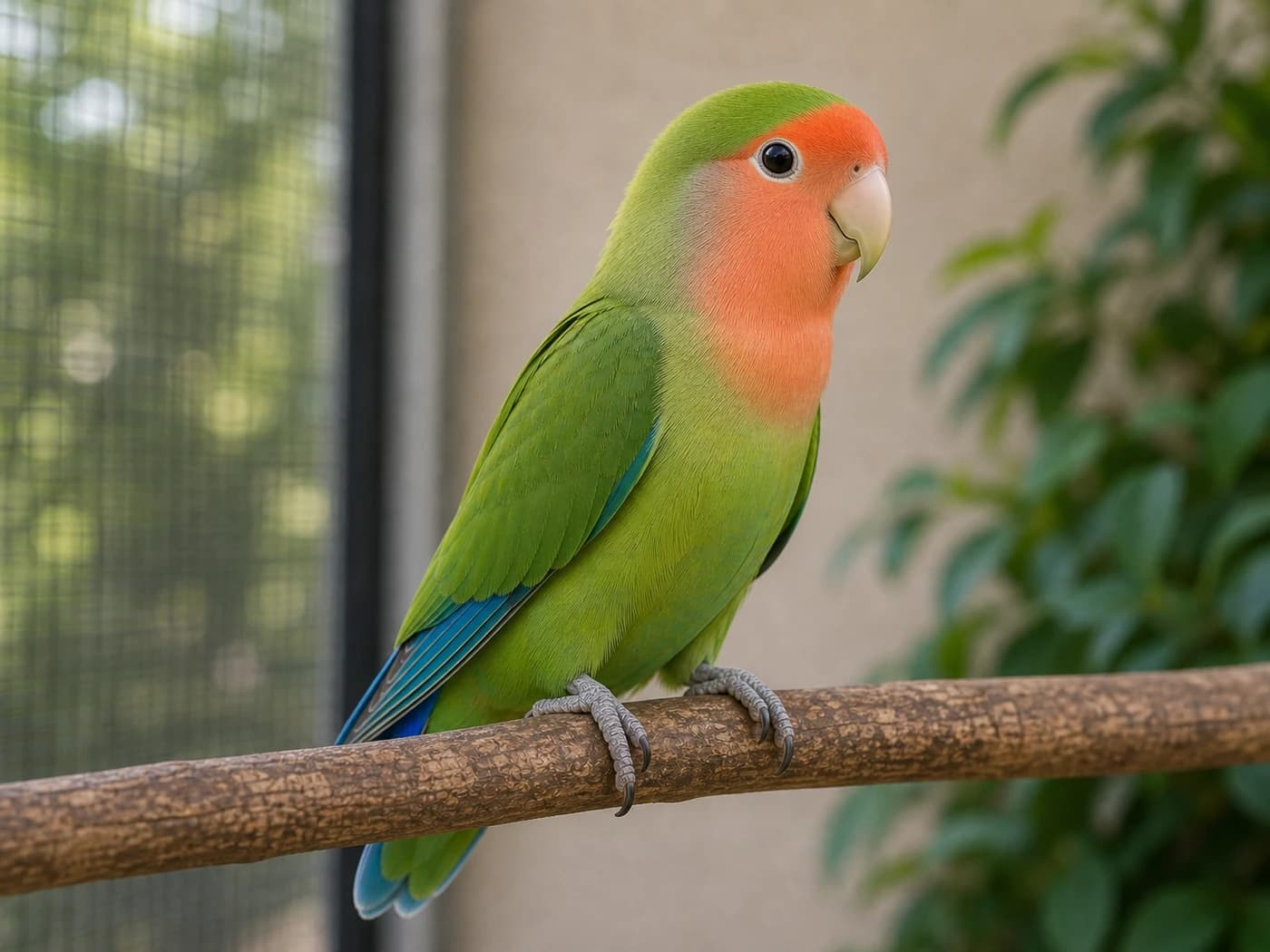
Wild green is the easiest lovebird to keep

Look

Wild-type. Bright green body, orange-red to peach face and forehead, blue rump.

Genetics

No mutations; wild-type genotype.

Health & care

Wild green is a clear reference look and a useful beginner comparison, but ease of care still depends on the individual, socialization, housing, and nesting-trigger management.

Sexing tip

Males and females look nearly identical; cannot sex by color. Females have slightly wider pelvic bones during breeding season. DNA testing is most accurate.
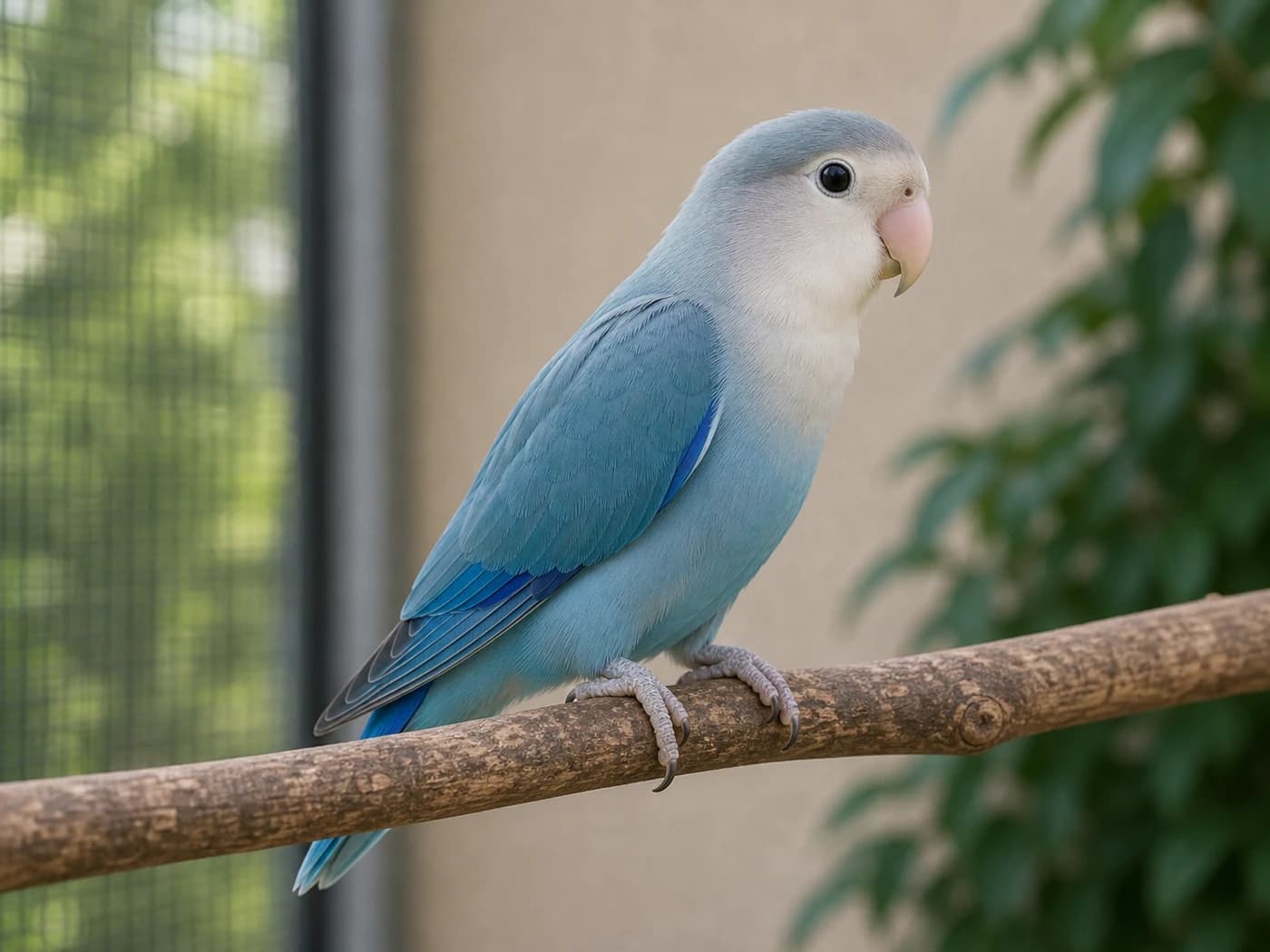
Blue Series Lovebird realistic reference image

Standard label

Blue Series

Blue

Variety

Common names

BlueDutch Blue

Owner shorthand

Blue lovebird is one of the most popular colors

Look

Sky blue body, white face, blue rump. The base color of the blue series after yellow pigment elimination.

Genetics

Autosomal recessive. Eliminates yellow psittacin pigment, leaving only structural blue.

Health & care

Care is usually similar to wild green; do not judge health by color alone. Look at energy, weight, feather condition, and source quality.

Sexing tip

Same as wild green; DNA testing recommended.

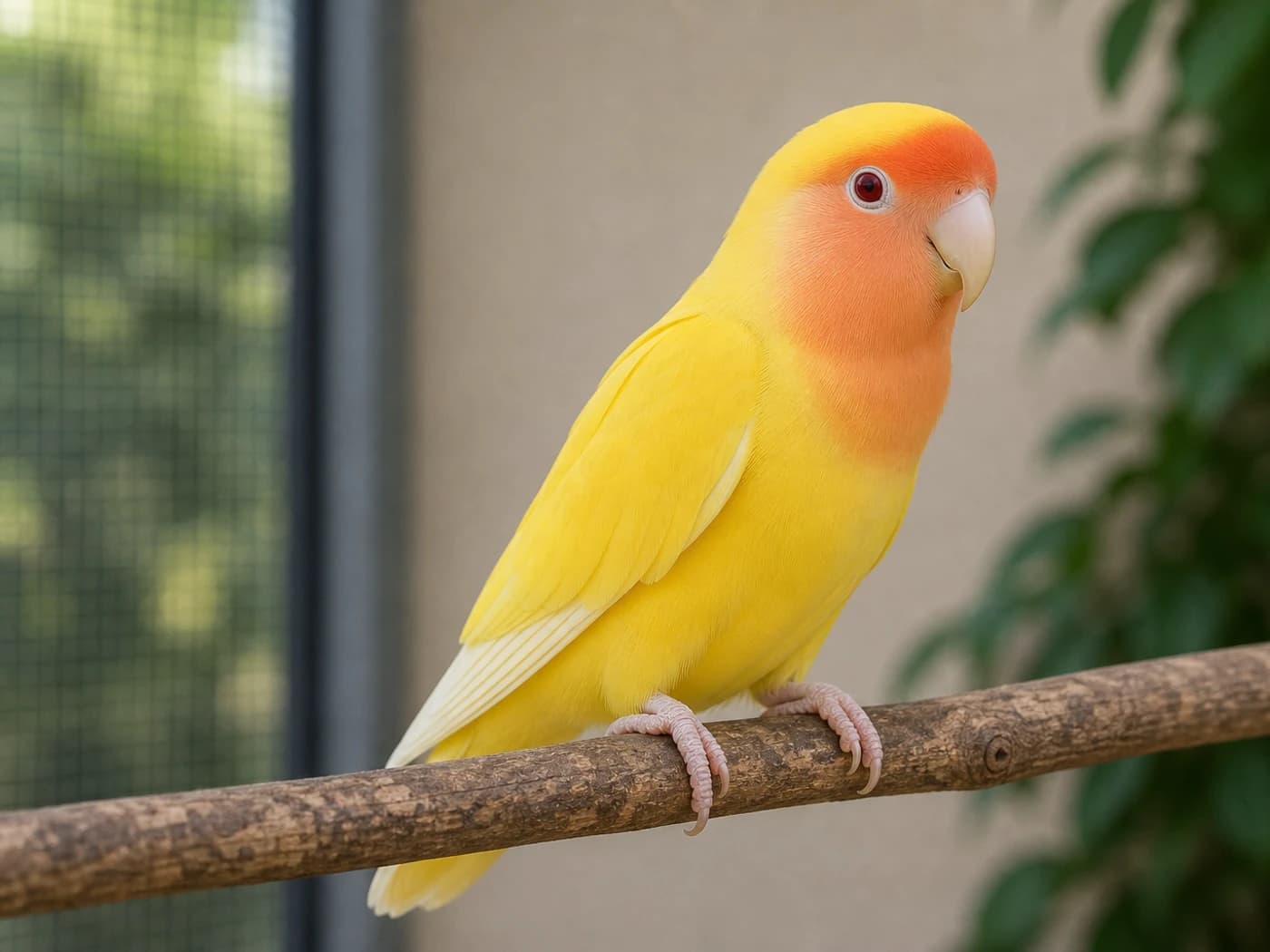
Lutino Lovebird realistic reference image

Standard label

Lutino

Variety

Common names

LutinoYellow lovebird

Owner shorthand

Lutino lovebird with orange face looks like a little sunflower

Look

Bright yellow body, orange-red face retained, red eyes. The lutino version of the green series.

Genetics

Sex-linked recessive. Eliminates melanin, leaving only yellow psittacin.

Health & care

Poor eyesight, slightly weaker constitution.

Sexing tip

DNA testing required.

Albino Lovebird realistic reference image

Standard label

Albino

Variety

Common names

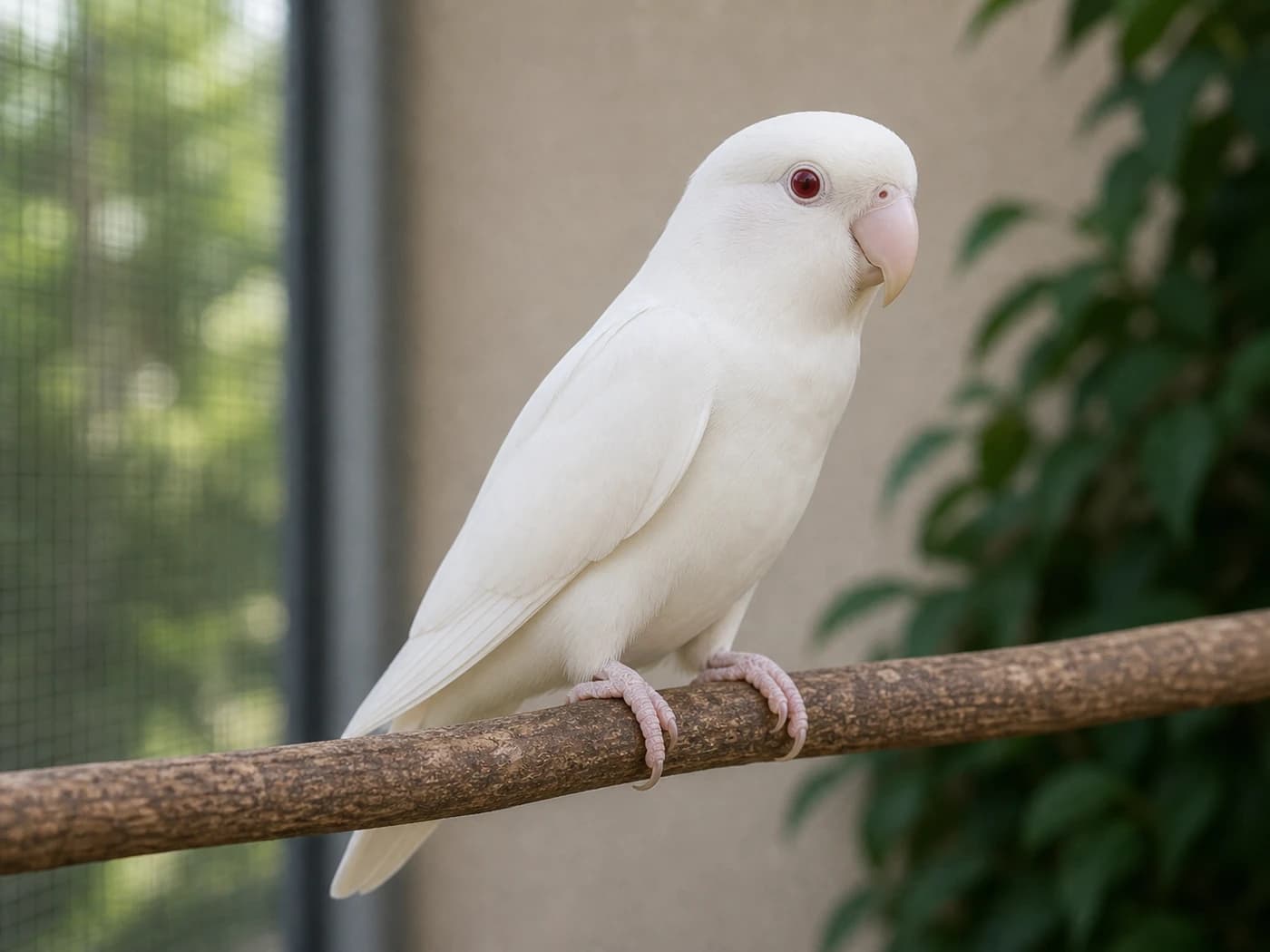
AlbinoWhite lovebird

Owner shorthand

Albino lovebird is the purest color

Look

Pure white body, red eyes, no orange face. Blue series + lutino double mutation.

Genetics

Double mutation: blue (autosomal recessive) + lutino (sex-linked recessive).

Health & care

Poor eyesight, slightly weaker constitution.

Sexing tip

DNA testing required.

Violet Lovebird realistic reference image

Standard label

Violet

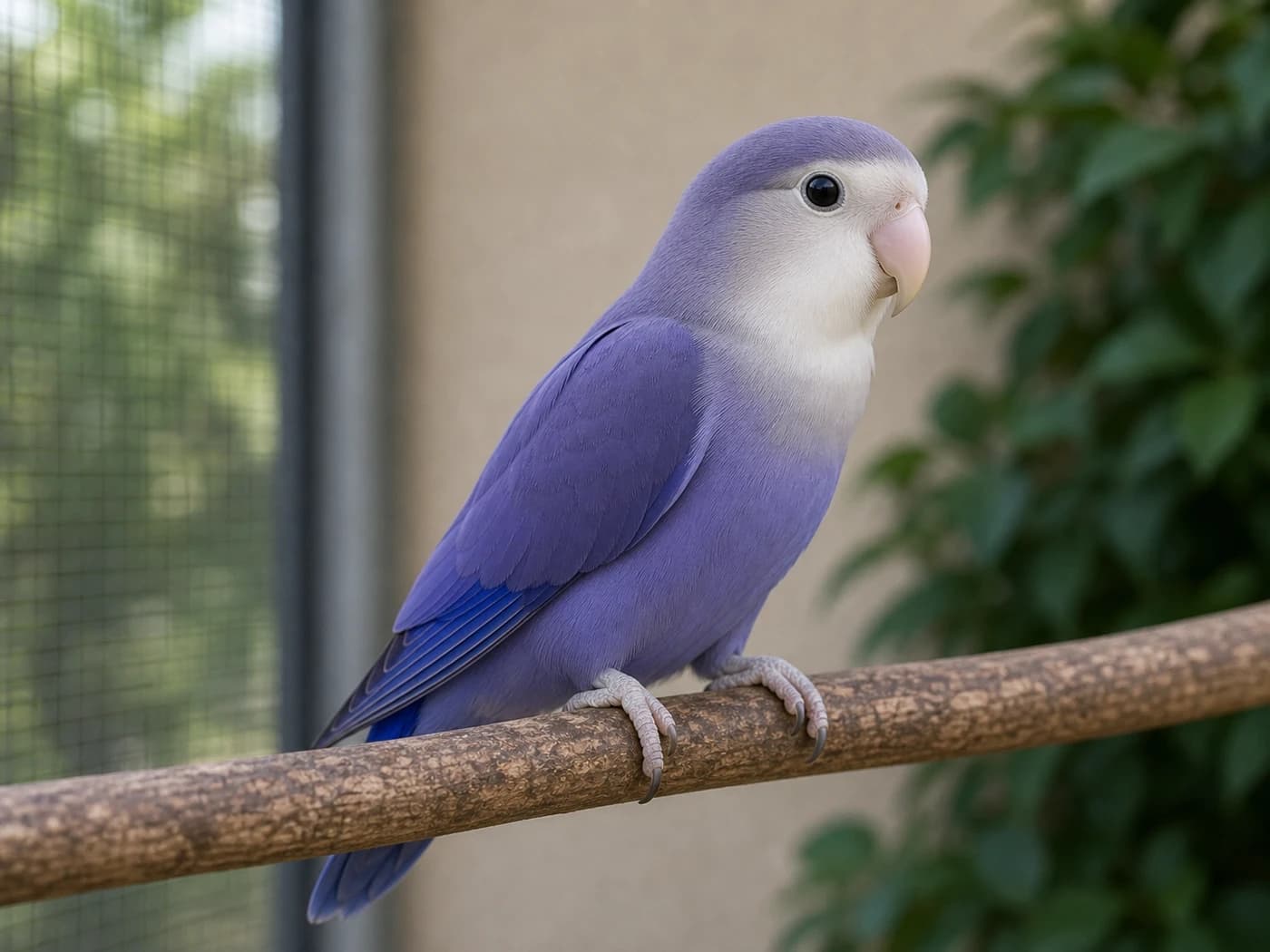
Violet lovebird

Variety

Common names

Violet lovebird

Owner shorthand

Violet lovebird is one of the hardest colors to breed consistently

Look

Deep violet/purple body; one of the most sought-after mutations. Requires specific gene combinations.

Genetics

Violet factor (autosomal dominant) combined with blue series for best visual effect.

Health & care

Good constitution; no specific health concerns.

Sexing tip

DNA testing required.

Cinnamon Lovebird realistic reference image

Standard label

Cinnamon

Variety

Common names

CinnamonCinnamon green

Owner shorthand

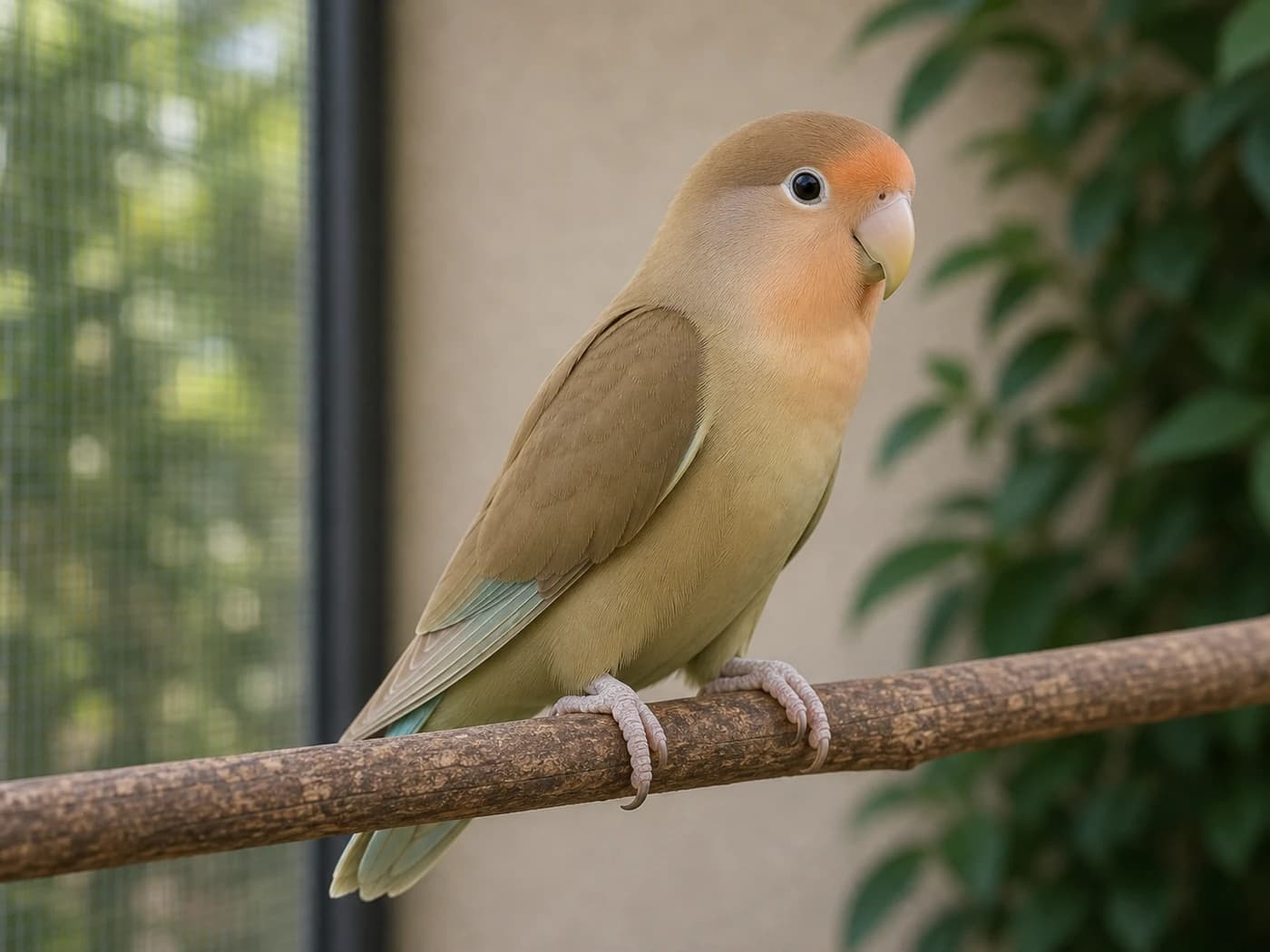
Cinnamon lovebird has warm autumn-leaf coloring

Look

Warm brownish-yellow-green body, lighter and warmer than wild green. Eyes red at birth, darkening with age.

Genetics

Sex-linked recessive. Converts eumelanin to phaeomelanin, producing brown tones.

Health & care

Care is usually similar to wild green; do not judge health by color alone. Look at energy, weight, feather condition, and source quality.

Sexing tip

DNA testing required.

Peach-faced Lovebird Lovebird realistic reference image

Standard label

Peach-faced Lovebird

Peach-faced

Variety

Common names

Rosy-faced LovebirdAgapornis roseicollis

Owner shorthand

small body, big attitudetiny bird, serious bite

Look

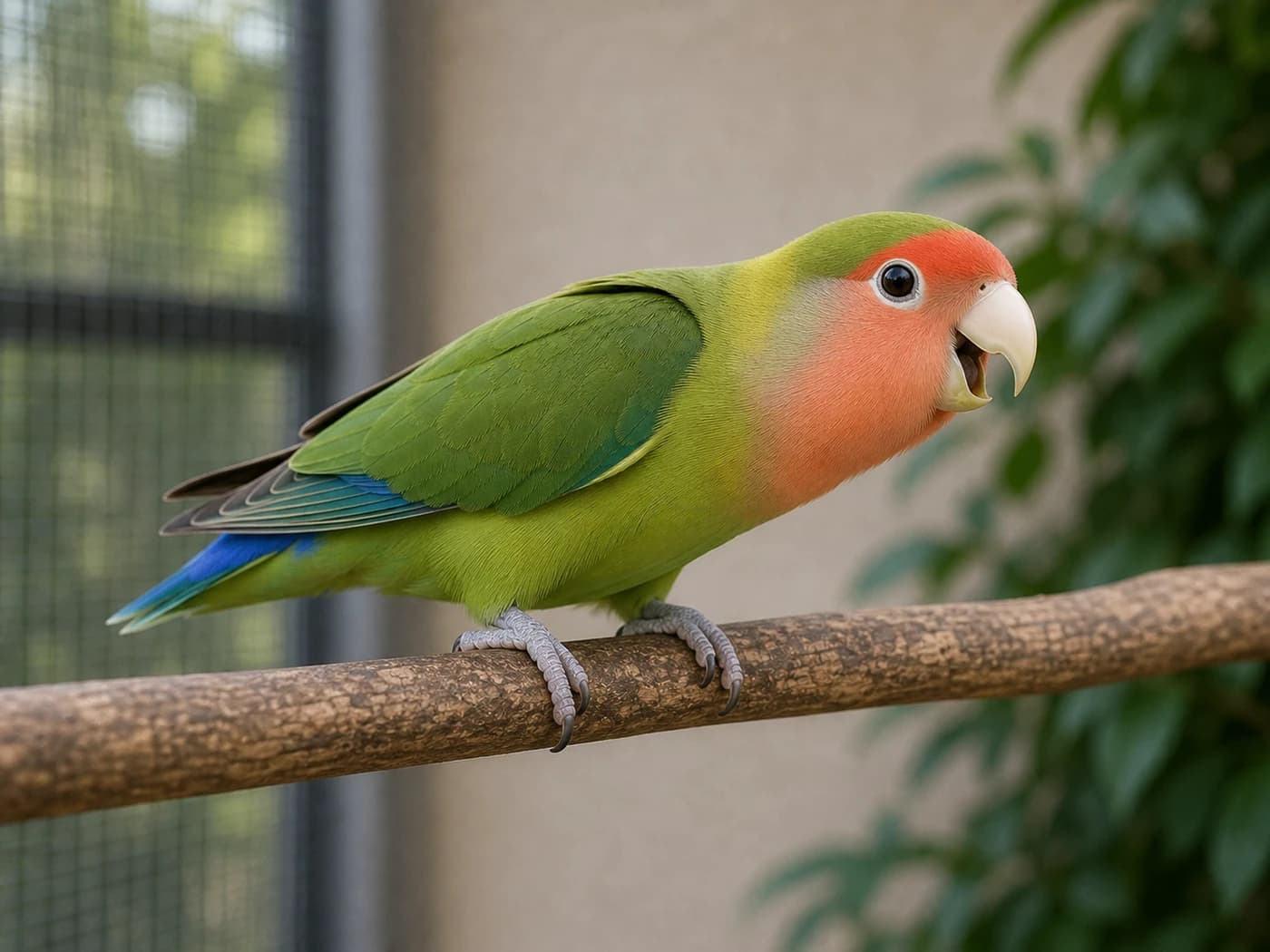
Often shows a peach to rosy-orange face and upper chest with a green body, though many pet mutations exist.

Genetics

This is a common pet lovebird species, not merely a peach-colored face mutation.

Health & care

Peach-faced lovebirds are energetic and boundary-aware; paper tucking and nest guarding are common.

Sexing tip

Visual sexing is usually unreliable; DNA sexing is safer.

Fischer's Lovebird Lovebird realistic reference image

Standard label

Fischer's Lovebird

Fischer's

Variety

Common names

Fischer'sAgapornis fischeri

Owner shorthand

eye-ring lovebirdnot a peach-faced mutation

Look

Has a clear white eye ring, orange-red to orange-yellow head, and usually green body, making it easy to distinguish from peach-faced lovebirds.

Genetics

This is one of the common eye-ring lovebird species, not a color line of peach-faced lovebirds.

Health & care

Pairing, territory, mixed-housing risk, and breeding triggers still need careful management.

Sexing tip

Sexes are hard to separate visually; DNA is the practical method.

Masked Lovebird Lovebird realistic reference image

Standard label

Masked Lovebird

Masked

Variety

Common names

Yellow-collared LovebirdAgapornis personatus

Owner shorthand

masked, not dirty-facedeye-ring lovebird species matter

Look

Typical birds show a dark head mask, white eye ring, and yellow collar/chest area, with many mutations in captivity.

Genetics

This is another eye-ring lovebird species; Chinese market names often mix black-headed and masked wording.

Health & care

Still a small bird with strong boundaries; mixed housing, nest guarding, and pairing pressure need caution.

Sexing tip

Visual sexing is unreliable; DNA is recommended.

Naming Notes

Chinese owner phrases, English common names, and market labels often do not translate one-to-one, so the tricky parts are separated here.

Common aliases

lovebirdAgapornispeach-faced lovebirdFischer's lovebirdmasked lovebird

Chinese owner circles often group lovebirds broadly, while Peach-faced, Fischer’s, and Masked lovebirds are separate species or species groups.

The bite-related Chinese owner joke should be explained as tiny bird, serious bite or small bird with a big bite instead of being turned into a literal English phrase.

Peach-faced, Fischer’s, and Masked are species/type comparisons, not just plumage colors.

Market labels often mix species and mutation names, so English copy should separate species from color mutation.

Detailed Field Notes

These notes isolate details that are easy to mistranslate, oversimplify, or overclaim. Each one separates the claim, why it matters, and what an owner should do.

6 notes

Tiny bird, serious bite

Localized Chinese-owner shorthand

Careful claim

The phrase means a small lovebird can deliver a fast, forceful bite and defend boundaries, nests, or favorite people seriously.

Why it matters

It does not mean lovebirds are bad; it warns beginners not to treat a small body as permission to grab.

Owner action

When you see leaning, an open beak, lunging, or corner guarding, pause and use target training and rewards to rebuild boundaries.

Paper tucking is usually nesting-related

Care-guide supported + owner-common

Careful claim

Lovebirds, especially many females, may tuck strips of paper, leaves, or nesting material into rump or back feathers to carry to a nest site.

Why it matters

It looks like carrying luggage, but in care terms it points to nesting and possible guarding.

Owner action

Reduce dark corners, nest boxes, unlimited paper, and back stroking; watch for cage guarding, biting, or egg laying.

Peach-faced, Fischer’s, and Masked are not one color line

Taxonomy-supported

Careful claim

Chinese owner speech often groups lovebirds together, but Peach-faced, Fischer’s, and Masked lovebirds are different species or species groups, not just colors.

Why it matters

This affects imagery, English naming, mixed housing, and breeding explanations.

Owner action

Color cards should separate species/type from mutation and avoid treating blue, lutino, or violet as species.

Lovebirds are risky casual mix-ins

Owner-common + behavior experience

Careful claim

Lovebirds may chase or bite other lovebirds, small birds, or even larger birds, especially around resources, nesting, or pair pressure.

Why it matters

The idea that a tiny bird cannot do harm is a dangerous misread.

Owner action

Do not test by sharing a cage; quarantine, observe side-by-side, separate out time, and keep separate long term if needed.

Dark corners can turn cute into nesty

Care-experience supported

Careful claim

Couch gaps, boxes, closet corners, and fabric huts can make a lovebird treat a spot like a nest.

Why it matters

Many bite escalations are not random aggression; nest feeling has been reinforced.

Owner action

Remove nest-like access and replace it with open perches, foraging toys, and short training sessions.

Pairing is not a magic fix

Owner experience, individual assessment needed

Careful claim

Two lovebirds may provide companionship, but pairing can also increase nest guarding, reduce human interaction, or create chasing.

Why it matters

The name lovebird should not be read as permission to casually pair any two birds.

Owner action

Assess sex, temperament, space, and quarantine before pairing.

Community Notes

These are the phrases owners commonly use when talking about Lovebirds in real communities.

tiny bird, serious bite

Literal meaning

A Chinese owner joke comparing the bird to a tiny airborne clamp; it is not a phrase English owners normally use.

Actual meaning

It means a small bird with a surprisingly forceful bite, fast reactions, and big confidence, especially around boundaries, nests, people, or stress.

Used when

Used when a lovebird bites hard, lunges, or shows serious boundary defense.

Care implication

It does not mean lovebirds are bad; it means owners must respect warnings, avoid forcing hands in, and manage nesting triggers.

little traveler with luggage

Literal meaning

A tiny traveler carrying luggage.

Actual meaning

Describes a lovebird carrying paper strips or nesting material around.

Used when

Used when paper-tucking or nest-material carrying appears.

Care implication

This is breeding-related; do not casually provide nest cavities and unlimited paper.

small bird, huge confidence

Literal meaning

A small bird acting much larger than it is.

Actual meaning

Lovebirds may challenge hands, flockmates, or even larger birds.

Used when

Used when a lovebird charges hands or chases another bird.

Care implication

Use extreme caution with mixed birds; separate first and never assume size means safe.

small body, big attitude

Literal meaning

Small body with a large attitude.

Actual meaning

Describes clear boundaries, resource guarding, and direct emotional expression.

Used when

Used when guarding corners, toys, or people.

Care implication

Use choice-based handling and rewards, not pressure.

Behavior Reading

Read posture, eyes, feathers, and beak use as a sequence: what you see, what it usually means, what not to assume, and what to do next.

Lovebird Forward body, open beak behavior reference image

Forward body, open beak

What you see

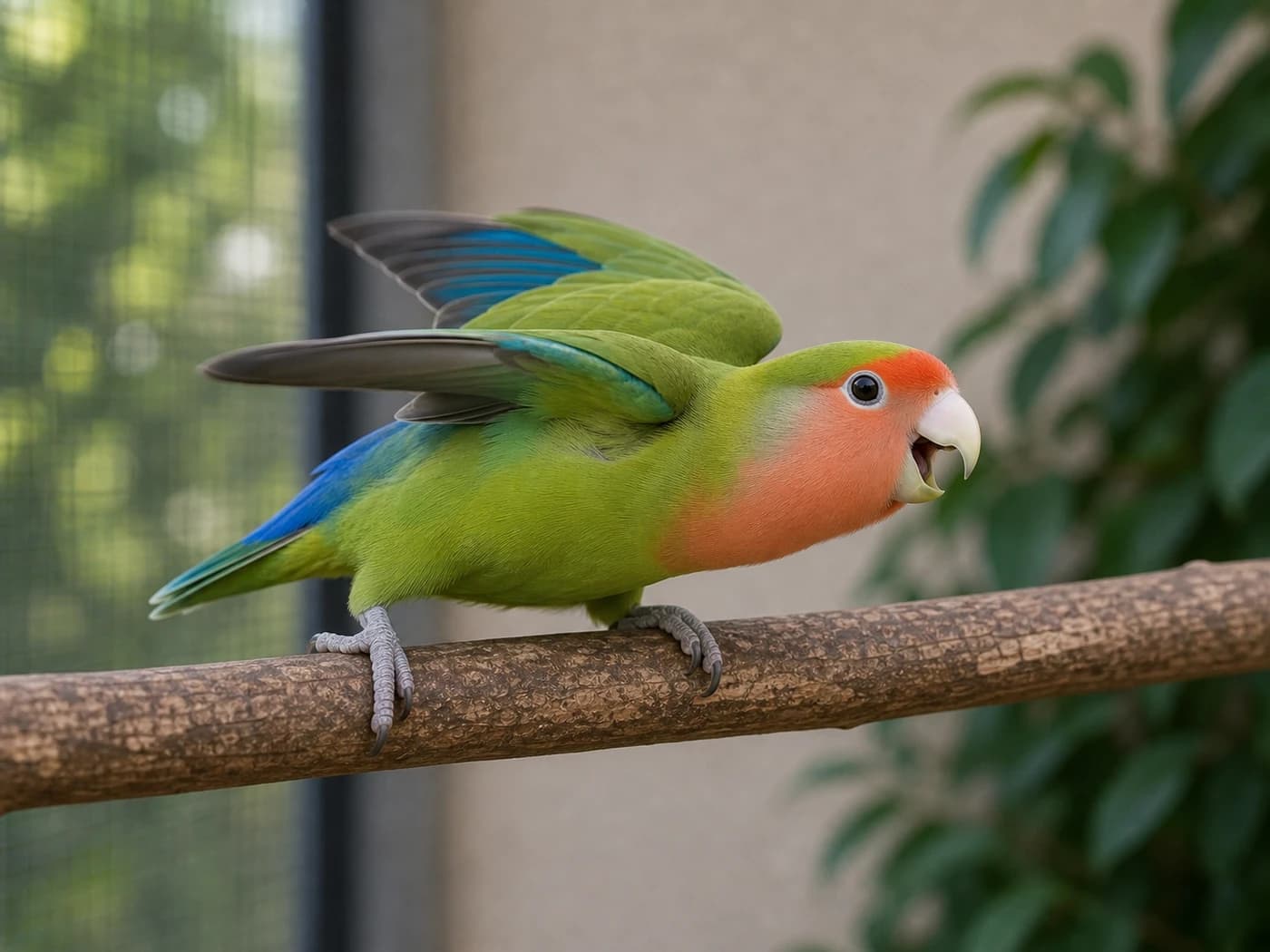
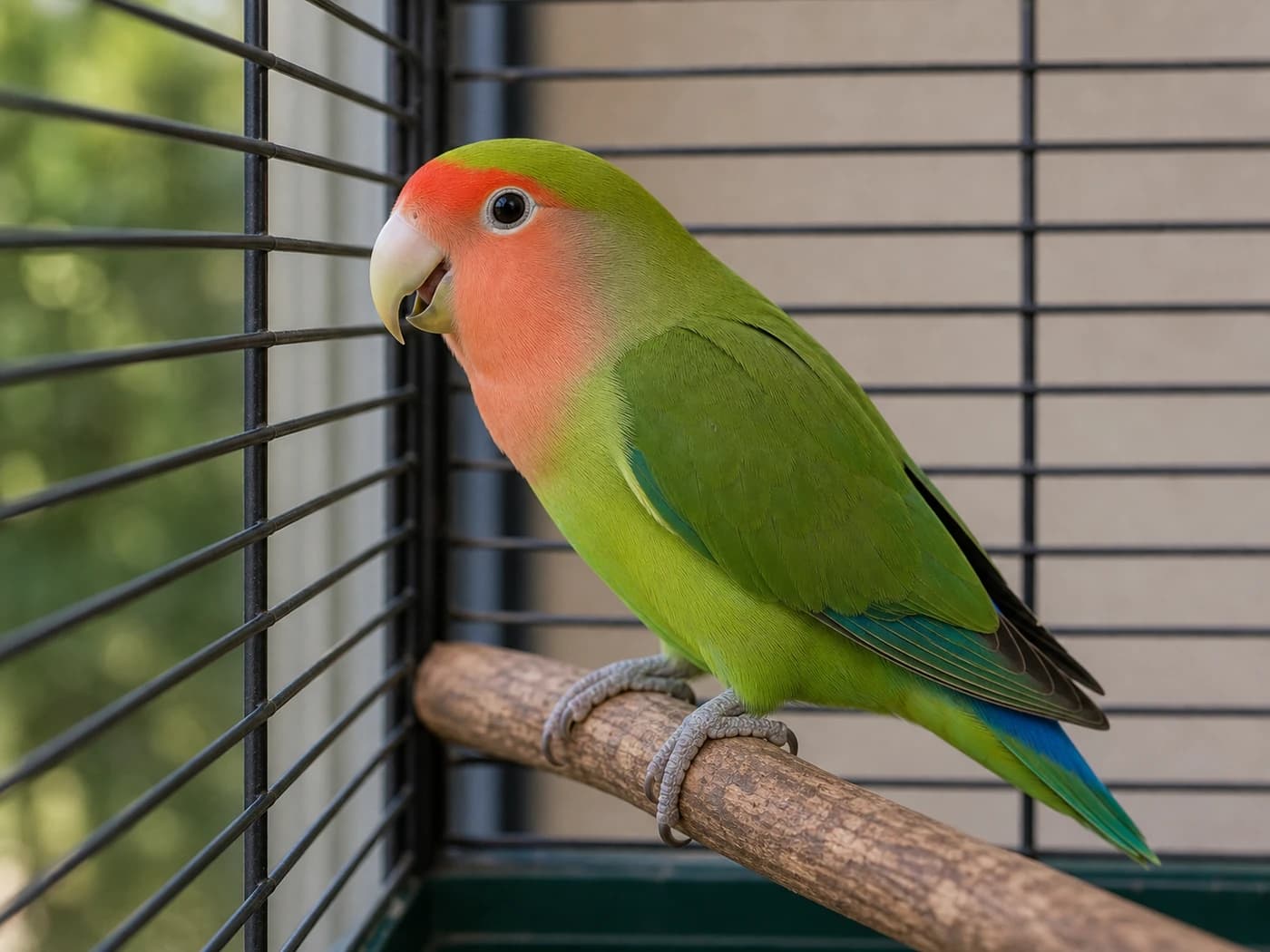
The body leans forward, beak opens, and the bird locks onto the hand.

Usually means

This is a clear warning posture.

Do not misread

Do not assume it is playful beaking.

Owner action

Stop reaching, step back, and rebuild choice with target training or treats.

Lovebird Charging toward hands behavior reference image

Charging toward hands

What you see

Sudden charge toward a hand, often with an open beak.

Usually means

Often defense, driving away, or resource guarding.

Do not misread

It is not just cute bravery.

Owner action

Identify triggers: cage door, corners, paper, mate, or favorite person.

Lovebird Paper tucking nesting behavior behavior reference image

Paper tucking nesting behavior

What you see

The bird shreds paper into strips and tucks them into rump/back feathers or carries them.

Usually means

Usually linked to nesting and breeding condition.

Do not misread

It is not just a cute organizing trick.

Owner action

Reduce nest cavities, paper strips, rich foods, and adjust light and interaction.

Lovebird Cage and corner guarding behavior reference image

Cage and corner guarding

What you see

The bird bites bars or lunges when you approach a corner, nest-like area, or toy.

Usually means

Territorial or hormonal threshold may be rising.

Do not misread

Do not treat every cage-guarding case as lack of tameness.

Owner action

Change the setup, reduce nest cues, and train outside the cage instead of grabbing inside.

Lovebird Over-chasing another bird behavior reference image

Over-chasing another bird

What you see

Persistent chasing, foot-biting, or blocking another bird.

Usually means

Lovebirds are not safe casual mixed-flock birds.

Do not misread

Do not rely on them to work it out.

Owner action

Separate immediately and reassess housing, out time, and pairing.

Growth Stages

This timeline keeps the typical development from egg to adult in one place so you can compare looks, feather changes, and feeding milestones.

Lovebird Egg growth-stage reference image

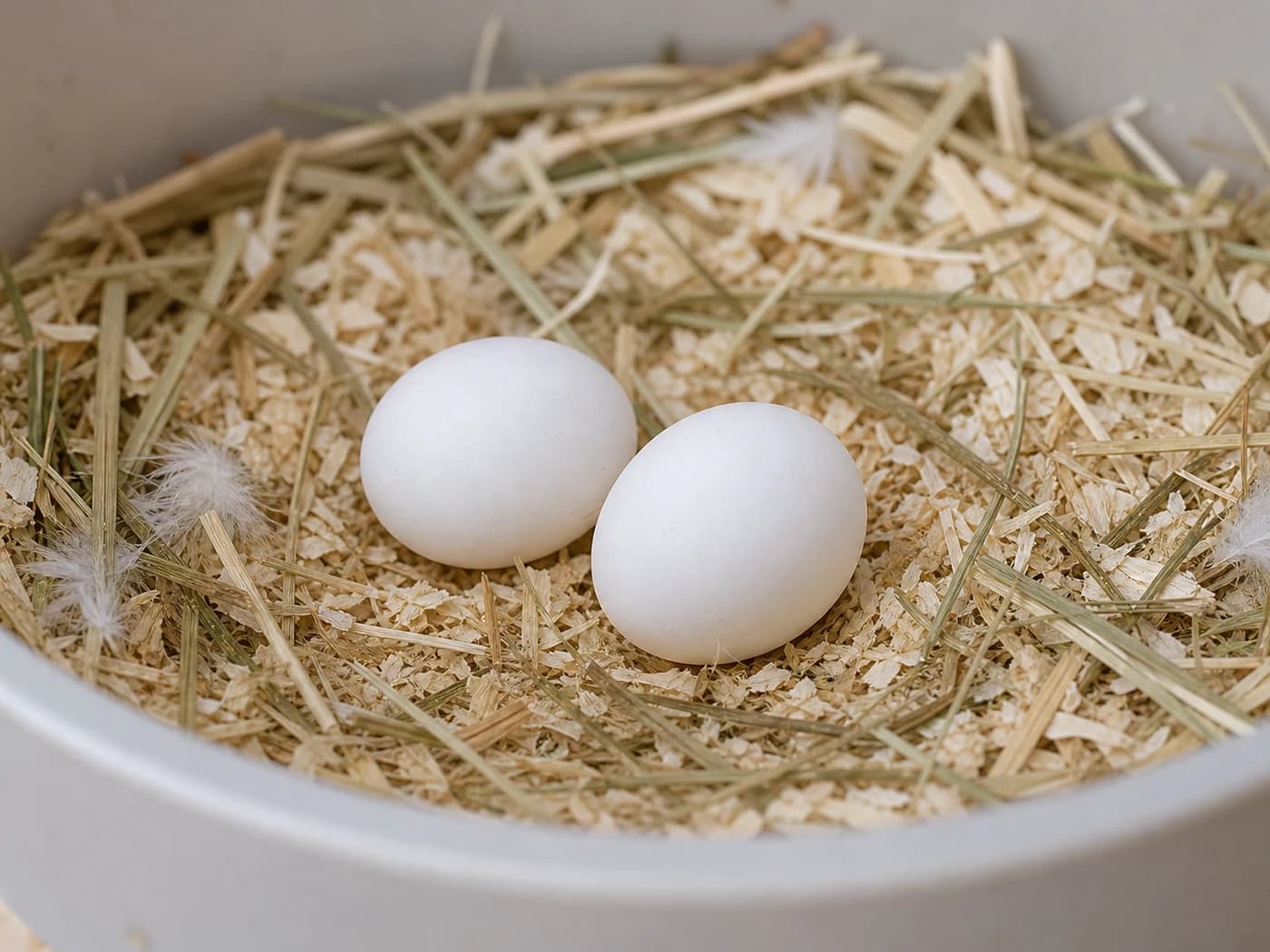
Egg

Incubation

Age range

Look

Lovebird plumage is not visible yet; shell condition, parent behavior, and incubation stability matter most.

What people watch

Avoid unnecessary disturbance; focus on humidity, temperature, parent stress, and hygiene.

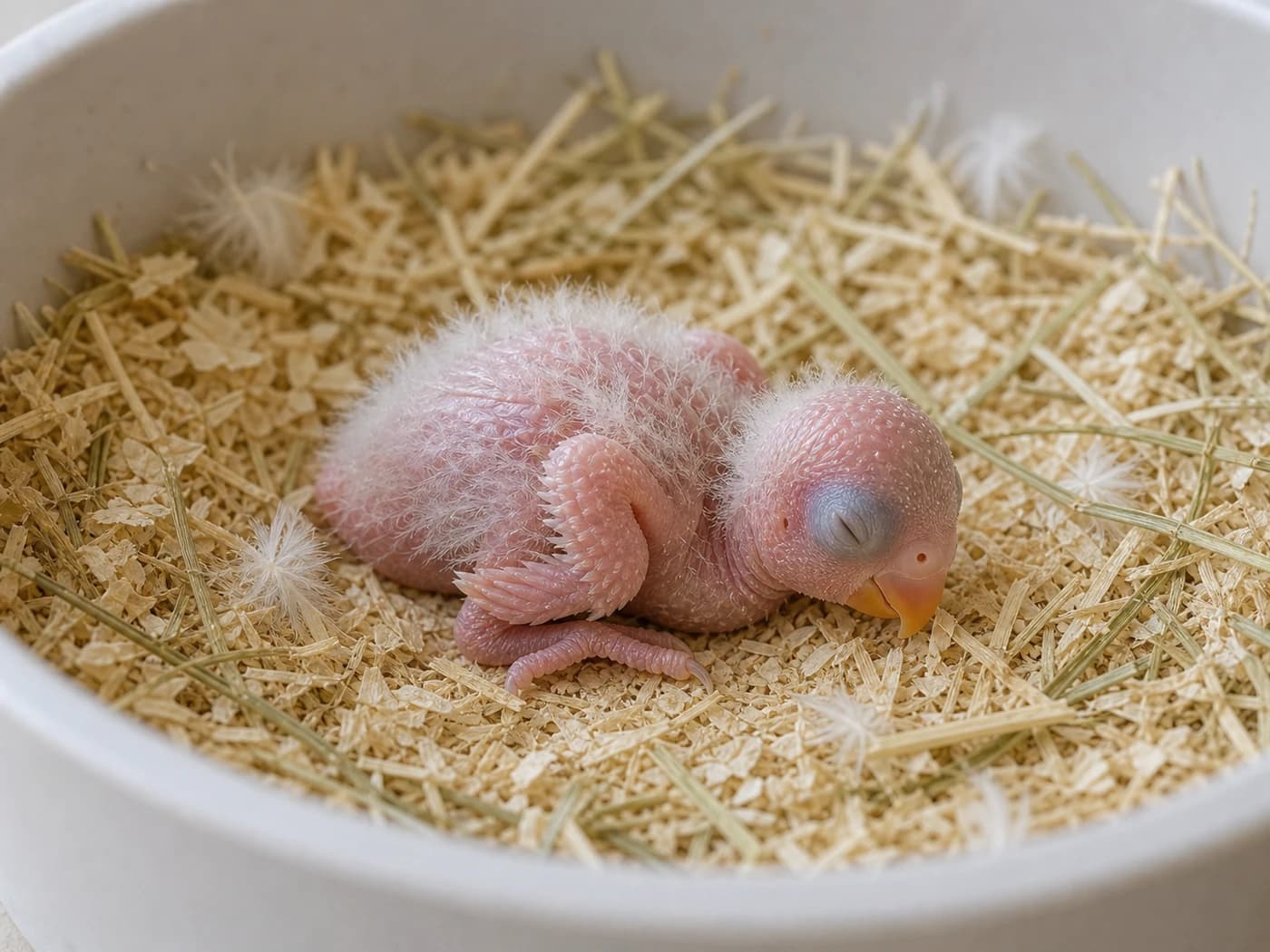
Lovebird Hatchling growth-stage reference image

Hatchling

0-7 days after hatch

Age range

Look

Newly hatched Lovebird chicks are delicate and mostly bare, so final color cannot be judged reliably yet.

What people watch

Watch warmth, crop filling, and feeding stability; visuals should be gentle, educational, and not graphic.

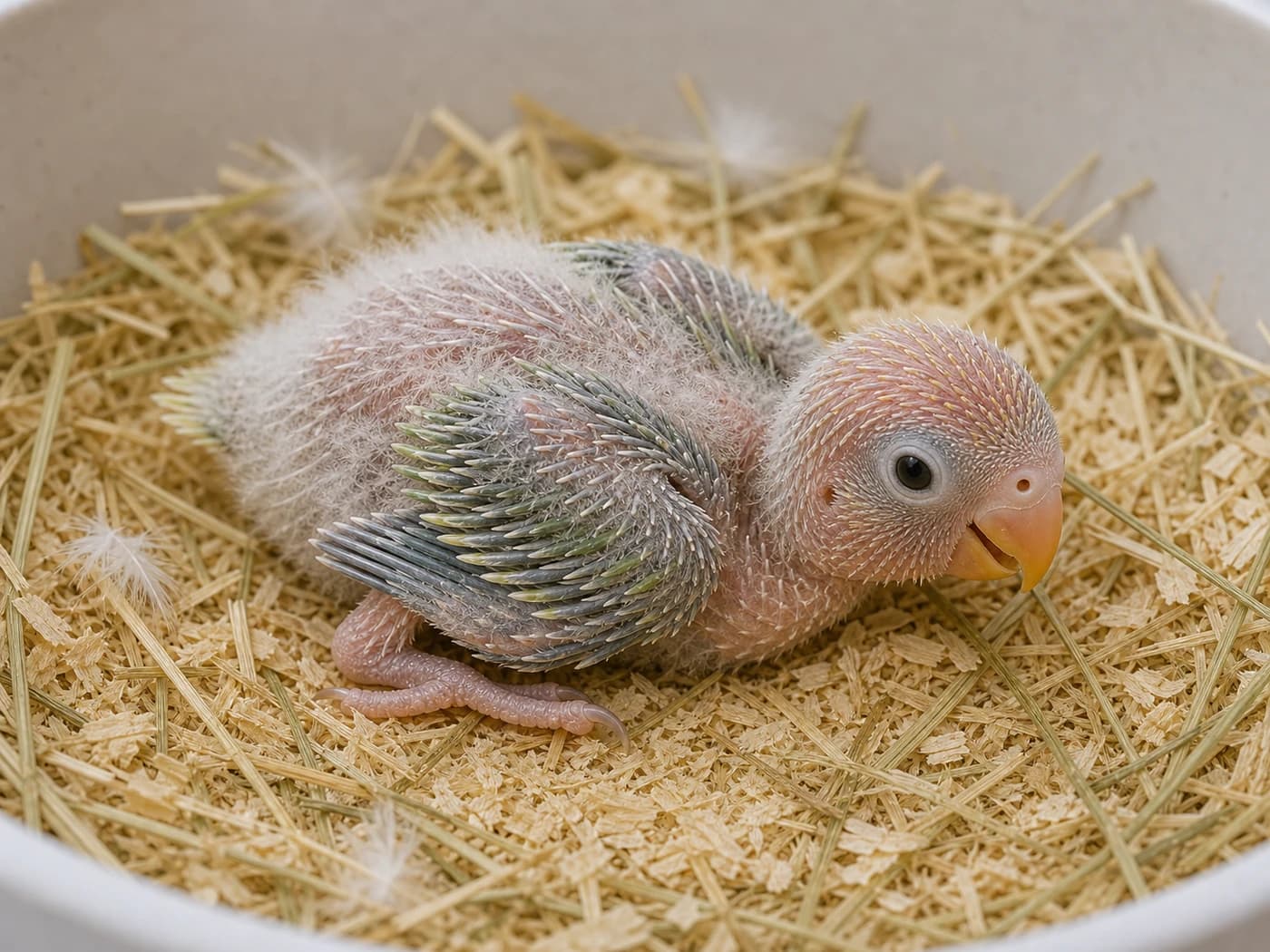
Lovebird Pin feather stage growth-stage reference image

Pin feather stage

About 2-4 weeks, varying by species size

Age range

Look

Lovebird chicks begin showing pin feathers, and early color direction or wing and face patterning starts to emerge.

What people watch

Do not force pin feathers open; monitor warmth, nutrition, and skin condition.

Lovebird Young chick growth-stage reference image

Young chick

About 1-2 months, varying by species size

Age range

Look

Lovebird now looks like a small bird, with clearer posture, plumage, eyes, and exploration behavior.

What people watch

Focus on socialization, gentle handling, safe movement, and gradual food variety.

Lovebird Weaning / juvenile growth-stage reference image

Weaning / juvenile

Around weaning through juvenile molt

Age range

Look

Lovebird looks closer to an adult, but coordination, bite control, and emotional regulation are still developing.

What people watch

Do not force early weaning; watch independent eating, weight stability, flight, and basic training.

Lovebird Adult growth-stage reference image

Adult

After juvenile molt and maturity

Age range

Look

Lovebird plumage and proportions are more stable, and long-term patterns in temperament, noise, hormones, and territory become clearer.

What people watch

Long-term care shifts toward diet, exercise, enrichment, hormone management, and annual health checks.

What to Know

Small bird, real bite

A lovebird bite is not always a nibble; stress or nest guarding can break skin.

Paper and dark cavities trigger nesting

Paper shredding, dark corners, and nest guarding can harden boundaries.

Avoid casual mixed housing

Lovebirds may chase or bite other birds, especially around resources.

Train boundaries, not submission

Respecting warnings, target training, and rewards work better than forcing contact.

Biting is not evil, but it needs real management

Lovebirds can be quick with the beak and firm about boundaries. Instead of grabbing or forcing touch, learn the warnings: leaning forward, opening the beak, charging hands, or guarding corners. Then use target training and rewards.

First things owners notice

Lovebird usually makes its first impression through inquisitive, always on the go, and loving, attentive bond with mates. Treat that as a starting point, not a full personality profile.

When you leave the room

Lovebirds are social and form strong bonds, suggesting they can experience separation anxiety and use contact calls if kept alone or not given enough attention.

Hand-raised vs parent-raised

Hand-raised lovebirds tend to be tamer, more comfortable with human interaction, and may form a stronger bond with their owners. Parent-raised lovebirds, while potentially more independent, might be more bonded to other birds and require more patience and effort to tame.

Common first mistakes

lack of patience, leading to force or punishment during training reacting to loud chirping with screaming, instead of understanding communication needs using physical punishment for biting (e.g., flicking beak)

Frequently Asked Questions

Listen to Lovebird Call

Hear their distinctive vocalizations

Community Photos

Be the first to share a photo!

Species Comparison

Trait
Lovebird
LovebirdSmall
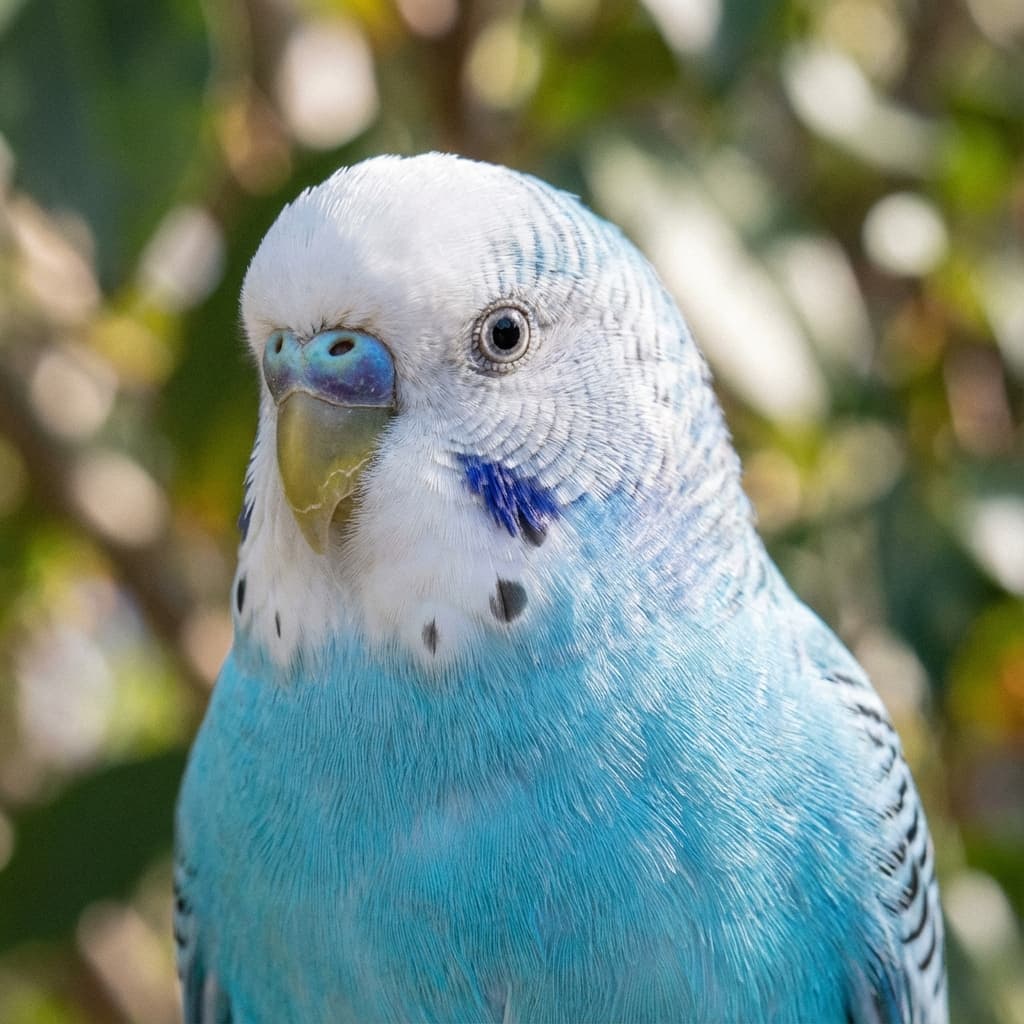
Budgie
BudgieSmall
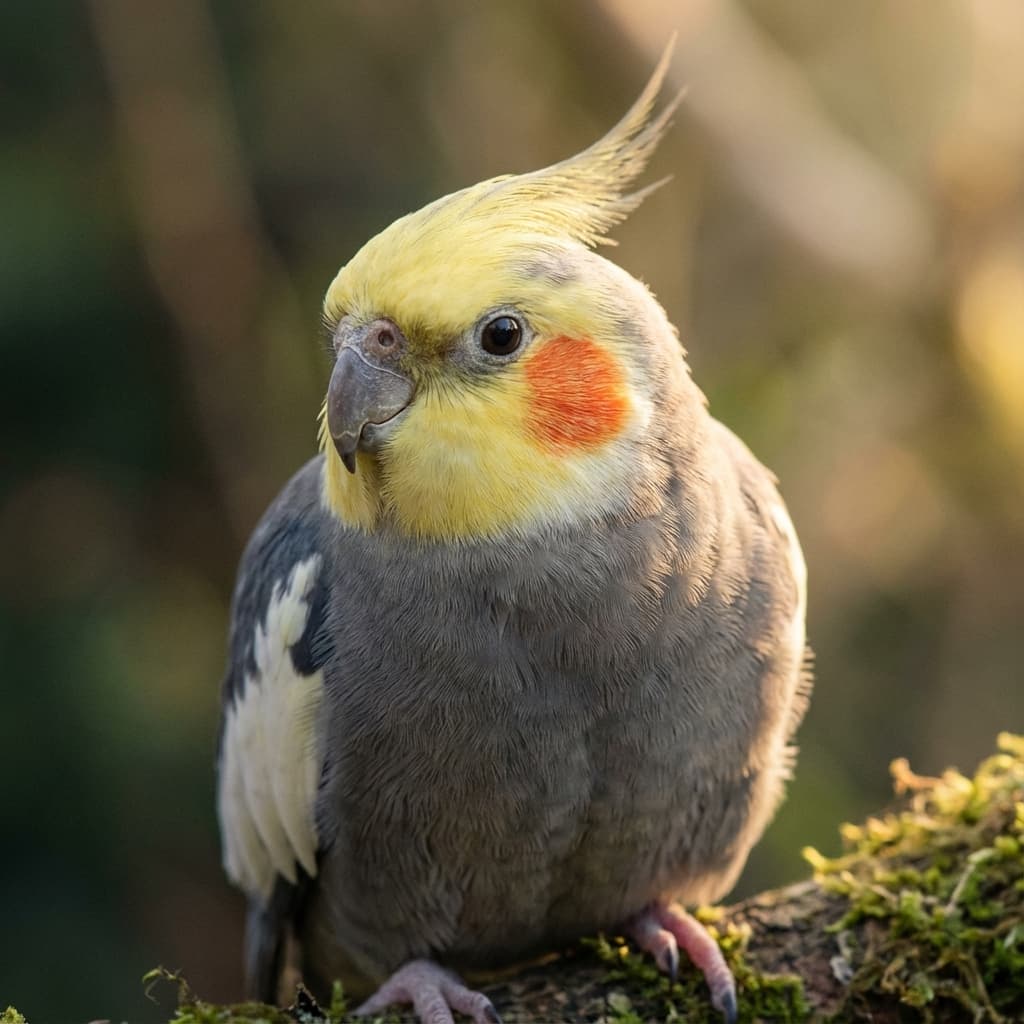
Cockatiel
CockatielSmall
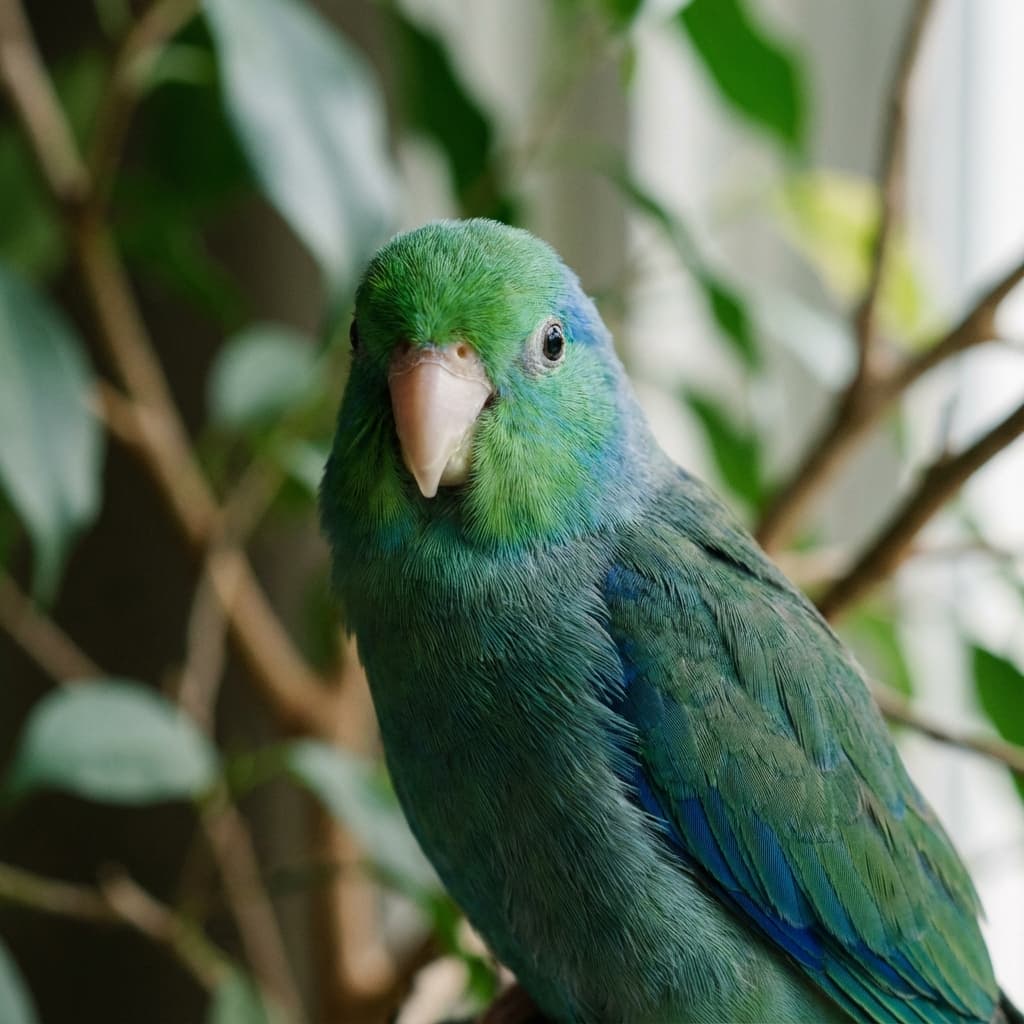
Pacific Parrotlet
Pacific ParrotletSmall
Lifespan10-20 years5-15 years15-25 years15-20 years
NoiseMediumMediumMediumLow
TrainingModerateEasyEasyModerate
TalkingRare - Most Lovebirds do not talk. A few may learn 5-10 words with unclear speech. They communicate through chirps, whistles, and chattering instead.Surprisingly Good - Males can learn 100-500+ words! Speech is fast and high-pitched. Hold the world record for largest vocabulary (1,728 words).Limited Speech, Excellent Whistler - Males are champion whistlers and can learn entire songs. Speech limited to 10-20 words with a cute, soft voice.Moderate - Can learn 10-20 words with a tiny, adorable voice. Males are better talkers. Speech is quiet and may require close listening to understand.
SizeSmallSmallSmallSmall

Shop Lovebird Products

Food, toys, cages & accessories for small birds

Browse Products