Best Bird Cage for Lovebirds
Lovebirds are territorial, extremely agile, and relentless chewers. Pairs need extra space to prevent territorial squabbles. Like budgies, bar spacing must not exceed 1/2 inch to eliminate fatal head entrapment.
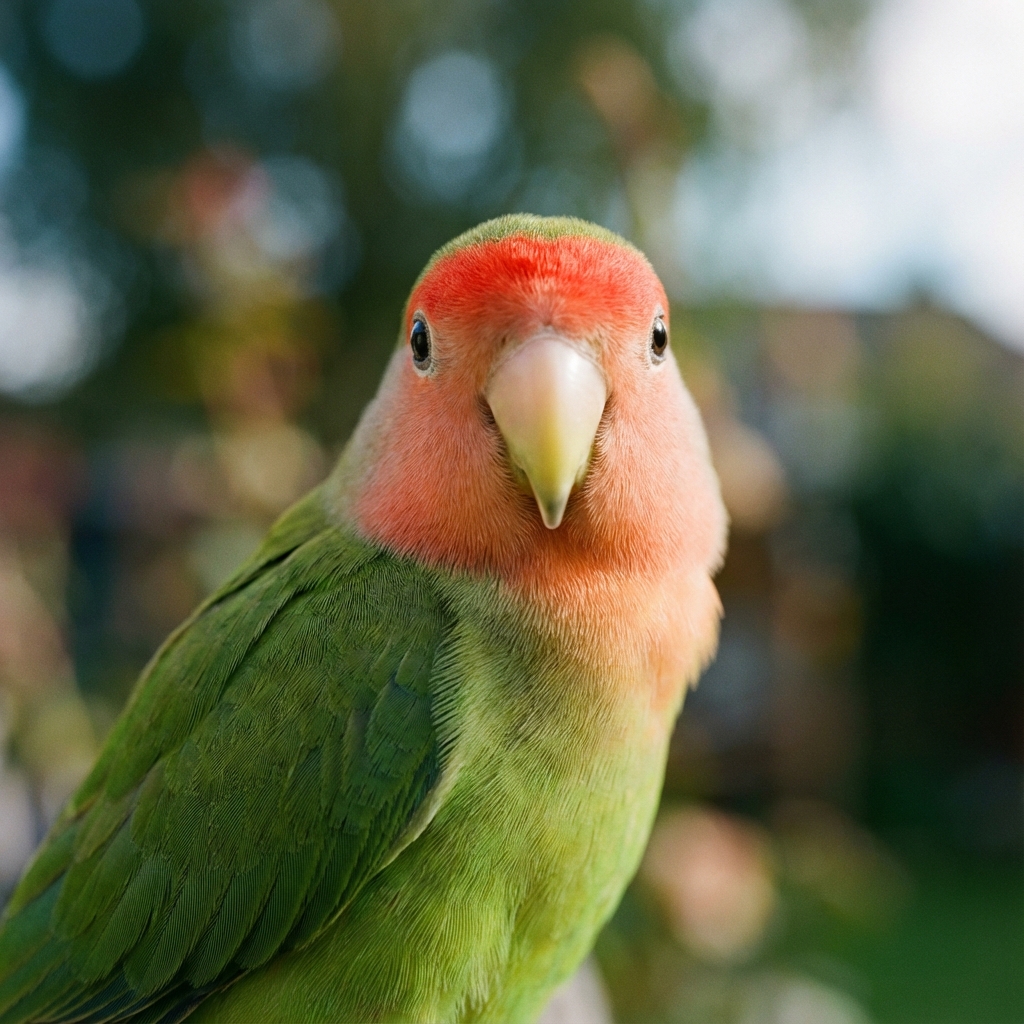
Lovebird Cage Dimensions & Bar Spacing At-a-Glance
Avian veterinary recommended minimum standards
24"W x 24"D x 24"H (single) / 30"W x 18"D x 24"H (pair)
(61 x 61 x 61 cm / 76 x 46 x 61 cm)32"W x 21"D x 30"H
Optimal active wing flapping space1/2 inch (1.27 cm) max
Strict limit to prevent head entrapment2 mm to 2.5 mm
Resists species beak leverageKey Layout Requirement: Wide horizontal flight room with escape-proof spring-lock doors
Best Cages for Lovebirds
Curated for safe bar spacing, non-toxic finishes, easy cleaning, and durable locks.
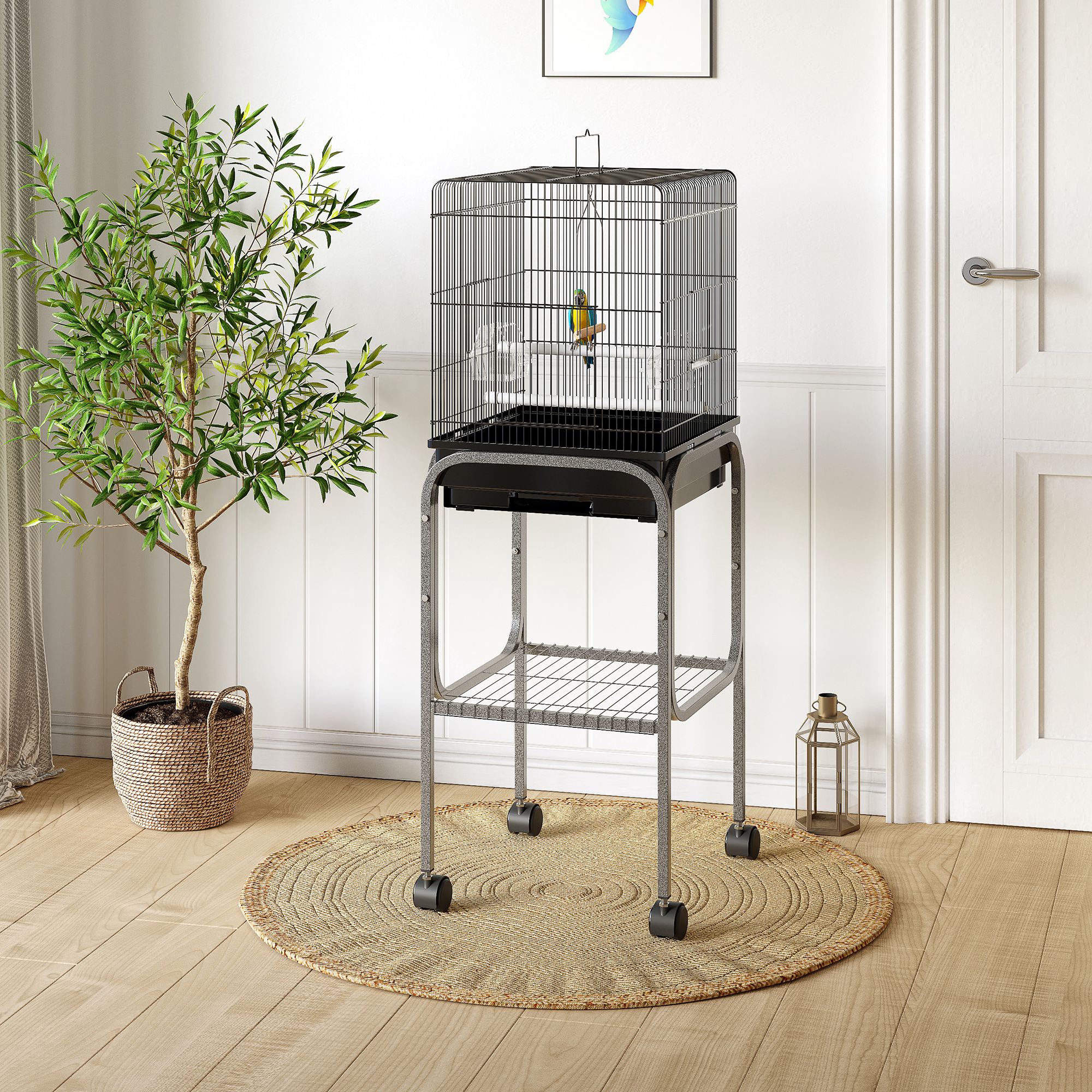 $135.93Best Overall for Lovebird Pairs
45-Inch Metal Indoor Bird Cage with Rolling Stand
Ideal width and height to prevent territorial fighting between bonded pairs.
Key Benefits
- Ample territory for two birds
- 1/2-inch spacing
- Wheeled stand included
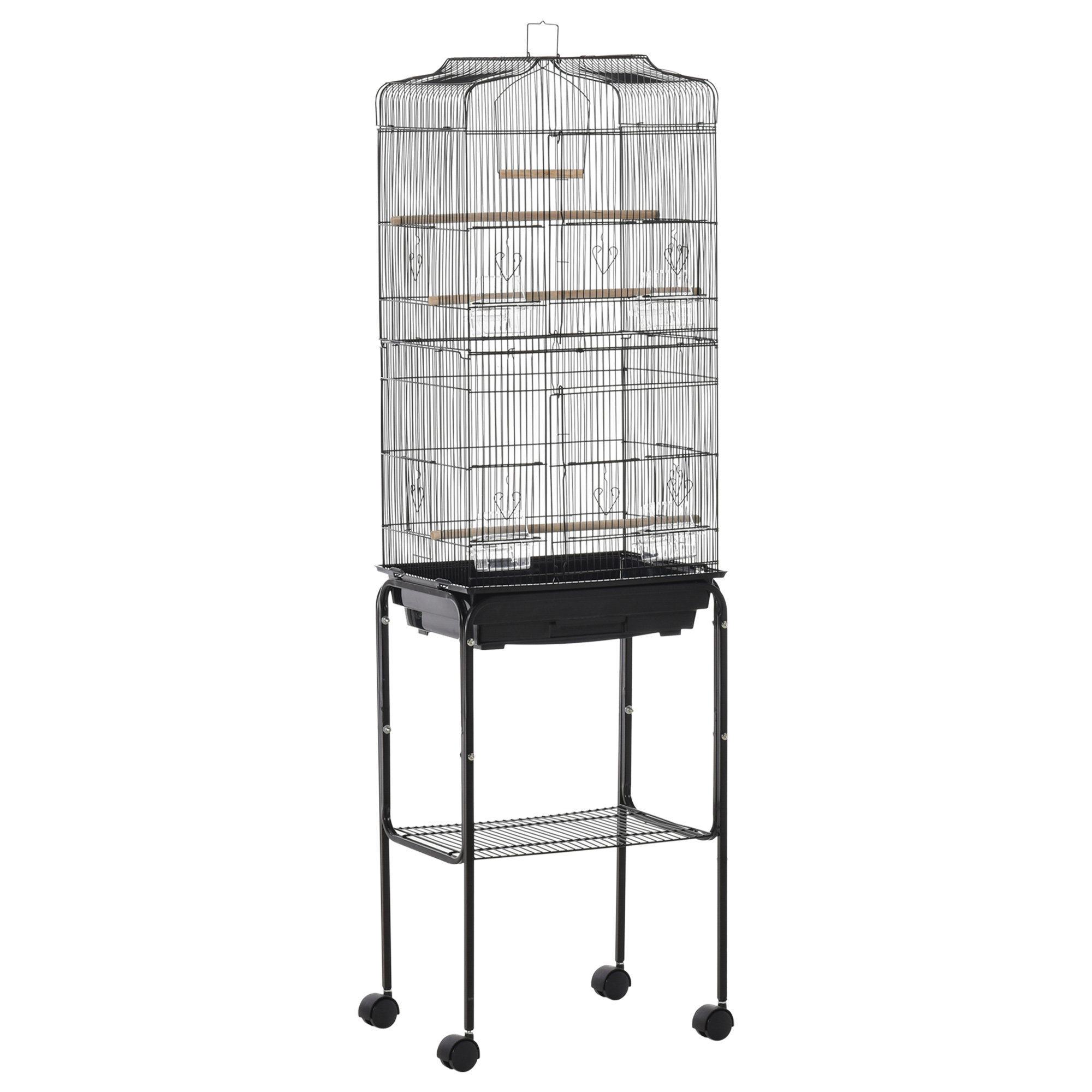 $103.28Best Single Lovebird Cage
PawHut Rolling Stand Cage with Accessories
Safe, escape-proof vertical space with rolling stand and storage shelf.
Key Benefits
- Compact footprint
- Secure spring latches
- Slide-out tray
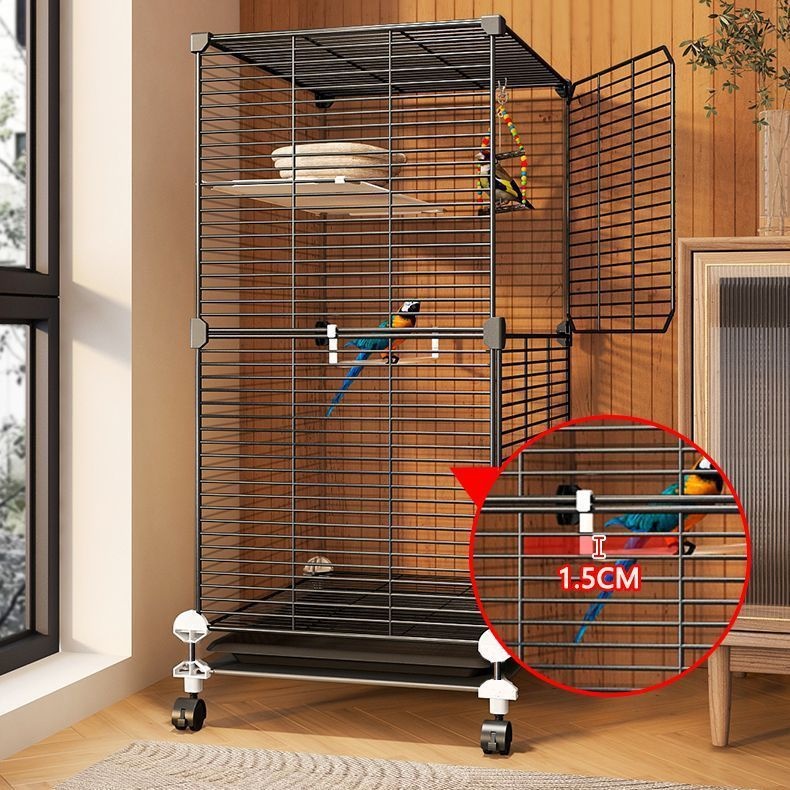 $47.02Best Compact Apartment Cage
Splash-Guard Small Parrot Ecological Villa
Mess-free acrylic splash guards with easy-clean bottom tray.
Key Benefits
- Splash guards contain seed scatter
- 1/2" safe spacing
- Budget friendly
How to Choose the Right Cage for a Lovebird
Sizing for Pairs vs. Singles
If keeping a pair of lovebirds, choose a cage with a minimum width of 30 inches. Cramped quarters trigger territorial fighting and feather plucking between cage mates.
Bar Spacing and Chew-Proof Construction
Never use bar spacing over 1/2 inch. Lovebird beaks can chip cheap plastic coatings; choose electro-welded steel with non-toxic powder coating.
Heavy-Duty Food and Door Latches
Lovebirds easily slide guillotine-style doors open. Look for spring-loaded locks or use quick-link clips on secondary doors.
Dangerous Cage Mistakes to Avoid
These common cage selection errors can cause physical trauma, behavioral disorders, or fatal head entrapment.
5/8" or 3/4" bar spacing
Lovebirds can force their heads through and become fatally trapped.
Round decorative wire cages
Inadequate flight space and dangerous bar angles.
Wooden cage components
Lovebirds will chew through soft wood frames within weeks.
Frequently Asked Questions
Do lovebirds always need to be kept in pairs?
No. A single lovebird makes a wonderful, deeply bonded pet if given at least 2–3 hours of daily interaction. But whether single or paired, they need a spacious cage.
What bar spacing is required for lovebirds?
1/2 inch maximum. Anything wider risks escape or severe injury.