Tracked delivery30-day returns
Back to Bird Hub
African Grey

African Grey Hub

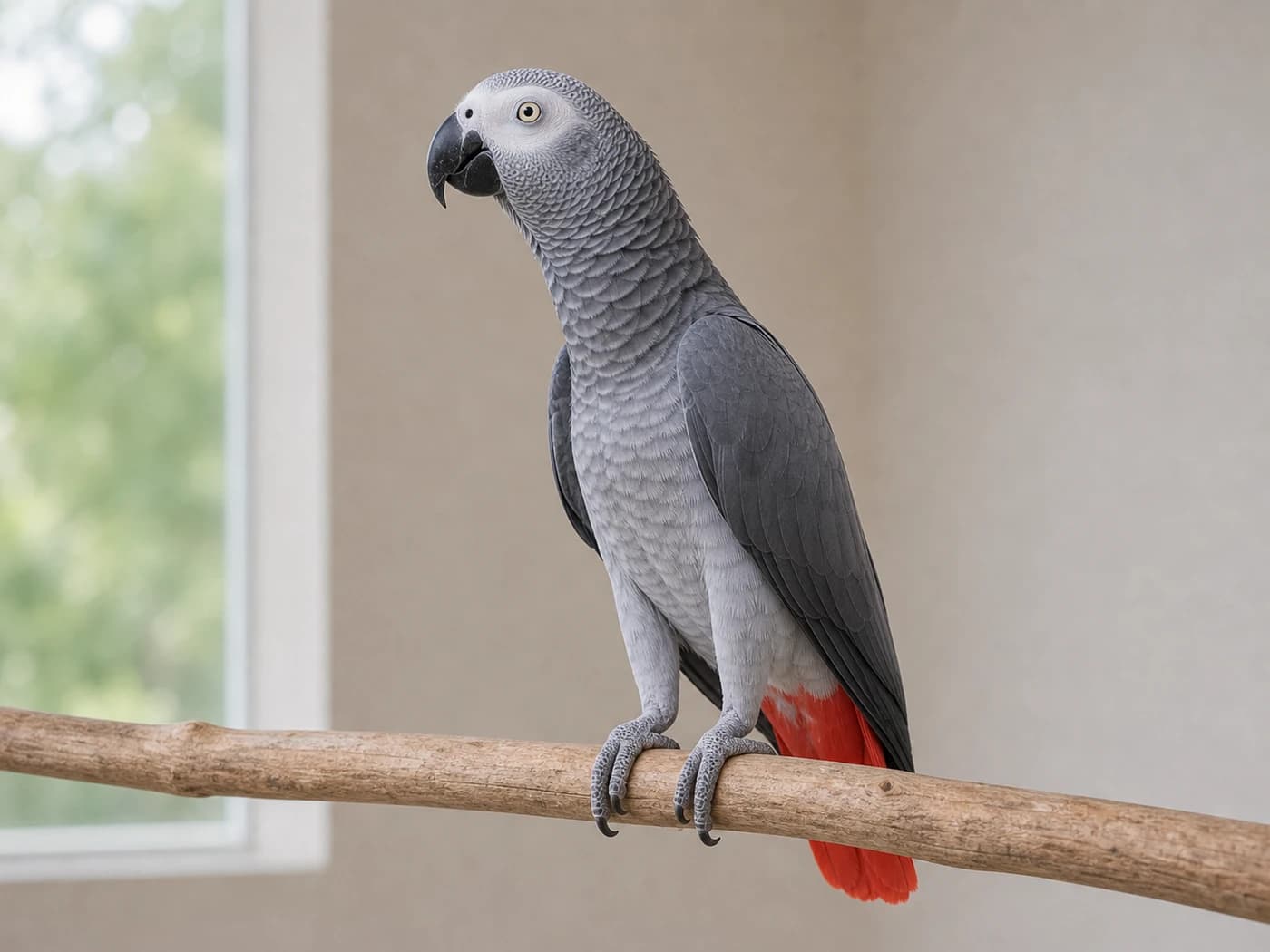
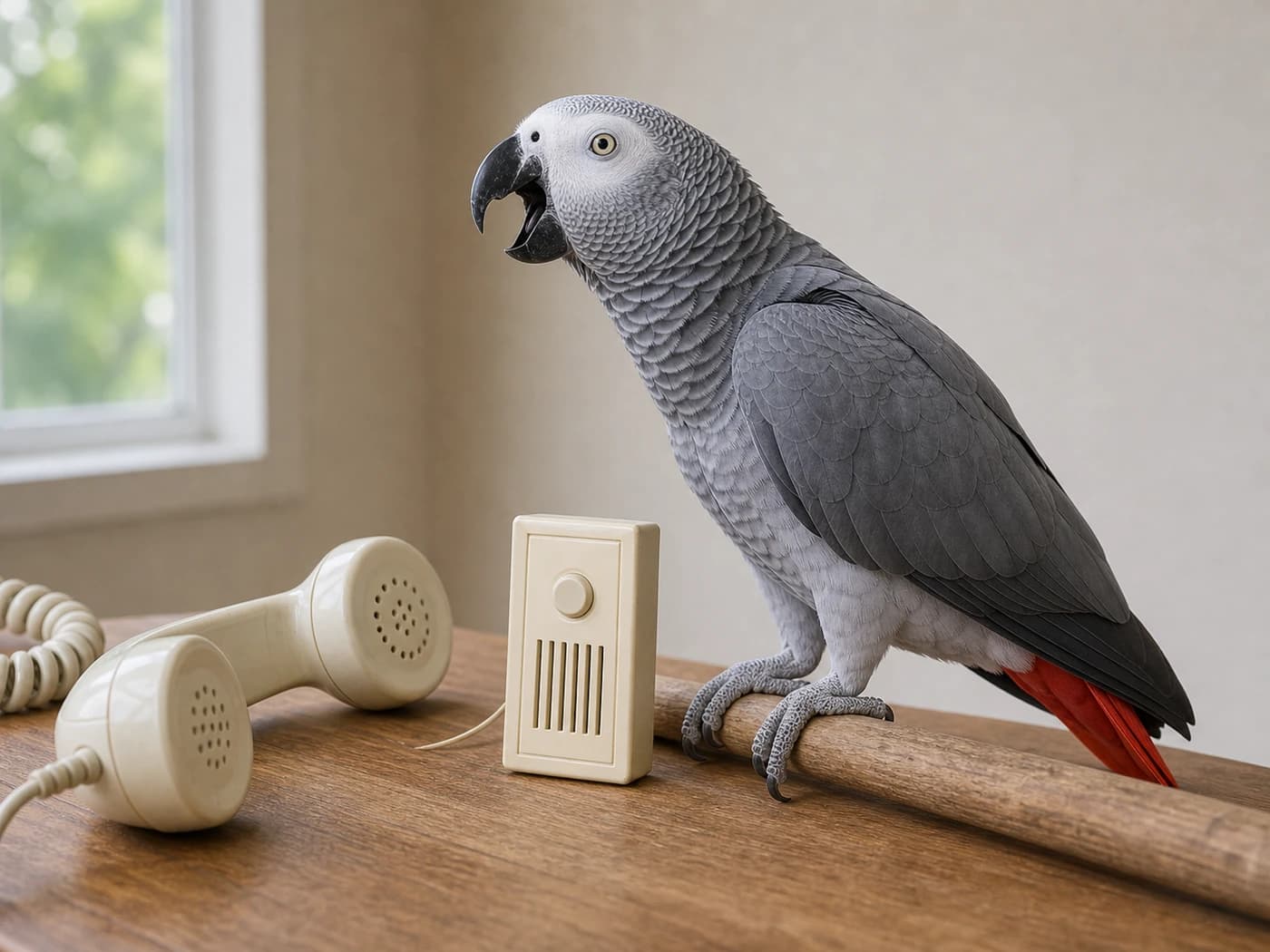
The appeal of an African grey is not simple repetition. Greys often connect sounds with context and human reaction. They may learn phone rings, microwave beeps, household phrases, and the tiny routines people forget they repeat. Congo and Timneh greys differ in appearance, and temperament still depends on the bird, but both are sensitive observers that can react strongly to change. A grey staring quietly is not necessarily cold; it may be assessing the room. Good homes offer predictable routines, low-pressure training, and the patience to earn trust slowly.

At a Glance

Size

Large

Lifespan

40-60 years

Noise

Medium

70-90 dB

Training

Expert

Talking

Exceptional

Best For

People who enjoy observant, thoughtful interaction
Homes that can keep a stable routine
Owners prepared to manage stress and feather issues seriously

Not For

Homes with frequent moves or caretaker changes
People wanting a talking machine
Owners impatient with sensitive, slow-warming birds

Noise Comparison

Where does a African Grey's call sit against familiar everyday sounds?

80 dB·Medium
QuieterLouder

Whisper · 30 dB

Library · 40 dB

Conversation · 60 dB

Vacuum Cleaner · 75 dB

Measured level

80 dB

Quieter than

4 · Lawnmower, Rock Concert

Louder than

4 · Conversation, Vacuum Cleaner

Whisper

30 dB

Library

40 dB

Conversation

60 dB

Vacuum Cleaner

75 dB

Lawnmower

90 dB

Rock Concert

110 dB

Chainsaw

120 dB

Jet Engine (100ft)

140 dB

Care Commitment

What does it realistically take to live well with a African Grey?

Beginner fit

Mixed

Needs a steady routine.

Daily Time

4–6 hrs/day

Heavy

Noise

70-90 dB

Noticeable

Lifespan

40-60 years

Lifetime

Space

Large

Large

Experience

Expert

Advanced

Daily reality

African Grey fits into home life more easily, but still needs routine interaction and enrichment.

  • A steady routine makes noise easier to manage.
  • Learn training/behavior basics early to prevent issues.

Next steps

Start with the guide for this species, then move into shopping or naming.

About African Greys

Personality

The intellectuals of the avian world. Greys are observant, cautious, and incredibly distinct in their speech capabilities.

Diet

High calcium requirement. Ensure diet is rich in calcium or provide supplements as recommended by a vet.

Behavior

They prefer mental stimulation over physical rough-housing. Foraging wheels, complex puzzles, and learning tricks are their favorite pastimes.

Varieties & Colors

The appeal of an African grey is not simple repetition. Greys often connect sounds with context and human reaction. They may learn phone rings, microwave beeps, household phrases, and the tiny routines people forget they repeat. Congo and Timneh greys differ in appearance, and temperament still depends on the bird, but both are sensitive observers that can react strongly to change. A grey staring quietly is not necessarily cold; it may be assessing the room. Good homes offer predictable routines, low-pressure training, and the patience to earn trust slowly.

2 entriesvisual ID

How They Differ

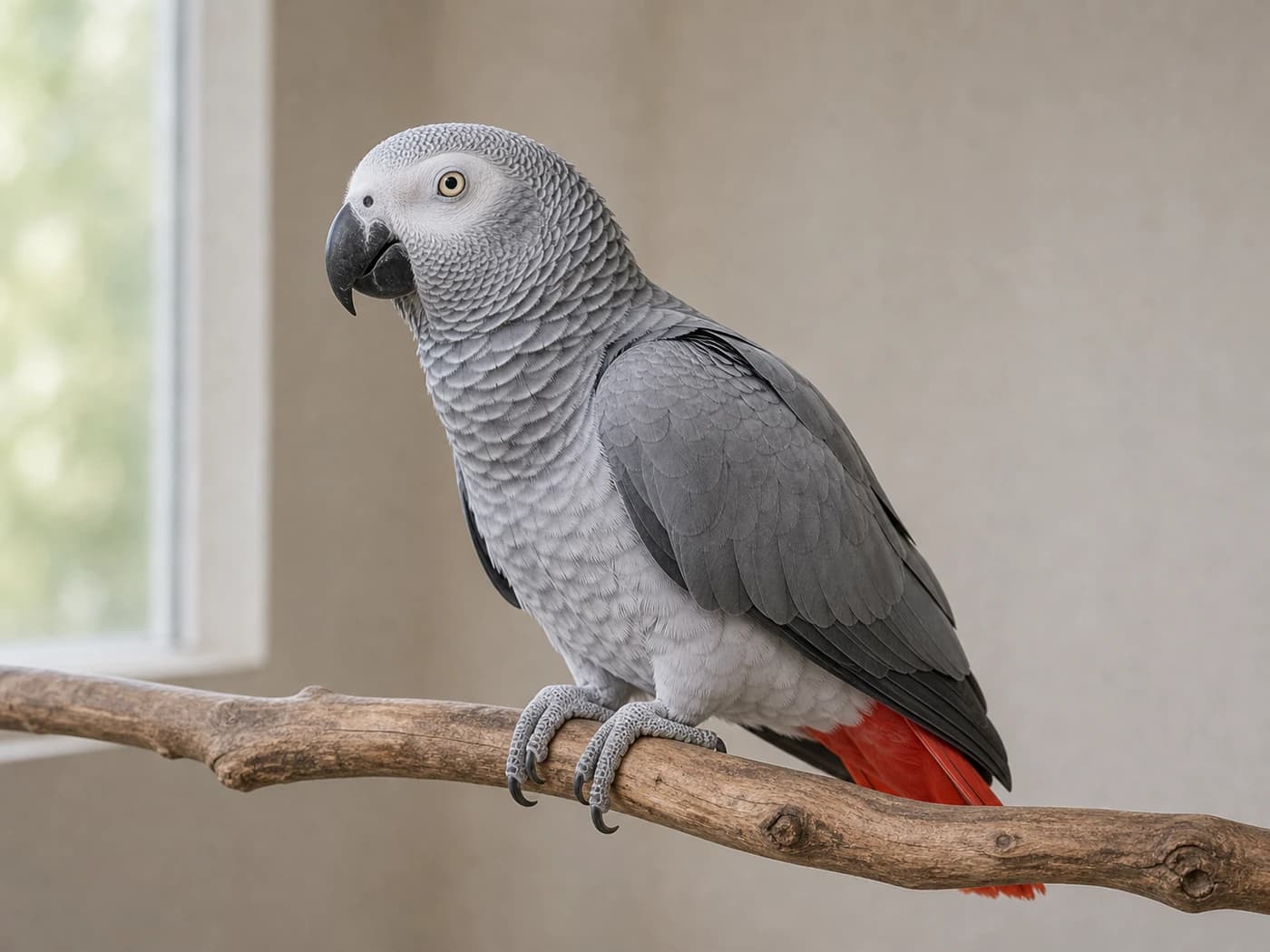
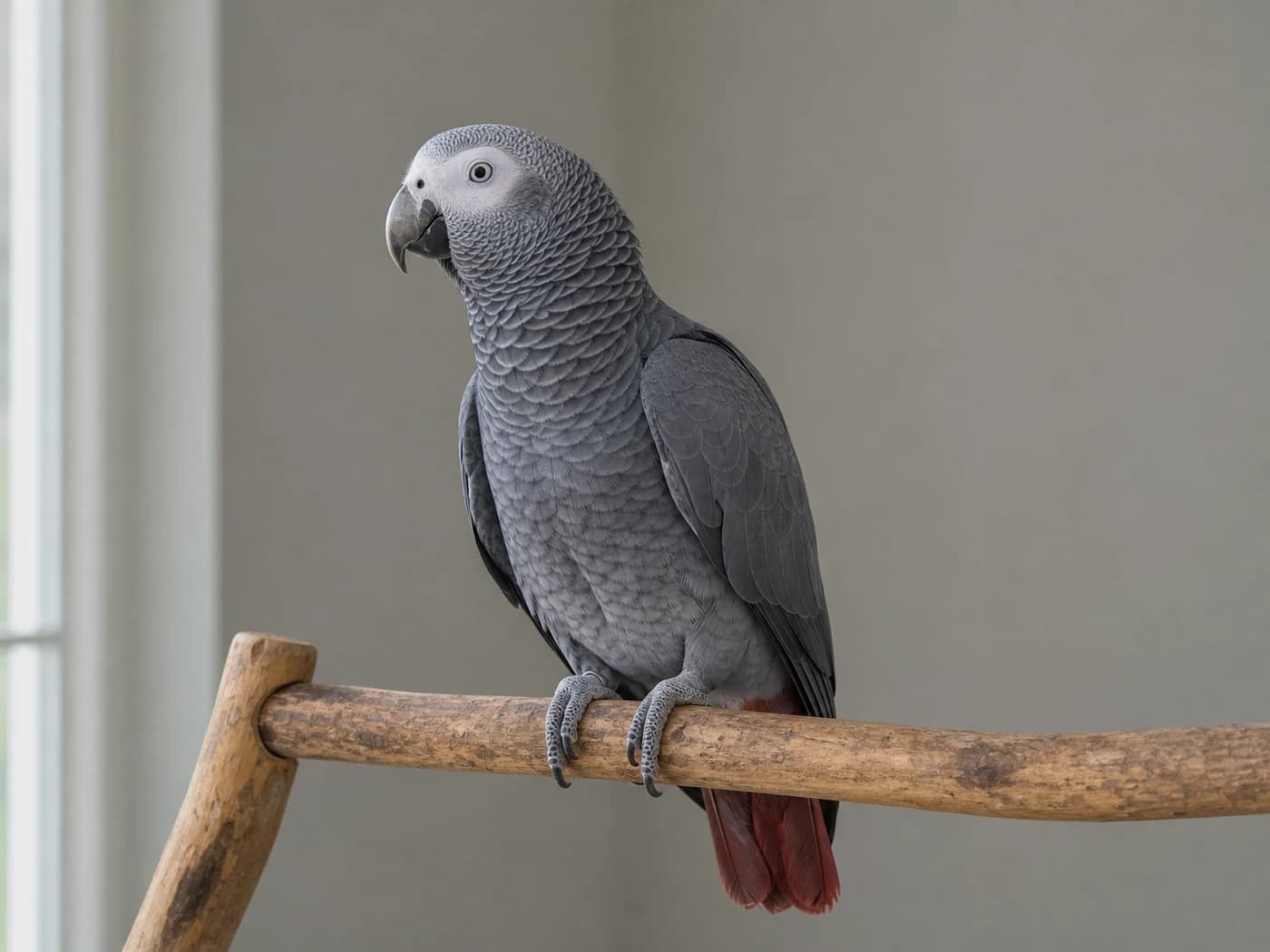
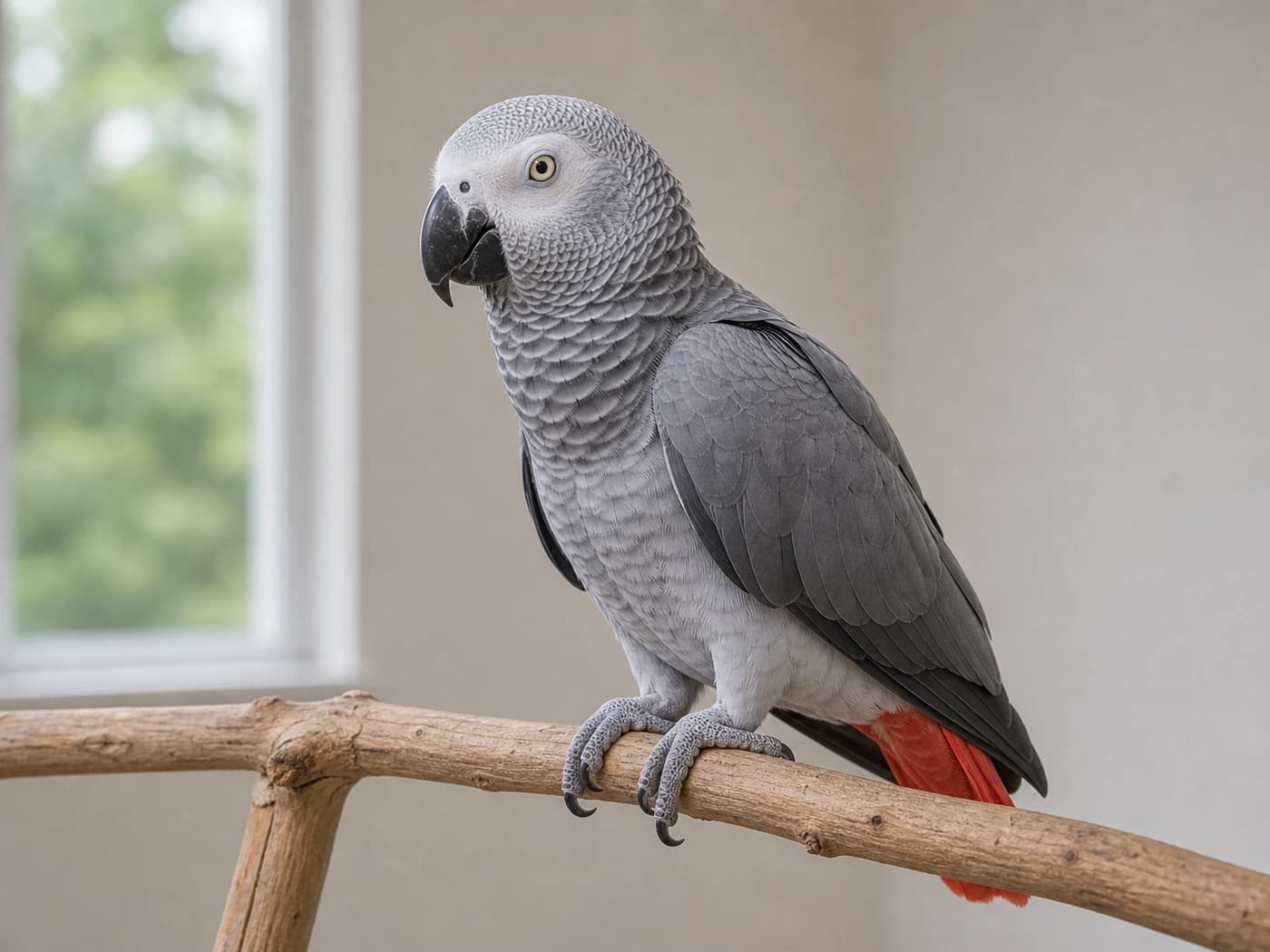
Two main subspecies: Congo African grey (CAG) is larger, lighter grey, with a bright red tail and black beak; Timneh African grey (TAG) is slightly smaller, darker grey, with a dark maroon tail and horn-colored upper beak. Timnehs are generally considered calmer and less neurotic.

How These Varieties Happen

African grey parrots primarily consist of two subspecies: Congo African Grey and Timneh African Grey. Both look similar but have distinct differences. Artificially bred color mutations are extremely rare.

Congo African Grey African Grey realistic reference image

Standard label

Congo African Grey

Variety

Common names

Congo African GreyCAGPsittacus erithacus erithacus

Owner shorthand

Congo grey is the psychologist of parrots - can read your emotionsKeeping a Congo grey requires not a cage but a therapist

Look

Larger size, dark gray plumage, bright red tail feathers, black beak. The most common pet African grey.

Genetics

Natural subspecies, not an artificially bred mutation.

Health & care

Lifespan 50-60 years. Good physical health but extremely high psychological needs; prone to feather plucking if under-stimulated.

Sexing tip

Males and females look nearly identical. Males slightly larger with rounder heads; females have slightly longer, thinner necks. DNA testing most accurate.
Timneh African Grey African Grey realistic reference image

Standard label

Timneh African Grey

Variety

Common names

Timneh African GreyTAGPsittacus timneh

Owner shorthand

Timneh grey starts talking earlier and adapts to new environments more easilyTimneh grey is smaller but just as intelligent

Look

Smaller size, lighter gray plumage, dark red to maroon tail feathers, upper beak pinkish-horn colored.

Genetics

Natural subspecies, not an artificially bred mutation.

Health & care

Lifespan 40-50 years. Good constitution; slightly more psychologically adaptable than Congo grey; matures earlier (develops speech earlier).

Sexing tip

Same as Congo grey; DNA testing required.

Naming Notes

Chinese owner phrases, English common names, and market labels often do not translate one-to-one, so the tricky parts are separated here.

Common aliases

Congo African GreyTimneh African GreyCAGTAG

Congo and Timneh African Greys should be distinguished rather than collapsed into one grey parrot label.

Little-professor owner shorthand points to observation, learning, and caution, not merely speech tricks.

Mimicry is not full semantic understanding, but it is not meaningless parroting either.

Detailed Field Notes

These notes isolate details that are easy to mistranslate, oversimplify, or overclaim. Each one separates the claim, why it matters, and what an owner should do.

6 notes

Not just a repeater

Cognition-research supported

Careful claim

African Greys are famous mimics, but research and long-term care show they can connect sounds, context, and social feedback.

Why it matters

The page should avoid calling them tape recorders while also avoiding magical claims about full human-language understanding.

Owner action

Train words in meaningful contexts instead of chasing vocabulary count alone.

Highly sensitive to change

Care experience + behavior guidance

Careful claim

African Greys can be highly sensitive to moves, cage changes, household changes, routine shifts, and forced handling.

Why it matters

Quiet observation is often misread as coldness, when the bird may be assessing safety.

Owner action

Use slow transitions, stable stations, familiar cues, and predictable routines.

Feather damage needs medical rule-out

Veterinary-care supported

Careful claim

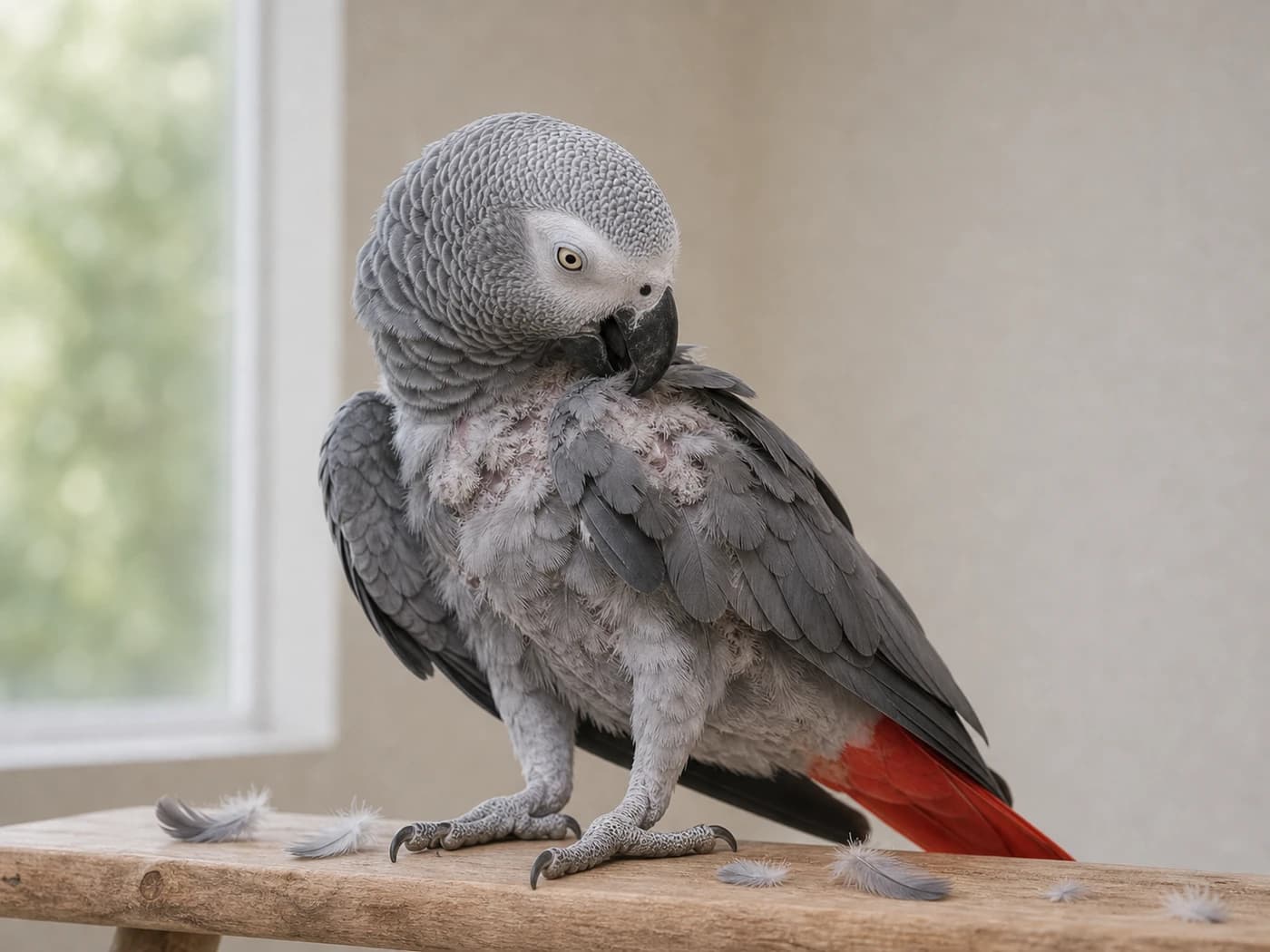
Feather damage in Greys may involve stress or boredom, but also pain, skin disease, nutrition, infection, or environmental irritation.

Why it matters

The page must not reduce every feather problem to psychology.

Owner action

Start with an avian vet check, then adjust sleep, light, humidity, foraging, and social pressure.

Congo and Timneh need separate labels

Taxonomy-supported

Careful claim

Congo Greys are larger with bright red tails; Timneh Greys are smaller with darker maroon tails and often a pale upper bill area.

Why it matters

Many pages say African Grey only, which blurs image identification and market expectations.

Owner action

Variety cards, English labels, and market notes should say Congo or Timneh clearly.

Mimicry is not full semantic understanding

Research-supported, cautious phrasing

Careful claim

Greys can mimic phones, microwaves, and speech, and some use words in context, but individual differences are large.

Why it matters

Do not dismiss them as mechanical repeaters or promise every bird will chat.

Owner action

Measure success by interaction quality, agency, and stability, not only the number of phrases.

Greys also create feather dust

Veterinary-care supported

Careful claim

African Greys are commonly grouped with powder-down parrots such as cockatoos and cockatiels, so dust management matters.

Why it matters

Many readers remember speech ability and forget air-quality and cleaning cost.

Owner action

Plan air filtration, bathing opportunities, damp cleaning, and allergy sensitivity checks.

Community Notes

These are the phrases owners commonly use when talking about African Greys in real communities.

the little professor

Literal meaning

A professor-like observer.

Actual meaning

Greys observe, remember, and mimic environmental and human routines.

Used when

Used when a grey watches and learns quietly.

Care implication

Give predictable training and a stable environment.

parrot psychologist

Literal meaning

Feels like it is reading people.

Actual meaning

Describes sensitivity to household changes, tone, and tension.

Used when

Used when it reacts to household mood shifts.

Care implication

Use low-pressure, choice-based interaction.

master of sound bits

Literal meaning

A master of odd sound effects.

Actual meaning

Phone rings, microwave beeps, doorbells, and coughs may be copied.

Used when

Used when the bird drops household sound effects.

Care implication

Do not reward every piercing sound just because it is funny.

not just a repeater

Literal meaning

Not merely mechanical repetition.

Actual meaning

It may place sounds in daily context without understanding everything fully.

Used when

Used when discussing speech ability.

Care implication

Train communication and emotional safety, not just vocabulary.

Behavior Reading

Read posture, eyes, feathers, and beak use as a sequence: what you see, what it usually means, what not to assume, and what to do next.

African Grey Quiet staring behavior reference image

Quiet staring

What you see

Quietly watches people, actions, or objects.

Usually means

Often observing and learning, not necessarily coldness.

Do not misread

Do not force liveliness with pressure.

Owner action

Give time and invite predictable interaction.

African Grey Body freeze behavior reference image

Body freeze

What you see

Feathers tighten, body stiffens, and feet stop moving.

Usually means

A stress signal.

Do not misread

Stillness does not mean consent.

Owner action

Step back, lower your voice, and remove the trigger.

African Grey Repeated feather plucking behavior reference image

Repeated feather plucking

What you see

Repeated chewing or plucking with thinning feathers.

Usually means

May reflect stress, health, pain, or environment.

Do not misread

Do not call it just a bad habit.

Owner action

Start with an avian vet, then review stress, sleep, humidity, and foraging.

African Grey Sound mimicry behavior reference image

Sound mimicry

What you see

Copies rings, beeps, and family voices.

Usually means

Does not mean full semantic understanding.

Do not misread

But do not dismiss it as meaningless parroting.

Owner action

Build useful communication with consistent words and contexts.

African Grey Sensitive to change behavior reference image

Sensitive to change

What you see

Becomes quiet or tense after cage changes, moving, or caretaker shifts.

Usually means

Environmental changes can hit hard.

Do not misread

Do not expect instant adaptation.

Owner action

Use gradual exposure, familiar objects, and routine.

Growth Stages

This timeline keeps the typical development from egg to adult in one place so you can compare looks, feather changes, and feeding milestones.

African Grey Egg growth-stage reference image

Egg

Incubation

Age range

Look

African Grey plumage is not visible yet; shell condition, parent behavior, and incubation stability matter most.

What people watch

Avoid unnecessary disturbance; focus on humidity, temperature, parent stress, and hygiene.

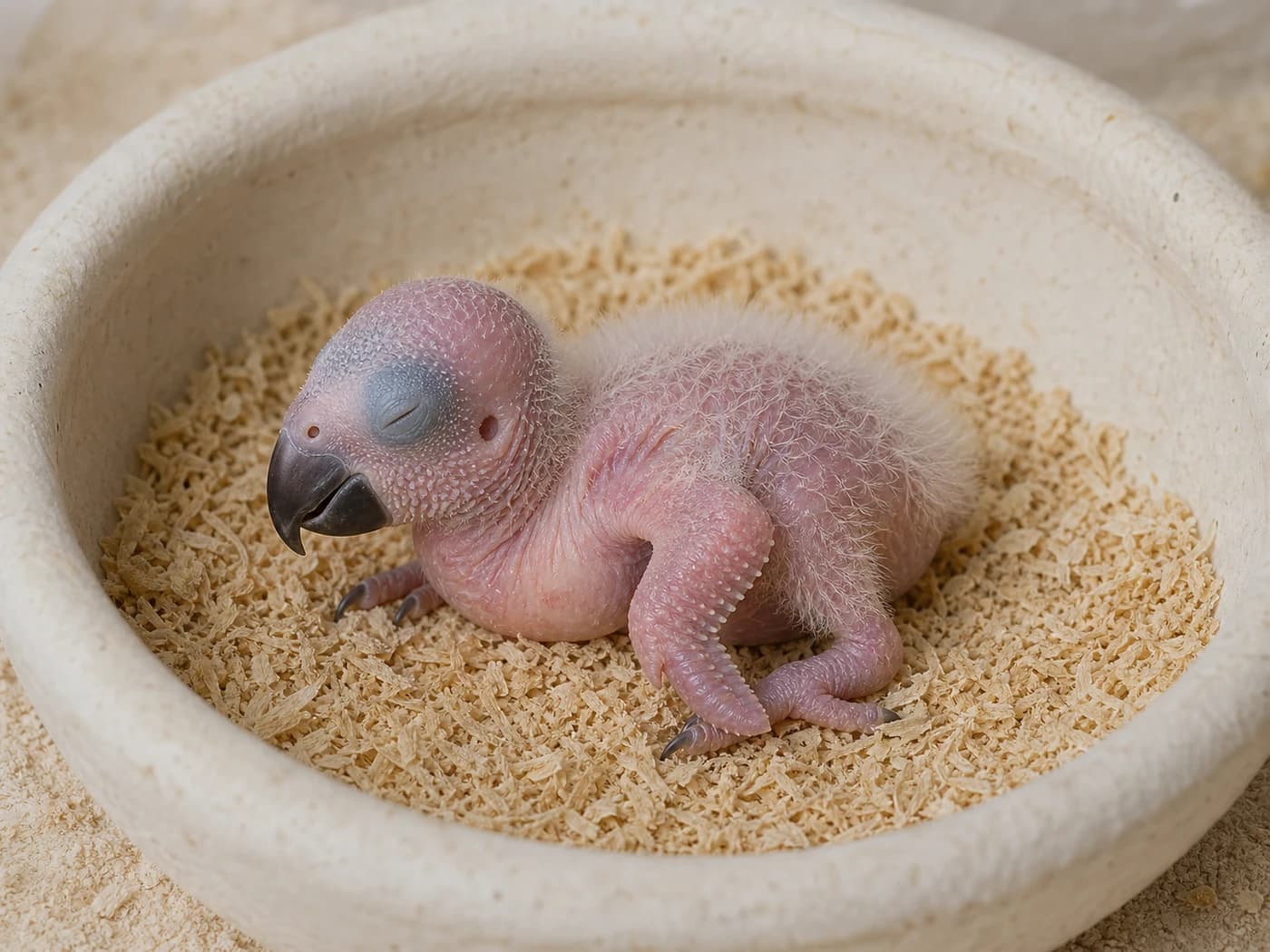
African Grey Hatchling growth-stage reference image

Hatchling

0-7 days after hatch

Age range

Look

Newly hatched African Grey chicks are delicate and mostly bare, so final color cannot be judged reliably yet.

What people watch

Watch warmth, crop filling, and feeding stability; visuals should be gentle, educational, and not graphic.

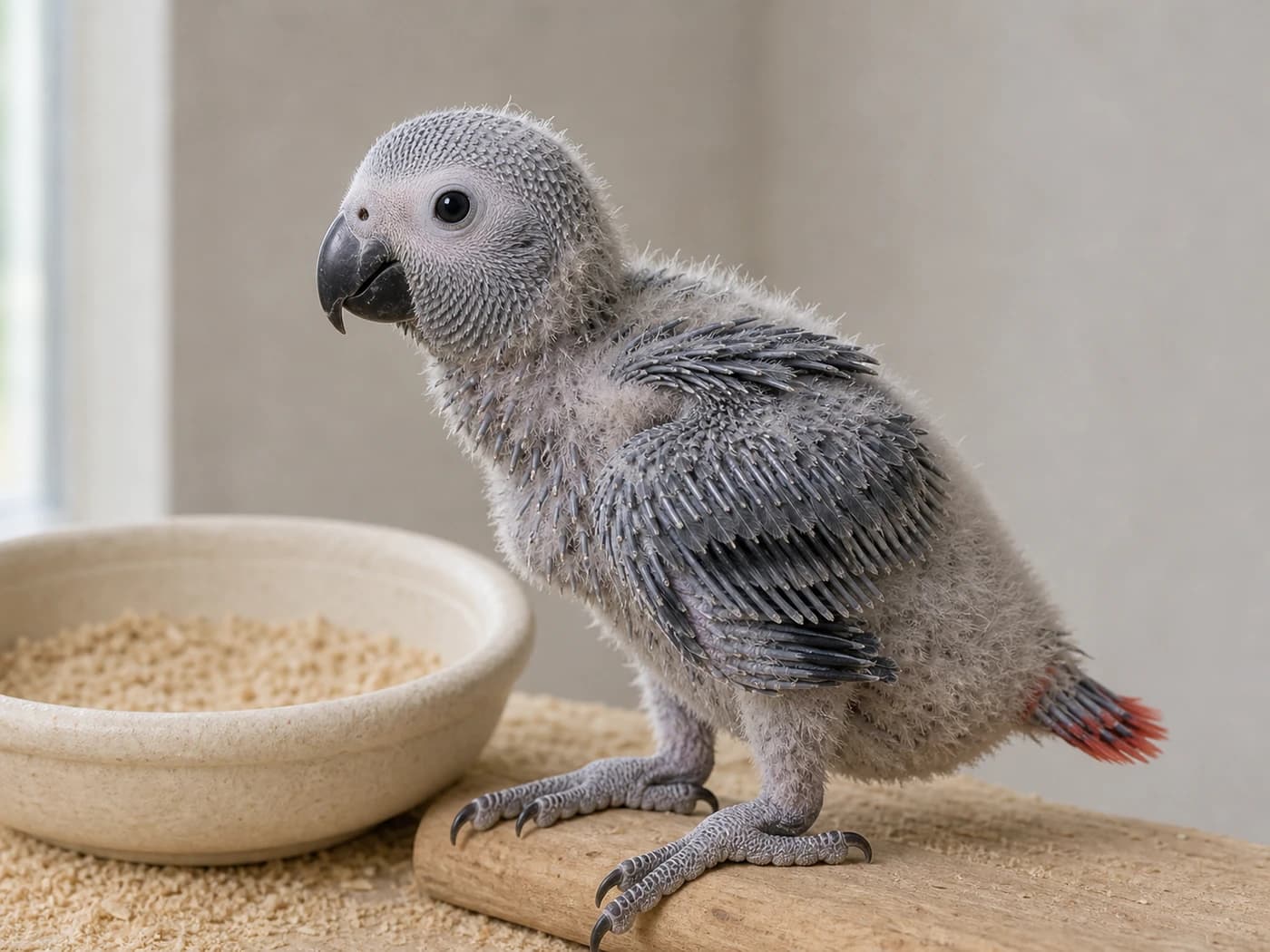
African Grey Pin feather stage growth-stage reference image

Pin feather stage

About 2-4 weeks, varying by species size

Age range

Look

African Grey chicks begin showing pin feathers, and early color direction or wing and face patterning starts to emerge.

What people watch

Do not force pin feathers open; monitor warmth, nutrition, and skin condition.

African Grey Young chick growth-stage reference image

Young chick

About 1-2 months, varying by species size

Age range

Look

African Grey now looks like a small bird, with clearer posture, plumage, eyes, and exploration behavior.

What people watch

Focus on socialization, gentle handling, safe movement, and gradual food variety.

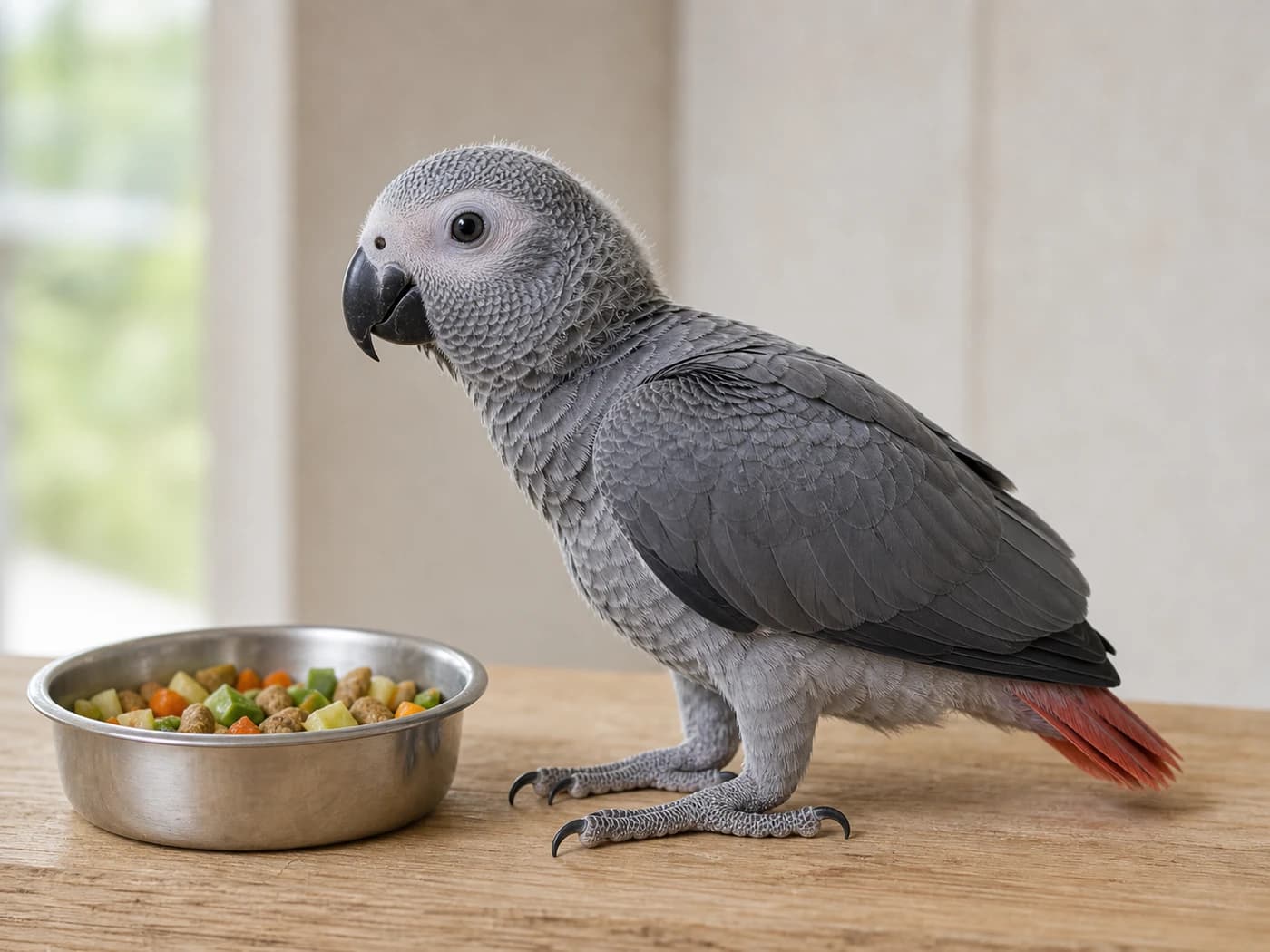
African Grey Weaning / juvenile growth-stage reference image

Weaning / juvenile

Around weaning through juvenile molt

Age range

Look

African Grey looks closer to an adult, but coordination, bite control, and emotional regulation are still developing.

What people watch

Do not force early weaning; watch independent eating, weight stability, flight, and basic training.

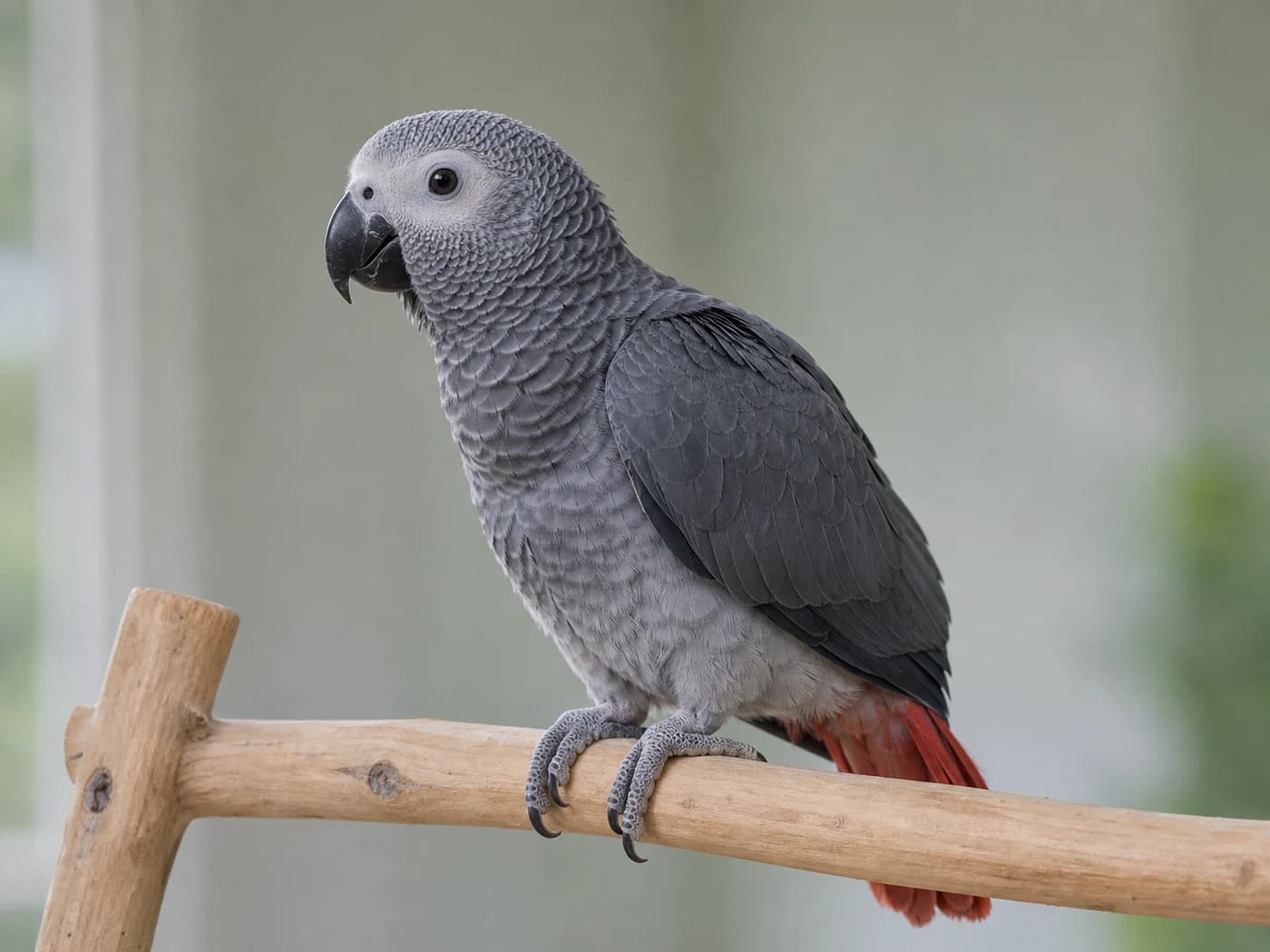
African Grey Adult growth-stage reference image

Adult

After juvenile molt and maturity

Age range

Look

African Grey plumage and proportions are more stable, and long-term patterns in temperament, noise, hormones, and territory become clearer.

What people watch

Long-term care shifts toward diet, exercise, enrichment, hormone management, and annual health checks.

What to Know

Stress management is core care

Greys are sensitive; change, scares, and forced handling can accumulate stress.

Plucking needs health checks

Plucking is not only psychological; pain, skin, nutrition, and environment all matter.

Not a talking machine

Strong speech ability still comes with needs for choice, security, and routine.

Moves and caretaker changes matter

Environmental stability can matter more than adding more toys.

Make changes slowly

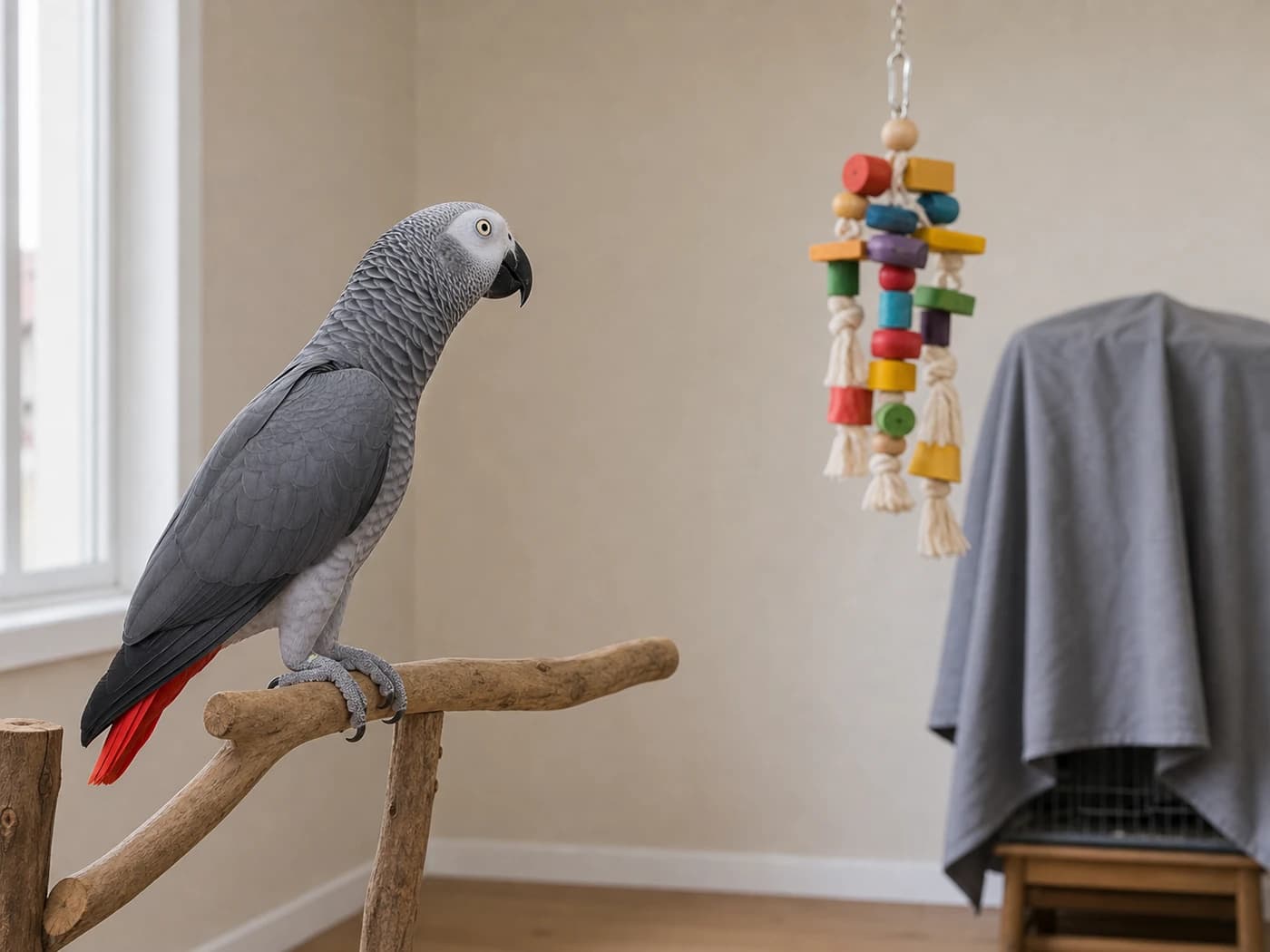
African greys can be sensitive to moves, cage changes, routine shifts, and household tension. Do not dump new things on them all at once. Let the bird see changes from a distance, then bring them closer gradually.

Handle calcium and lighting with avian-vet guidance

Calcium metabolism matters in African greys, but long-term guessing is risky. Use diet, exams, bloodwork, and lighting history with an avian vet instead of increasing supplements just because greys have that reputation.

Frequently Asked Questions

Listen to African Grey Call

Hear their distinctive vocalizations

Community Photos

Be the first to share a photo!

Species Comparison

Trait
African Grey
African GreyLarge
Amazon Parrot
Amazon ParrotLarge
Eclectus
EclectusMedium
Cockatoo
CockatooLarge
Lifespan40-60 years40-70 years30-50 years40-70 years
NoiseMediumHighLowVery High
TrainingExpertModerateModerateExpert
TalkingExceptional - The best talkers in the parrot world. Can learn 1000+ words with remarkable clarity. Capable of contextual speech and understanding.Excellent - Outstanding singers and talkers. Can learn 100-300 words with clear speech. Famous for singing opera and mimicking voices with emotion.Very Good - Clear, distinct speech. Can learn 100-250 words. Males tend to be better talkers. Known for speaking in complete sentences.Moderate - Can learn 20-50 words but speech is often unclear. Excellent at mimicking household sounds, alarms, and musical tunes.
SizeLargeLargeMediumLarge

Shop African Grey Products

Food, toys, cages & accessories for large birds

Browse Products
African Grey Hub: Photos, Care Guide, Varieties & Growth Stages | Pet Parrot World