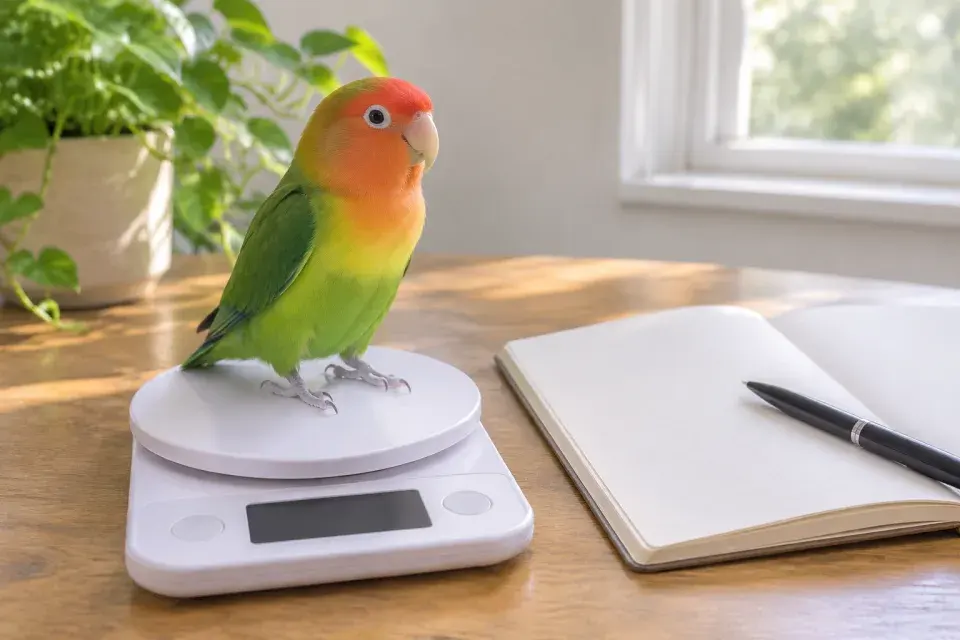
Brought a new bird home and the food bowl looks untouched? Learn how to tell normal relocation stress from hidden illness, why diet continuity matters on Day 1, and the exact 24-hour / 10% weight intervention line.
Few moments worry a new bird owner more than bringing home a budgie, cockatiel, or conure and watching it sit frozen like a statue beside an untouched food dish. Because parrots are prey animals with ultra-fast metabolic rates, a new parrot not eating requires a calm balance: giving shy birds enough privacy to eat while knowing the exact clinical cutoff before hypoglycemia sets in.
1. Why Newly Relocated Parrots Refuse Food on Day 1
- Predator-watch freeze response: Lowering the head into a deep stainless cup blocks peripheral vision. Many new birds wait until humans leave the room—or eat at dawn before anyone wakes up.
- Abrupt food mismatch: Even if a breeder or previous owner claimed the bird ate pellets or fresh vegetable chop, stressed birds only recognize the exact seed or pellet shape they ate yesterday.
- Unfamiliar feeder placement: Hooded silo feeders or floor bowls confuse birds raised on open perch-level dishes.
2. Normal Relocation Shyness vs Medical Red Flags
| Indicator | Normal Relocation Stress (0–24 Hours) | Urgent Red Flag — Act Immediately |
|---|---|---|
| Posture & Eyes | Sleek tight feathers, wide alert eyes, upright grip | Fluffed ball on two feet, half-closed eyes, sitting on cage floor |
| Droppings Count | Small or scant early on, turning dark brown/green once secret nibbling starts | Pure white urates with zero fecal center or neon biliverdin green after 24 hours |
| Body Weight | Within 3–5% of arrival weight | >24 hours zero intake OR >10% body-weight drop |
3. Five-Step First-Week Feeding Protocol
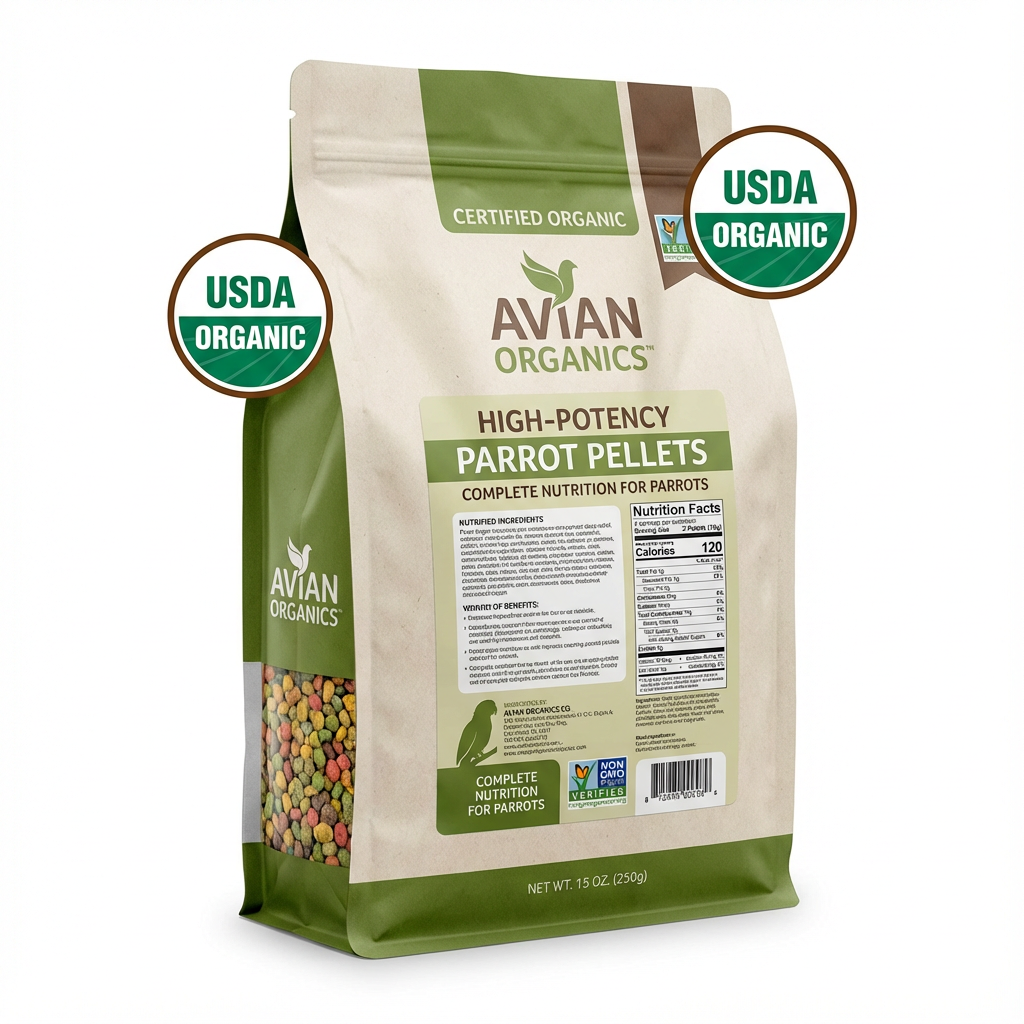
- Match the exact prior diet for 7 full days: Never force diet conversion during week one. Offer a buffet of their previous seeds alongside organic parrot pellets and spray millet clipped right beside their favorite high perch.
- Mount shallow bowls at chest height: Use clamp-on stainless steel dishes right next to the main perch so the bird doesn't have to climb down to the scary cage floor. Keep water one perch away so hulls don't foul the water.
- Raise ambient temperature to 27–29°C (80–84°F): A slightly warm, draft-free room dramatically lowers resting calorie burn while appetite recovers.
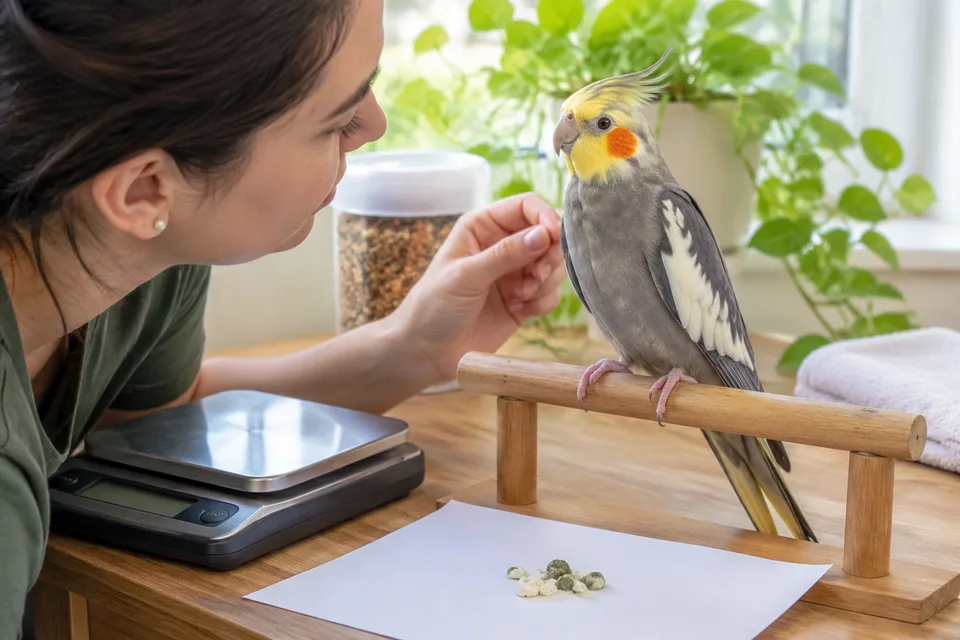
- Cover three sides of the cage & step out: Leave soft background music playing—silence feels like a predator stalks the forest—and check hull crumbs on clean white paper towels 2 hours later.
- Intervene at 24 hours / 10% weight loss: If an unweaned or young bird truly eats nothing past 24 hours or drops 10% weight, revert temporarily to warm 39°C hand-rearing formula or consult an avian vet via our Symptom Checker.
Frequently Asked Questions
Will avian probiotics make a scared new bird start eating?
Bird probiotics support gut flora during relocation stress, but they do not stimulate appetite if the bird doesn't recognize the food format or feels exposed.
How can I tell if a budgie is actually eating seeds or just dropping them?
Line the tray with plain white paper towels and look for split, hollow seed hulls and dark tubular fecal centers in the droppings.