Tracked delivery30-day returns
Back to Bird Hub
Conure

Conure Hub

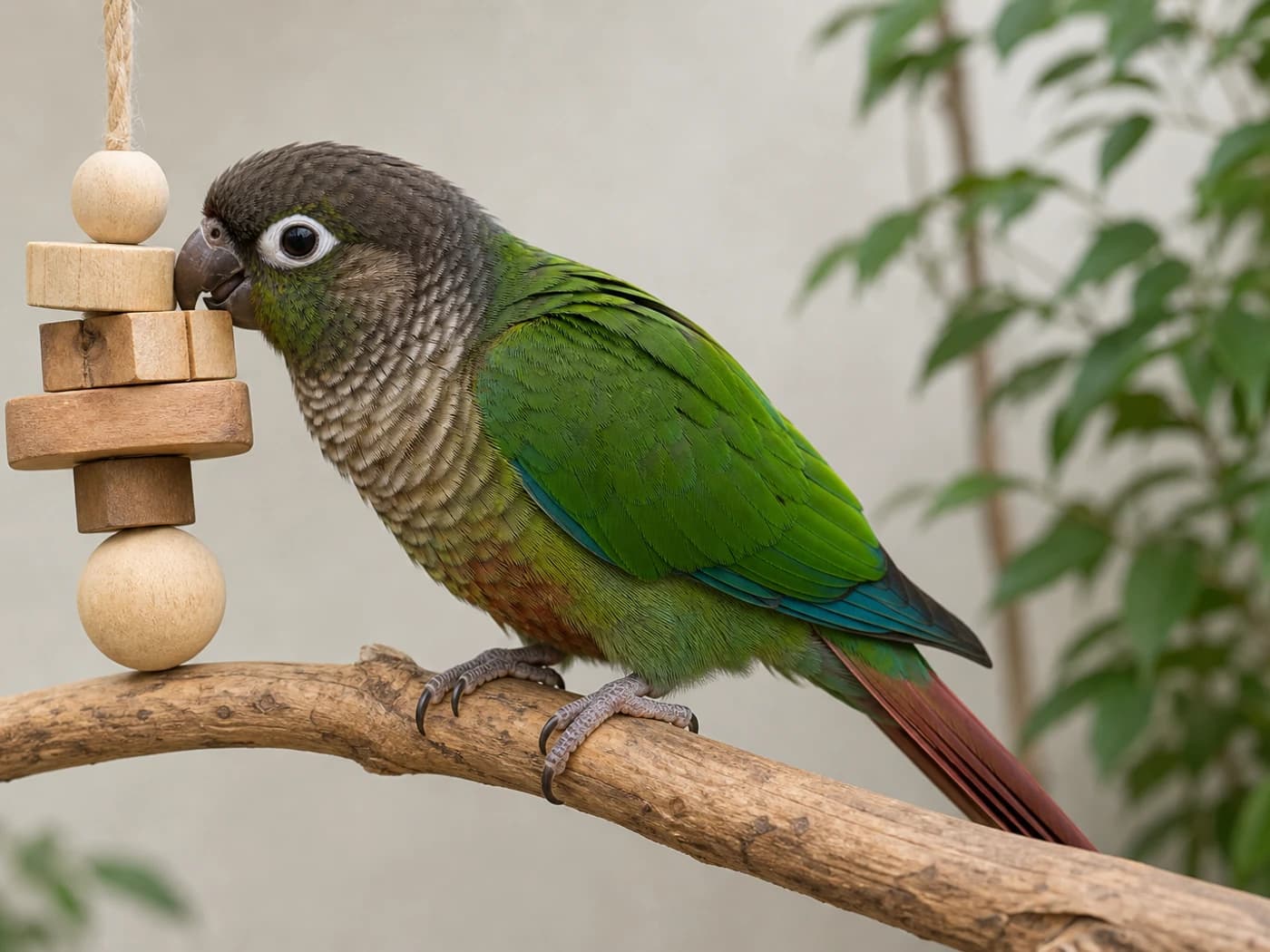
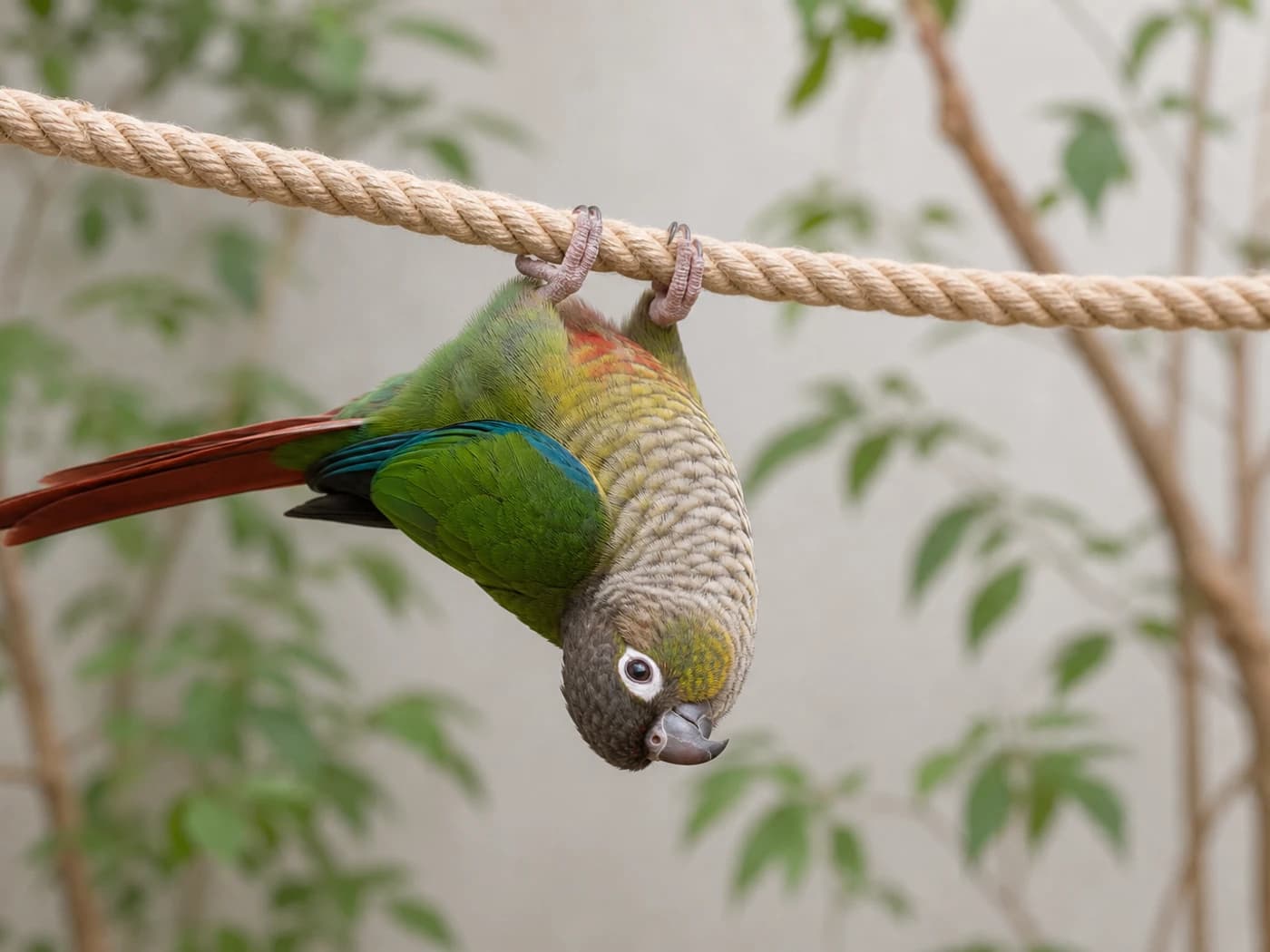
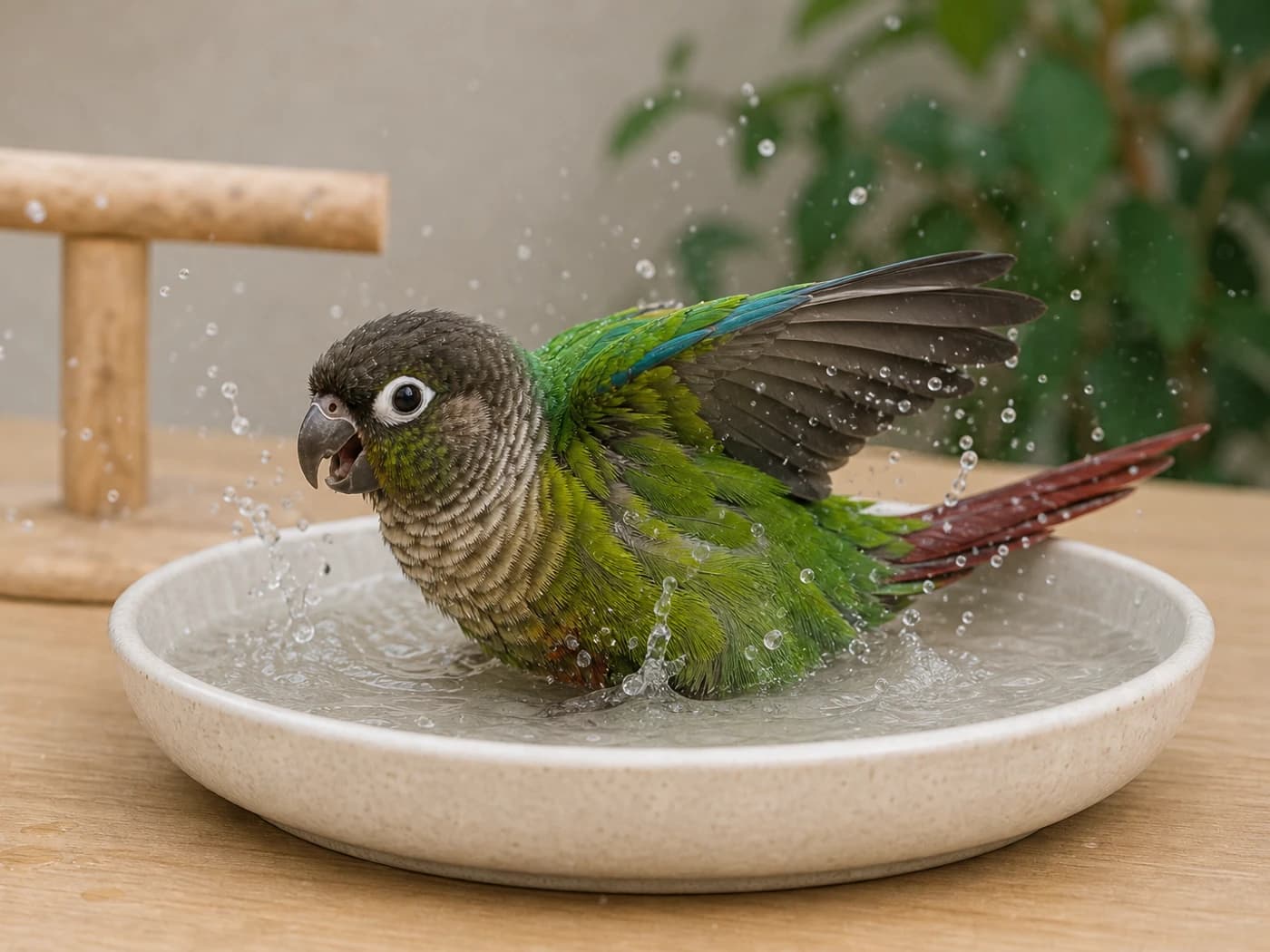
“Conure” is not one personality. Green-cheeked conures are popular, affectionate, and often obsessed with burrowing into clothes; cinnamon, pineapple, yellow-sided, and turquoise are green-cheek color lines. A sun conure is a different experience: brilliant color and a piercing voice. Many conures explore with the beak, hang upside down, get excited about baths, and treat clothing like a nest cavity. That can be adorable, but clothing burrows carry crush and hormone risks, and sun conure noise is something a household should hear before committing.

At a Glance

Size

Medium

Lifespan

20-30 years

Noise

High

90-110 dB

Training

Moderate

Talking

Limited

Best For

People who enjoy close contact and play
Owners willing to train beaky boundaries
Green-cheeks fit homes wanting a small interactive parrot

Not For

People uncomfortable with shirt burrowing or nippy exploration
Noise-sensitive homes considering Sun Conures
Owners unable to provide daily out time

Noise Comparison

Where does a Conure's call sit against familiar everyday sounds?

100 dB·High
QuieterLouder

Whisper · 30 dB

Library · 40 dB

Conversation · 60 dB

Vacuum Cleaner · 75 dB

Measured level

100 dB

Quieter than

3 · Rock Concert, Chainsaw

Louder than

5 · Vacuum Cleaner, Lawnmower

Whisper

30 dB

Library

40 dB

Conversation

60 dB

Vacuum Cleaner

75 dB

Lawnmower

90 dB

Rock Concert

110 dB

Chainsaw

120 dB

Jet Engine (100ft)

140 dB

Care Commitment

What does it realistically take to live well with a Conure?

Beginner fit

Mixed

Needs a steady routine.

Daily Time

4–6 hrs/day

Heavy

Noise

90-110 dB

Loud

Lifespan

20-30 years

Long

Space

Medium

Medium

Experience

Moderate

Intermediate

Daily reality

Daily life with a Conure is mostly about noise management, out-of-cage time, and routine.

  • Apartment or thin walls? Be realistic about noise.
  • Enrichment beats punishment for most behavior issues.

Next steps

If this species does not have a dedicated guide yet, this falls back to the full care manuals library.

About Conures

Personality

Big personality in a small package. Conures are cuddly, playful, and often loud. They love being part of the family action.

Diet

High energy birds that need a balanced mix of pellets, grains, and fresh produce.

Behavior

They love to hang upside down, bathe in water bowls, and burrow into snuggly places (beware of suffocation hazards).

Varieties & Colors

“Conure” is not one personality. Green-cheeked conures are popular, affectionate, and often obsessed with burrowing into clothes; cinnamon, pineapple, yellow-sided, and turquoise are green-cheek color lines. A sun conure is a different experience: brilliant color and a piercing voice. Many conures explore with the beak, hang upside down, get excited about baths, and treat clothing like a nest cavity. That can be adorable, but clothing burrows carry crush and hormone risks, and sun conure noise is something a household should hear before committing.

6 entriesvisual ID

How They Differ

Most common pet conures: green-cheeked (green cheeks, red belly, dark maroon tail), sun conure (all orange-yellow, very loud), jenday (green with orange-yellow head). Green-cheeked conures have multiple color mutations: pineapple, cinnamon, yellow-sided, turquoise.

How These Varieties Happen

Conures include multiple species. Green-cheeked conures have the most color mutations. Sun conures and others have fixed coloration with fewer mutations.

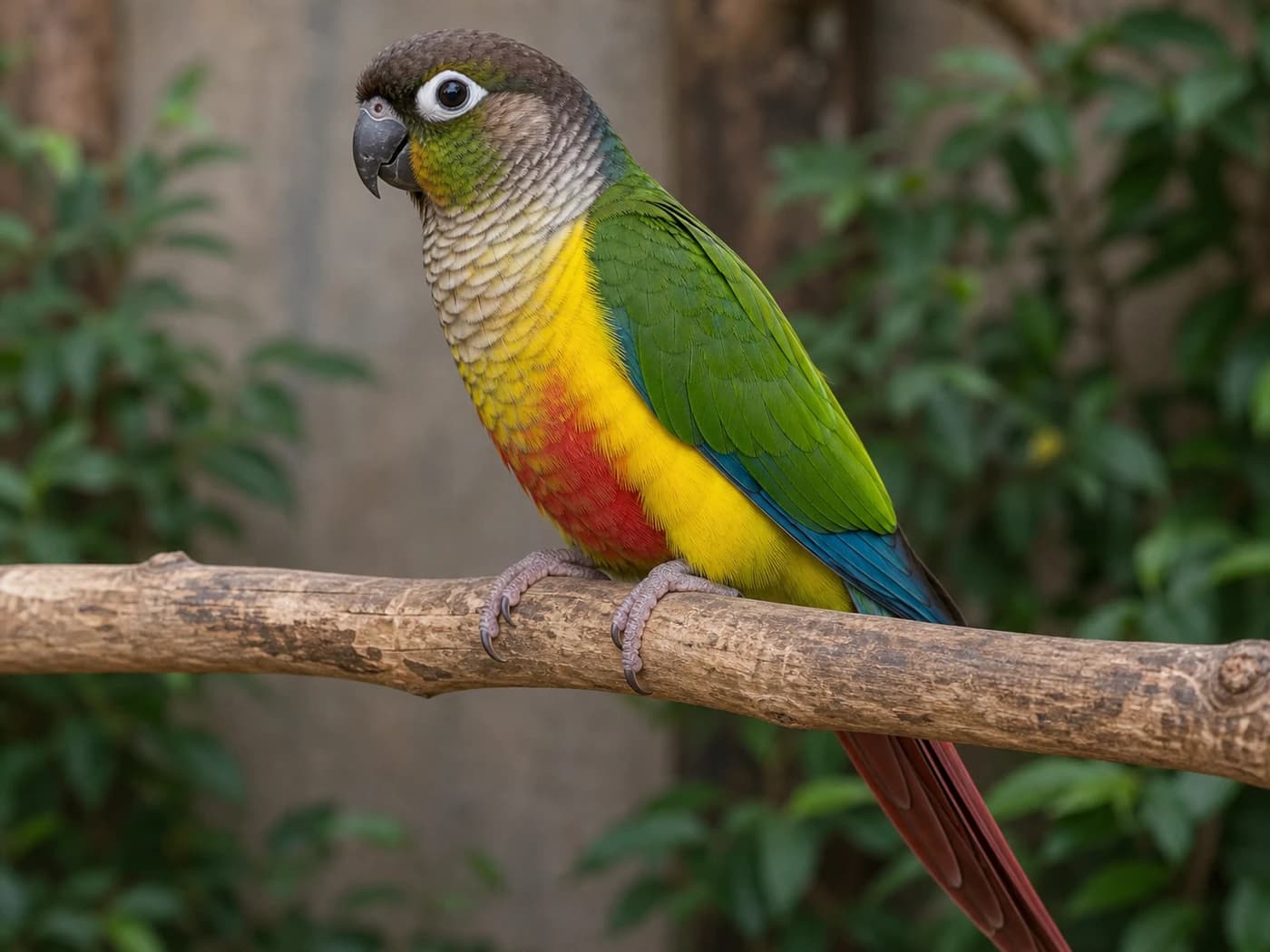
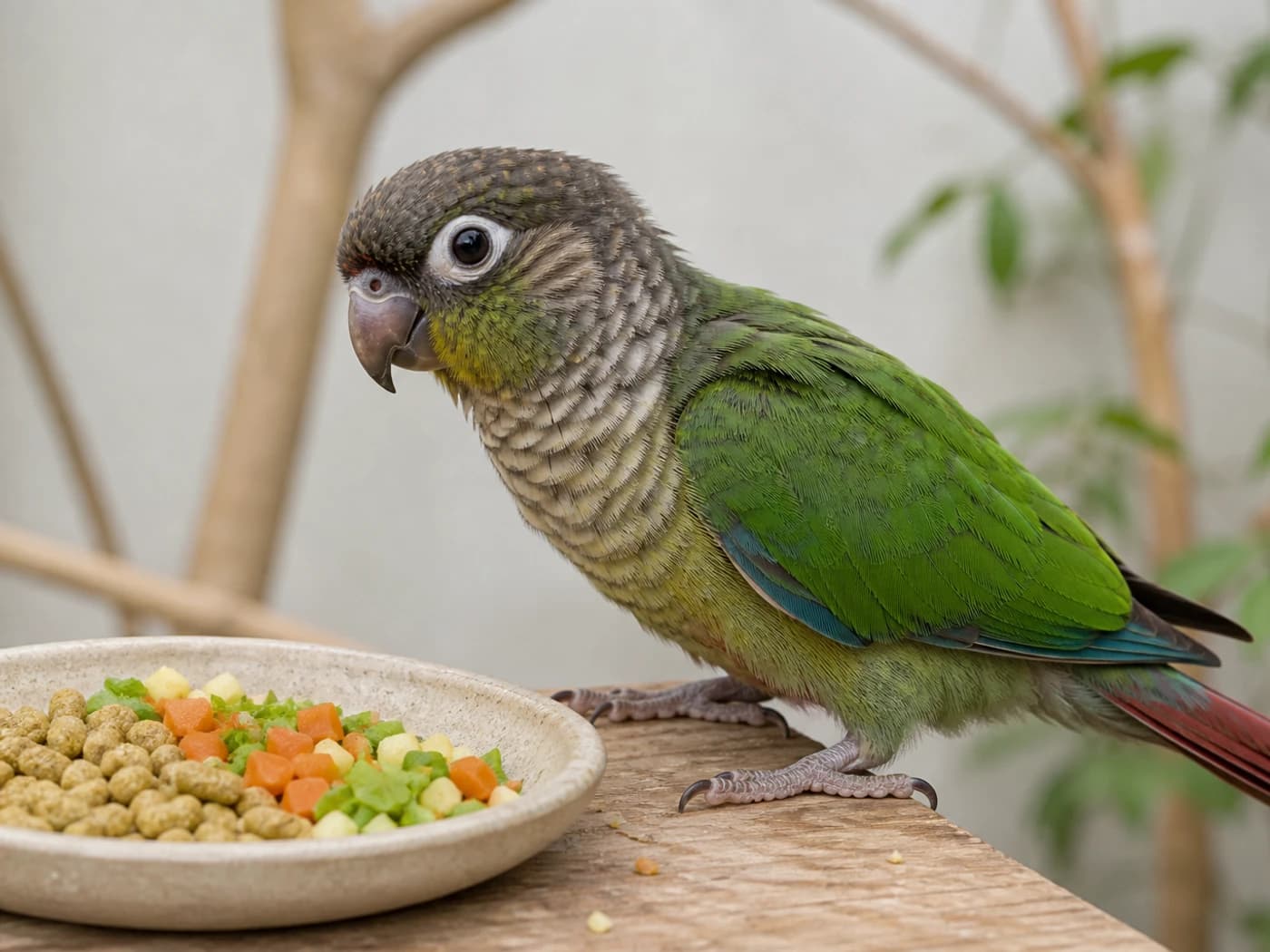
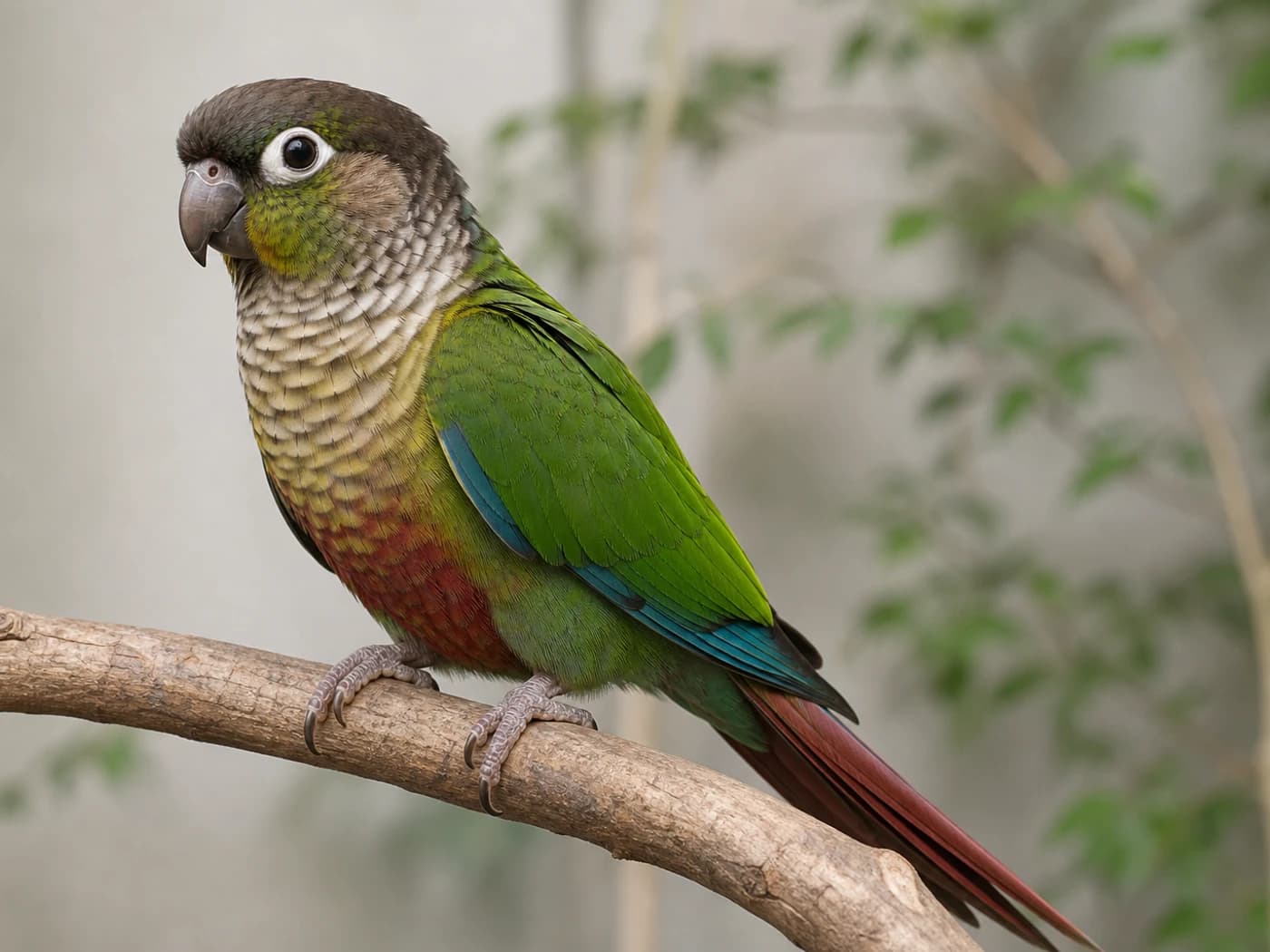
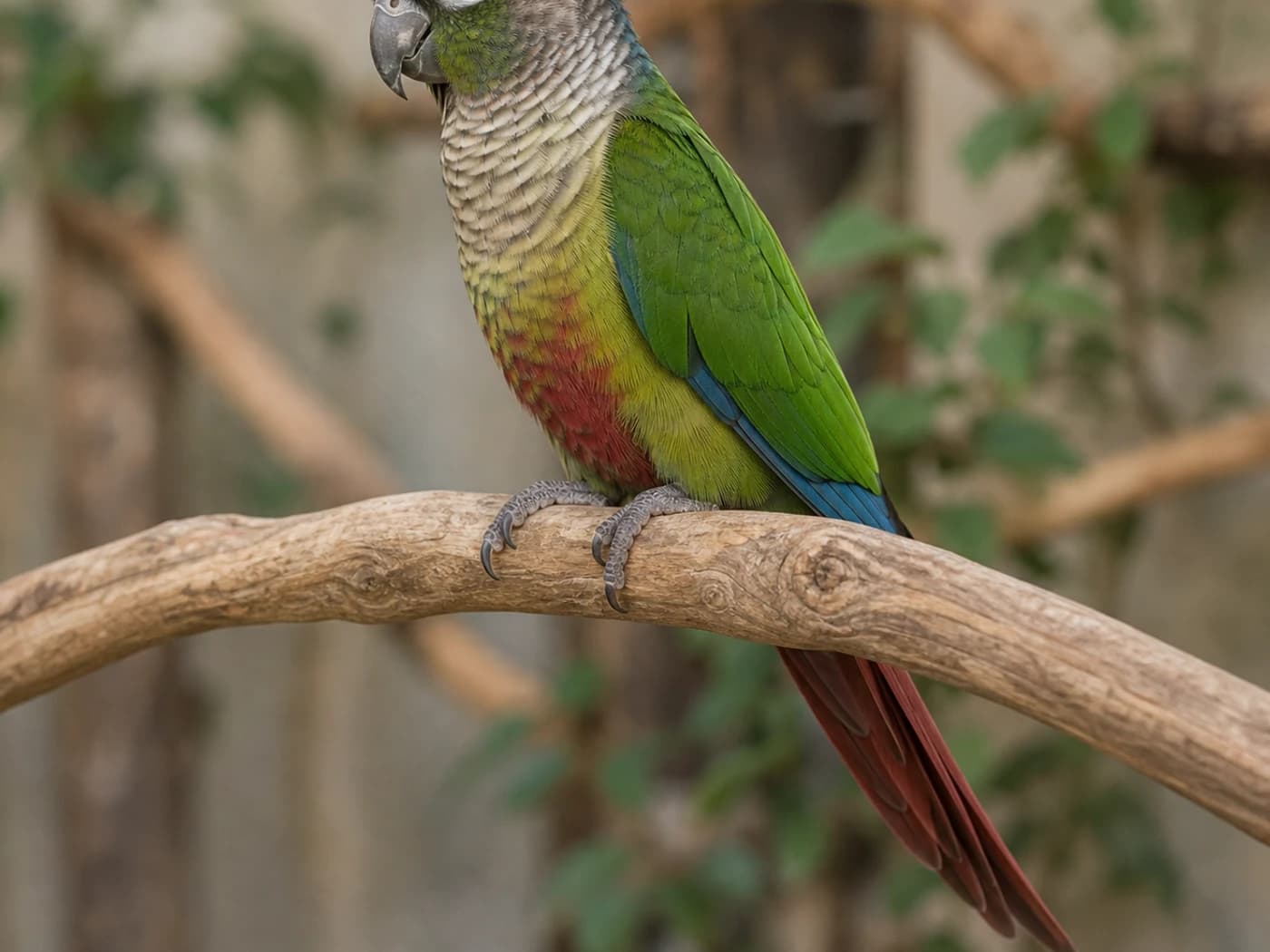
Green-cheeked Conure (Normal) Conure realistic reference image

Standard label

Green-cheeked Conure (Normal)

Green-cheeked Conure

Variety

Common names

Green-cheeked ConureGCCPyrrhura molinae

Owner shorthand

Green-cheeked is the easiest conure to keep - good health and sweet temperament

Look

Black-gray head, green cheeks, green body, gray scalloping on chest, red tail.

Genetics

Wild-type coloration; no mutations.

Health & care

Good constitution; lifespan 20-25 years.

Sexing tip

Males and females look identical; DNA testing required.
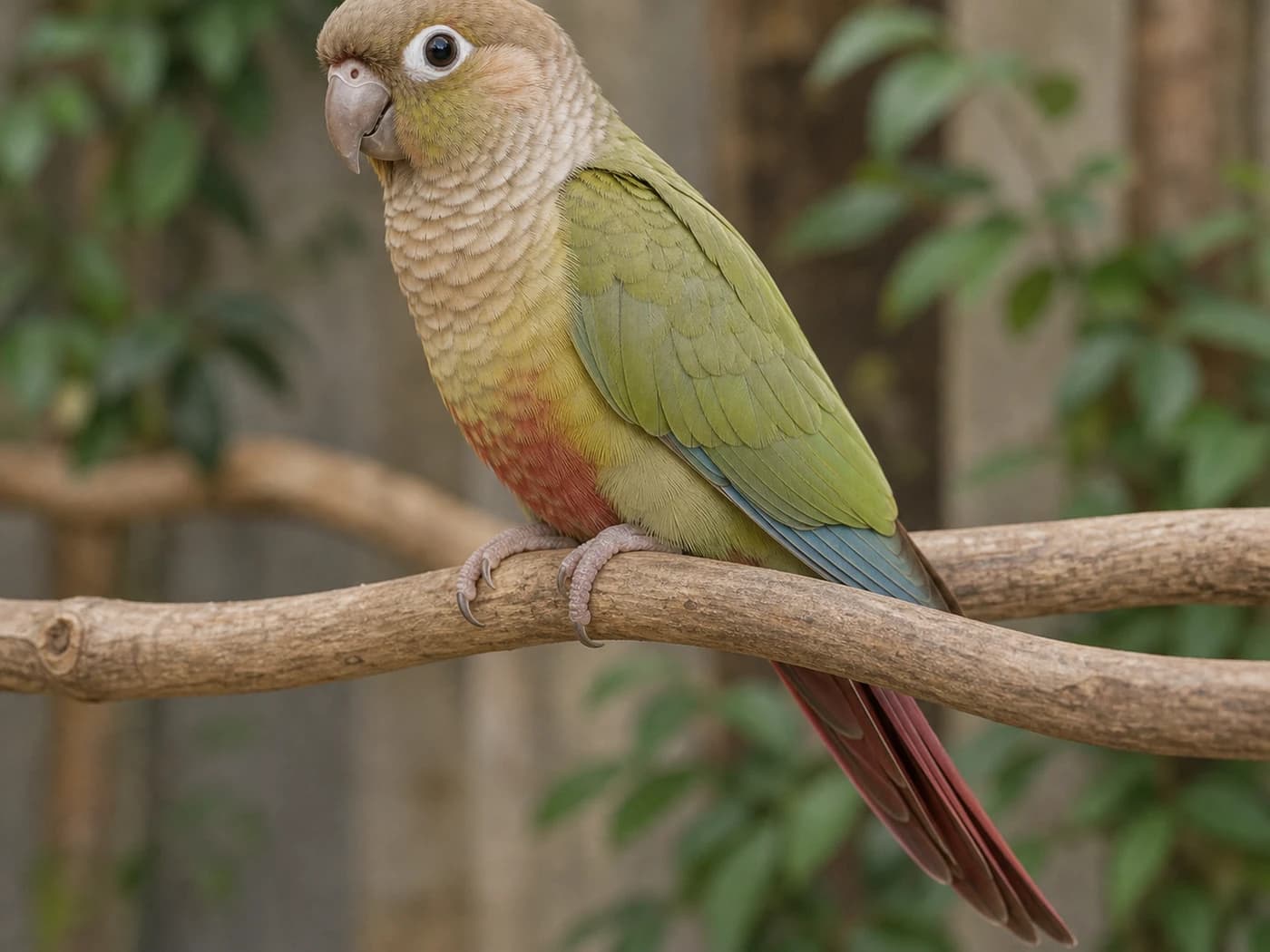
Cinnamon Green-cheeked Conure Conure realistic reference image

Standard label

Cinnamon Green-cheeked Conure

Cinnamon GCC

Variety

Common names

Cinnamon GCCCinnamon Green-cheeked

Owner shorthand

Cinnamon GCC has warm autumn-leaf coloring

Look

Similar to normal GCC but lighter and warmer, overall brownish-yellow-green tones.

Genetics

Sex-linked recessive. Converts eumelanin to phaeomelanin, producing brown tones.

Health & care

Care is usually similar to normal; do not judge health by color alone. Look at energy, weight, feather condition, and source quality.

Sexing tip

DNA testing required.

Pineapple Green-cheeked Conure Conure realistic reference image

Standard label

Pineapple Green-cheeked Conure

Pineapple GCC

Variety

Common names

Pineapple GCCPineapple Green-cheeked

Owner shorthand

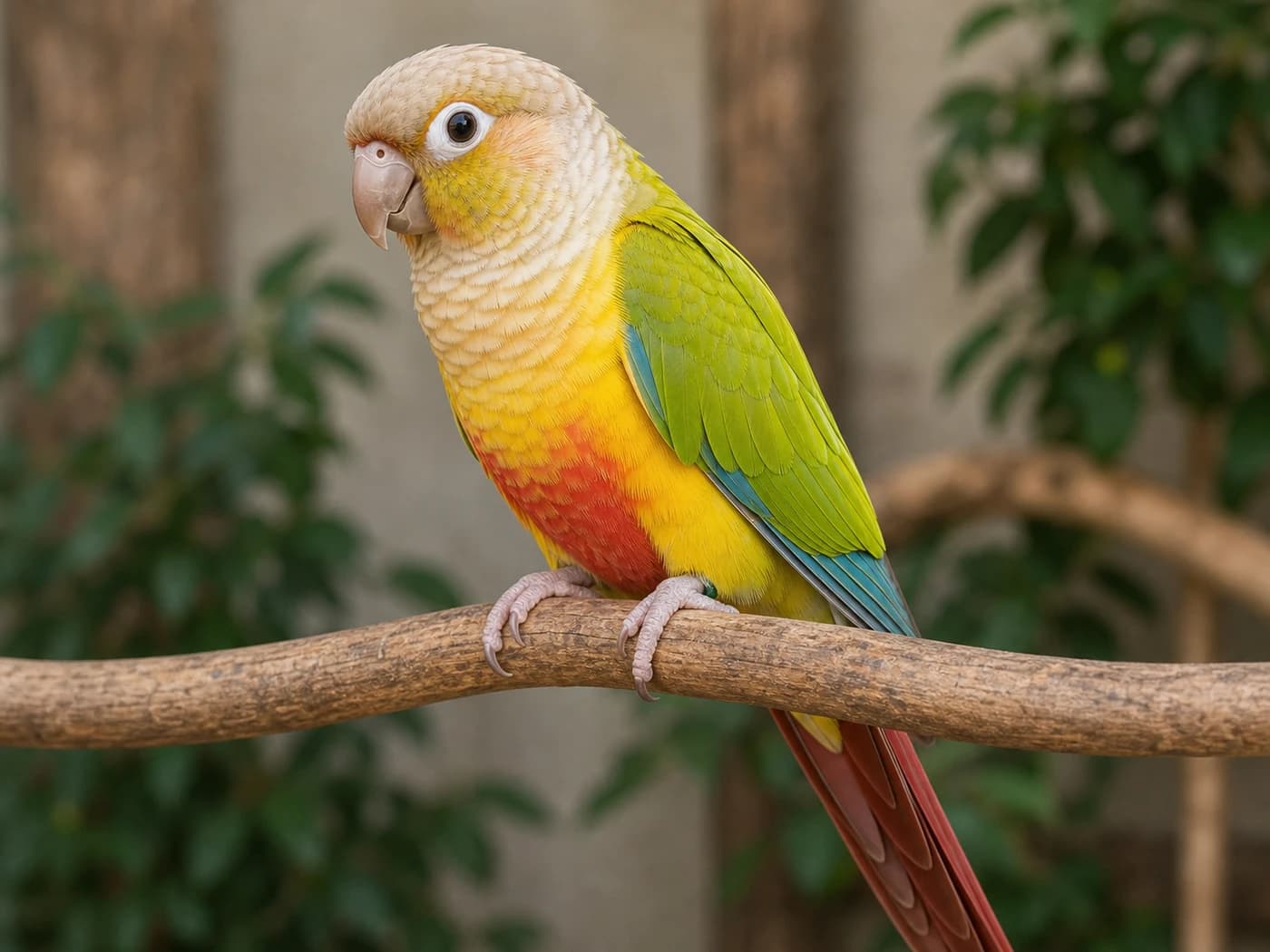
Pineapple GCC is the most popular GCC mutation - colors like tropical fruitPineapple GCC has the best looks among green-cheeked conures

Look

Reddish-brown head, yellow to orange breast, green back. Result of cinnamon + yellow-sided double mutation. Very colorful; one of the most popular GCC mutations.

Genetics

Double mutation: cinnamon (sex-linked recessive) + yellow-sided (autosomal recessive).

Health & care

Good constitution; no specific health concerns.

Sexing tip

DNA testing required.

Yellow-sided Green-cheeked Conure Conure realistic reference image

Standard label

Yellow-sided Green-cheeked Conure

Yellow-sided GCC

Variety

Common names

Yellow-sided GCCYellow-sided Green-cheeked

Owner shorthand

Yellow-sided GCC looks like it's wearing an orange vest

Look

Yellow to orange breast and abdomen, green back, black-gray head.

Genetics

Autosomal recessive. Mutation affects pigment distribution in breast/abdomen, producing yellow-orange.

Health & care

Good constitution; no specific health concerns.

Sexing tip

DNA testing required.

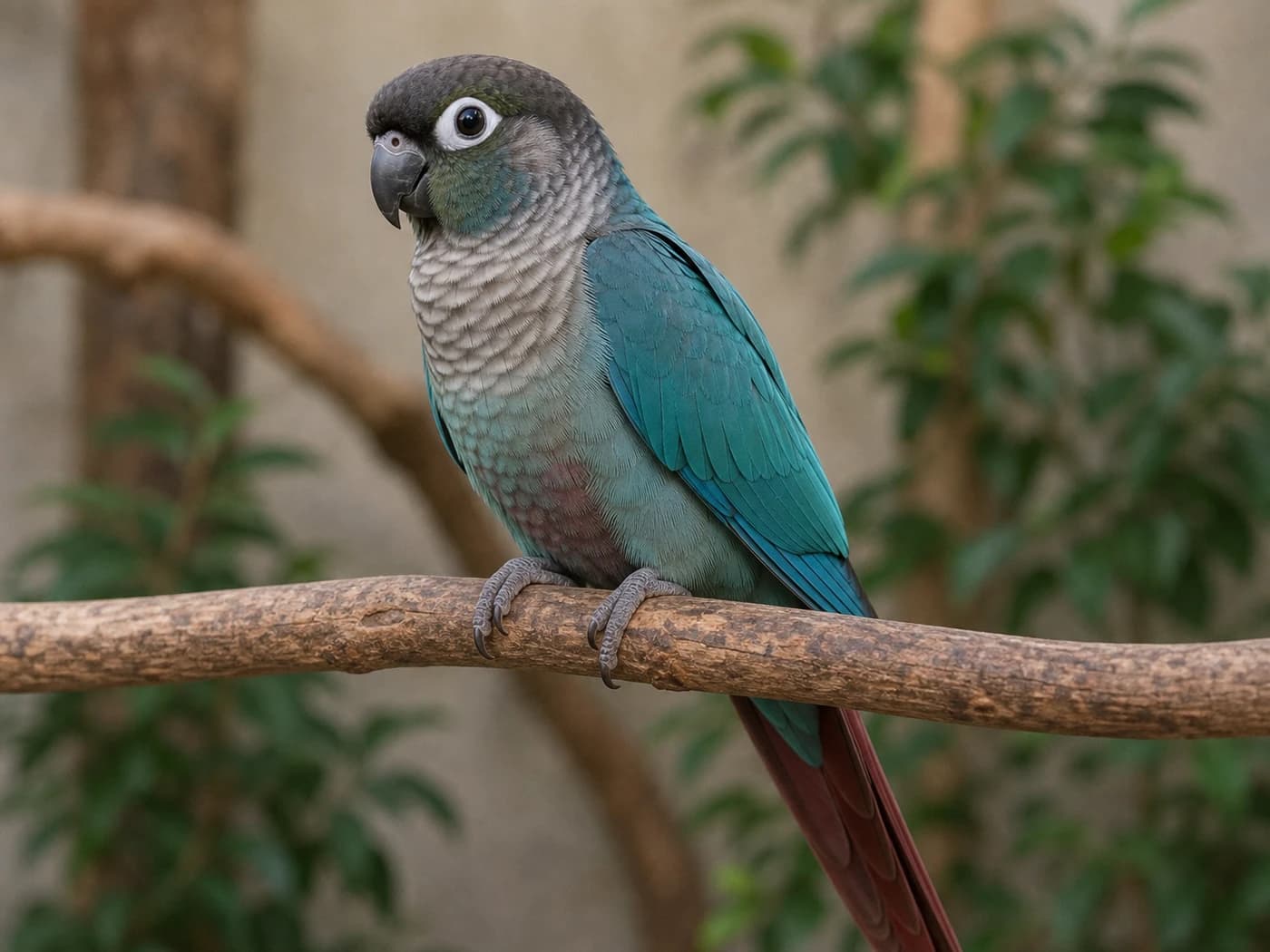
Turquoise Green-cheeked Conure Conure realistic reference image

Standard label

Turquoise Green-cheeked Conure

Turquoise GCC

Variety

Common names

Turquoise GCCTurquoise Green-cheeked

Owner shorthand

Turquoise GCC has refreshing colors like a tropical ocean

Look

Turquoise (blue-green) plumage throughout, bluer than normal, more pronounced chest scalloping.

Genetics

Autosomal recessive. Reduces yellow pigment and increases structural blue, producing turquoise tones.

Health & care

Good constitution; no specific health concerns.

Sexing tip

DNA testing required.

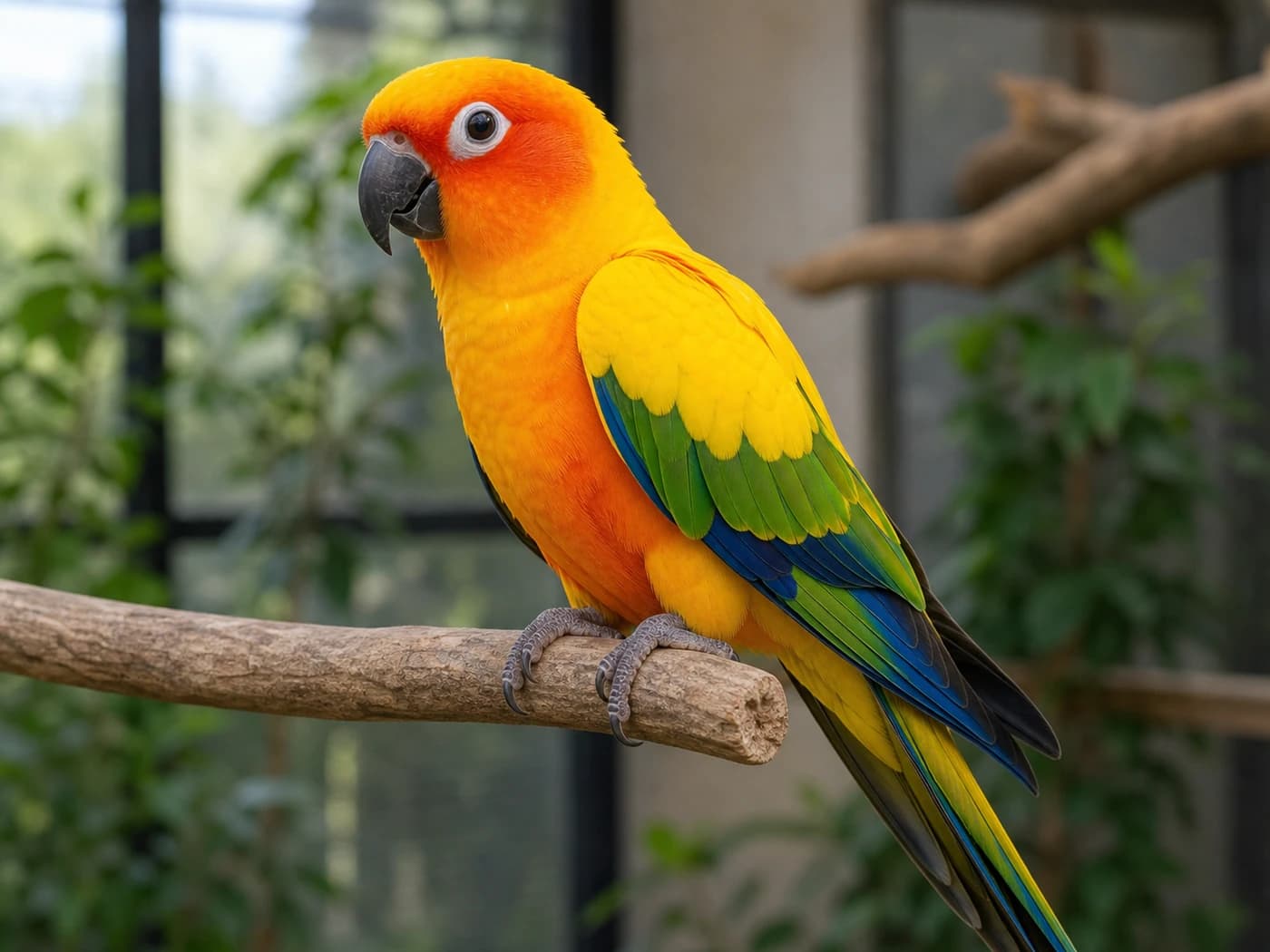
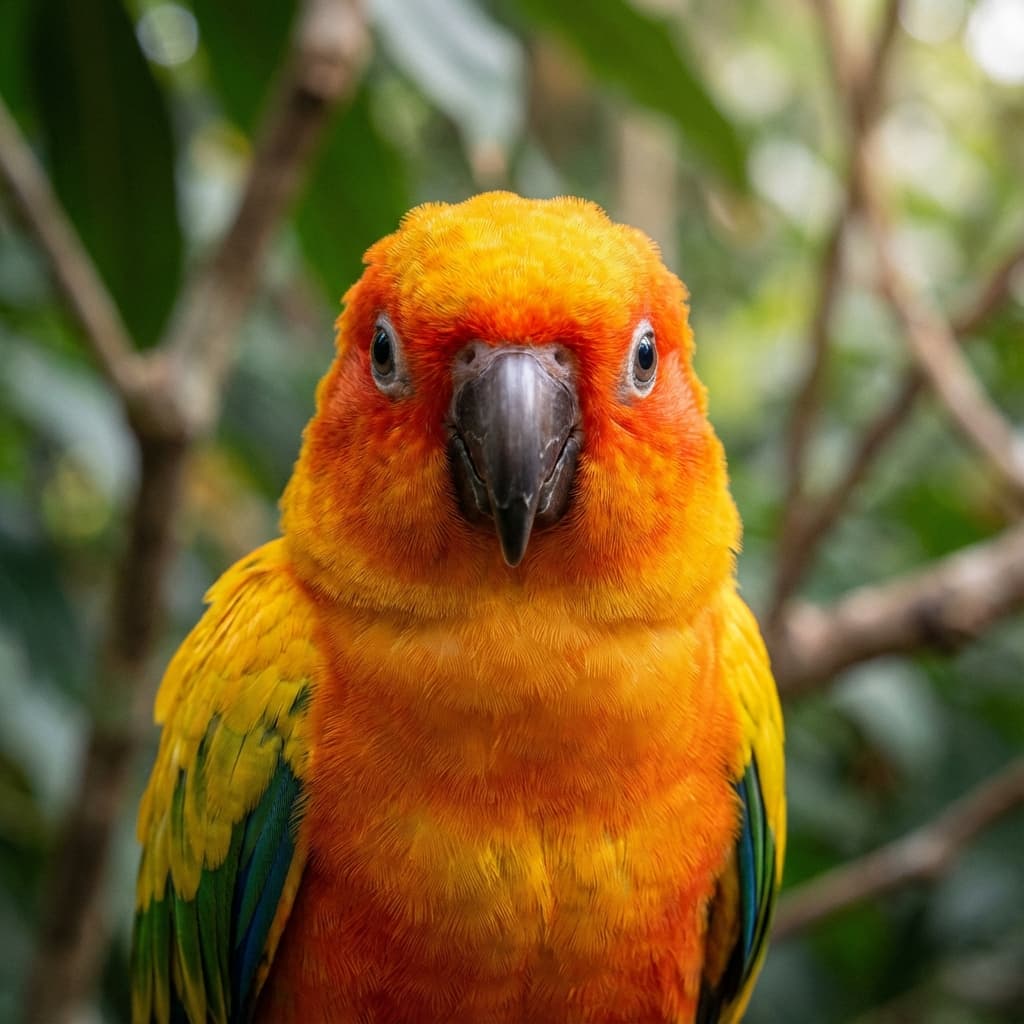
Sun Conure Conure realistic reference image

Standard label

Sun Conure

Variety

Common names

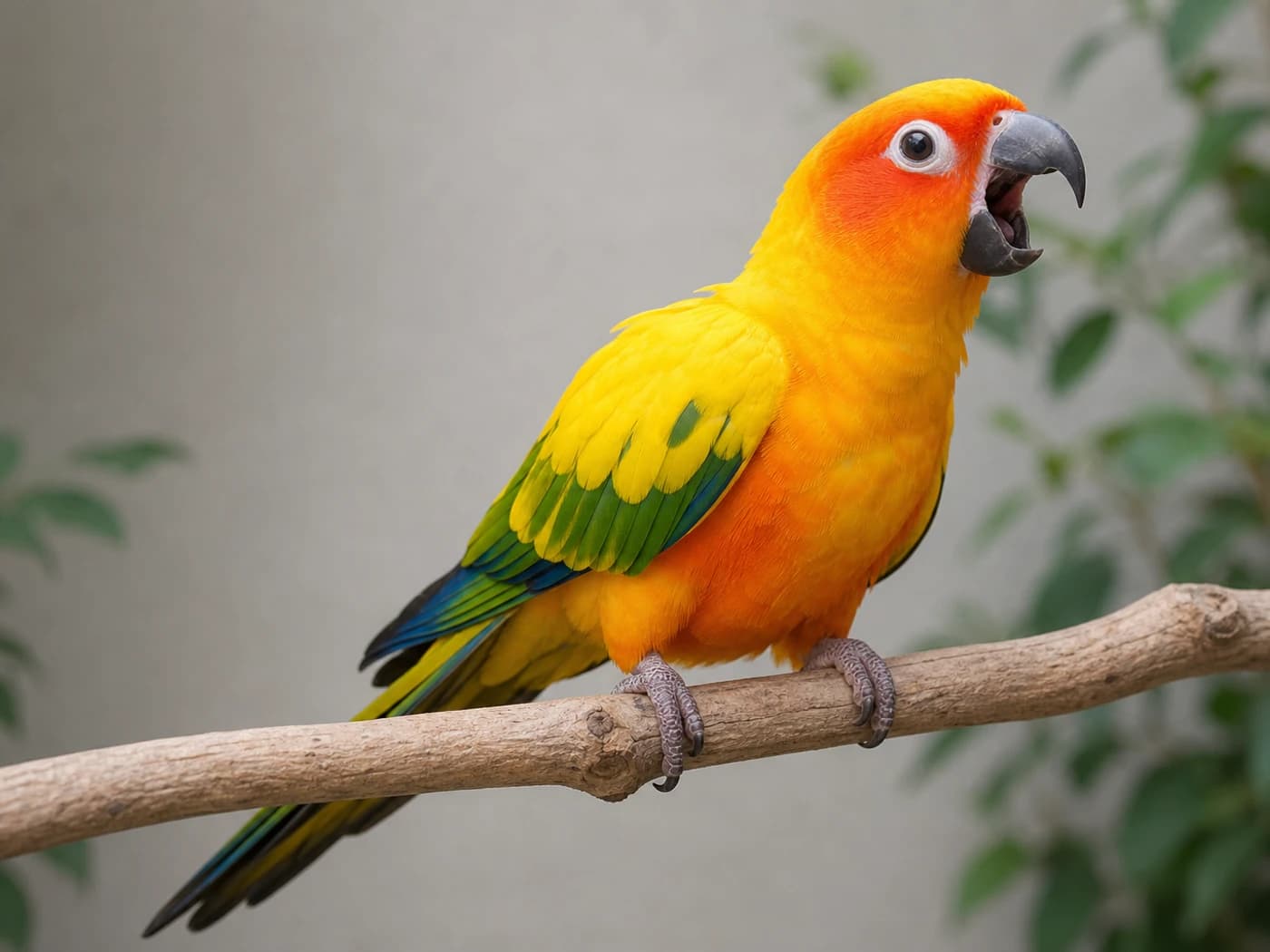
Sun ConureSun ParakeetAratinga solstitialis

Owner shorthand

Sun conure is the most beautiful conure but also the loudestBefore getting a sun conure, apologize to your neighbors first

Look

Bright yellow to orange body with green and blue on wings. One of the most colorful conures.

Genetics

Natural species, not an artificially bred mutation.

Health & care

Lifespan 25-30 years. Good constitution; but extremely loud - one of the noisiest parrots.

Sexing tip

Males and females look identical; DNA testing required.
Naming Notes

Chinese owner phrases, English common names, and market labels often do not translate one-to-one, so the tricky parts are separated here.

Common aliases

green-cheeked conureGCCsun conure

Cinnamon, Pineapple, Yellow-sided, and Turquoise are Green-cheeked Conure mutation labels.

Sun Conure is a different conure species and its noise reality should not be softened by GCC expectations.

nippy but loving means affectionate with beaky exploration and boundaries, not simply mean.

Detailed Field Notes

These notes isolate details that are easy to mistranslate, oversimplify, or overclaim. Each one separates the claim, why it matters, and what an owner should do.

6 notes

Green-cheek mutations are not different species

Aviculture-supported

Careful claim

Cinnamon, pineapple, yellow-sided, and turquoise are green-cheek mutation lines, while Sun Conure is a different conure species.

Why it matters

The page should not put pineapple and Sun Conure under the same color-mutation logic.

Owner action

Label each card by species/type and mutation.

Sun Conure noise is the first reality check

Care-guide supported + owner-common

Careful claim

Sun Conures are stunning, but their calls are sharp and penetrating, making apartments and thin walls difficult.

Why it matters

Beautiful imagery should not hide the noise reality.

Owner action

Listen to real calls before purchase and confirm family, neighbor, and schedule tolerance.

Nippy but loving is not just bites

English-owner shorthand

Careful claim

Green-cheeks are often affectionate and close-contact, while also using the beak to explore, set boundaries, and ask for interaction.

Why it matters

Reducing it to bites loses the real owner tone and can scare away suitable readers.

Owner action

Teach gentle beak, release cues, and replacement behaviors early.

Shirt burrowing is cute and risky

Owner-common experience

Careful claim

Conures often burrow into shirts, collars, and sleeves for security and closeness, but it can become nest-like.

Why it matters

This behavior is often treated only as cute short-video content.

Owner action

Check location before sitting, rolling, or layering clothing, and limit dark enclosed time.

Hanging and flipping are often play

Species-behavior experience

Careful claim

Conures commonly hang upside down, flip, cling to toys, and get excited during baths, especially green-cheeks.

Why it matters

Readers need to separate normal play from panic, entrapment, or injury.

Owner action

Provide safe ropes, low-risk play areas, and materials that do not catch toes.

Clothing caves can raise hormones

Care-experience supported

Careful claim

Letting a conure sleep in clothing, blankets, or dark cavities can increase possessiveness, hormones, and biting.

Why it matters

Like lovebirds and Eclectus, dark-cavity management needs to be explicit.

Owner action

Move affection to open stations and hand or shoulder routines, not long-term clothing nests.

Community Notes

These are the phrases owners commonly use when talking about Conures in real communities.

shirt burrower

Literal meaning

A bird that burrows into clothing.

Actual meaning

Conures often treat clothing as a safe, close hideout.

Used when

Used when the bird burrows into shirts.

Care implication

Watch crushing, suffocation, and hormone triggers.

nippy but loving

Literal meaning

Affectionate but beaky.

Actual meaning

Green-cheeks often use the beak for exploration, boundaries, and excitement.

Used when

Used for beaky but affectionate birds.

Care implication

Train bite pressure and exit cues; do not punish the beak.

apologize to the neighbors first

Literal meaning

Sun Conures are seriously loud.

Actual meaning

A reminder that Sun Conures have piercing volume.

Used when

Used when people fall for Sun Conure color.

Care implication

Assess housing and family tolerance first.

pineapple GCC is a looker

Literal meaning

Pineapple is visually popular.

Actual meaning

Pineapple Green-cheeks are popular for warm coloration.

Used when

Used during color selection.

Care implication

Color does not guarantee temperament.

Behavior Reading

Read posture, eyes, feathers, and beak use as a sequence: what you see, what it usually means, what not to assume, and what to do next.

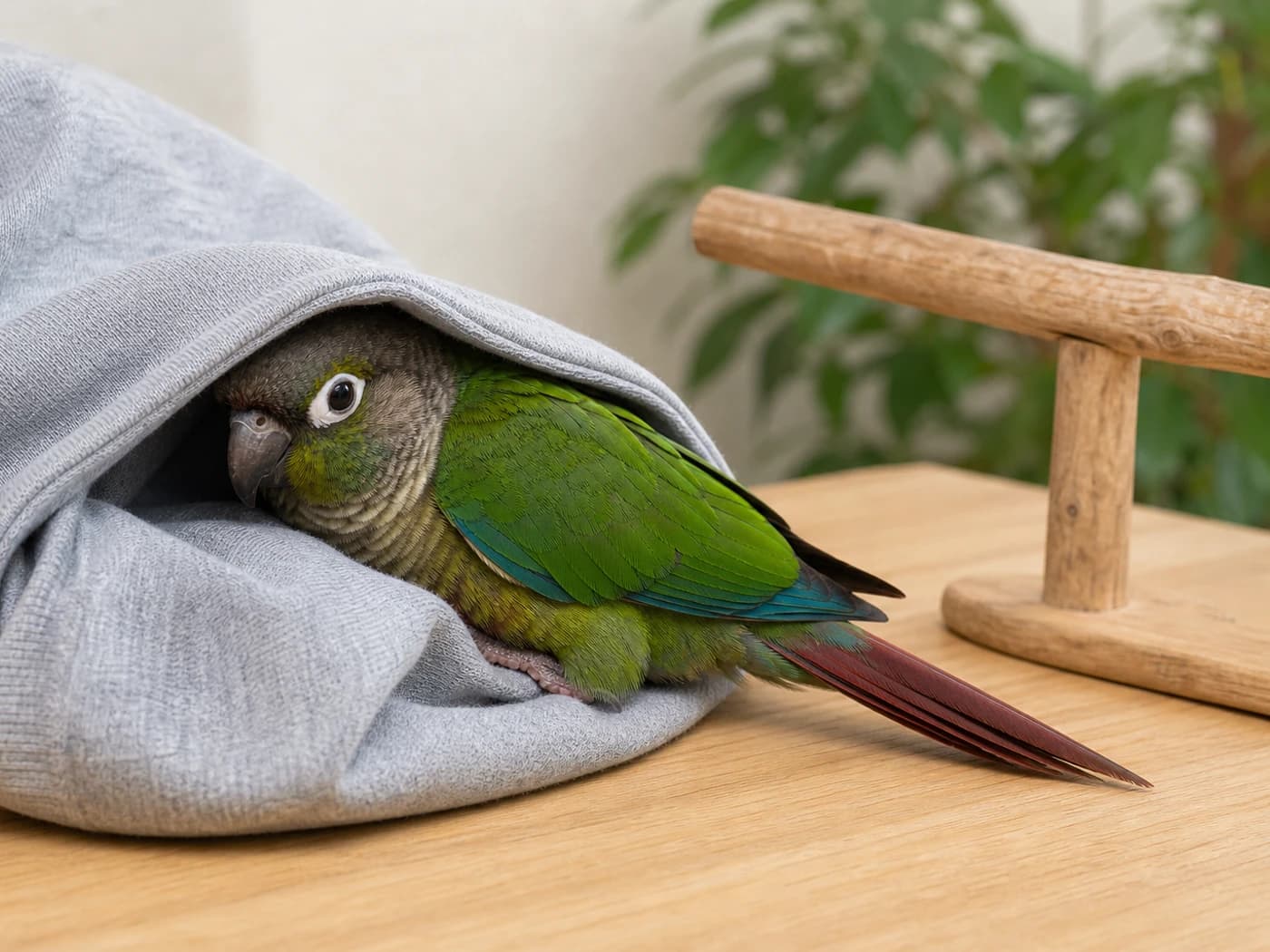
Conure Shirt burrowing behavior reference image

Shirt burrowing

What you see

Crawls into collars, sleeves, or clothing.

Usually means

Affection and security, but it can become nest-like.

Do not misread

Never leave it unsupervised inside clothing.

Owner action

Check location before moving and limit prolonged burrowing.

Conure Beaky exploration behavior reference image

Beaky exploration

What you see

Touches, pinches, or nibbles fingers.

Usually means

Not always a real bite; often exploration.

Do not misread

Escalating pressure should not be ignored.

Owner action

Teach gentle beak and release cues.

Conure Hanging upside down behavior reference image

Hanging upside down

What you see

Hangs, flips, and plays upside down.

Usually means

Common play behavior.

Do not misread

If paired with panic flapping, read differently.

Owner action

Provide safe ropes and low-risk play areas.

Conure Sun Conure scream behavior reference image

Sun Conure scream

What you see

A sharp, piercing call.

Usually means

The noise reality must be known beforehand.

Do not misread

Do not let color distract from volume.

Owner action

Listen to real calls before deciding.

Conure Bath excitement behavior reference image

Bath excitement

What you see

Wing flapping, fluffing, and calling during baths.

Usually means

Normal excitement and grooming behavior.

Do not misread

Do not force cold spray.

Owner action

Offer a shallow dish or mist and let it choose.

Growth Stages

This timeline keeps the typical development from egg to adult in one place so you can compare looks, feather changes, and feeding milestones.

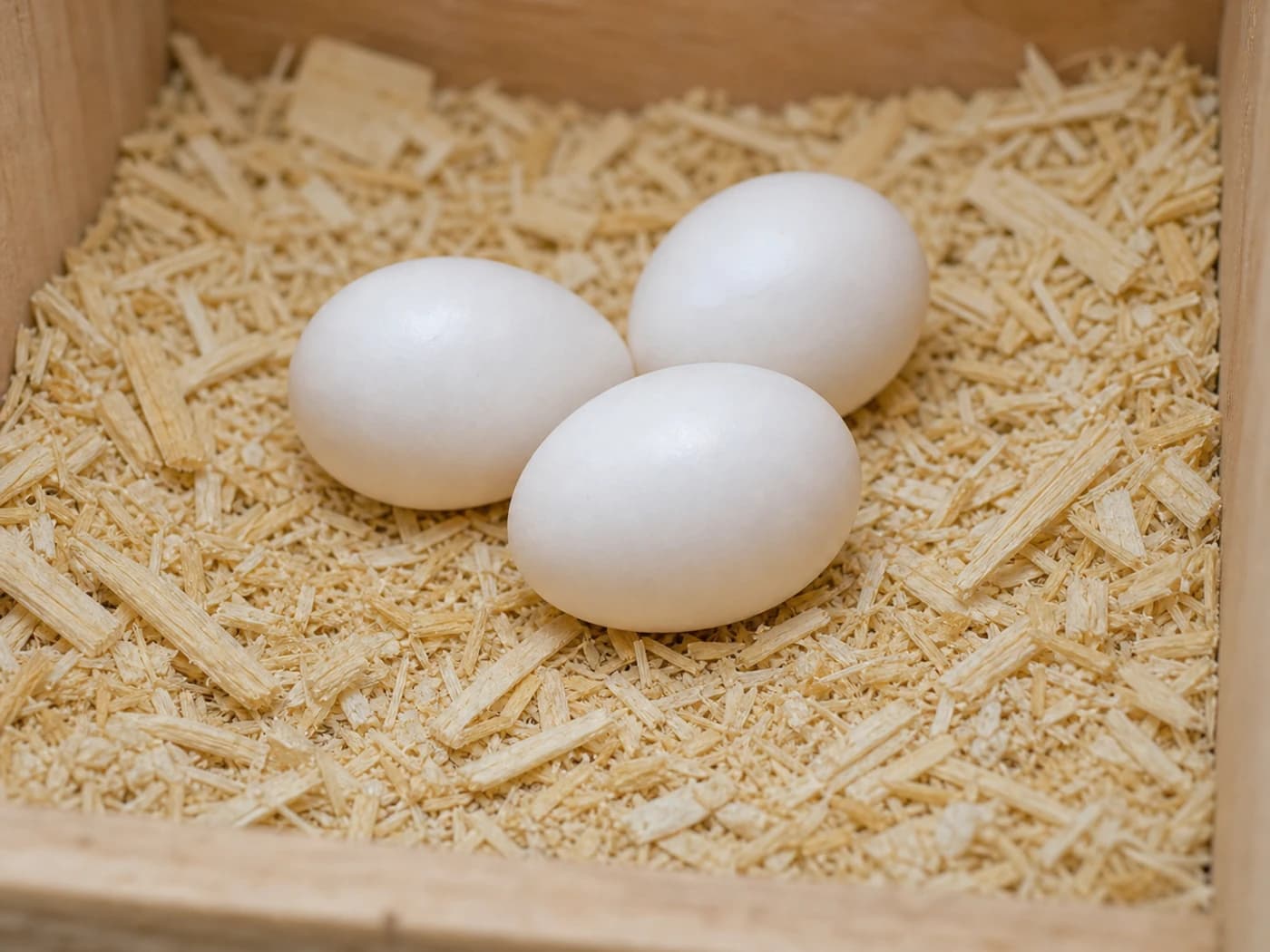
Conure Egg growth-stage reference image

Egg

Incubation

Age range

Look

Conure plumage is not visible yet; shell condition, parent behavior, and incubation stability matter most.

What people watch

Avoid unnecessary disturbance; focus on humidity, temperature, parent stress, and hygiene.

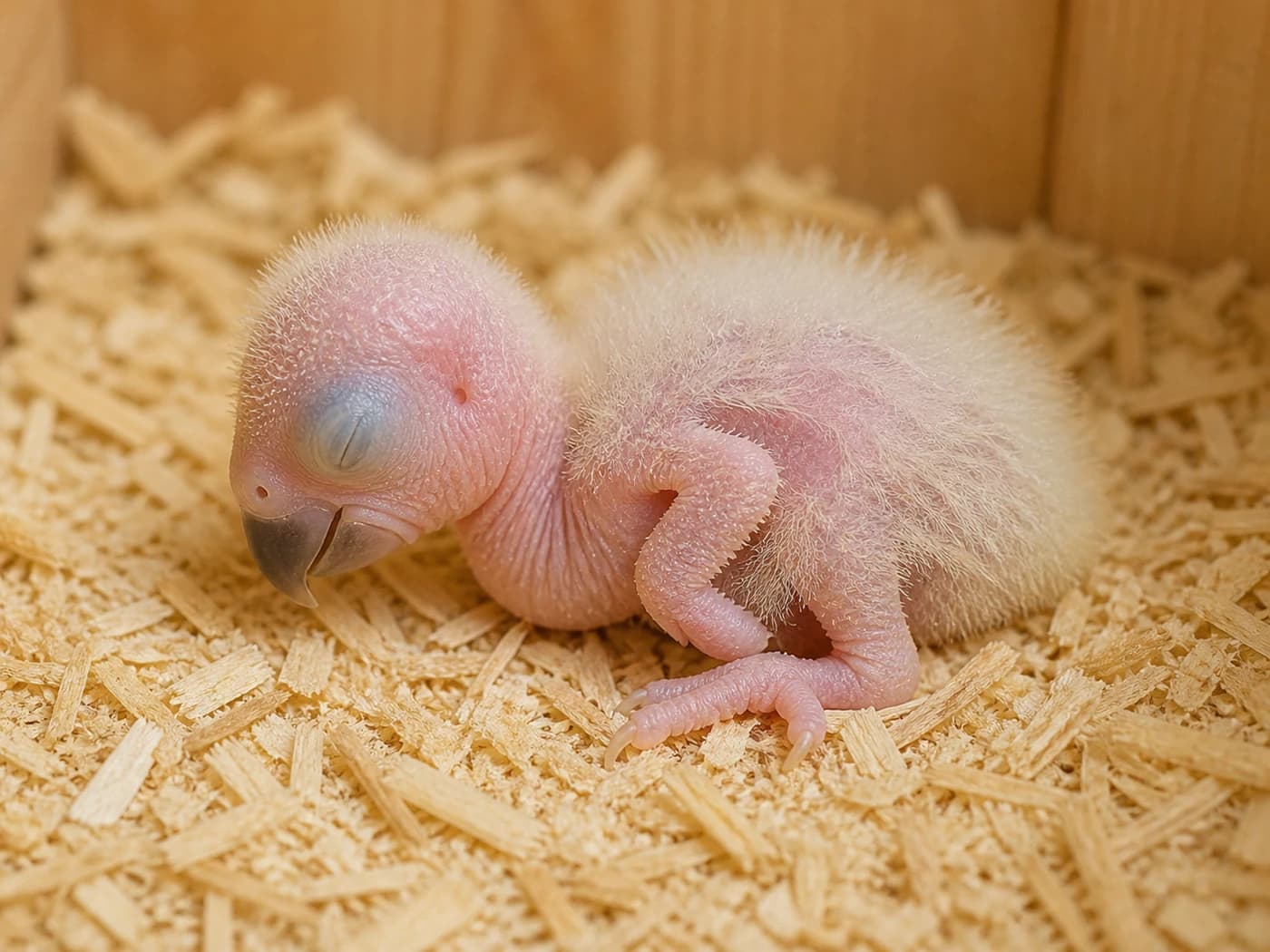
Conure Hatchling growth-stage reference image

Hatchling

0-7 days after hatch

Age range

Look

Newly hatched Conure chicks are delicate and mostly bare, so final color cannot be judged reliably yet.

What people watch

Watch warmth, crop filling, and feeding stability; visuals should be gentle, educational, and not graphic.

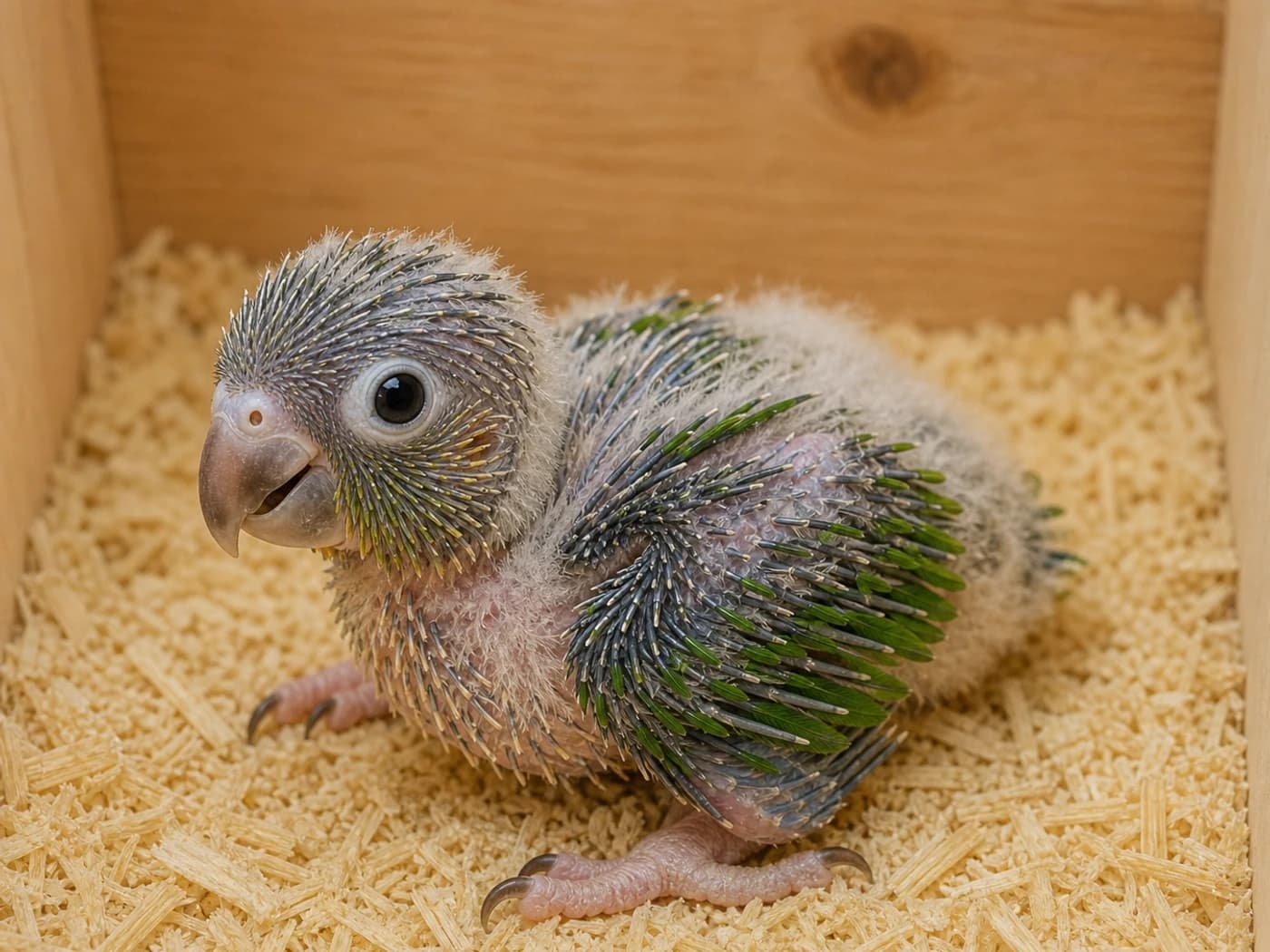
Conure Pin feather stage growth-stage reference image

Pin feather stage

About 2-4 weeks, varying by species size

Age range

Look

Conure chicks begin showing pin feathers, and early color direction or wing and face patterning starts to emerge.

What people watch

Do not force pin feathers open; monitor warmth, nutrition, and skin condition.

Conure Young chick growth-stage reference image

Young chick

About 1-2 months, varying by species size

Age range

Look

Conure now looks like a small bird, with clearer posture, plumage, eyes, and exploration behavior.

What people watch

Focus on socialization, gentle handling, safe movement, and gradual food variety.

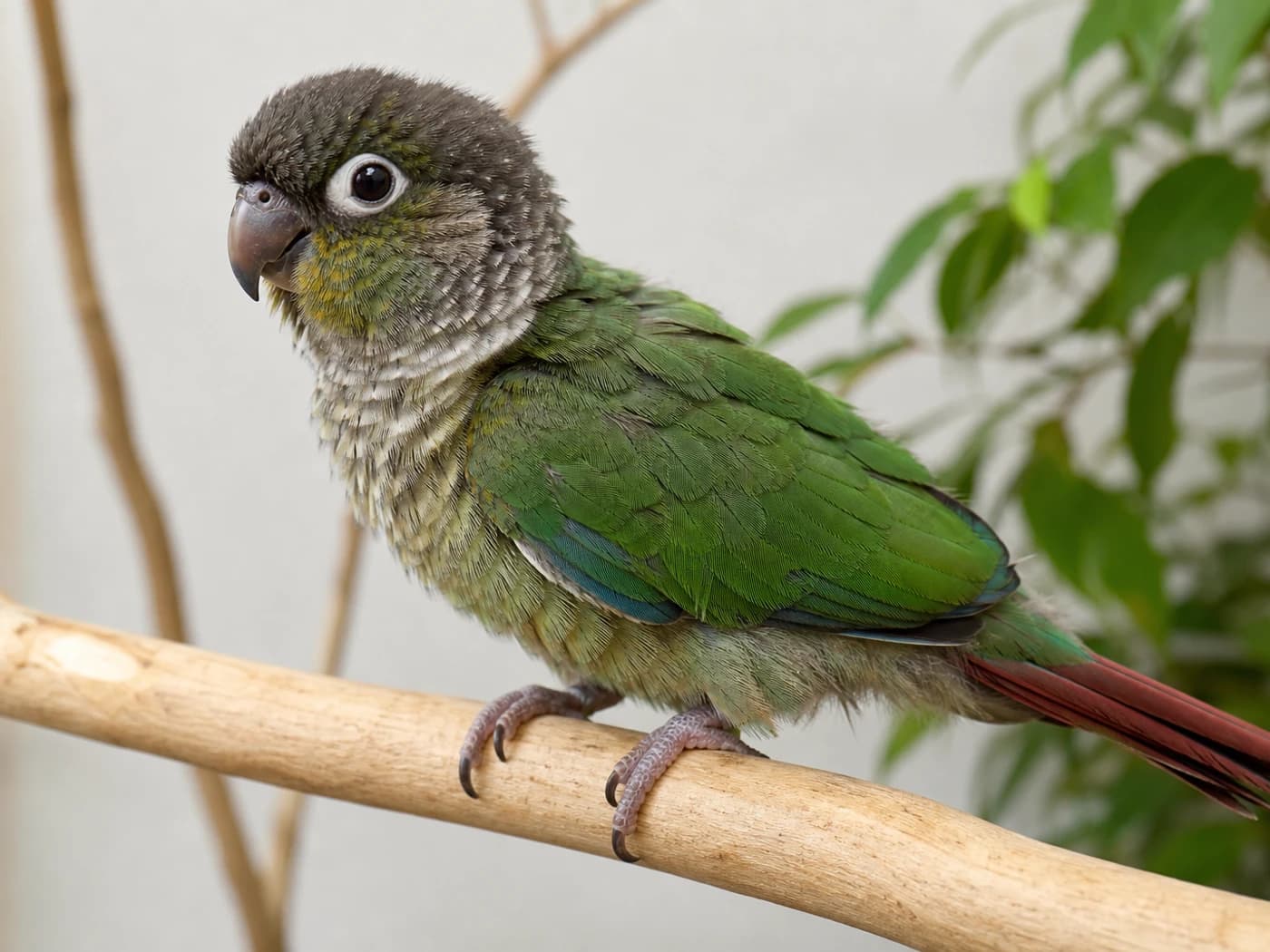
Conure Weaning / juvenile growth-stage reference image

Weaning / juvenile

Around weaning through juvenile molt

Age range

Look

Conure looks closer to an adult, but coordination, bite control, and emotional regulation are still developing.

What people watch

Do not force early weaning; watch independent eating, weight stability, flight, and basic training.

Conure Adult growth-stage reference image

Adult

After juvenile molt and maturity

Age range

Look

Conure plumage and proportions are more stable, and long-term patterns in temperament, noise, hormones, and territory become clearer.

What people watch

Long-term care shifts toward diet, exercise, enrichment, hormone management, and annual health checks.

What to Know

Train nippy boundaries

Green-cheeks are affectionate but beaky; bite-pressure training matters early.

Burrowing has crushing risk

Check bird location before sitting, rolling, or putting on layers.

Sun Conure noise is real

Sun Conures are beautiful, but their screams can be apartment-unfriendly.

Daily out time matters

Conures are energetic; lack of out time can turn into screaming, biting, and destruction.

Hear the calls before calling it apartment-friendly

Green-cheeked conures are usually easier for apartments than sun conures, but “quieter” does not mean quiet. Sun conure calls carry hard, so everyone in the home should hear real recordings before committing.

First things owners notice

Conure usually makes its first impression through Playful and inquisitive personalities, Love to be at the center of attention, and Crave social interaction and affection. Treat that as a starting point, not a full personality profile.

When you leave the room

Yes, can develop severe separation anxiety. Frantic screaming when owner leaves the room

Hand-raised vs parent-raised

Not explicitly detailed in the gathered information, but generally hand-raised birds are considered more tame and bonded with humans.

Frequently Asked Questions

Listen to Conure Call

Volume warning - these birds are loud!

Community Photos

Be the first to share a photo!

Species Comparison

Trait
Conure
ConureMedium
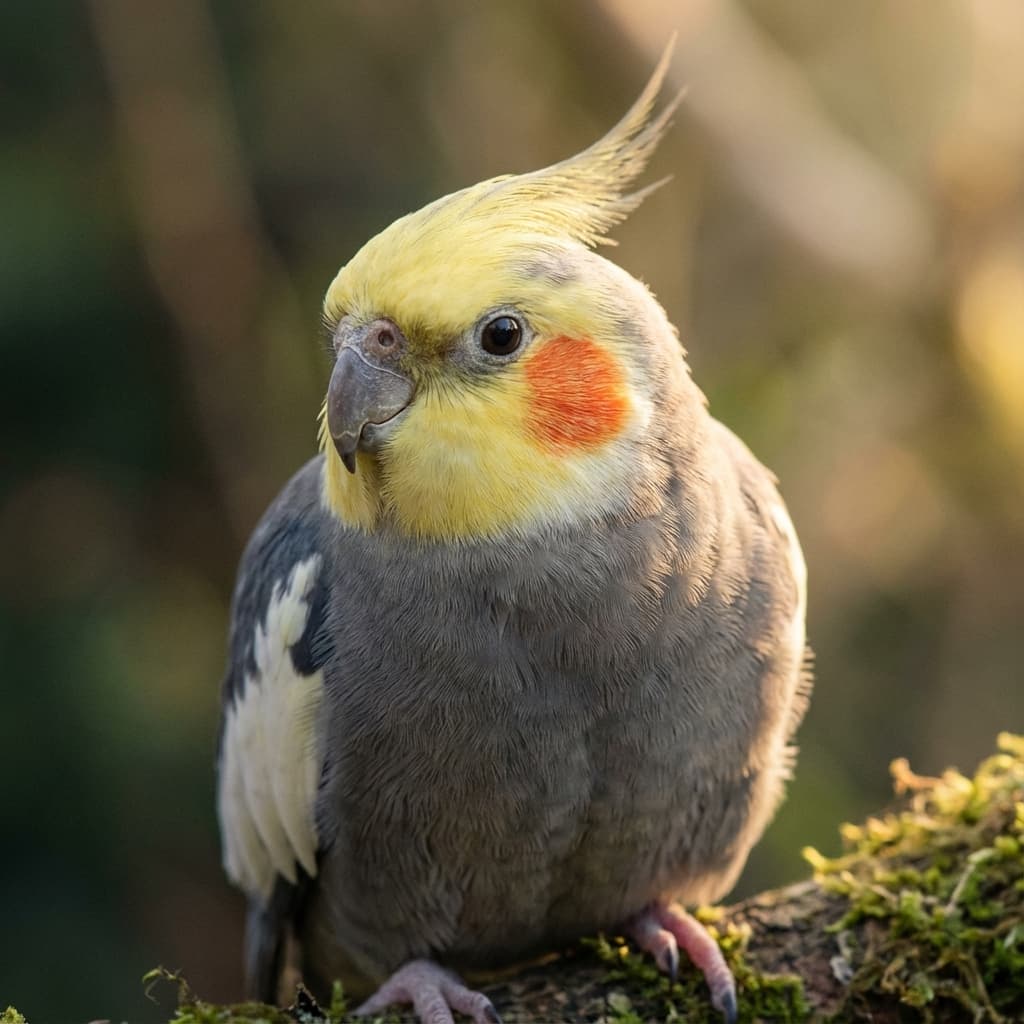
Cockatiel
CockatielSmall
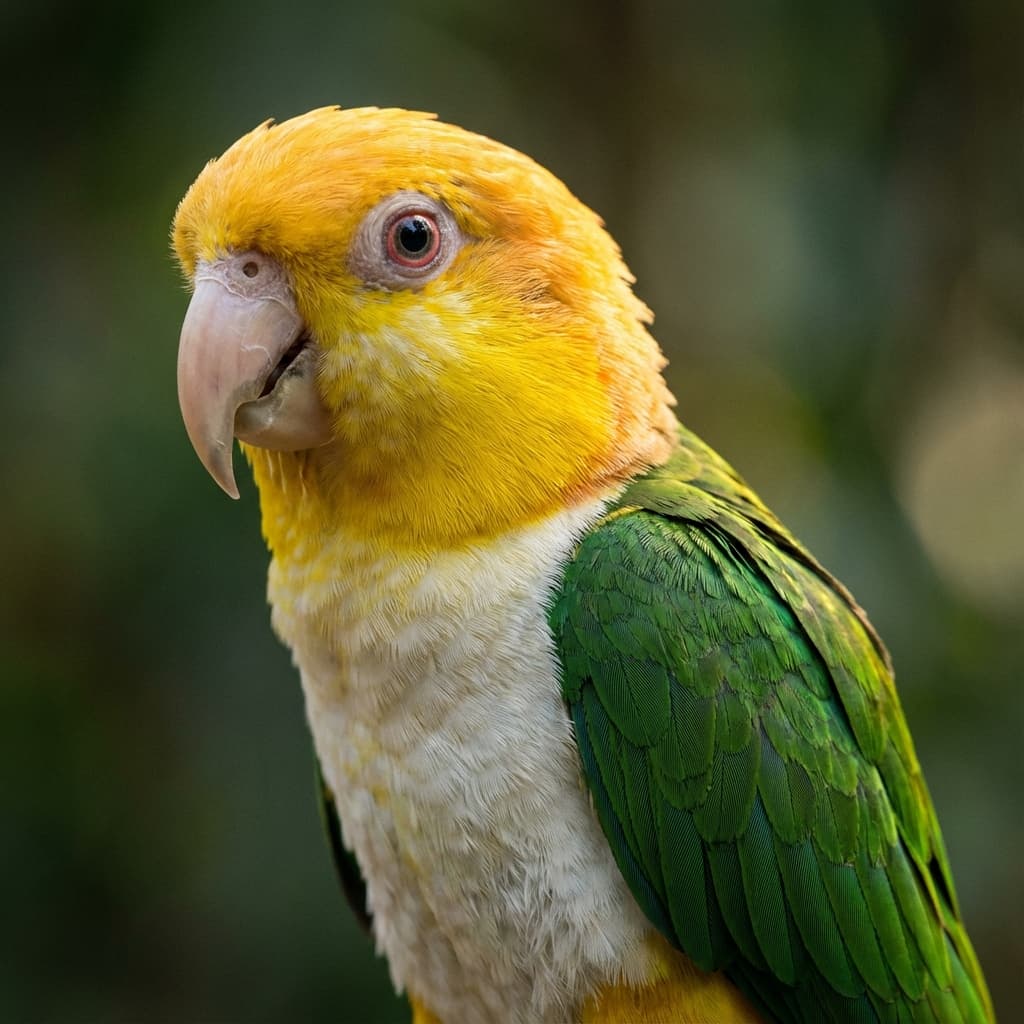
Caique
CaiqueMedium
Lovebird
LovebirdSmall
Lifespan20-30 years15-25 years20-40 years10-20 years
NoiseHighMediumMediumMedium
TrainingModerateEasyModerateModerate
TalkingLimited - Can learn 10-20 words but speech is often unclear. Better at learning tricks than talking. Some species like Sun Conures rarely talk.Limited Speech, Excellent Whistler - Males are champion whistlers and can learn entire songs. Speech limited to 10-20 words with a cute, soft voice.Limited - Can learn a few words (5-15) but speech is robotic and unclear. Excel at whistles, beeps, and environmental sounds instead.Rare - Most Lovebirds do not talk. A few may learn 5-10 words with unclear speech. They communicate through chirps, whistles, and chattering instead.
SizeMediumSmallMediumSmall

Shop Conure Products

Food, toys, cages & accessories for medium birds

Browse Products