Does clipping wings actually stop outdoor escapes—or create a false sense of security while harming cardiovascular health, 3D visual brain development, and confidence? Here is the evidence-based breakdown.
Few topics spark fiercer debate among bird owners than bird wing clipping. For decades, pet shops routinely trimmed primary flight feathers before sending young parrots home—promising effortless taming and escape prevention. Today, avian veterinarians and certified behaviorists paint a far clearer picture of what flight actually does inside a parrot's lungs, brain, and emotional resilience—and when rare medical exceptions truly apply.
1. Busting the #1 Outdoor Escape Myth
The single greatest danger of wing clipping is human overconfidence. Owners walk onto balconies or driveways with a clipped cockatiel or conure on their shoulder thinking it cannot fly. Outdoors, a 15 km/h gust provides instant aerodynamic lift—carrying a startled clipped bird 100 meters into high trees or traffic, where it lacks the steering control to fly back down to you.
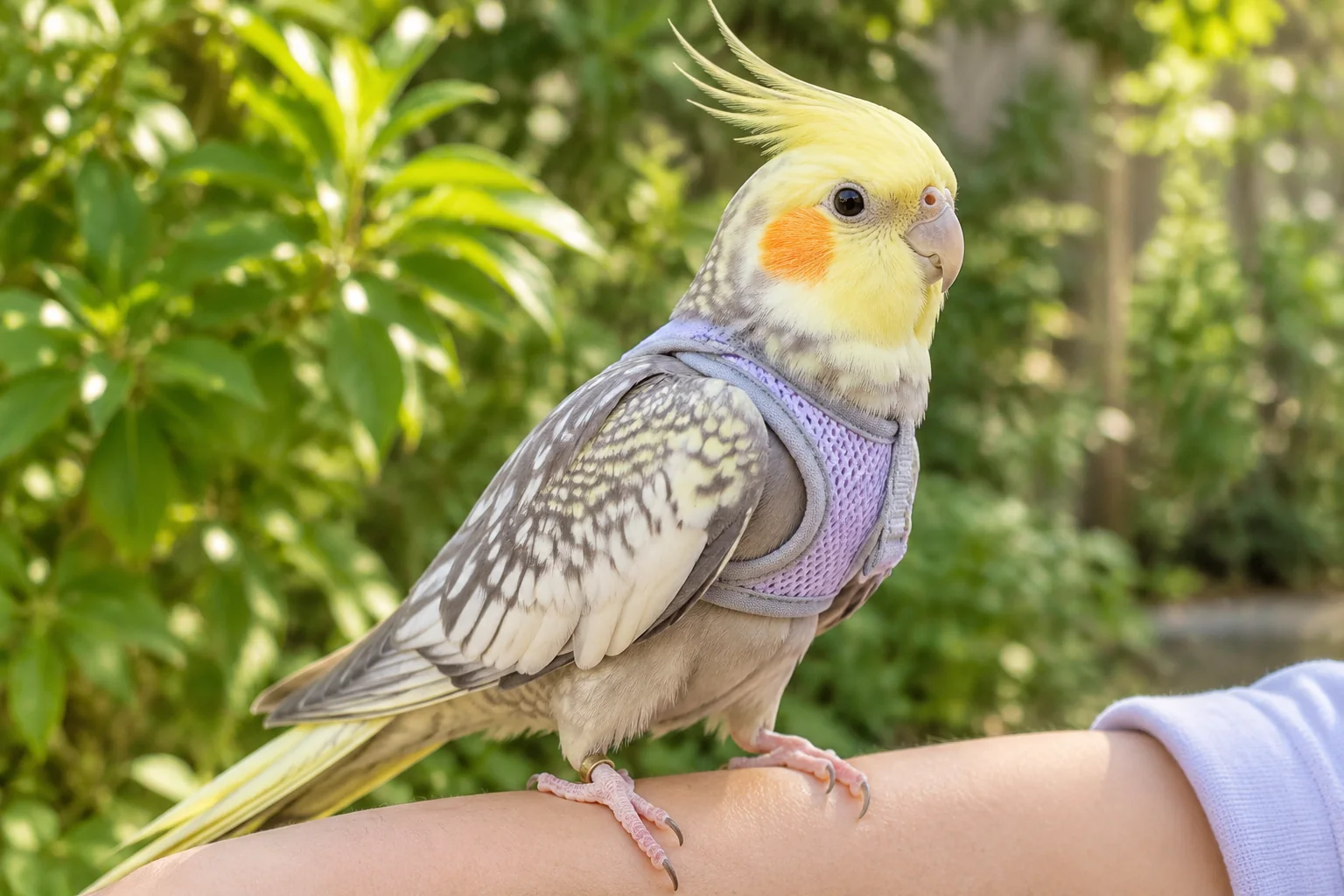
Whether flighted or clipped, outdoor trips always belong inside a secure parrot backpack carrier or a properly trained parrot harness and leash.
2. Evidence-Based Comparison: Flighted vs Clipped Parrots
| Health & Behavior Dimension | Flighted Indoor Parrot (Bird-Proofed Room) | Clipped Parrot |
|---|---|---|
| Cardiovascular & Lipid Health | Aerobic flight ventilates all 9 air sacs and burns dietary fats (Beaufrère, 2026; Bavelaar, 2004) | Walking & climbing burn a fraction of flight calories; higher obesity & atherosclerosis risk |
| Fledgling Brain & 3D Vision | High-speed spatial navigation trains rapid visual-motor coordination and confident landings | Clipping before fledgling mastery stunts spatial confidence and causes clumsy crash-landings |
| Early Illness Detection | Reluctance to fly alerts owners days before resting symptoms appear | Subtle stamina loss goes unnoticed until heavy breathing starts |
| Biting & Feather Chewing | Can fly away from scary stimuli instead of biting in self-defense | Blunt cut quill tips irritate flanks, sometimes triggering feather chewing; keel-bone split risk from hard floor drops |
3. Bird-Proofing Your Home Instead of Clipping
- Close doors, windows, toilets & ceiling fans BEFORE opening the cage: Make a non-negotiable household latch check—never cook with open pots while birds are out.
- Put decals or sheer curtains over clear glass & mirrors: Walk a fledgling up to windows to tap the glass with its beak so it learns solid boundaries safely.
- Set up landing stations: Place a wooden training stand or open play-top cage across the room and practice recall hops so your bird knows how to fly down as confidently as it flies up!
Frequently Asked Questions
Are there ever medical reasons an avian vet recommends a temporary trim?
Rarely—such as blind or neurologically impaired birds that repeatedly fly into walls, or severe temporary safety emergencies while structural bird-proofing is installed. Never perform a one-wing asymmetric clip, which causes spiral crashes and fractured keel bones.
My rescued parrot was clipped for years—will its flight feathers grow back?
Yes, unless follicles were permanently scarred, cut primaries shed and regrow during the next natural molt cycle. Teach short 30 cm hops onto your hand first to rebuild pectoral muscle and landing skills gradually.